The Hidden Variables in Smart Thermostat Efficiency Claims

Oliver Shaw
July 7, 2026
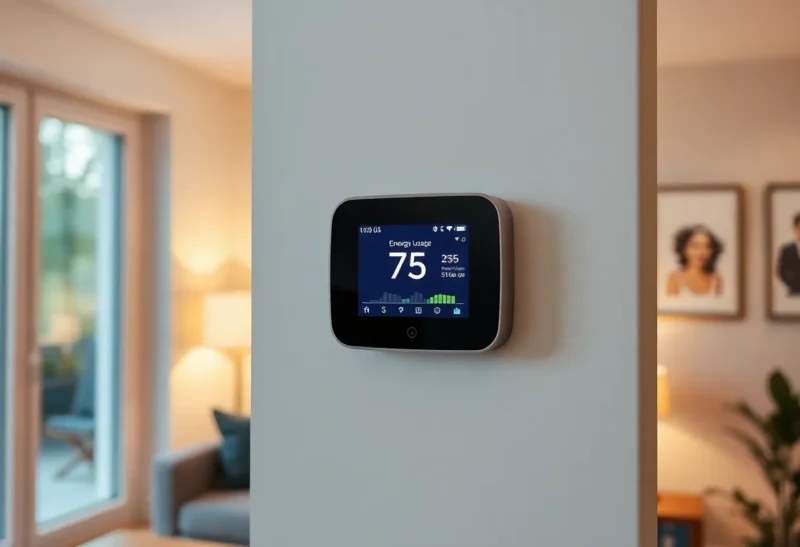
Smart thermostat marketing has a consistent, appealing structure: buy our device, save 10–15% on your heating and cooling bills, recover the purchase price in under two years, continue saving indefinitely. The headline figures come from real studies, the claims are broadly defensible, and the devices genuinely can save energy. The problem is in the hidden variables—the conditions under which those savings figures are generated versus the conditions in most people’s actual homes.
Understanding the gap between the headline claim and the realistic outcome isn’t just useful for managing expectations. It tells you something about how to actually get maximum benefit from a smart thermostat if you do buy one—which is a different strategy than the one most people follow.
Where the Headline Numbers Come From
Nest’s oft-cited study showing an average 10–12% reduction in heating costs and 15% reduction in cooling costs is probably the most influential piece of smart thermostat research in the consumer space. It’s real, it’s based on real utility data from real customers, and Google has been transparent about the methodology. Similar studies from ecobee and independent researchers have produced comparable figures.
The methodology matters, though. Nest’s study compared heating/cooling energy use before and after installation of a Nest thermostat, controlling for weather. The sample population was customers who chose to install a Nest thermostat—a self-selected group that’s likely to be more engaged with their energy use than the average household. The baseline they were comparing against was a programmable thermostat (or simpler) that many customers weren’t using optimally.
This selection effect matters. If you’re already running a well-programmed schedule on your existing thermostat, you’re starting from a higher efficiency baseline. The smart thermostat’s incremental improvement over your existing behaviour is smaller than the improvement over someone running at a constant comfortable temperature all day. A household that goes from “heat the whole house to 21°C all day while everyone’s out” to “smart setback and occupancy detection” sees dramatic savings. A household that already had a reasonable setback schedule sees modest improvements.
The Variable That Matters Most: Occupancy
The single biggest driver of smart thermostat savings is occupancy detection and response. A thermostat that correctly identifies when the house is empty and adjusts temperature accordingly is doing useful work. A thermostat that thinks the house is occupied when it isn’t, or vice versa, is not.
Occupancy detection in consumer smart thermostats typically uses two methods: geofencing (phone location data) and motion detection (passive infrared sensors in the thermostat itself). Both are imperfect.
Geofencing works well for households with consistent patterns where one person’s departure reliably signals that the house is empty. It fails for households where some occupants don’t carry smartphones, where there are elderly relatives or children who don’t leave, or where occupancy is generally more varied. The thermostat can be notified that person A has left, but person B’s grandmother is still home—and the thermostat doesn’t know that.
Motion detection fails for the most common occupancy failure mode: rooms that are occupied but not by anyone moving much. A person reading in a chair, a sleeping toddler, a bedridden family member—the thermostat’s motion sensor may decide the house is unoccupied and initiate setback, with uncomfortable results.
Households with simple, consistent occupancy patterns—working adults who leave at fixed times and return at fixed times, no unusual household members—get much better outcomes from smart thermostats. Households with complex or variable occupancy patterns often find that the automated schedules require more manual override than they expected, reducing the “smart” benefit.
The HVAC System Variable
Smart thermostat savings are significantly affected by the type of HVAC system you have, and this is almost never discussed in consumer-facing marketing.
The largest savings potential is in houses with forced-air gas heating that can ramp down quickly and recover quickly. If your system can drop the temperature significantly overnight or while you’re out and restore comfort in 30 minutes before you return, the setback strategy has real value. The energy not spent maintaining temperature while you’re away is recovered minus the energy to reheat—and if the reheat is fast, this arithmetic works out well.
For heat pumps—particularly in cold climates—this arithmetic changes. Heat pumps are most efficient when running at lower, sustained output. Allowing a house to cool significantly and then demanding rapid reheat is actually less efficient with a heat pump than maintaining a steadier temperature. The “nest leaf” points you toward lower temperatures, which is correct for gas heating efficiency but may not be optimal for heat pump efficiency. If you have a heat pump and live in a cold climate, the blanket advice to run aggressive setbacks may cost you more than it saves.
Radiant floor heating presents a more extreme version of this problem. Radiant systems have very high thermal mass and can take hours to change the floor temperature meaningfully. Setback strategies that work in 15 minutes for forced-air are mostly pointless for radiant floor heat. Smart thermostats combined with radiant heat typically provide minimal efficiency benefit—the occupancy detection and scheduling features just aren’t relevant to the system’s thermal dynamics.
Electric resistance heating—the baseboard heaters still common in older homes—is at least predictable: setback always saves the exact energy cost of what wasn’t heated, and recovery is fast. The savings from occupancy-based setback are real here, though the absolute dollar savings depend on your electricity rate rather than gas prices.
The Building Envelope Variable
Smart thermostat savings are also a function of how well-insulated your home is, in a non-obvious way.
In a very well-insulated home, temperature drops slowly when heating is cut. The setback strategy doesn’t save as much energy because the house doesn’t cool down as fast—you’re not losing much heat during the setback period, so you’re not saving much energy. Paradoxically, a well-insulated house benefits less from smart thermostat setback than a poorly insulated one.
This cuts against the framing of smart thermostats as a green technology. The most energy-efficient approach is a well-insulated house with good windows and properly sealed air infiltration—and in such a house, the smart thermostat’s setback savings are smaller than in a leaky Victorian terraced house. The leaky house sees bigger percentage savings from setback but is still burning much more total energy. The efficient house uses less total energy but captures less of the headline savings figure.
If you’re investing in home energy efficiency, the return on insulation and draught-proofing often exceeds the return on smart thermostat automation—but that’s a harder, messier, more expensive project, so the thermostat gets marketed instead.
The Learning Variable
Most premium smart thermostats now advertise learning capabilities—algorithms that observe your manual adjustments and build a model of your preferences to automate future scheduling. The Nest’s learning algorithm is the best-known example.
Learning works well when your schedule is consistent and your preferences are stable. It works poorly when your life is variable—irregular work hours, weekend versus weekday differences that are large, seasonal changes in how you use rooms. A thermostat that “learns” a pattern from an unusual week will apply that pattern until it observes enough subsequent data to override it.
For many households, the learning phase is actively counterproductive: the thermostat makes confident-looking predictions based on limited data, applies them, and then requires corrective overrides while it adjusts. Users who expected a “set it and forget it” experience and instead need to manually correct the thermostat’s guesses frequently become less satisfied with the product.
The irony is that a well-programmed traditional thermostat, manually set once by someone who understands their household’s schedule, often outperforms a learning thermostat for households with irregular routines. The learning algorithm’s value is mainly for households who wouldn’t bother to program a traditional thermostat optimally—which is a real user population, but not every user.
The Integration Variable
Smart thermostats that integrate with other smart home systems—occupancy sensors in multiple rooms, door and window sensors, weather forecasting APIs—can significantly outperform standalone units. The thermostat that knows a window is open and pauses heating, or that uses a dedicated room presence sensor rather than the PIR built into the thermostat unit, is meaningfully smarter than one operating with only its own sensors.
This is where platforms like Home Assistant, Google Home with multiple sensors, or Apple Home with well-placed occupancy detectors change the calculation. If you’re willing to invest in proper multi-sensor occupancy detection—not just the thermostat’s built-in PIR—the occupancy accuracy problem is largely solved and the energy savings start to approach the headline figures more reliably.
The tradeoff is complexity and upfront cost. The thermostat alone is £200–£300. Adding proper multi-room occupancy sensing to make it work well adds another £100–300 in sensor hardware plus configuration time. At that point, the total investment is significantly higher than the headline thermostat price suggests.
What to Actually Expect
A more realistic set of expectations for a smart thermostat, given these variables:
If you currently run a constant temperature all day with a manual thermostat and your household has consistent, simple occupancy patterns with gas forced-air heating in a moderately insulated home: the headline savings figures are approximately relevant. You’ll likely see 10–15% reductions in heating energy use, and the payback period really might be under two years.
If you already have a reasonably well-programmed programmable thermostat, your home is well-insulated, your occupancy is irregular, or you have a heat pump or radiant system: expect 3–7% improvement over your baseline, maybe less. The payback period extends to four to seven years or more. The thermostat may still be worth it for the convenience features, but as an energy investment the case is weaker.
The honest advice: check your current energy use, understand your HVAC system type, be realistic about your household’s occupancy patterns, and consider what improvements you’re comparing against. A smart thermostat is a useful device for many homes. Its savings are real but not universal, and the gap between marketing numbers and your specific situation depends on variables the marketing has no interest in highlighting.