Why Underwater Data Centers Keep Getting Proposed and Never Scale

Callan Reeve
July 9, 2026
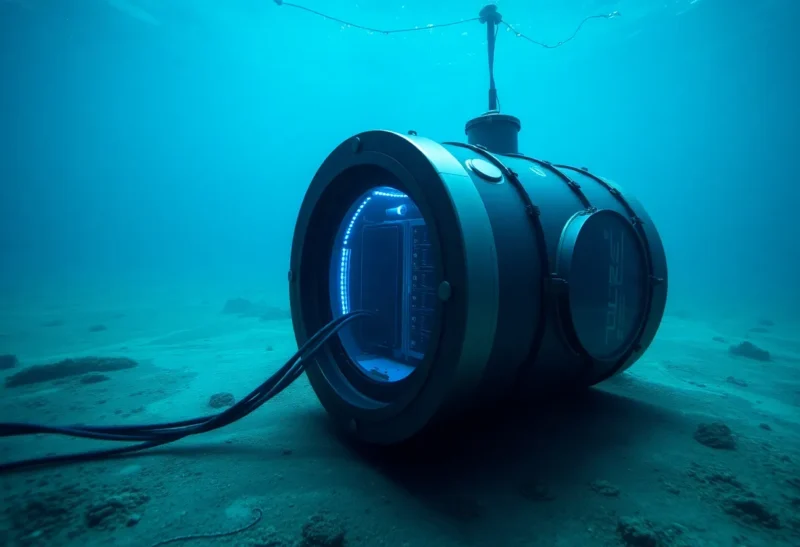
Every few years, a new pilot project resurrects the same pitch: sink a sealed data center capsule to the ocean floor, let the surrounding seawater handle cooling for free, and skip the enormous energy cost of air conditioning a server hall. Microsoft ran the most famous version of this experiment, Project Natick, and reported genuinely good results. And yet, over a decade after the concept first got serious engineering attention, there isn’t a single commercially operating underwater data center anywhere in the world doing meaningful production workload at scale. I spent a decade designing subsea equipment for offshore oil and gas before moving into writing about infrastructure, and the reasons this keeps stalling out are less about the core idea being bad and much more about a set of unglamorous operational constraints that pilot projects are specifically designed to avoid confronting.
What Project Natick Actually Proved
Microsoft’s Project Natick deserves credit for being a genuinely rigorous experiment rather than a publicity stunt. The second phase, deployed off the coast of Scotland’s Orkney Islands in 2018 and retrieved in 2020, ran a fully sealed, nitrogen-filled server pod on the seafloor for two years, powered partly by local renewable energy, and returned genuinely interesting results: reported server failure rates roughly one-eighth of what Microsoft sees in comparable land-based data centers, attributed largely to the stable temperature, absence of oxygen, and lack of human contact and vibration inside the sealed unit. Cooling efficiency also came out ahead, since the surrounding seawater provided passive heat rejection without needing power-hungry chillers or evaporative cooling towers.
Those are real, well-documented benefits, and Microsoft’s own reporting on the project was refreshingly honest about both the wins and the open questions. The project was explicitly framed as research rather than a commercial rollout plan, and Microsoft has been fairly quiet about pursuing a wider deployment since the pods were recovered, which is itself informative — a company with Microsoft’s resources and appetite for infrastructure experimentation choosing not to scale a result that good tells you the barriers are substantial, not marginal.
The Maintenance Problem That Doesn’t Go Away
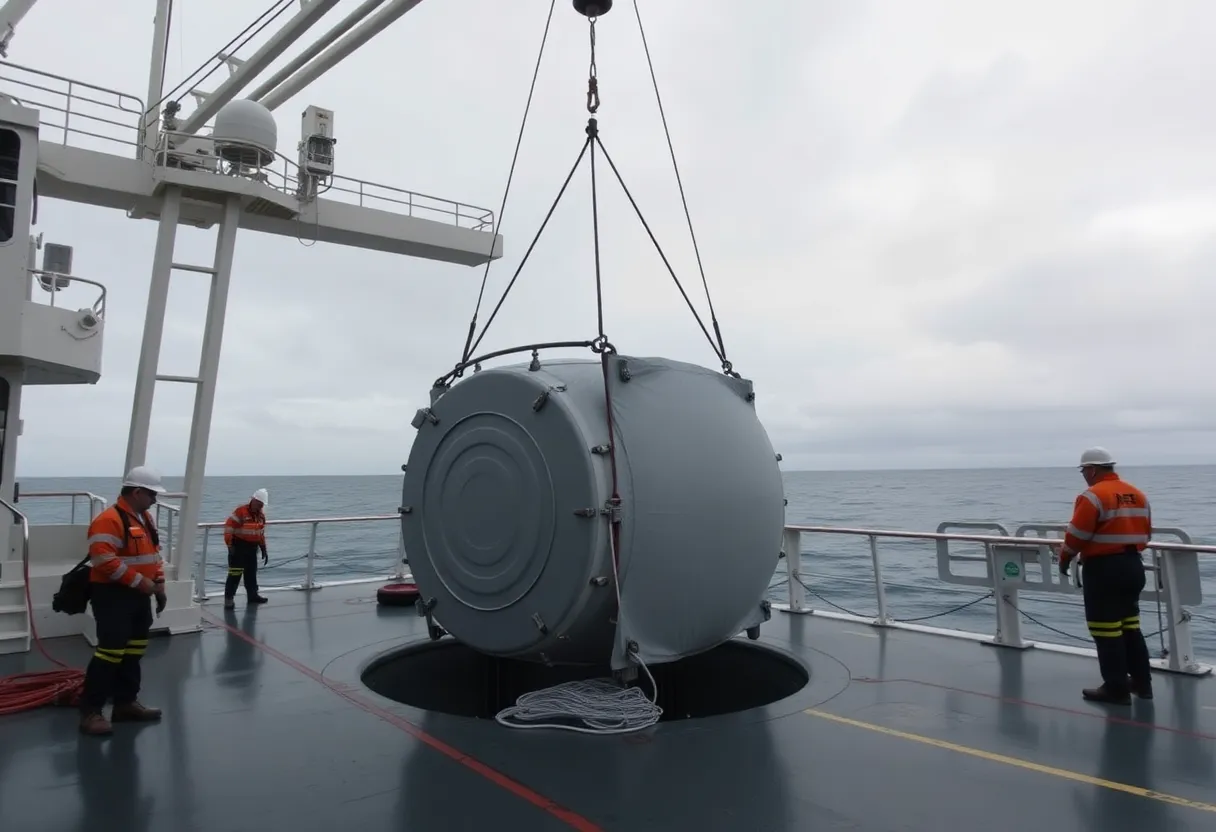
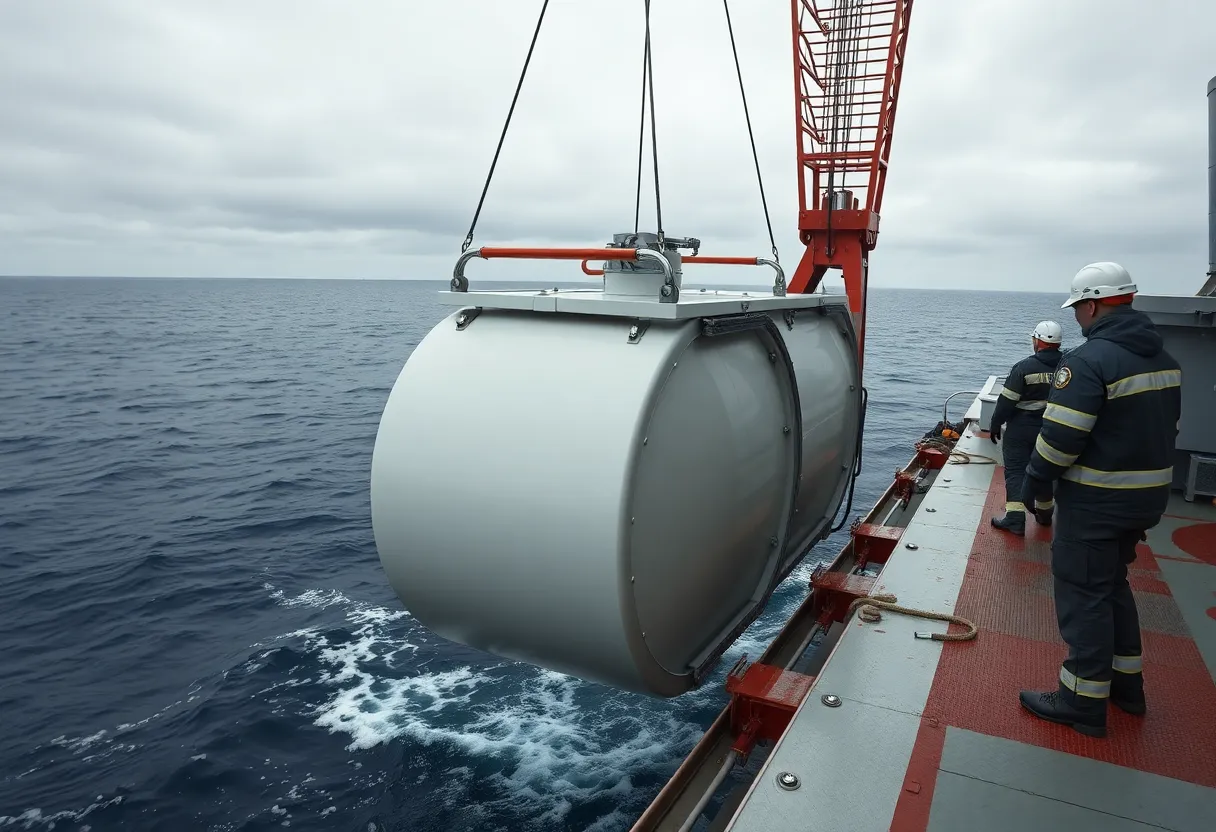
Here’s the constraint that dominates every serious conversation about scaling this concept: land-based data centers are maintained constantly. Failed drives get swapped, failed servers get pulled and replaced, network hardware gets upgraded, and this happens on an ongoing basis measured in a data center’s normal operational rhythm — technicians walking server aisles daily is simply how the facility stays current and functional. A sealed underwater pod, by design, cannot be accessed without a genuinely expensive marine operation: a vessel, a crew, lifting equipment, and downtime for the retrieval and resealing process.
Project Natick’s own design assumed a roughly five-year deployment cycle with no maintenance access at all during that window — hardware failures were accepted as a cost of the model, with the pod’s redundancy designed to tolerate a certain percentage of failed servers before the whole unit needed retrieval. That’s a workable design for a research pilot proving a concept, but it’s a fundamentally different operating model than any commercial data center customer actually wants, because it means accepting a slowly degrading capacity curve over years with no ability to intervene, in an industry where customers expect near-instant hardware replacement and infinite scalability on demand.
Why the Economics Don’t Close at Scale
The energy savings from passive seawater cooling are real, but they have to be weighed against costs that don’t show up in a single pilot deployment’s budget the same way they would across a commercial fleet of dozens or hundreds of underwater units. Marine engineering and deployment costs — vessel time, specialized waterproof pod manufacturing, underwater power and fiber connectivity infrastructure, environmental permitting for seabed use — are substantially higher per unit of compute than simply building another conventional data center hall on land, where labor, materials, and permitting processes are all far more standardized and competitive.
There’s also a scaling mismatch specific to how modern data center demand actually grows. Hyperscale cloud and AI training workloads favor enormous, contiguous facilities where thousands of servers share power and networking infrastructure efficiently — the entire trend in the industry over the past five years has been toward bigger, more centralized facilities, not smaller, distributed, harder-to-access ones. An underwater pod is inherently a smaller, more isolated unit, which cuts directly against the scaling economics that make modern data center construction cost-effective in the first place. You’d need many more individual underwater deployments to match the capacity of one modern hyperscale campus, and each of those deployments carries its own fixed marine engineering and permitting overhead that doesn’t shrink with volume the way land-based data center construction costs have.
The Regulatory and Environmental Questions That Never Fully Resolved
Seabed use for infrastructure isn’t a blank slate — it runs into existing maritime law, fishing rights, shipping lane considerations, and environmental review processes that vary significantly by jurisdiction and that most countries never anticipated needing a specific framework for “data center on the ocean floor.” Environmental groups and marine biologists have raised legitimate open questions about the thermal impact of continuous heat rejection into a localized marine environment over years of operation — Microsoft’s pilot was too short and too small in scale to fully answer what a large cluster of pods running for a decade would do to local water temperature and marine ecosystems nearby, and that’s exactly the kind of unresolved environmental question that tends to slow down permitting for any proposed commercial-scale deployment, especially in coastal areas with existing fishing industries or protected marine habitats.
China’s Highlander project, a more recent and more commercially oriented underwater data center effort launched off the coast of Hainan starting in 2023, has approached this differently by pursuing government-backed pilot deployment with more explicit commercial intent than Microsoft’s research framing, and it’s worth watching as the most serious attempt yet to push past pilot scale. Even that project, as of its most recent public updates, remains characterized as a phased pilot program rather than a fully commercial, market-competitive offering, and it’s too early to say whether it will encounter the same maintenance and scaling constraints or has found genuine workarounds.
Where the Idea Might Actually Find a Niche
None of these constraints mean underwater data centers are a dead concept — they mean the use cases where the economics and operational model actually make sense are narrower than the initial pitch suggested. Coastal or island regions with limited land availability and expensive real estate, combined with strong local demand for low-latency edge computing rather than hyperscale capacity, represent a more plausible niche than trying to compete with mainland hyperscale campuses directly. Applications tolerant of the multi-year, low-maintenance deployment model — long-duration archival cold storage, for instance, where data is written once and rarely accessed rather than continuously read and written under heavy load — sidestep the maintenance access problem almost entirely, since failure tolerance matters far less when the workload isn’t latency- or availability-critical in the way live cloud services are.
Renewable-energy-adjacent deployments, particularly near offshore wind farms where a data center could draw power with minimal transmission loss and use the same marine infrastructure and permitting relationships already established for the wind installation, represent a plausible pairing that a few research groups have floated, though nothing has moved past the conceptual stage publicly as of the most recent reporting.
The Honest Verdict
Underwater data centers keep getting proposed because the core physics genuinely works — seawater is an excellent, free heat sink, and the reduced failure rates from a stable, sealed, human-free environment are real and well-documented. What keeps them from scaling isn’t a technical flaw in the concept; it’s that the commercial data center industry’s entire operating model is built around constant physical access, rapid hardware refresh cycles, and enormous centralized facilities, and an underwater deployment is structurally incompatible with all three of those norms without a fundamentally different customer expectation about maintenance and scale.
That’s a genuinely hard problem to solve with better engineering alone, because it’s not an engineering problem — it’s a business model mismatch between what the ocean makes easy (passive cooling, low disturbance) and what the industry’s growth pattern demands (constant access, rapid iteration, massive contiguous scale). Until something changes about how data centers are operated and refreshed — or until a specific workload emerges that’s genuinely well-suited to a five-year, no-maintenance deployment cycle — underwater data centers will likely keep producing compelling pilot results and struggling to become anything more than that.