Why Cloud Providers Are Quietly Building Their Own Custom Networking Chips

Futurion Editorial
July 9, 2026
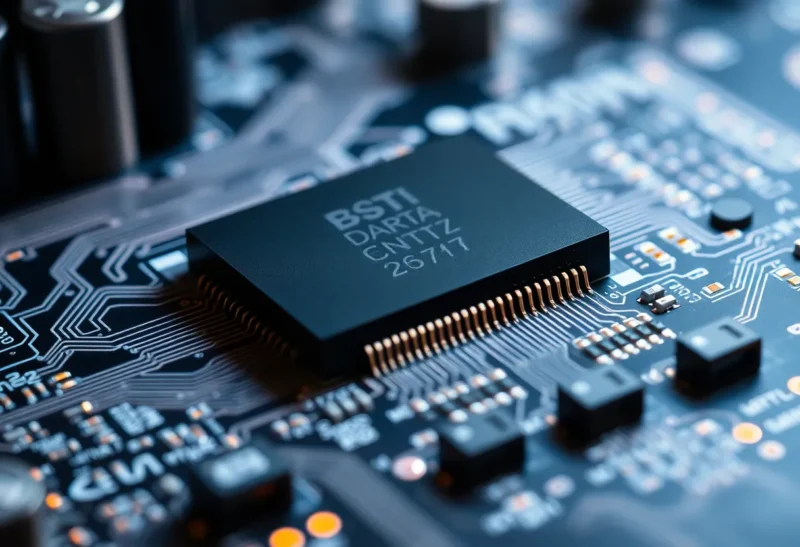
The custom silicon story most people have heard about involves cloud providers building their own AI training and inference chips — Google’s TPUs, Amazon’s Trainium and Inferentia, Microsoft’s Maia — as an alternative to buying everything from Nvidia. A quieter, less publicized parallel effort has been happening in the same data centers: major cloud providers designing and deploying their own custom networking chips, the silicon responsible for moving data between servers rather than doing the AI computation itself. This is a considerably less flashy story than AI chip competition, but it’s arguably just as consequential to how these companies’ infrastructure actually performs, and the specific reasons behind it reveal something important about where bottlenecks in modern data centers actually live.
Why Networking Became the Thing Worth Custom-Building
Modern large-scale AI training, in particular, has pushed data center networking requirements to a genuinely different order of magnitude than what most conventional cloud computing workloads previously demanded. Training a large AI model typically requires thousands of specialized accelerator chips working together in close coordination, constantly exchanging data as they jointly process a training workload, and the speed at which those chips can communicate with each other over the data center network has become, in many large-scale training setups, just as important a performance bottleneck as the raw computational power of the chips themselves — a training cluster with extremely fast individual chips but comparatively slow networking between them will spend a large share of its time simply waiting for data to move between chips rather than actually computing, which defeats much of the purpose of building an enormously expensive, powerful compute cluster in the first place.
This shift has made data center networking performance, historically treated as important background infrastructure but rarely the primary bottleneck worth obsessing over, into a genuinely first-order performance and cost factor for the specific, extremely demanding workload of large-scale AI training, and cloud providers have concluded that off-the-shelf networking silicon from traditional networking equipment vendors, built to serve the entire broad market’s more general networking needs, doesn’t optimize specifically enough for their own particular AI infrastructure requirements to be worth the alternative of designing something more tailored themselves.

What Makes a Custom Networking Chip Actually Different
Custom data center networking silicon developed by cloud providers for their own infrastructure differs from general-purpose commercial networking chips in several specific, technically meaningful ways rather than simply being a rebranded, marginally modified version of existing designs. These custom chips are frequently optimized specifically for the particular traffic patterns that large-scale distributed AI training generates, which differ meaningfully from the traffic patterns a general enterprise data center network is typically designed around — AI training traffic tends to be more predictable and synchronized, with many chips needing to exchange data in tightly coordinated bursts at specific points in a training computation, rather than the more varied, less predictable mix of traffic patterns a general-purpose commercial data center network chip has to handle reasonably well across a much broader range of possible customer workloads.
Building custom silicon also lets a cloud provider integrate networking capability more tightly with their own specific server and rack-level hardware architecture and their own custom AI accelerator chips, creating a more tightly co-designed system where the networking chip, the compute chip, and the physical rack and cabling architecture are all designed together with full knowledge of each other’s specific characteristics, rather than each being designed somewhat independently and then combined afterward, which is generally how integrating third-party networking equipment into a data center works. This kind of tight co-design can meaningfully reduce communication latency and improve effective bandwidth utilization in ways that are considerably harder to achieve when combining independently designed, off-the-shelf components from different vendors.
The Economics That Make This Worth the Enormous Engineering Investment
Designing custom networking silicon from scratch is an enormously expensive, multi-year undertaking requiring specialized chip design talent that’s genuinely scarce and expensive to hire, and this kind of investment only makes economic sense at the scale that only the largest cloud providers actually operate at. The core economic logic mirrors the reasoning that has driven cloud providers’ custom AI accelerator chip programs: at the scale of deploying networking infrastructure across enormous numbers of data centers globally, even a modest percentage improvement in networking performance or efficiency, multiplied across that enormous deployed infrastructure base, can translate into genuinely significant total cost savings or performance advantages that justify the substantial upfront chip design investment in a way that simply wouldn’t make sense for a smaller-scale data center operator.
There’s also a supply chain and negotiating leverage dimension to this decision that parallels the same logic driving custom AI accelerator development: reducing dependence on external networking equipment vendors for infrastructure this fundamental to a cloud provider’s own competitive performance gives that provider more direct control over its own technology roadmap and reduces exposure to any single external vendor’s pricing power, product availability constraints, or strategic priorities potentially diverging from what a specific cloud provider’s own infrastructure actually needs most.
Why This Doesn’t Mean Traditional Networking Vendors Are Being Fully Displaced
It’s worth being precise about what this trend actually represents, since it would be an overstatement to describe it as cloud providers abandoning traditional networking equipment vendors entirely. Custom networking silicon development has generally been concentrated specifically in the highest-performance, most specialized portions of these companies’ infrastructure — particularly the networking connecting large clusters of AI accelerator chips together for training workloads — while much of the broader data center and general enterprise cloud networking infrastructure these same companies operate continues to rely substantially on commercial networking equipment from established vendors, whose general-purpose products remain well suited and cost-effective for the large majority of networking needs that don’t specifically involve this narrow, extremely demanding AI training use case.
This selective, workload-specific approach to custom silicon development — investing heavily in custom chips specifically where the performance stakes and deployment scale justify the enormous engineering cost, while continuing to rely on commercial off-the-shelf solutions everywhere else — reflects a fairly disciplined allocation of an expensive, scarce engineering resource rather than a wholesale strategic shift toward vertical integration across every layer of data center infrastructure, and it’s a pattern likely to persist and even deepen specifically in the AI infrastructure networking space as the scale and performance demands of AI training continue growing faster than general-purpose networking equipment vendors’ product roadmaps can necessarily keep pace with on their own.