The Hidden Water Cost Behind Every New AI Data Center

Fatima Al-Rashid
July 9, 2026
When a new AI data center gets announced, the coverage almost always leads with power: how many megawatts it will draw, whether the local grid can handle it, which utility is scrambling to add capacity. Water rarely makes the headline, even though for a growing number of communities hosting these facilities, water — not electricity — is the resource that’s actually running short. I spend most of my time on environmental policy work around water security, and the AI data center boom has become one of the clearest examples I’ve seen of infrastructure planning that treated a finite local resource as an afterthought until it very much wasn’t.
Why Data Centers Need Water in the First Place
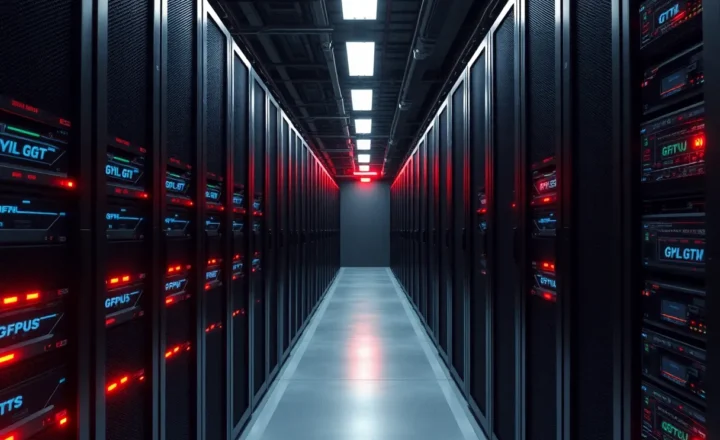
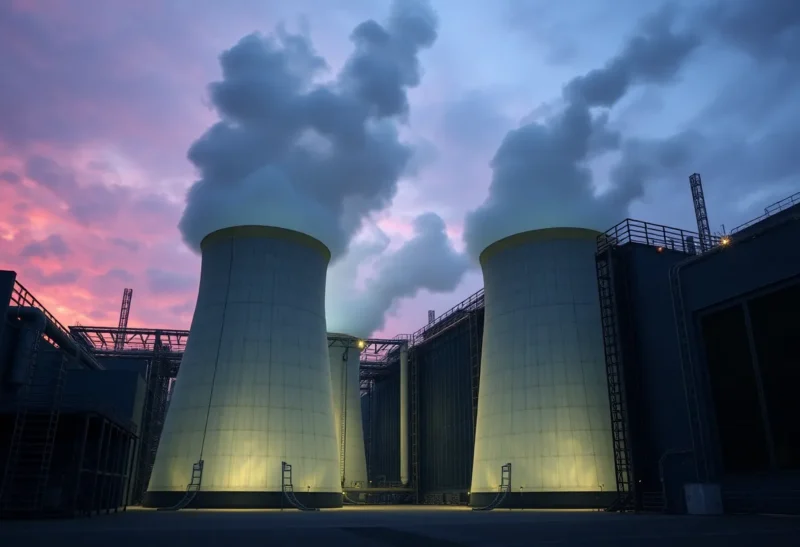
Servers generate heat, and heat has to go somewhere. The most water-efficient cooling methods — closed-loop liquid cooling and, increasingly, direct-to-chip cooling for the densest AI training racks — recirculate the same fluid indefinitely with minimal loss. But the cheapest and still most common large-scale cooling method for hyperscale data centers is evaporative cooling, which works exactly like sweat: water absorbs heat and evaporates, carrying that heat away into the atmosphere. It’s efficient in terms of energy use, which is precisely why it’s popular, but it means water that enters the facility largely doesn’t come back out as usable water — it leaves as vapor.
The scale involved is substantial. Industry estimates and disclosures (Microsoft, Google, and Meta all publish some water usage data in sustainability reports, though granularity varies by facility) put a large hyperscale data center’s water consumption in the range of hundreds of thousands to over a million gallons per day for direct cooling alone, before accounting for the additional water used indirectly to generate the electricity the facility consumes — thermoelectric power plants also use significant water for cooling, meaning every kilowatt-hour drawn by a data center often carries a secondary water cost incurred somewhere else in the grid.
Why AI Specifically Made This Worse
Training and running large AI models draws far more sustained, high-density compute load than most previous data center workloads, and that density is exactly what drives up cooling demand disproportionately. A University of California, Riverside study published in 2023 estimated that training a single large language model on the scale of GPT-3 could consume on the order of hundreds of thousands of liters of freshwater for cooling alone, and that inference — the ongoing process of actually running the trained model to answer queries — adds a continuous, smaller-per-query but cumulatively enormous water draw across billions of interactions.
What makes the AI boom specifically acute isn’t just the aggregate volume, though — it’s the pace and geographic concentration. Data center construction has clustered heavily in a handful of regions, partly for cheap land and favorable tax incentives, partly for proximity to power infrastructure, and several of the fastest-growing clusters — Northern Virginia, parts of Arizona, and areas of Texas among them — sit in regions already dealing with water stress from agriculture, population growth, or, in Arizona and Texas’s case, long-term drought conditions that predate any data center construction entirely.

Where This Has Already Become a Local Fight
This isn’t a hypothetical future problem — it’s already produced real local conflicts. In The Dalles, Oregon, reporting uncovered that Google’s data centers were consuming roughly a quarter of the city’s total water usage, a fact that had been kept confidential under trade-secret claims until local journalists and residents pushed for disclosure through public records requests. Chandler, Arizona at one point restricted new water-intensive commercial development, including data centers, specifically citing concerns about the city’s ability to supply water reliably during drought conditions. In Georgia, community opposition to a planned Meta data center’s water usage became a significant local political issue, with residents raising concerns about impacts on rural wells and the Chattahoochee River watershed.
These fights share a common pattern: the water usage terms were often negotiated confidentially between the company and local utilities or governments, residents frequently found out the actual scale of consumption well after construction was already underway or approved, and by the time public pressure mounted, the leverage to renegotiate terms had mostly evaporated along with the water. Increased local reporting and a handful of state-level transparency pushes have started to change this pattern, but disclosure remains inconsistent and often voluntary rather than mandated.
What the Industry Is Actually Doing About It
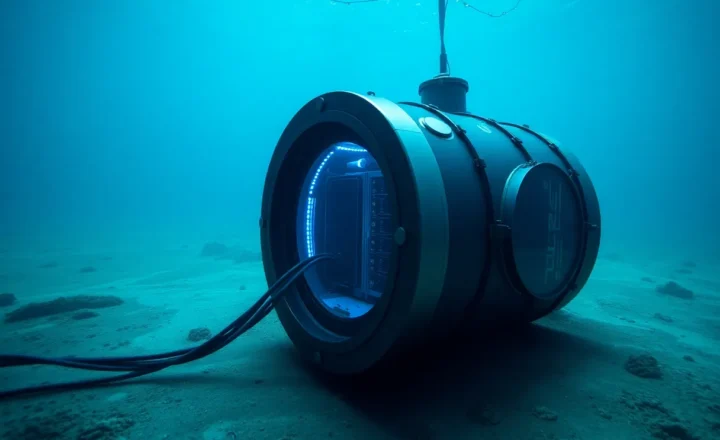
To be fair to the hyperscalers, the water problem hasn’t gone entirely unaddressed — competitive and reputational pressure has pushed real engineering investment into reducing it. Microsoft has published research and deployed “zero water” cooling designs for some newer data centers, using closed-loop liquid cooling that eliminates evaporative water loss entirely, at the cost of higher energy consumption for the cooling system itself — a genuine tradeoff between two different environmental costs rather than a clean win. Google has invested in reclaimed and non-potable water sourcing for cooling at several facilities specifically to avoid drawing from municipal drinking water supplies, and has published facility-level water usage effectiveness (WUE) metrics for some sites, though not universally.
Direct-to-chip liquid cooling, increasingly necessary anyway for the extreme heat density of the latest AI accelerator chips, has a useful side effect: it’s dramatically more water-efficient than the air-and-evaporation cooling it’s replacing, mostly because it operates as a sealed, recirculating system rather than one designed around continuous evaporative loss. As more AI-specific data centers get built around this cooling approach out of thermal necessity rather than environmental intent, water consumption per unit of compute may improve somewhat as a side effect, even without dedicated water policy driving it.
The Gaps That Remain
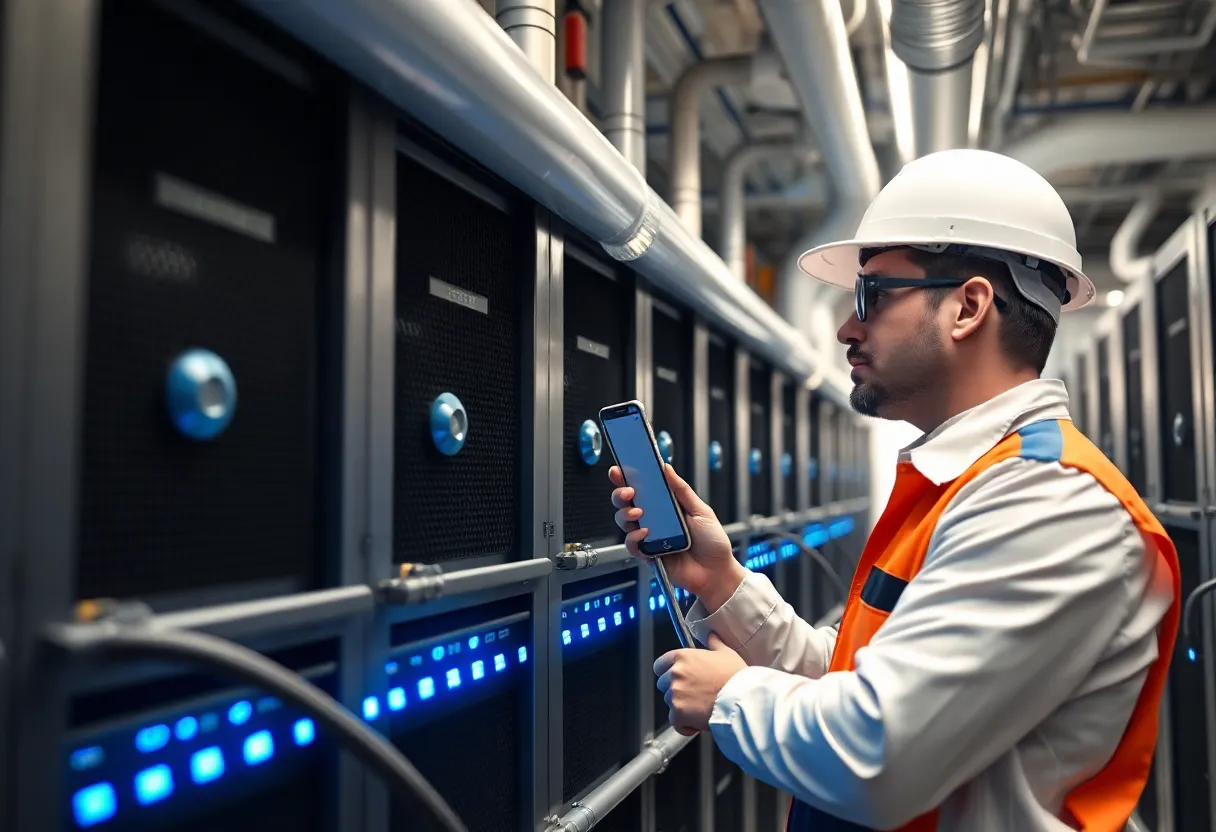
Despite genuine engineering progress at a handful of leading companies, the broader picture remains uneven and under-regulated. There’s no unified, mandatory disclosure standard requiring data center operators to report water usage publicly at the facility level in most jurisdictions, which means the public conversation is still working from incomplete, self-reported, and voluntarily disclosed data rather than a full accounting. Water rights and allocation frameworks in the U.S. are governed by a patchwork of state and even county-level rules dating from long before anyone anticipated a single commercial facility drawing water at this scale, meaning the legal and regulatory tools available to communities pushing back are often mismatched to the actual scale of modern demand.
There’s also a harder structural tension that better engineering alone doesn’t resolve: even the most water-efficient cooling designs still carry an indirect water cost through the electricity grid, unless that electricity comes from renewable sources with minimal water footprint (wind and solar have dramatically lower water intensity than thermoelectric generation). Data center operators increasingly tout renewable energy purchases for climate reasons, but the water benefit of that shift is real and under-discussed relative to the carbon framing that dominates most sustainability marketing.
What Communities Are Starting to Demand
The policy response taking shape in the most affected regions has converged on a few specific asks: mandatory, facility-level water usage disclosure as a condition of permitting; contractual water usage caps tied to drought contingency triggers, so that data center consumption scales down automatically during declared water emergencies rather than competing on equal footing with residential and agricultural users; and a genuine local cost-benefit accounting that weighs promised tax revenue and jobs against water infrastructure strain, rather than treating water availability as a given.
None of this is likely to slow the pace of AI infrastructure construction significantly — the economic incentives pushing that build-out are far larger than the water policy pushback currently has leverage against. But the trajectory of local fights over the past three years suggests water is becoming a real constraint on where and how fast this infrastructure gets built, in a way that simply wasn’t part of the conversation even five years ago. For an industry used to treating land, power, and now increasingly chips as its binding constraints, water may be the resource that forces the next round of genuinely hard siting decisions.