Why Municipal Broadband Projects Keep Stalling at the Permitting Stage

Remy Torres
July 9, 2026
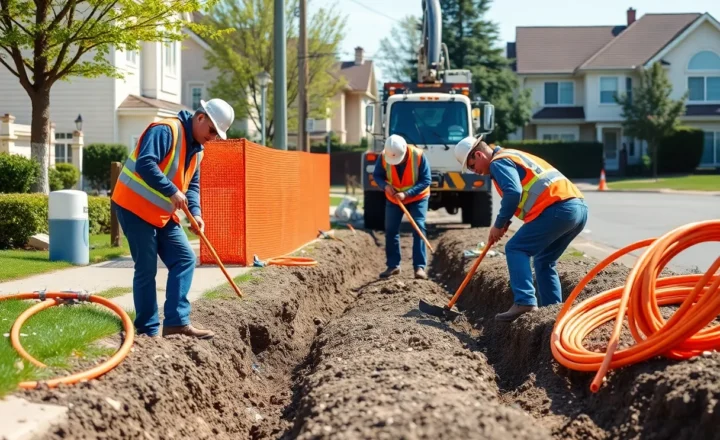
Municipal broadband projects tend to die in a predictable place, and it isn’t where most coverage of the topic focuses. The public fights over municipal broadband are almost always framed as political battles — incumbent ISPs lobbying state legislatures for laws restricting city-run networks, budget fights over whether taxpayer money should compete with private industry, ballot measures rising and falling on cable company ad spending. Those fights are real and well documented. But a large share of municipal fiber projects that clear every one of those political hurdles still stall for years afterward, quietly, in permitting offices, long after the headlines have moved on.
The permitting stage is unglamorous enough that it rarely makes news, which is exactly why it’s worth examining directly: it’s where good policy intentions and available funding routinely run into a bureaucratic reality that nobody budgeted enough time or money for.
What “Permitting” Actually Involves for a Fiber Network
Building a citywide fiber network means physically accessing almost every piece of linear infrastructure the city already has — streets, sidewalks, utility poles, existing conduit, sometimes private easements — and every one of those has a separate permitting authority with separate rules, timelines, and fee structures. A single fiber route down one commercial corridor might require permits from the city’s public works department for street cuts, a separate approval from the department managing traffic control during construction, a pole attachment agreement with whichever utility owns the poles (which is very often not the city itself), and in many cases a specific franchise agreement or right-of-way license distinct from the general construction permit.
Pole attachments are the single biggest chokepoint in practice. In most American cities, utility poles are owned by the incumbent electric utility, sometimes jointly with the incumbent telecom or cable provider under decades-old joint-use agreements. Federal Communications Commission rules governing pole attachments (primarily under Section 224 of the Communications Act) set out procedures and timelines that pole owners are supposed to follow when a new attacher — including a municipal broadband provider — requests access. In practice, pole owners have wide latitude to require “make-ready” work: modifying pole height, moving existing equipment, or replacing poles that can’t safely support another line. That make-ready work is performed by the pole owner or their approved contractors, on their schedule, and billed to the new attacher, which means the municipal network’s timeline is directly hostage to a private utility’s construction backlog.
The “One Touch Make-Ready” Fight
Some cities have adopted “one touch make-ready” (OTMR) ordinances specifically to address this bottleneck — rules that allow a single approved contractor to perform all necessary make-ready work on a pole in one visit, rather than requiring each existing attacher to send their own crew to move their own equipment sequentially. Without OTMR, a single pole needing three existing attachers moved before new fiber can be strung can take months, because each attacher schedules its own crew independently, and there’s often no strong incentive for an incumbent competitor to prioritize speeding up a rival network’s buildout.
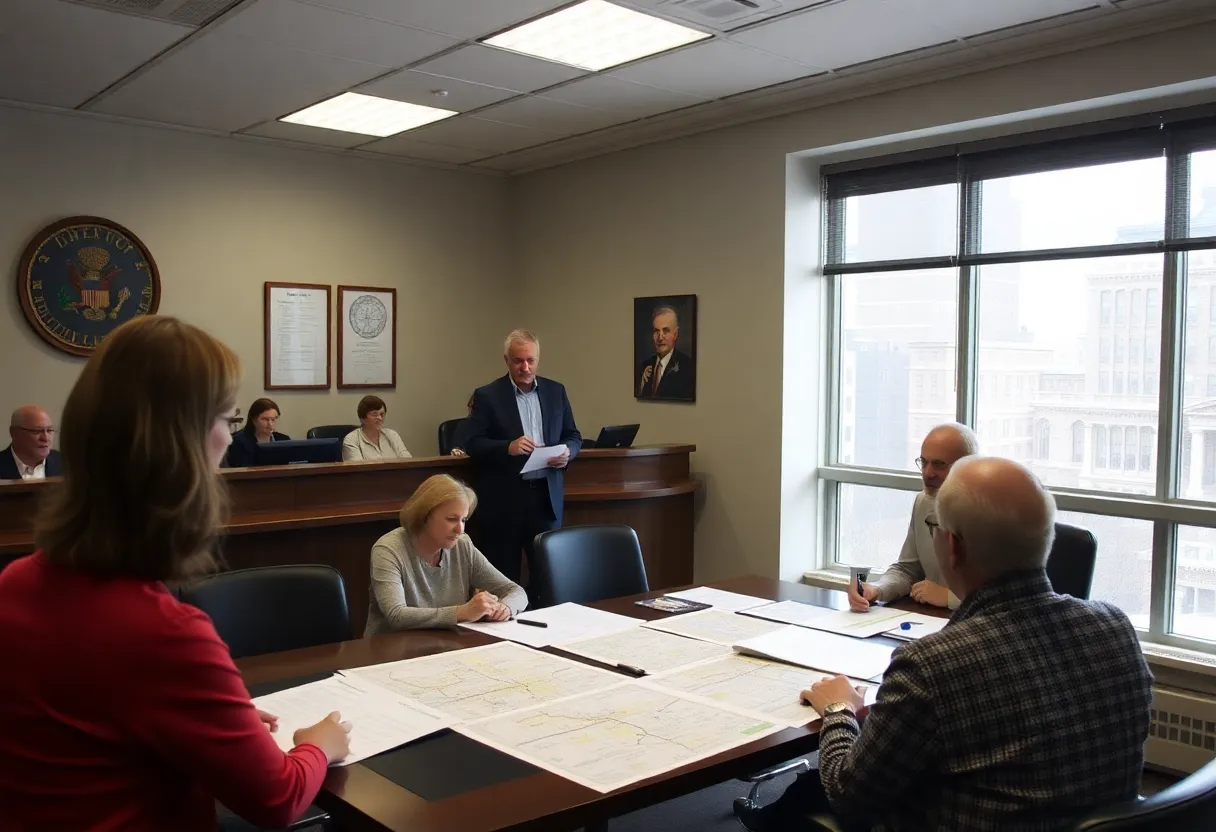
OTMR ordinances have faced legal challenges from incumbent providers in multiple jurisdictions, on grounds ranging from safety liability concerns to claims that the rules violate existing franchise agreements. Where OTMR has survived legal challenge and been implemented well, cities report meaningfully faster buildout timelines. Where it hasn’t — either blocked in court or never adopted — municipal broadband projects are stuck relying on the same sequential, incumbent-controlled make-ready process that private competitors also face, except that a municipal project usually has a public deadline tied to grant funding, and a private competitor generally doesn’t.
The Grant Funding Clock Problem
This collides badly with how broadband infrastructure grants are typically structured. Federal programs like the Broadband Equity, Access, and Deployment (BEAD) program and various state-level grant programs award funding with defined deployment deadlines — often several years, but not indefinite — and require regular progress reporting to keep disbursements flowing. A city that wins funding expecting a straightforward multi-year buildout can lose a year or more of that window purely to permitting and pole attachment delays that had nothing to do with construction capacity, engineering design, or the availability of fiber and equipment.
Some municipal broadband directors have described the actual bottleneck less as technical or financial and more as organizational: cities that run their own electric utility and therefore own their own poles can move dramatically faster than cities where poles belong to an investor-owned utility with its own commercial incentives and its own backlog of unrelated maintenance work competing for the same crews. That single structural difference — who owns the pole — often predicts permitting timelines better than the sophistication of the city’s broadband plan or the amount of money behind it.
Underground Construction Isn’t a Clean Escape
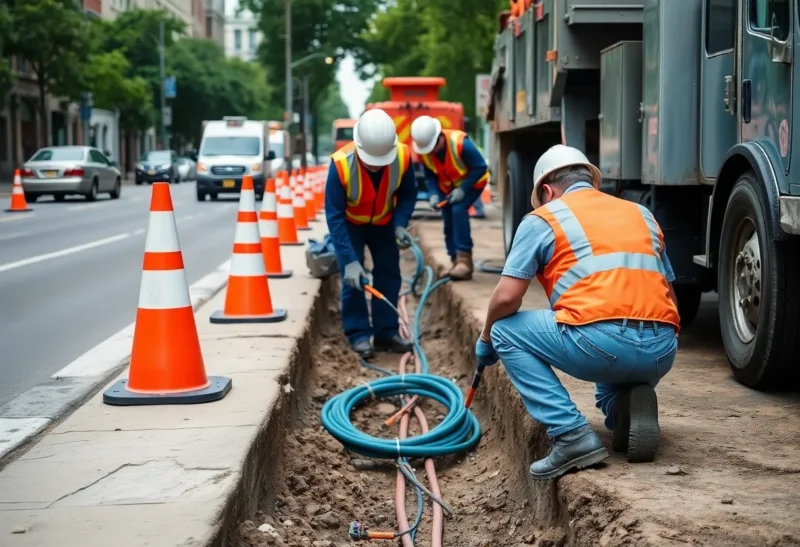
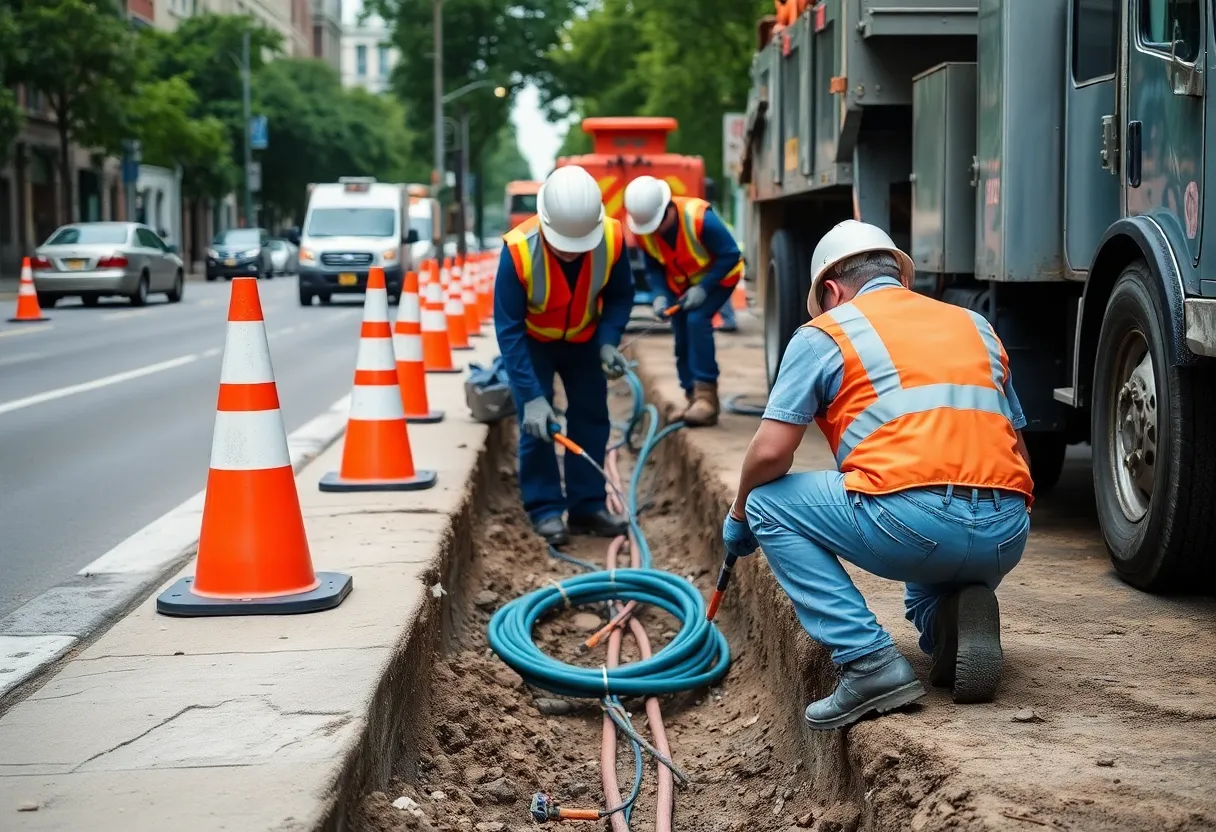
Cities that route fiber underground instead of on poles avoid the pole-attachment bottleneck but run into a different permitting maze: locating and coordinating around existing underground utilities (water, gas, sewer, electrical conduit, and other telecom lines already buried in the same right-of-way), securing street cut permits that often carry moratoriums on cutting into recently repaved streets, and managing traffic control approvals for construction in active roadways. Many cities have “pavement cut moratorium” policies specifically to preserve road surfaces after repaving, which can block or delay fiber trenching along an otherwise ideal route for years after a routine road resurfacing project, regardless of how ready the broadband project is to build.
What Faster Projects Have in Common
Looking across municipal broadband deployments that have actually hit their timelines, a few practical patterns show up repeatedly. Cities that pre-negotiated pole attachment and make-ready agreements with utility partners before construction began — rather than negotiating pole-by-pole during buildout — avoided most of the sequential delay. Cities that built dedicated, adequately staffed permitting review teams specifically for the broadband project, instead of routing every application through the same general permitting queue as every other private construction project in the city, cut review time substantially. And cities with existing dig-once policies, which require any street excavation to include conduit installation for future use regardless of which department initiated the work, had measurably more available conduit already in the ground when the broadband project started, reducing how much new permitted construction was needed at all.
None of these fixes are technologically sophisticated, and none of them require new federal legislation. They require cities to treat permitting coordination as a first-class part of the project plan rather than an administrative afterthought handled after the exciting parts — the funding announcement, the network design, the vendor selection — are already finished. The projects that get this right tend to actually deliver the service they promised. The ones that don’t spend years explaining, quietly, why the fiber still isn’t in the ground.