Why Precision Fermentation Is Closer to Your Grocery Store Than You Think

Dr. Naomi Fielding
July 9, 2026
If you’ve eaten cheese made with vegetarian rennet any time in the last thirty years, you’ve already eaten a product of precision fermentation without anyone marketing it that way. The enzyme chymosin, historically extracted from calf stomachs to curdle milk into cheese, has been produced instead by genetically engineered microorganisms — yeast or bacteria programmed to produce the exact protein — since the 1990s, and it now accounts for the large majority of rennet used in commercial cheesemaking globally. I spent six years developing fermentation strains for food ingredient companies before moving into writing about this field, and the thing that surprises people most is that precision fermentation isn’t an emerging technology waiting for its moment — it’s already deeply embedded in the food system, and the current wave of newer applications is really an expansion of infrastructure and techniques that quietly proved themselves decades ago.
What Precision Fermentation Actually Means
The term covers a specific technique: genetically engineering a microorganism — typically yeast, bacteria, or fungi — to produce a specific target molecule, then growing that organism at scale in a bioreactor and harvesting the molecule it produces. It’s distinct from traditional fermentation, which relies on the natural metabolic byproducts of unmodified organisms (the alcohol from yeast fermenting sugar, the lactic acid from bacteria fermenting milk into yogurt), and it’s distinct from biomass fermentation, which grows and harvests the organism itself as the product (the mycelium-based meat alternatives from companies like Quorn use this approach). Precision fermentation instead uses the microorganism as a living factory, engineered to churn out a specific molecule that gets purified and used as an ingredient, separate from the microbial biomass itself.
This distinction matters because it changes what the end product actually is. A precision-fermented dairy protein isn’t “fake milk” in the way plant-based analogs are — it’s the actual, identical protein molecule (casein or whey, depending on the target) that would otherwise come from a cow, just produced by a different biological factory. That’s the core value proposition driving investment in this space: identical molecules, without the animal.
Where This Has Already Shipped
Beyond the decades-old vegetarian rennet example, precision fermentation has already delivered several ingredients now common enough that most consumers have no idea they’re eating fermentation-derived products rather than traditionally sourced ones. Vitamin B12, riboflavin, and several other vitamins added to fortified foods and supplements are overwhelmingly produced via industrial fermentation rather than extraction from natural sources, simply because it’s more cost-effective and scalable at the volumes the global supplement and fortification industry requires. Human insulin, while a pharmaceutical rather than food product, was one of the earliest and most consequential precision fermentation successes, replacing insulin extracted from pig and cattle pancreases starting in the early 1980s — proof the underlying technology has been commercially mature and safety-validated for over four decades.
The newer wave specifically targeting dairy and egg protein alternatives is where most current investment and press attention concentrates. Companies including Perfect Day (producing fermentation-derived whey protein used in ice cream and other dairy-alternative products already on shelves from several consumer brands), The EVERY Company (egg proteins), and a growing list of competitors have moved from pilot to genuine commercial-scale production over the past five years, with products already sold in mainstream grocery retail in multiple countries rather than remaining confined to specialty or direct-to-consumer channels.
Why the Economics Are Finally Working
The core cost driver in precision fermentation has always been bioreactor capacity and fermentation efficiency — how much of your target molecule a given strain can produce per liter of fermentation broth, per hour, at what input cost for the sugar or other feedstock the microorganism consumes. Strain engineering has improved substantially over the past decade, driven by cheaper and more precise gene editing tools (the same broader CRISPR-adjacent toolkit that’s transformed other areas of biotechnology) that let researchers iterate on strain performance far faster and more precisely than the older, slower techniques of traditional mutagenesis and selection that industrial fermentation relied on for most of the twentieth century.
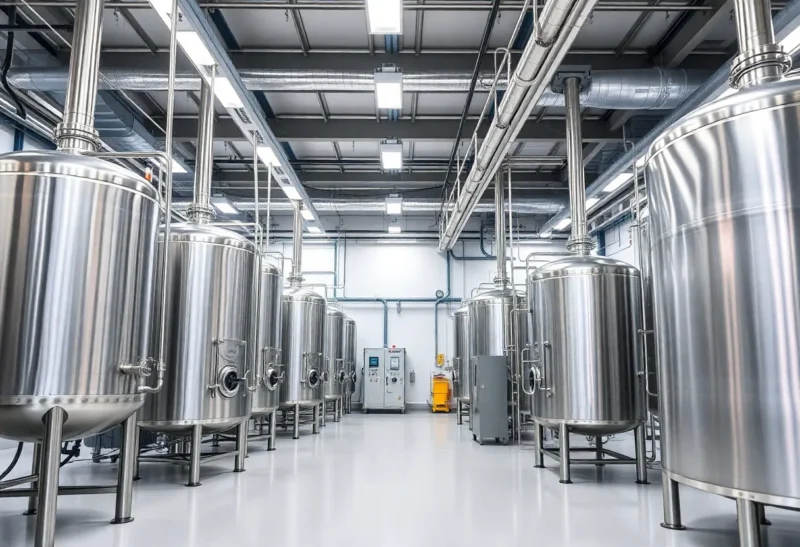
Bioreactor capacity itself has been a genuine bottleneck, though, and it’s one of the less-discussed reasons this technology took decades to expand beyond enzymes and vitamins into higher-volume applications like dairy protein. Building large-scale fermentation capacity requires substantial capital investment, and much of the existing global fermentation infrastructure was built for other industries (biofuel, pharmaceutical, industrial enzyme production) and isn’t automatically available or configured for food-grade protein production at the volumes a mainstream consumer product would require. Several companies in this space have had to build or retrofit dedicated fermentation capacity specifically for their target products, a capital-intensive step that’s arguably been the single biggest constraint on how fast newer applications could scale, more than any remaining scientific uncertainty about the strain engineering itself.
The Regulatory Path That Actually Matters
Regulatory clearance has generally moved faster for precision fermentation products than for some other novel food technologies, largely because the safety framework builds on decades of established precedent from the enzyme and vitamin applications described earlier — a fermentation-derived protein that’s molecularly identical to its animal-derived counterpart faces a more straightforward safety review than a genuinely novel molecule would, since regulators can lean on existing knowledge about the target molecule’s safety rather than evaluating an unfamiliar substance from scratch. The FDA’s Generally Recognized as Safe (GRAS) determination process has cleared several precision-fermented dairy and egg proteins for use in the U.S. food supply, and similar clearances have followed in other major markets, though pace and specific requirements vary meaningfully by jurisdiction, with the EU’s novel food approval process generally moving more cautiously and slowly than the U.S. framework.
Labeling remains a genuinely contested area, similar to the gene-edited livestock labeling debate playing out in a different corner of food technology — some advocacy groups argue precision-fermented ingredients should be clearly disclosed as such, while industry groups generally argue that a molecularly identical protein doesn’t warrant different labeling than its traditionally sourced counterpart, since the end molecule is chemically indistinguishable regardless of production method. How this settles across different markets will meaningfully shape consumer perception and adoption speed in ways that are somewhat independent of the underlying technology’s actual safety or performance.
What This Doesn’t Solve
It’s worth being clear-eyed about the limits, because some marketing in this space overstates the near-term scope. Precision fermentation is very good at producing specific, well-defined molecules — proteins, enzymes, vitamins, certain fats — but it doesn’t replicate the full structural and textural complexity of a whole food like meat, which is why precision-fermented proteins are typically used as an ingredient blended into a broader formulated product (ice cream, protein powder, a burger patty alongside plant-based components) rather than as a standalone whole-food replacement. That’s a meaningfully different value proposition than the “lab-grown meat” framing some coverage conflates it with, and precision fermentation and cultivated (cell-based) meat are genuinely distinct technologies solving different parts of the alternative protein challenge, despite frequently being lumped together in casual coverage.
Cost parity with conventional animal-derived ingredients also hasn’t fully arrived across the board — some precision-fermented ingredients are already cost-competitive at scale (the vitamin and enzyme examples), while newer dairy and egg protein applications generally still carry a price premium over conventional equivalents, one that’s narrowing as bioreactor capacity and strain efficiency improve but hasn’t yet closed for most applications without either a sustainability-focused premium market or continued investor subsidy supporting the difference.
Where This Actually Goes
The realistic trajectory isn’t precision fermentation displacing conventional animal agriculture wholesale — the scale mismatch is simply too large for that to happen within any near-term timeframe, given how much bioreactor capacity would be required to match even a modest fraction of global dairy or egg protein production. It’s a continued, steady expansion into specific ingredient categories where the technology has clear advantages: functional proteins for food formulation, allergen-reduced or lactose-free product lines, and applications where sustainability-conscious consumers are willing to pay a premium for an identical molecule produced without animal agriculture’s land, water, and emissions footprint.
That’s a less sweeping story than “the end of animal agriculture,” but it’s the one actually supported by where investment, regulatory clearance, and real commercial products have landed so far — a technology that’s already decades into quiet, successful deployment in enzymes and vitamins, now expanding carefully and unevenly into higher-profile categories, constrained mostly by capital-intensive bioreactor buildout rather than any remaining scientific mystery about whether the core approach works.