How Induction Cooking Actually Works—And Why It’s Faster Than Gas

Felix Hargreaves
July 7, 2026

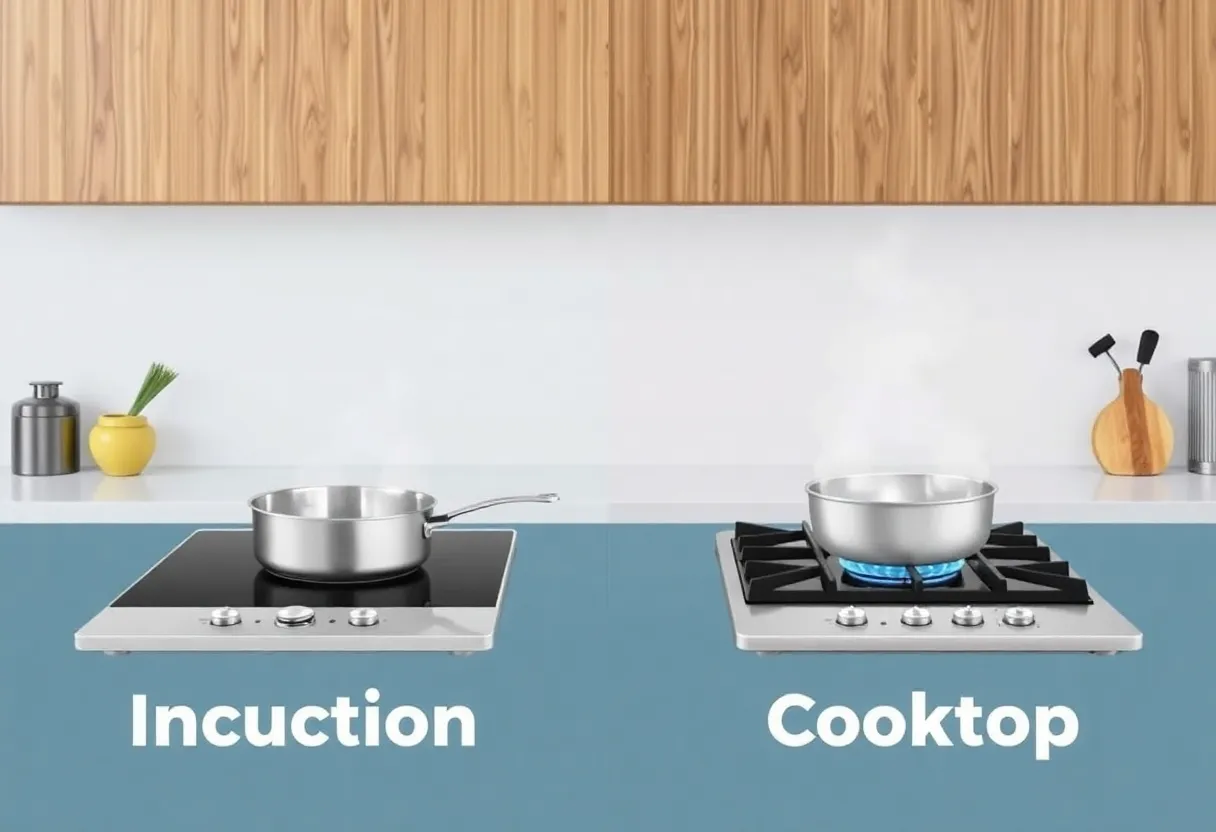
Induction cooktops look similar to smooth ceramic electric stoves from the outside, and the casual observer might mistake one for the other. They work through entirely different physics. An induction cooktop doesn’t heat a surface and transfer that heat to a pan—it makes the pan itself generate heat directly, using electromagnetic induction. Understanding that difference explains why induction is faster, more energy-efficient, and safer than gas or conventional electric, and also why it only works with specific cookware.
The Physics of Electromagnetic Induction
An induction cooktop contains a coil of copper wire beneath the ceramic glass surface. When the cooktop is activated, an alternating current passes through this coil, creating a rapidly alternating magnetic field above the surface. When a ferromagnetic pan (one containing iron or other magnetically susceptible material) is placed on the cooktop, this alternating magnetic field penetrates the base of the pan and induces electrical currents within the metal—these are called eddy currents.
The eddy currents flow through the electrical resistance of the pan’s metal base, and resistance converts electrical energy to heat. The pan itself becomes the heating element. The glass surface of the cooktop remains relatively cool—it absorbs some conducted heat from the hot pan sitting on it, but doesn’t generate heat itself.
The frequency of the alternating current matters for the heating characteristics. Consumer induction cooktops typically operate at 20–100 kHz. Higher frequencies cause the induced currents to concentrate near the surface of the metal (the “skin effect”), which affects how different pan materials heat. Cast iron heats differently from stainless steel with an aluminium core because the depth at which eddy currents flow and the resistance characteristics differ between materials.
Why Induction Heats Faster Than Gas
The speed advantage of induction over gas has a clear technical explanation. A gas burner converts fuel to heat, which heats the air and the pan surface above the flame through convection and radiation. Most of that heat—commonly 30–50% of the energy released by combustion—goes into the surrounding kitchen air rather than into the pan. Even high-output gas burners are constrained by how efficiently the flame geometry transfers heat to the pan surface.
Induction transfers energy directly into the metal of the pan at efficiency rates of 85–90% or higher. Almost no energy goes into the surrounding air. When you set an induction cooktop to its maximum output, nearly all that power is going into the pan immediately.
The practical result: a high-output induction burner (typically 3,500–5,000 watts) boils water faster than most residential gas burners despite gas burners often having nominally higher BTU ratings. A 3,800-watt induction burner delivering 85% efficiency to the pan delivers roughly 3,200 watts of effective cooking power. A 30,000 BTU gas burner at 40% efficiency delivers approximately 12,300 watts at face value but only 3,500 effective watts to the pan—and the absolute peak output of a residential burner rarely exceeds 18,000 BTU. The induction unit competes effectively or wins on actual cooking speed.
Cookware Compatibility: Why It Matters
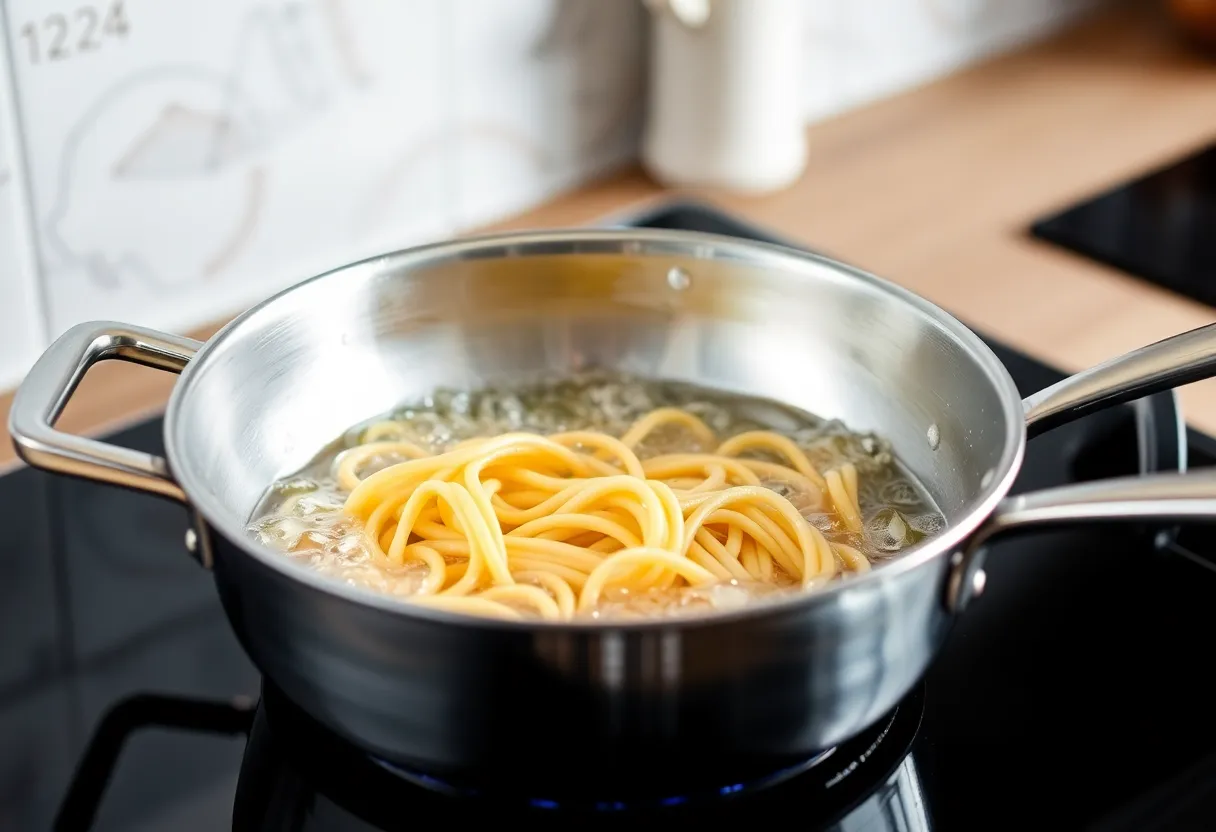
The requirement for ferromagnetic cookware is the main practical constraint of induction cooking. The magnetic field must induce eddy currents in the pan, which requires the pan material to be susceptible to magnetic fields. Cast iron works perfectly—it’s highly ferromagnetic and inducts very efficiently. Magnetic stainless steel (not all stainless is magnetic) works well. Carbon steel works. Non-magnetic materials like copper, aluminium, and non-magnetic stainless steel don’t work at all—the magnetic field passes through without inducing significant eddy currents.
The quick test: a magnet sticks firmly to induction-compatible cookware. If a magnet slides off or doesn’t stick, the pan won’t work on induction. This eliminates some beloved cookware: all-aluminium sauté pans, traditional copper pots, some older stainless steel pieces.
The cookware market has responded with multi-layer construction: aluminium cookware with stainless steel bases bonded to the bottom. The aluminium provides the excellent heat distribution and responsiveness that makes it good for cooking; the stainless base provides the ferromagnetic layer that enables induction heating. Many modern “induction-compatible” pots and pans use this construction. Cast iron and carbon steel need no adaptation—they’ve always been induction-compatible because they’ve always been ferromagnetic.
The size relationship between burner and cookware matters more on induction than on gas. Induction cooktops have coils of specific diameters; a pan significantly smaller than the active coil area will heat unevenly or not efficiently. Most modern induction cooktops have auto-sensing that adjusts the active coil area for pan size, but matching pan size to burner size remains better practice than on gas, where the flame can spread or be reduced to match.
Temperature Control: More Precise Than Gas, Faster Than Conventional Electric
One of the practical advantages of induction is the precision and responsiveness of temperature control. Gas burners are responsive—turn the gas down and the flame drops immediately—but maintaining very low heats requires managing small flame characteristics that vary with burner condition. Conventional electric resistance coils heat slowly and cool slowly; turning down the setting doesn’t immediately reduce heat output because the coil retains thermal mass.
Induction changes the power output of the cooktop’s magnetic field almost instantaneously when you adjust the setting. Since the heat is generated in the pan, reducing power reduces heating immediately. Induction excels at sustained low-heat cooking that gas can struggle with—a genuine simmer without the risk of the flame going out, precise temperature holds for sauces and chocolate melting.
High-end induction units include temperature probes that read pan temperature directly, enabling PID (proportional-integral-derivative) control loops that maintain a target pan temperature rather than just a power output level. This is a capability that gas and conventional electric don’t have without external hardware.
Safety Characteristics
The thermal characteristics of induction have safety implications. The cooktop surface doesn’t generate heat itself—only the pan does. Touching the cooktop surface immediately beside an active pan is uncomfortable but not dangerous; touching it where no pan is placed presents essentially no burn risk. A child touching the surface doesn’t risk burning their hand on the glass (though the glass directly under the pan will be warm from conducted heat).
There’s no open flame, no combustion, and no gas line to the appliance. For kitchen environments with concerns about gas combustion safety—households with small children, elderly residents, environments with poor ventilation—induction removes several risk categories simultaneously.
The automatic pan detection means the cooktop won’t activate unless ferromagnetic cookware is present, which prevents accidental activation. Boil-dry detection in better models monitors whether a pan is absorbing energy normally and shuts off if it detects that nothing is absorbing heat (the characteristic signature of an empty pan that has boiled dry).
Energy Efficiency and the All-Electric Kitchen
The efficiency advantage of induction over gas becomes more significant as the energy cost and carbon intensity of electricity improves relative to gas. In regions where electricity comes from high-renewable grids, cooking with induction rather than gas substantially reduces cooking’s carbon contribution. The efficiency gap also shows up directly in energy bills: you use less energy to accomplish the same cooking task on induction than on gas, and significantly less than on conventional electric resistance.
The move toward all-electric homes in response to decarbonisation goals has put induction at the centre of kitchen electrification discussions. Replacing gas cooktops with induction is among the most straightforward appliance electrification upgrades—the technology is mature, the products are widely available at consumer price points, and the cooking experience is at least comparable to gas and often superior.
The upfront cost premium over gas or conventional electric ranges has decreased as the category has grown. Entry-level induction cooktops and ranges are now price-competitive with mid-range gas alternatives when total cost of ownership (efficiency, elimination of gas line requirements) is considered. Professional-grade and high-BTU-equivalent induction equipment has reached cooking performance benchmarks that professional chefs—historically the most resistant contingent to change from gas—are now taking seriously.
What Induction Doesn’t Do Well
Despite its advantages, induction has genuine limitations. Wok cooking presents a persistent challenge: traditional round-bottomed woks require the direct flame contact of high-output gas to achieve the intense, distributed heat and “wok hei” (breath of the wok) that characterises stir-fry. Flat-bottomed woks work on induction but don’t produce the same cooking characteristics. This is the most legitimate culinary objection to induction from serious cooks.
Electromagnetic interference is a concern for people with older pacemakers and certain implanted devices, though modern devices are designed to be induction-safe at the distances typically involved in cooking. It’s worth verifying device specifications for household members with cardiac implants.
Power requirements matter: high-output induction burners draw significant current, and installing a full induction range in a kitchen previously using gas may require electrical service upgrades. The 240V/50A or higher service required for a full range is not universal in older homes.
These limitations aside, induction cooking represents the most significant advancement in residential cooking technology in decades—one where the physics genuinely produces a better outcome rather than a marketing-driven claim.