What It Takes to Build a Production-Ready RAG System Beyond the Demo

Marcus Dalton
July 7, 2026
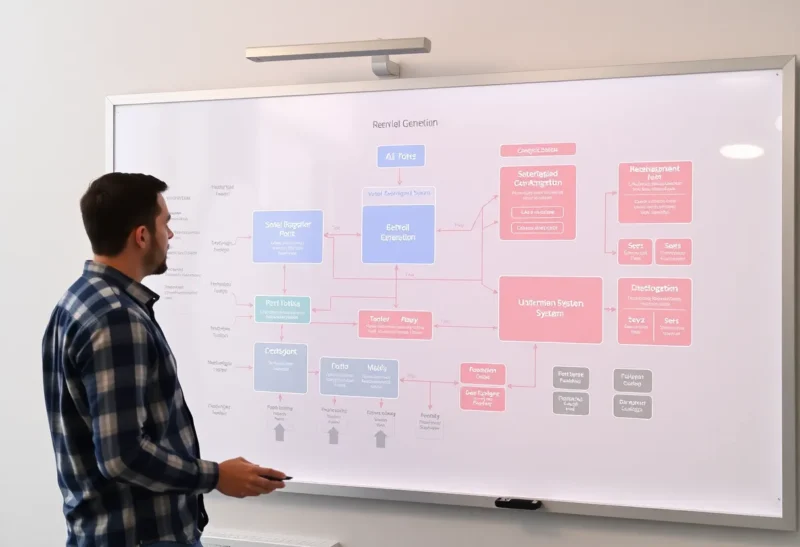
A Retrieval Augmented Generation (RAG) demo is quick to build. Connect a vector database, embed some documents, retrieve the top-k chunks for a query, feed them into an LLM prompt, and display the response. The demo impresses. The demo’s failure modes are invisible until you put it in front of real users with real questions on real documents. Building a production RAG system that delivers reliable, accurate, trustworthy answers at scale is substantially harder than building the demo, and the gap between the two is where most RAG projects get stuck.
Understanding the production challenges before you start saves a lot of rework. The issues are well-understood at this point — there’s enough collective experience from teams that have shipped production RAG systems to know what will go wrong and what it takes to prevent it.
Chunking: The Most Underestimated Problem
Naive chunking — splitting documents into fixed-size text windows with some overlap — works well enough for demos and poorly enough in production that it’s worth treating chunking strategy as a primary design decision, not an implementation detail. The problem is that semantic meaning doesn’t respect arbitrary character or token boundaries. A 512-token chunk might contain half a table, break a numbered list in the middle, or split a sentence across chunks in ways that remove context needed to understand the fragment. When the retriever finds one of these meaningless partial chunks as the top result for a query, the LLM has no useful information to work with and either hallucinates or admits ignorance when the relevant information was actually in the document.
Better approaches include document structure-aware chunking (respect header boundaries, list boundaries, table boundaries — split by semantic unit rather than character count), late chunking (embed larger sections for retrieval, then return the matched section), and overlapping paragraph chunks where the overlap is tuned to your typical context window needs. For structured documents (PDFs, web pages, technical documentation), parsing to understand the structure before chunking dramatically improves retrieval quality.
The other chunking consideration is chunk size relative to query type. A system handling long-context questions (“summarize the entire contract”) needs a different chunking strategy than one handling point queries (“what is the late payment penalty”). If your system needs to handle both, adaptive retrieval — returning fewer large chunks for synthesis queries and more targeted small chunks for factual queries — requires query intent classification before retrieval.
Retrieval Quality: Beyond Top-K Similarity
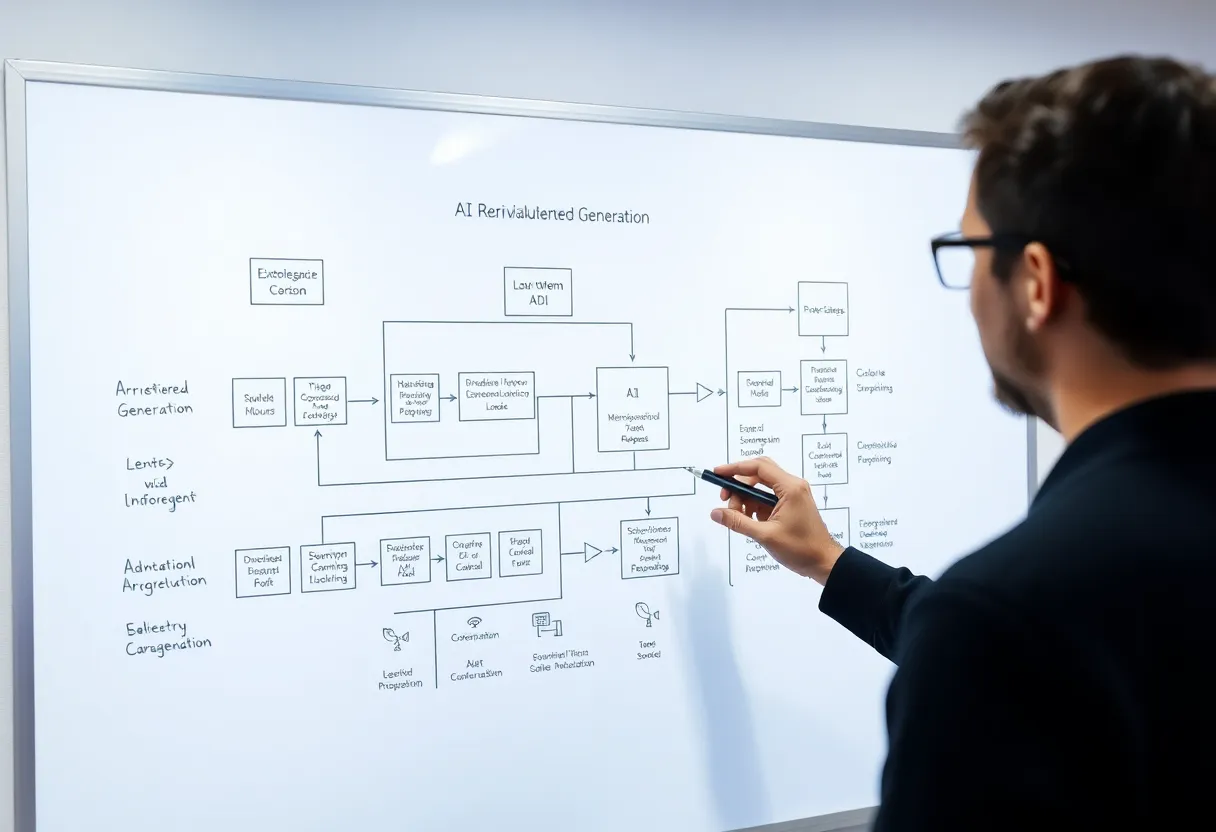
Semantic similarity search with vector embeddings retrieves chunks that are semantically similar to the query. “Semantically similar” and “answers the query” are related but not identical concepts. A query about “contract termination clauses” retrieves chunks about contract termination — but retrieval might miss the specific clause that governs the user’s situation if it’s phrased differently in the document, might return several chunks about termination from different sections with contradictory implications, or might miss relevant context that’s in a different section but needed to interpret the retrieved clause correctly.
Production retrieval typically combines multiple signals: vector similarity for semantic matching, BM25 or other keyword search for lexical precision (hybrid search), and metadata filters for document type, date range, or access control. Hybrid retrieval consistently outperforms pure vector search for most enterprise document Q&A tasks. Reciprocal Rank Fusion (RRF) is a simple and effective way to combine rankings from multiple retrieval strategies.
Reranking — retrieving a larger set of candidates (top-50) and then applying a more expensive cross-encoder model to reorder them before passing to the LLM — meaningfully improves precision over simple embedding similarity alone. Cross-encoders score query-document pairs jointly rather than independently, capturing relevance nuances that bi-encoder embeddings miss. Models like Cohere Rerank or open-source alternatives (cross-encoder/ms-marco family) add latency but improve answer quality enough to justify the cost in most applications.
Evaluation: You Can’t Improve What You Don’t Measure
The single biggest difference between RAG demos and production systems is the presence of systematic evaluation. Without evaluation infrastructure, you’re guessing whether changes improve or degrade quality, user trust in the system erodes when it produces wrong answers, and you have no baseline to compare against as you modify the system.
A RAG evaluation framework measures at minimum: retrieval precision and recall (are the right chunks being retrieved?), answer faithfulness (does the LLM’s answer reflect what’s in the retrieved context, or is it hallucinating?), and answer relevance (does the response address the query?). Building a golden dataset — a set of representative questions with known correct answers — is essential for offline evaluation. Even 50–100 high-quality labeled examples enables meaningful regression testing as you modify the system.
RAGAS is a widely used open-source framework for RAG evaluation that automates faithfulness and relevance scoring using an LLM judge. LLM-as-judge approaches have known limitations (LLMs judge LLMs, with systematic biases) but are practical for automated regression testing at scale. Human evaluation remains the ground truth for quality assessment and should happen periodically, especially before major changes.
Tracing and observability infrastructure — logging every query, retrieved chunks, and LLM response — enables you to debug failures when users report wrong answers, identify systematic retrieval failures (entire document types being consistently missed, specific query patterns producing bad results), and monitor quality degradation over time as the document corpus changes. LangSmith, Phoenix, Langfuse, and similar tools provide this observability layer with minimal integration work.
Document Ingestion: Handling the Real World
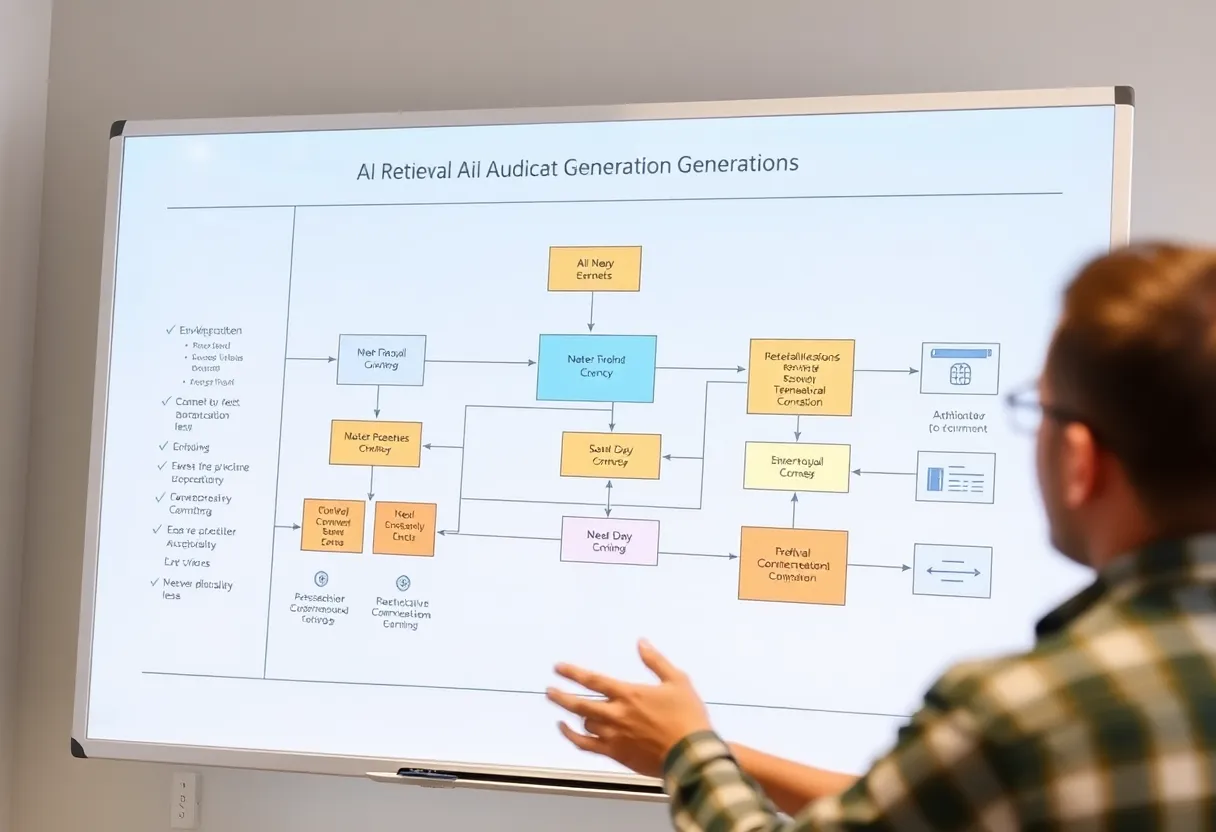
Demo RAG systems ingest clean text files. Production RAG systems ingest PDFs (with tables, headers, footers, multi-column layouts, and scanned pages), Word documents, PowerPoints, HTML pages, spreadsheets, and sometimes images with text. Extracting clean, structured text from this variety of input quality is harder than it seems and has a large impact on retrieval quality.
PDF parsing is notoriously difficult. PDFs are a layout format, not a text format, and naive extraction often loses table structure, confuses column order in multi-column layouts, and includes header/footer content that pollutes chunks with meaningless boilerplate. Purpose-built PDF parsing tools (Unstructured.io, AWS Textract, Azure Document Intelligence for scanned documents, or the open-source PDFPlumber/pdfminer for digital PDFs) extract more useful content than generic libraries. Investing in quality document parsing is one of the highest-leverage improvements available in a production RAG system.
Keeping the document corpus synchronized as documents are updated is an operational concern. Stale embeddings of outdated documents lead to answers based on superseded information — a critical quality issue for compliance-sensitive applications. Ingestion pipelines need metadata tracking to detect document updates and re-embed changed documents, and some indexing strategies need to handle deletions of old versions cleanly.
The Pieces That Make It Production-Ready
Beyond retrieval quality and evaluation, a production RAG system needs: latency that satisfies users (streaming responses while retrieval completes in parallel helps perception even if total latency is constant), query routing to handle out-of-scope questions gracefully rather than generating confident wrong answers, access control that ensures users only retrieve documents they’re authorized to see, and cost management since LLM API costs at scale can be significant without caching, model routing (using smaller models for simple queries), and efficient prompt construction.
These aren’t reasons not to build RAG systems — they’re reasons to plan for them from the beginning rather than discovering them after launch. Teams that treat the production gap as a known problem to be engineered around, rather than an implementation detail, ship better systems and spend less time firefighting after deployment.