Backblaze B2 vs a Used Synology: Cloud Egress Math After Year Two

Henrik Voss
August 25, 2026
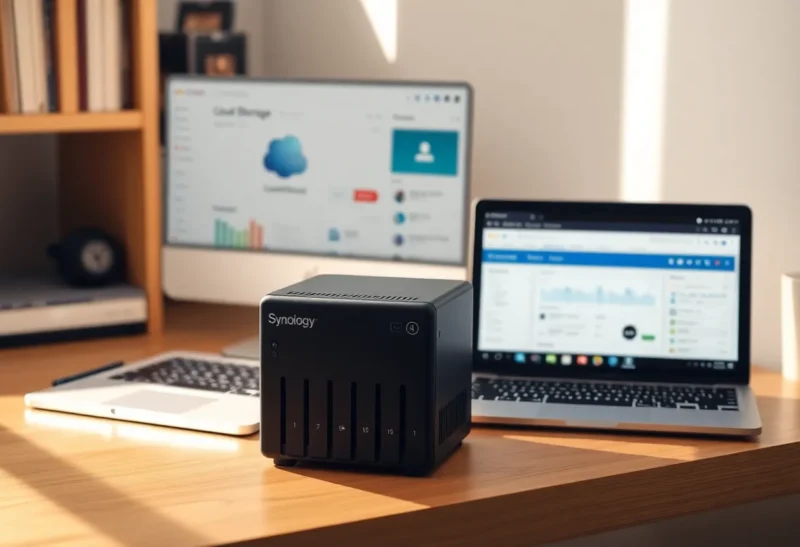
Cloud storage ads sell the first year: cheap gigabytes at rest, a pretty client, the feeling that you have left the hard-drive era. Year two is when someone restores a laptop, a relative wants the family video, or you migrate off a tool that used B2 as a backend. That is when egress stops being a footnote and starts being a bill you can feel.
A used Synology is the other common escape. Buy a two-bay that someone upgraded from, drop in drives you understand, and tell yourself the electricity is “basically nothing.” Year two is when a drive fails, DSM wants an account for a feature you thought was local, and you discover your upload is fine but your apartment upload-from-parents is not.
I have paid both bills. This is the math I wish I had written on a sticky note before the first “it’s only six dollars a month.”
What B2 is good at, said without the brochure
Backblaze B2 is object storage with a price culture that is friendlier than S3 if you are a person, not a procurement team. At rest is cheap enough that a few terabytes feel like a subscription you can ignore. The API is normal. rclone, restic, Arq, and a pile of NAS backup jobs speak it. That ecosystem is the real product.
Ingress is the honey. Uploading does not hurt. People design their lives around that: nightly restic to B2, Synology Cloud Sync, a photo pipeline that only goes up. The architecture assumes you will rarely pull the archive. That assumption is correct until it is not. A restore is the point of a backup. A migration is the point of not being locked in. Both are downloads.
B2’s download pricing is the number to put in a spreadsheet, not the storage pricing. Storage is how they get you calm. Egress is how they charge you for using your files like files. Free egress tiers and partnerships change; I will not tattoo a cent-per-gigabyte here. I will say: price a full restore of your corpus, and price a “I want to leave” restore, before you call it cheaper than a NAS. If the slogan you wanted was “egress-free,” Wasabi versus B2 is that fight—and leaving is still a project.

The year-two events that blow the model
Laptop death. You restore 400 GB of projects you forgot were not in git. That is a good day for backups and a bad day for a surprise download line item if you were close to a free cap.
OS reinstall plus “I’ll just sync the photo library down again.” Photo libraries are the silent terabyte. They also retry. Retries are egress too if your client is dumb.
Vendor change. The backup app you liked gets worse. You export. Export is a download. People treat this as a one-time exception. In year two I have done it twice: once for software, once because I wanted the files on a friend’s machine for a weekend edit.
Sharing. You send a large folder to a contractor. If the link is B2-backed and they pull it on a hotel Wi-Fi twice, you paid for their impatience. A NAS share on a tailnet has a different cost: your electricity and your reputation when the apartment uplink is 20 Mbps up.
I now keep a “restore budget” as a number of dollars I am willing to spend to get everything back in one week. If B2’s full-restore estimate exceeds that number plus my patience, the cloud is an offsite copy, not the working library.
What a used Synology actually costs after 24 months
Purchase: a used DS220+ class box or similar is still a common score. Add two NAS drives, not leftover laptop SSDs you found in a drawer, unless you like rebuild pain. The used unit can arrive with a dead fan, a noisy disk, or someone else’s DSM leftovers. Budget an evening to wipe it like a paranoid person.
Electricity: a small 2-bay is not a space heater, but it is also not zero. 24/7 for two years is a real number on a residential rate. I write it down. People who say “pennies” have not multiplied hours. Pennies times 17,000 hours is a dinner.
Drives: one failure in two years is not bad luck. It is the product. RAID is not a backup. A used NAS plus one USB copy plus an offsite is a system. A used NAS alone is a single point of humming confidence.
Time: DSM updates, a certificate, a user account you added for a relative, a Hyper Backup job that filled a volume. Year two is when you stop treating the NAS as an appliance and start treating it as a tiny server. If you hate tiny servers, B2 looks cheaper even when it is not, because someone else is the sysadmin.
The hybrid that matches how people actually fail
The setup that survived my year-two events is boring. Working files live on the Synology. Offsite copies go to B2. I restore from the NAS first. I restore from B2 when the apartment is on fire or the NAS is. I do not daily-drive B2 as a network drive for big media. That path is how egress happens in drips you do not notice until the invoice.
If you only have B2, you will use it as a drive. Humans open folders. Clients cache. Smartphone apps re-download previews. The cheap at-rest story dies by a thousand GETs. If you only have a NAS, you will skip offsite until the week of the burst pipe. I have met those people. They are optimistic.
Tailscale or a VPN to the Synology beats “everything in B2 so I can click from a café” for large libraries. The café does not need your raw video. It needs a preview you exported on purpose.
When B2 alone is still rational
You travel, you have no closet, you will not replace a drive. Your corpus is small enough that a full restore is a rounding error. You already pay for a backup client you trust and you have tested a restore. Your threat model is laptop theft, not a $40 egress surprise.
B2 is also rational as the only copy of data you can afford to re-create: generated artifacts, things you could download again from vendors. It is a worse only copy of baby video. Price the sentiment. I am not joking. People cheap out on the one category they cannot shoot again.
When the used Synology is the less stupid box
You have a few terabytes of working media. You restore often enough to feel it. You have a closet and a surge protector. You can tolerate DSM. You will buy two drives and an offsite, not one drive and a prayer.
Used is important. A new Synology plus new iron plus plus packs can erase the cloud-savings story in hardware before year one ends. The used market is how NAS economics beat B2 for “I actually open the files.” If used units in your region are scarce or overpriced, recalculate. A Raspberry Pi plus USB disks is the other cheap local path, with its own USB drama. I prefer a small Synology when I want the thing to exist without a hobbyist weekend each quarter. I prefer a Pi when I already have the hobby.
A spreadsheet with four lines, not forty
Line 1: two years of B2 storage for your real size, including versioning if you enable it. Versioning doubles stories. People forget.
Line 2: one full restore plus one “I changed tools” restore. If the vendor swears some egress is free, believe it after you read this month’s fine print, not a 2022 screenshot.
Line 3: used NAS + two drives, amortized over two years, plus power.
Line 4: your hours at a rate that makes you uncomfortable. If line 4 is huge, pay B2 and stop. If line 4 is small because you already like homelab, the NAS “costs less” in money and you will spend the hours anyway.
I rerun this when the corpus doubles. A library that was a rounding error becomes a restore event. Year two is often when the library doubles, because you finally dumped the old laptop into the archive.
Failure modes that are not prices
B2 will be fine and your IAM key will leak in a restic config you committed. That is a you problem with a cloud blast radius. A NAS will be fine and you will expose SMB to the internet for a week “just to get a file.” That is a you problem with a ransomware blast radius. Offsite object storage plus no inbound ports is a security feature. Local disks plus sloppy port forwards is how homelabs get famous.
Availability: B2’s outage is rare and shared with strangers. Your NAS outage is a breaker, a fan, or a child pulling a plug. Different reliabilities. I do not pick one. I pick both for things I cannot replace.
The choice I would make again
After year two, I would not use B2 as the primary shelf for data I open monthly. Egress and client chatter make it a worse filesystem than it is an archive. I would not use a used Synology as the only copy of that data. Closets fail.
I would buy the used box for daily files, send versioned backups to B2, and keep the restore-from-NAS muscle memory. I would price a full B2 pull once a year on purpose, like a fire drill, so the invoice is a drill and not a tragedy. If the drill is too expensive, the corpus is too big for that cloud to be a working set. Shrink the working set, or admit you are paying for a warehouse, not a disk.
The honest trade after 24 months is not “cloud versus NAS.” It is “pay for someone else’s building when you leave, or pay for your own building when a drive dies.” I pay a little for both. The people who pick only one are either lucky or about to learn which year it is.