Why Smart Irrigation Controllers Still Guess Wrong About Your Actual Soil

Paul Eriksson
July 9, 2026
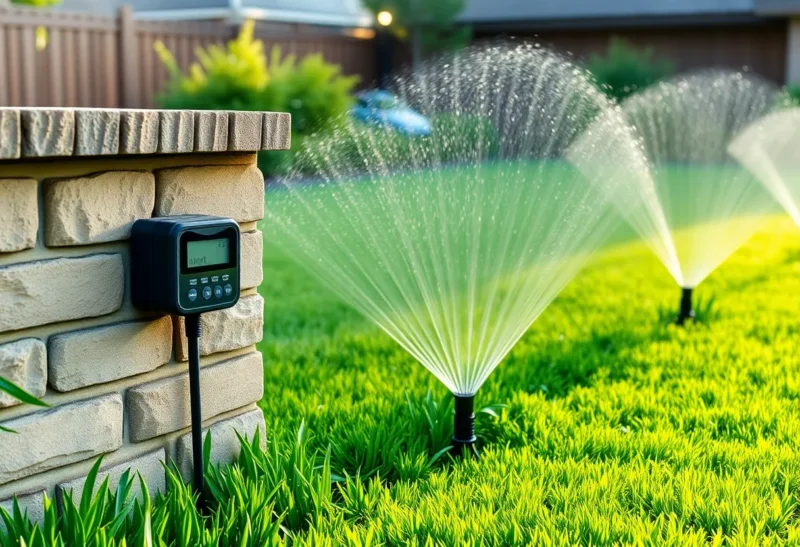
Smart irrigation controllers were supposed to solve one of the more wasteful habits in residential water use: fixed-schedule sprinklers that run on Tuesday and Friday mornings regardless of whether it rained Monday night or the soil is already saturated. Replace the dumb timer with a controller that checks weather data and adjusts automatically, and the promise is a lawn that gets exactly the water it needs, no more. For a meaningful share of installations, that promise mostly works. For a meaningful share of others, owners report the same frustration: a controller that skips watering during an actual dry spell, or drenches a lawn the day after a storm, because the system’s model of “your soil” was never actually built from your soil.
What These Controllers Are Actually Measuring
The most common category of smart irrigation controller — the kind that connects to Wi-Fi and pulls local weather data rather than requiring a buried soil sensor — works on what’s called an evapotranspiration (ET) model. It estimates how much water evaporates from soil and transpires through plant leaves each day based on temperature, humidity, wind, and solar radiation for the local weather station nearest the property, then calculates a watering schedule designed to replace that estimated water loss. This is a genuine improvement over a fixed timer because it responds to real seasonal and daily conditions rather than an arbitrary schedule set once at installation.
The problem is that ET models are built on regional averages, and soil doesn’t work in regional averages. A property with heavy clay soil holds water dramatically differently than one with sandy, fast-draining soil a few streets over, even under identical weather conditions — clay retains moisture far longer and can become waterlogged with the same watering volume that would leave sandy soil bone dry within a day. Most consumer smart controllers ask the user to select a general soil type during setup, but that self-reported input is frequently wrong (most homeowners don’t actually know their soil composition with any precision) and even when accurate, a single “clay/loam/sandy” category can’t capture the variation that exists within a single yard, let alone across an entire neighborhood the local weather station is representing.
Where the Weather Data Itself Breaks Down
ET-based controllers are also only as good as the weather data feeding them, and that data typically comes from the nearest available weather station or a modeled interpolation between several stations — which might be several miles away, at a different elevation, or in a meaningfully different microclimate than the actual yard being watered. A property in a valley, near a large body of water, or shaded by mature trees can have humidity and evaporation rates that diverge substantially from what the nearest official weather station is reporting, and the controller has no way to know that unless it’s paired with a local sensor.
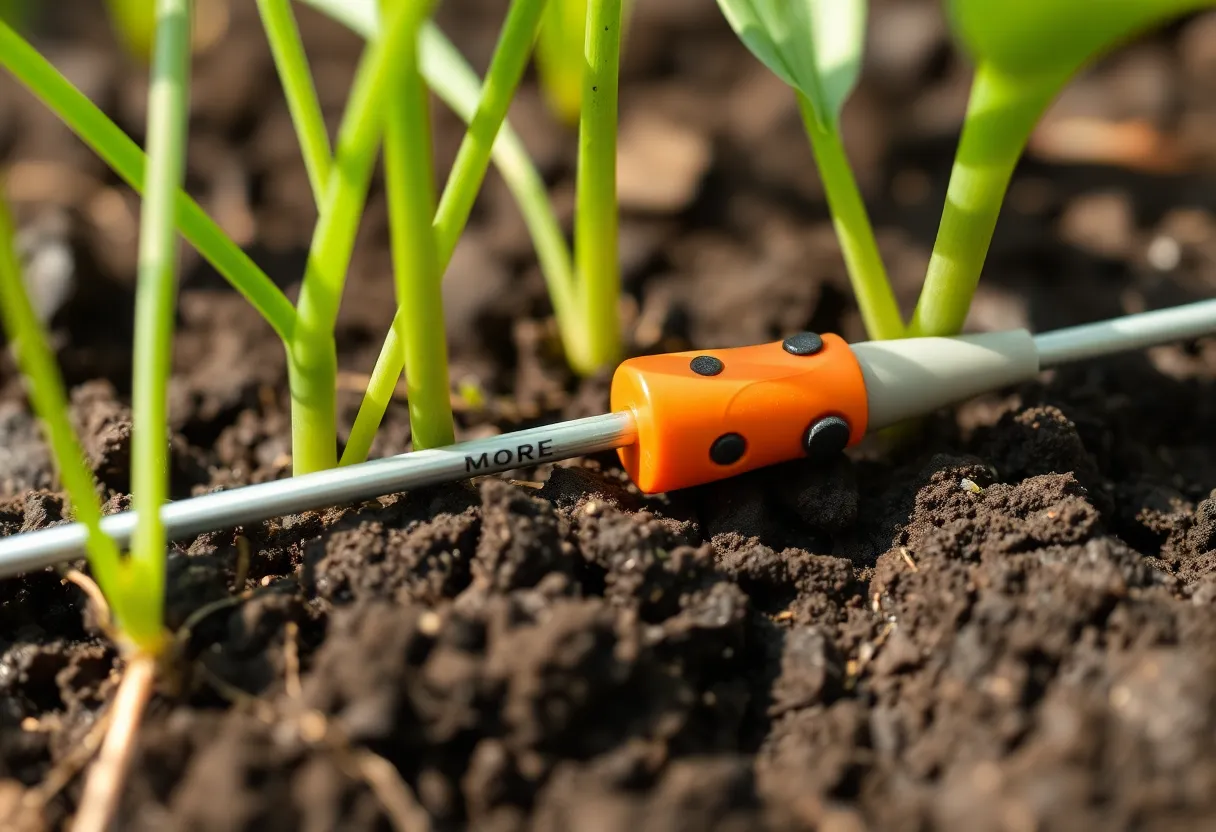
This is exactly why the more sophisticated (and more expensive) tier of smart irrigation systems adds actual in-ground soil moisture sensors rather than relying purely on weather-based estimation. A true soil moisture sensor measures dielectric properties of the soil directly around its probe to estimate volumetric water content, which sidesteps the regional-average problem entirely — it’s measuring the specific soil, at the specific depth, where it’s actually installed. The trade-off is that a single sensor only represents the specific spot it’s buried in, and a yard with varied sun exposure, slope, or soil composition across different zones may need multiple sensors to actually represent the whole property, which most consumer installations skip due to cost.
The Installation Variable Nobody Talks About
Soil moisture sensors that are installed too shallow measure surface moisture that dries out quickly after any watering or rain, triggering the system to think the whole root zone is dry when deeper soil, where most root water uptake actually happens, is still adequately moist. Installed too deep, they can under-report drought stress that’s already affecting shallow-rooted plants and turf grass, whose roots typically sit in the top few inches of soil. Manufacturer installation guides generally specify a target depth — often around 3 to 6 inches for turf applications — but DIY installations, which make up the large majority of residential smart irrigation setups, frequently deviate from that guidance without the homeowner realizing the depth matters as much as it does.
Why “Learning” Systems Don’t Fully Solve This Either
Some premium smart controllers market machine-learning-based adjustment, claiming the system improves its watering model over time based on observed outcomes. In practice, most of these systems are still fundamentally adjusting an ET-based estimate using indirect signals — how quickly grass color or observed conditions change, if the system has any sensor input at all — rather than directly measuring ground truth soil moisture continuously. That’s a meaningful improvement over a static ET model, but it’s not the same as a system with real-time, multi-zone soil moisture feedback, and marketing language describing these systems as having fully “learned” a property’s specific soil behavior usually overstates how directly the system is actually measuring anything below the surface.
What Actually Improves Accuracy
For homeowners troubleshooting a smart controller that seems to be getting it wrong consistently, a few adjustments tend to matter more than swapping to a more expensive controller brand. Manually correcting the soil type setting based on an actual test — a simple jar test, where soil mixed with water is left to settle and separate into visible sand, silt, and clay layers, gives a rough but genuinely useful read on composition — often fixes systematic over- or under-watering better than any software update. Adding at least one physical soil moisture sensor, even a basic one, in the zone that seems most consistently wrong gives the system real ground-truth data to calibrate against rather than relying purely on regional weather estimates. And setting zone-specific schedules rather than a single property-wide program acknowledges what should be obvious but often gets skipped at setup: a front lawn in full sun and a shaded back garden bed are not the same watering problem, no matter how good the underlying weather model is.
None of this means smart irrigation controllers are a bad investment — the water savings compared to fixed-schedule timers are real and well documented in utility efficiency program data. It means the “smart” part is doing a reasonable job estimating regional averages, and the actual intelligence about a specific yard’s specific soil still depends on the homeowner feeding it accurate information, which most installations never quite get around to doing.