What It Actually Takes to Get a Satellite Insured Before Launch

Futurion Editorial
July 9, 2026
A satellite operator spends years and often hundreds of millions of dollars building a spacecraft, only to hand it over to a rocket that will accelerate it to roughly 28,000 kilometers per hour and release it into an environment no technician will ever touch again. If something goes wrong — a launch vehicle failure, a solar panel that fails to deploy, a communications system that never powers on — there is no repair truck, no service call, no warranty return. That single fact has created one of the strangest and most specialized corners of the insurance industry: a small global market, run by a surprisingly small number of underwriters, that prices the risk of humanity’s most expensive machines failing in a place none of them can inspect.
A Market Smaller Than You’d Expect
Space insurance is a genuinely tiny industry by financial services standards. The entire global space insurance market — covering commercial satellites, launch risk, and in-orbit operations — generates on the order of a few hundred million dollars in annual premiums, spread across a pool of underwriters that has historically numbered only a few dozen firms worldwide with the specialized expertise to price this risk at all. Lloyd’s of London syndicates have long been central to this market, alongside specialized reinsurers and a handful of major insurance groups with dedicated space and aviation divisions.
This small scale matters enormously for how the market behaves. A single major launch failure — the loss of one large geostationary communications satellite, for instance, which might carry $300 million or more in combined hardware and launch insurance value — can represent a meaningful fraction of the entire market’s annual premium pool. That means space insurance pricing is unusually sensitive to recent loss history in a way that, say, auto insurance is not. A bad year with two or three major losses can trigger premium rate increases across the entire industry the following year, regardless of whether an individual operator’s specific mission had anything to do with those losses.
What Actually Gets Insured, and What Doesn’t
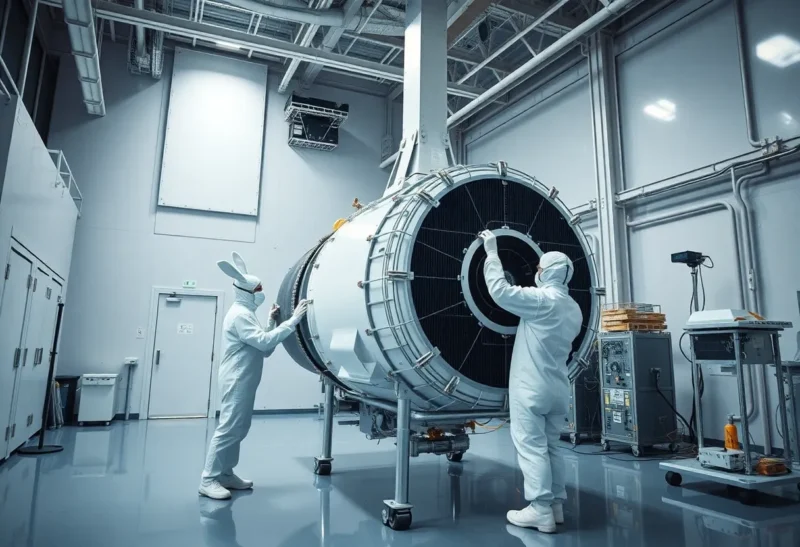
Space insurance breaks down into several distinct risk periods, each priced separately because the risk profile is completely different at each stage. Pre-launch coverage protects the satellite during manufacturing, testing, and transport to the launch site — a phase where the risks look more like conventional property insurance, covering fire, handling damage, or a dropped component during clean-room assembly.
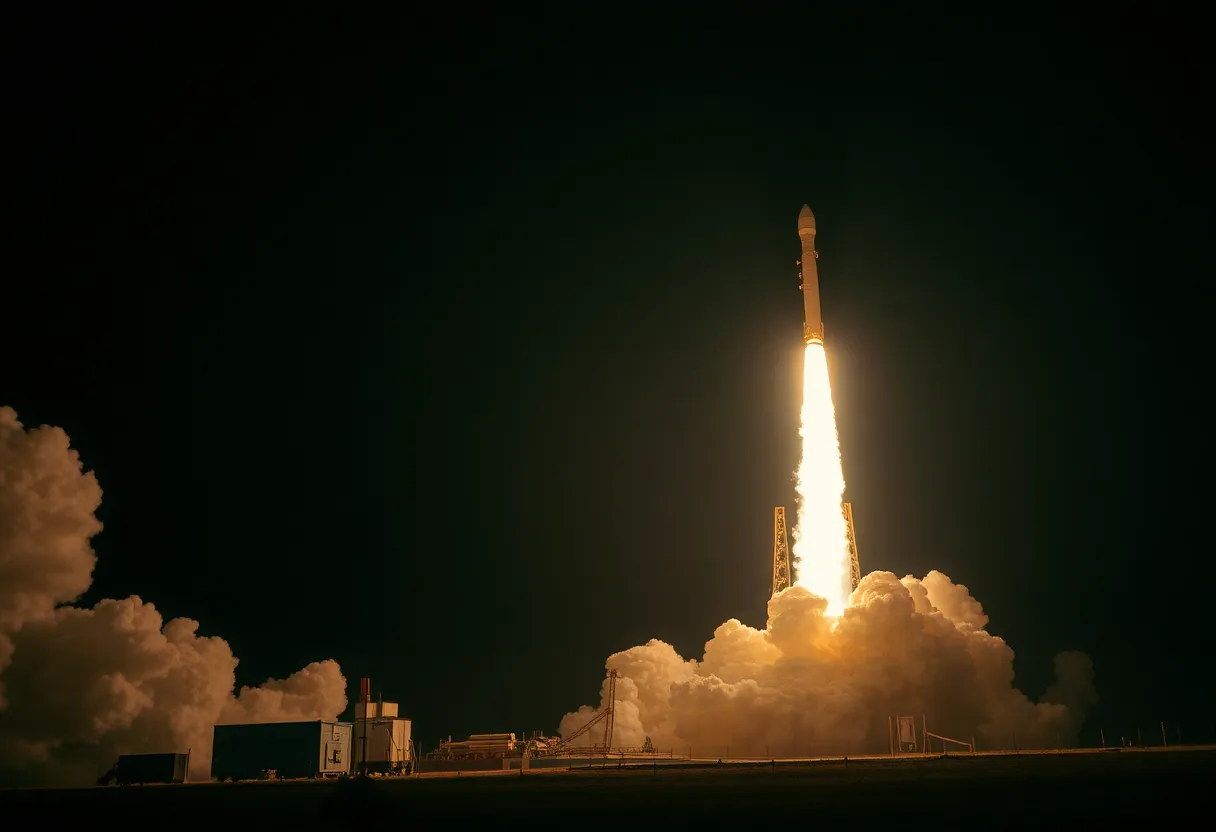
Launch insurance is the phase most people picture, covering the vehicle from ignition through separation and initial deployment, and it is priced very differently depending on the specific rocket’s track record. A launch vehicle with a long history of consecutive successful flights, like SpaceX’s Falcon 9 has built over the past decade, commands meaningfully lower launch insurance rates than a newer vehicle with only a handful of flights, simply because underwriters have more actuarial data to work with. This creates a real, if underappreciated, cost advantage: a satellite operator choosing a well-proven rocket over a promising newer one is not just buying a safer statistical bet, they are buying a cheaper insurance policy too, sometimes by a meaningful margin on the total mission cost.
In-orbit insurance covers the satellite once it has reached its operational position and begun service, typically for a defined policy period — commonly one year, renewable — and covers failures of onboard systems, degradation beyond expected performance curves, or loss of station-keeping capability. This is priced based partly on the satellite’s specific bus design and manufacturer’s track record, and partly on the broader fleet history of similar satellite models, since manufacturers occasionally discover systemic design flaws that affect an entire generation of otherwise similar spacecraft.
Notably, many satellite operators — particularly companies operating large constellations of smaller, cheaper satellites, the model SpaceX’s Starlink and similar mega-constellation operators use — choose not to insure individual satellites at all. When you are launching thousands of relatively inexpensive satellites and have engineered the system to tolerate a meaningful percentage of individual failures without materially affecting the overall service, self-insuring by simply building loss expectancy into the deployment plan can be more economical than paying premiums on every individual unit. This is a fairly recent and significant shift in how the industry thinks about risk, since it depends entirely on a satellite being cheap and replaceable rather than a unique, irreplaceable asset.
How Underwriters Actually Assess the Risk
Pricing a satellite insurance policy requires a genuinely unusual due-diligence process compared to most insurance underwriting. Specialized space insurance brokers and underwriters — a profession with a global headcount small enough that most of the senior figures in the industry know each other personally — review detailed engineering documentation on the specific satellite bus design, the manufacturer’s historical reliability record across previous missions using similar components, the launch vehicle’s flight history, and the mission’s specific orbital parameters and operational plan.
This often involves underwriters or their technical consultants physically attending pre-launch reviews and inspecting hardware at the manufacturer’s facility, in a process that resembles a highly technical version of a home inspection, except the “home” is a multi-hundred-million-dollar spacecraft and the inspector needs a background in aerospace engineering to evaluate what they are looking at. Component-level failure history matters enormously — if a particular model of solar array deployment mechanism or a specific transponder design has had documented issues on previous missions using the same hardware, that history directly affects pricing on every subsequent mission using related components, even for a completely different operator.
Reinsurance plays a critical role in making this market function at all. Because a single satellite’s insured value can run into the hundreds of millions of dollars, no single underwriter wants to hold that entire risk alone — policies are typically syndicated across multiple underwriters, each taking a percentage share, with additional reinsurance layered on top to spread the risk further across the global reinsurance market. This layered risk-sharing structure is part of why space insurance capacity can tighten so noticeably after a bad loss year: reinsurers who got burned become more selective or demand higher rates, and that tightening cascades down through the entire chain.
Why Premiums Swing So Dramatically
Anyone who has followed the space insurance market for more than a few years has watched premium rates swing by 50% or more within a single year, in either direction, which is a far more volatile pattern than most insurance lines exhibit. This volatility comes directly from the market’s small size combined with genuinely lumpy loss events — a handful of specific incidents, like satellite manufacturing defects that were only detected after several units from the same production run failed in orbit, or a launch vehicle anomaly that destroyed multiple payloads at once, can single-handedly move the entire market’s pricing for the following year.
The mid-2010s saw a notably soft insurance market with historically low rates, driven partly by a strong run of successful launches and reliable satellite performance. That softness reversed sharply starting around 2019, when a cluster of in-orbit satellite failures and a couple of high-profile launch losses pushed underwriters to reassess risk more conservatively, tightening capacity and raising rates industry-wide for several years afterward. Operators planning missions during a hard market simply have to budget for meaningfully higher insurance costs as a fixed reality of the timing, with little individual control over it beyond choosing a track-record-proven launch vehicle and manufacturer wherever their mission allows that flexibility.

The Growing Complication of Orbital Debris and Liability
A newer and increasingly important dimension of space insurance concerns third-party liability — what happens if a satellite malfunction, or debris from a launch failure or in-orbit collision, damages someone else’s asset in orbit or causes harm on the ground during reentry. International liability frameworks, rooted in agreements like the 1972 Liability Convention, establish that launching states bear liability for damage caused by their space objects, which creates a real incentive for commercial operators to carry adequate third-party liability coverage even when their own hardware isn’t the one that ultimately fails.
As low Earth orbit becomes more crowded with mega-constellations, underwriters have begun factoring collision risk and orbital debris exposure into pricing more explicitly than they did a decade ago, and this is widely expected to become a larger and more contentious part of space insurance underwriting as satellite population density continues to climb through the rest of this decade.
A Market That Will Only Get Stranger
As commercial space activity diversifies — lunar landers, in-space manufacturing platforms, orbital servicing and refueling missions, and eventually crewed commercial stations — the insurance industry is being asked to price risks with essentially no historical loss data to draw on at all, which is the exact opposite of how insurance is supposed to work. Underwriters covering these frontier missions today are relying heavily on engineering analysis and analogy to adjacent, better-understood risks rather than actuarial history, and pricing on these newer mission types remains, by the industry’s own admission, closer to informed guesswork than to the statistically grounded process that prices a well-understood geostationary communications satellite launch.
That gap between the maturity of the underlying space industry and the maturity of the insurance market covering it is likely to persist for years, and it is quietly one of the more interesting constraints on how fast certain kinds of ambitious space missions can actually get funded and flown — because a mission that cannot get adequately insured, or can only get insured at a prohibitive price, sometimes simply doesn’t happen on the timeline its backers originally hoped for.