What Bird-Safe Glass Retrofits Actually Cost Building Owners

Hannah Voss
July 9, 2026

Somewhere between 365 million and just over a billion birds die from building collisions every year in the United States alone, according to the most widely cited estimate from a 2014 study published in The Condor and updated in subsequent research — a staggering number that surprises most people who’ve never specifically looked into it, because a bird striking a window rarely makes a sound loud enough to notice from inside. I spent seven years studying this exact collision data for municipal wildlife agencies before shifting into writing about the building science response, and the most interesting development over the last five years hasn’t been the science getting more precise about the scale of the problem — it’s been retrofit costs finally coming down enough that building owners without a legal mandate are starting to act anyway.
Why Glass Kills Birds at This Scale
Birds don’t perceive glass the way humans do. Reflective and transparent glass either mirrors sky and vegetation convincingly enough that a bird flies directly at what looks like open space, or, in the case of transparent glass connecting two sides of a building, birds simply don’t register it as a barrier at all and fly through what looks like a continuous flight path. Neither failure mode has anything to do with a bird’s intelligence or alertness — it’s a fundamental mismatch between how avian vision processes reflective and transparent surfaces and how those surfaces actually behave physically.
Collision risk isn’t evenly distributed across all glass. Research from groups including the American Bird Conservancy and various university ornithology programs has consistently found that lower stories (roughly the first four floors) account for a disproportionate share of collisions, since that’s where the density of vegetation, water features, and other natural attractants sits closest to glass. Buildings near migratory flyways, and specifically buildings with large uninterrupted glass expanses near landscaping or water, carry meaningfully higher risk than isolated urban towers surrounded by concrete, which is why the mitigation conversation increasingly focuses on specific problem facades rather than blanket building-wide treatment.
What Actually Makes Glass Bird-Safe
The core engineering principle behind every effective bird-safe glass treatment is the same: break up the reflective or transparent surface with a visual pattern dense enough that birds perceive it as a solid object to avoid, while ideally keeping that pattern subtle enough that it doesn’t meaningfully compromise the building’s appearance or the view from inside. The most commonly cited design guideline, informed by American Bird Conservancy testing, is roughly a 2-inch by 4-inch pattern density — meaning any gap in the pattern larger than that is still perceived by many bird species as passable open space.
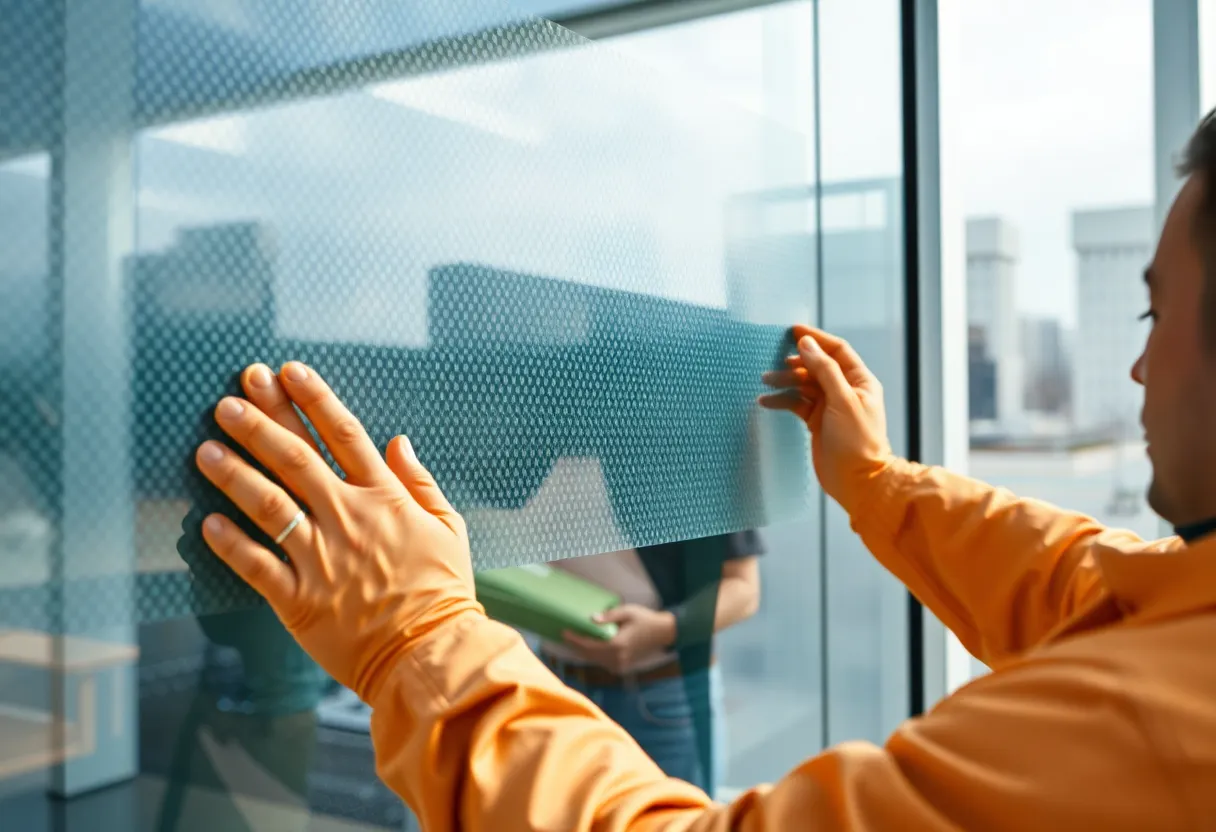
There are several distinct ways to achieve this. Fritted glass, where a ceramic pattern is fired directly onto the glass during manufacturing, is the most durable and often the most cost-effective option for new construction, since it’s specified at the manufacturing stage rather than applied after the fact. For existing buildings, where full glass replacement is rarely economical, applied film solutions — patterned UV or visible-light films adhered to the exterior or interior surface of existing glass — have become the dominant retrofit approach, precisely because they don’t require touching the building’s structural glazing at all.
The Actual Cost Numbers
This is the part building owners actually want to know, and it’s varied enough that generic estimates are only somewhat useful. Applied film retrofits, based on figures reported by bird-safe glass installers and cited in several municipal retrofit case studies (including reporting on Chicago and New York projects, two cities with particularly active bird-safe building advocacy given their position on major migratory flyways), typically run in the range of $8 to $20 per square foot installed, depending on the specific film product, pattern complexity, and whether it’s applied to interior or exterior glass surfaces — exterior application generally costs more due to access requirements (scaffolding, lift equipment, or rope access for taller buildings) but tends to perform better since the pattern is visible before light passes through the glass, rather than after.
For a mid-sized commercial building with a heavily glazed facade — the kind most likely to be a genuine collision risk — total retrofit costs commonly land in the tens of thousands to low hundreds of thousands of dollars range depending on square footage, which is a real but generally manageable capital expense relative to typical building maintenance and capital improvement budgets, especially compared to the cost of full glazing replacement, which applied film retrofits are specifically designed to avoid. New construction fritted or patterned glass, by contrast, typically adds a much smaller cost premium — often cited in the low single-digit percentage range over standard glazing — precisely because it’s specified as part of the original glass order rather than an after-the-fact retrofit.
Why Owners Without a Mandate Are Doing This Anyway
Legal requirements have expanded — New York City’s Local Law 15, passed in 2019, mandates bird-friendly materials for new construction and significant renovations meeting certain glazing thresholds, and San Francisco, Oakland, and a handful of other cities have adopted similar bird-safe building standards. But a meaningful share of retrofit activity is happening at buildings with no legal obligation at all, and the reasons cited by building owners and facilities managers in trade press coverage cluster around a few practical motivations beyond simple environmental concern.
LEED and other green building certification programs have increasingly incorporated bird-collision-deterrence credits, giving commercial building owners pursuing certification (often tied to leasing advantages or corporate sustainability commitments) a direct incentive to include bird-safe glazing as part of a broader certification strategy rather than a standalone initiative. Corporate ESG reporting pressure has made visible, easily communicable sustainability initiatives — and a building with a documented reduction in bird strikes is a genuinely compelling, photographable story for a sustainability report — more attractive to corporate real estate owners than some more technical energy-efficiency upgrades that are harder to explain to a general audience.
The Retrofit Prioritization Problem
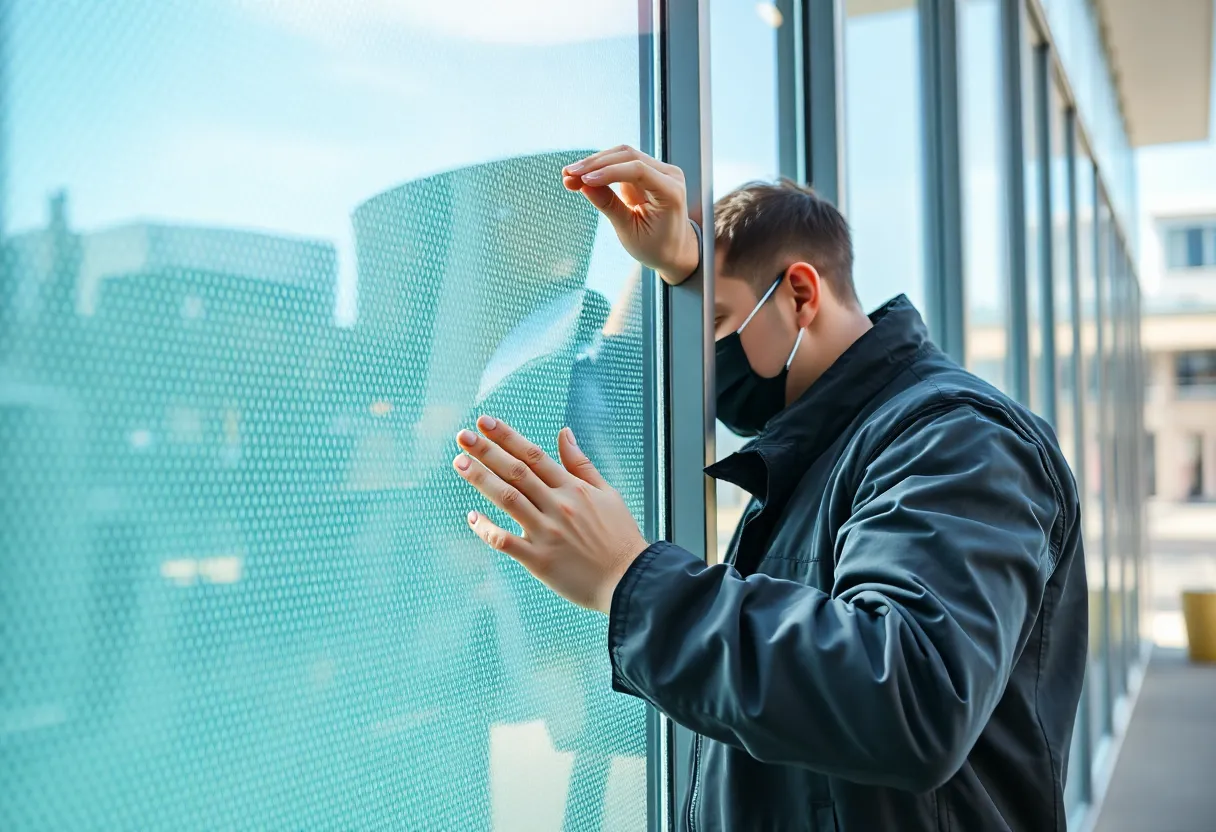
Given that full-building retrofits aren’t always economically justified, especially for larger buildings with lower-risk upper-story glazing, the practical guidance from ornithology and building science groups has converged on a targeted approach: prioritize lower stories, glass adjacent to significant vegetation, courtyards, or reflective glass corners where birds are most likely to misjudge a flight path, rather than uniformly treating every window in a structure. Several cities’ voluntary or mandatory programs now explicitly frame compliance this way, focusing regulatory and incentive attention on the specific facade zones where the collision science shows the risk actually concentrates, which meaningfully reduces the total retrofit cost building owners face compared to a blanket full-building treatment.
Migratory bird collision monitoring programs — many run through volunteer networks affiliated with groups like the Chicago Bird Collision Monitors or NYC Audubon’s Project Safe Flight — have become an important source of building-specific data that lets owners and city agencies identify which structures are actually significant collision sites versus which ones simply look risky on paper, allowing retrofit dollars to be targeted at buildings with documented, verified collision problems rather than applied uniformly across a city’s entire building stock.
Where This Is Headed
The cost trajectory for bird-safe glass has been consistently downward as more manufacturers enter the market and film application has become a more established, competitive trade rather than a specialty niche service — installer competition and manufacturing scale have both compressed the per-square-foot cost meaningfully over the past decade, according to installer surveys reported in building trade press. That trend, combined with expanding municipal mandates and growing certification-program incentives, points toward bird-safe glazing becoming a standard specification consideration in commercial construction and major renovation, the way energy-efficient glazing did a generation earlier, rather than the specialty retrofit it’s still often treated as today.
For building owners weighing whether to act ahead of a mandate, the honest calculus is that targeted retrofits — focused specifically on documented or high-risk lower-story and vegetation-adjacent glazing rather than an entire facade — deliver most of the collision-reduction benefit at a fraction of the cost a uniform full-building treatment would require, and that’s the approach increasingly recommended by the ornithology groups whose collision data actually built the case for doing this in the first place.