How High-Altitude Balloon Science Works and What It Still Does Better Than Satellites

Hana Dvorak
July 7, 2026
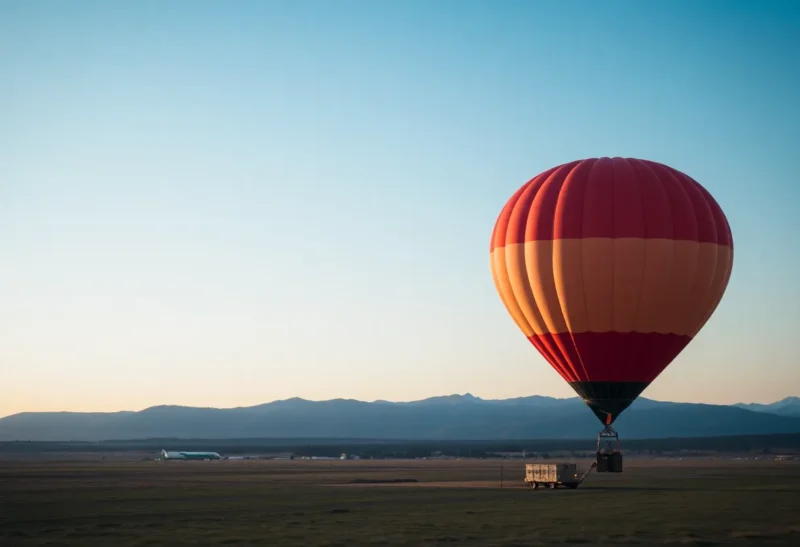
The satellite era has a way of making stratospheric balloon science seem quaint—a technology superseded by more capable platforms that operate at higher altitudes, with longer duration, and without the logistical constraints of inflating and launching a helium-filled envelope every time you want to make a measurement. But high-altitude balloons remain a significant scientific platform, and for specific applications, they offer advantages that no current satellite can match and that have kept them central to atmospheric science, astronomy, and technology development for over a century.
The Physics of the Stratosphere
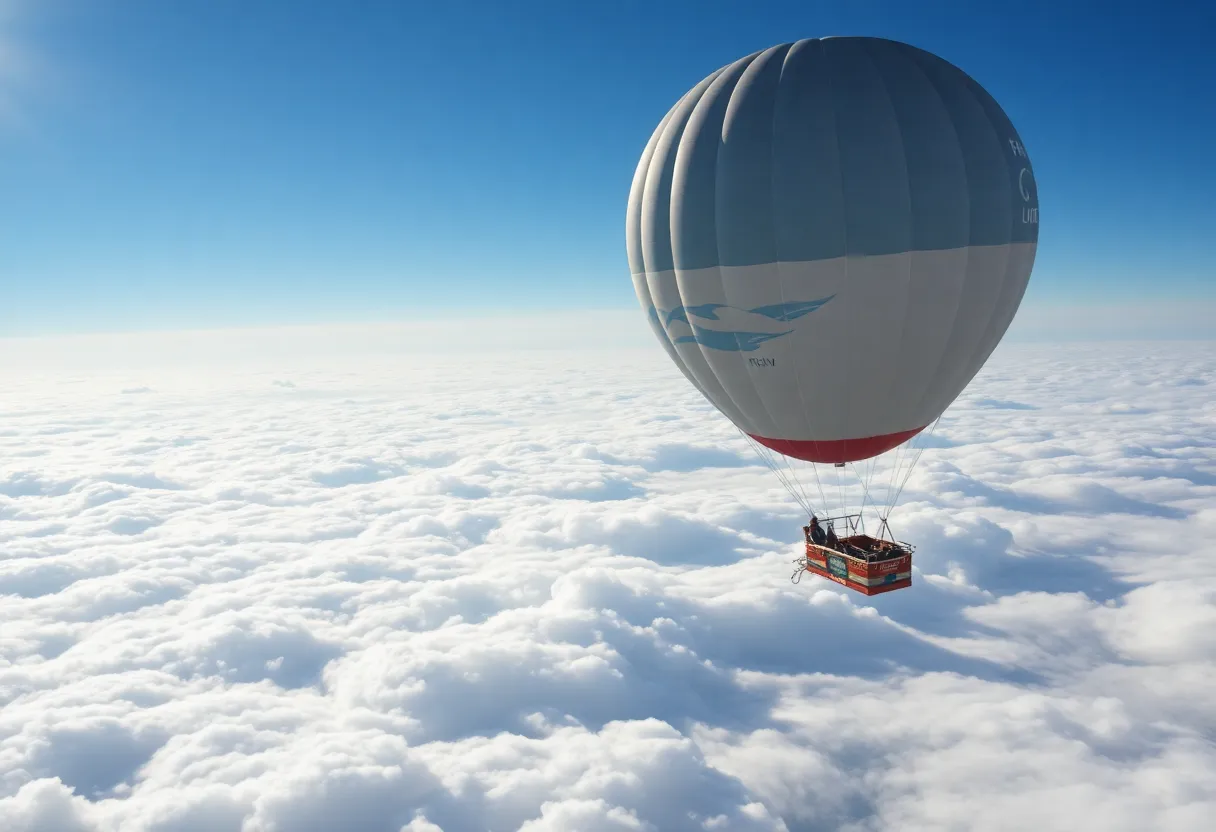
Scientific balloons typically operate in the stratosphere—the atmospheric layer from approximately 12 km to 50 km altitude. Weather balloons reach 30–40 km before bursting; large scientific balloons can reach 40–50 km. This altitude range sits above approximately 99% of the atmosphere by mass, which provides conditions relevant to several scientific applications:
Above the troposphere, the weather layer where clouds and turbulence dominate, the stratosphere is dry, stable, and largely free from atmospheric interference for infrared and submillimetre astronomy. Above most of the atmosphere’s water vapour column, observations in wavelengths that water vapour absorbs are possible from balloons in ways that aren’t possible from the ground. This is why stratospheric balloons were used for important early infrared and far-infrared astronomical observations before space-based observatories became available.
The atmosphere at 40 km altitude has a pressure approximately 0.3% of sea level pressure—similar enough to space for testing space instrument components without the expense of an actual space launch, while still retaining enough atmospheric interaction to be scientifically different from orbit.
The Basic Systems of a Scientific Balloon
Scientific balloon systems have three main components: the balloon itself, the gondola containing instruments and support systems, and the flight train connecting them.
Modern scientific balloons use zero-pressure or super-pressure designs. Zero-pressure balloons vent gas to maintain equal pressure inside and outside the envelope—they expand as they rise and the atmospheric pressure decreases, and vent gas at float altitude to prevent over-pressure. They are limited to daytime flight because solar heating drives gas expansion and venting; at night, the balloon cools and descends. Zero-pressure balloons are the standard design for most scientific flights requiring a specific altitude for a specific period.
Super-pressure balloons seal the gas inside and are pressurised above ambient at float altitude—allowing them to maintain altitude through the day-night temperature cycle without venting. Super-pressure designs enable long-duration flights lasting weeks to months, which dramatically extends the scientific return on each launch. NASA’s Super-Pressure Balloon programme has achieved flight durations exceeding 100 days, enabling observations that would require expensive satellite time to duplicate.
The balloon envelope is made from polyethylene film, typically 20 micrometres thick—thinner than a plastic bag—but engineered for the extreme cold of the stratosphere (-60°C or lower) and the stresses of inflation and flight. A large scientific balloon may contain 1.1 million cubic metres of helium and span more than 130 metres in diameter at float altitude, while the film itself weighs relatively little.
What Balloons Do Better Than Satellites
Several scientific and operational applications genuinely favour balloons over satellites, and the advantages are not just cost-related.
Recoverable instruments. Balloon payloads are recovered after flight—the gondola descends by parachute to a landing zone where it can be retrieved, examined, repaired, and relaunched. This makes balloons uniquely suited to instrument development and commissioning: a new detector or telescope can be tested at stratospheric altitudes, recovered with all its calibration data intact, and refined before a subsequent flight or a satellite deployment. The James Webb Space Telescope’s NIRCam instrument flew on a balloon campaign before its space mission to verify detector performance in the relevant environment.
Altitude flexibility. Balloons can float at any altitude within the stratosphere, adjusting to observation requirements. A satellite is in a fixed orbit; a balloon can be maintained at exactly the altitude that provides the best measurement conditions for a particular observation. For stratospheric chemistry experiments that need to sample air at specific pressure levels, this flexibility is significant.
Payload size and power. A scientific balloon can carry a tonne or more of instruments, powered by solar panels and batteries, with communications antennas and stabilisation systems that would be impossible to fit in a small satellite. This allows sophisticated, large-aperture telescopes, mass spectrometers, and multi-instrument scientific platforms that the size and mass constraints of satellite launch make impractical or extremely expensive.
In-situ atmospheric sampling. Balloons pass through the atmosphere, allowing direct measurement of atmospheric composition, temperature, pressure, and dynamics at each altitude during ascent and descent. A satellite observing from orbit can make remote sensing measurements of atmospheric composition; it can’t physically pass through the stratosphere collecting air samples. In-situ sampling of stratospheric ozone, aerosols, and trace gases remains primarily a balloon discipline.
Cost per measurement. Launching a large scientific balloon costs in the range of hundreds of thousands of dollars—orders of magnitude less than a satellite mission that might accomplish a similar measurement. For atmospheric science programmes that need regular measurements over years, the cost differential is decisive. The global network of radiosonde balloons (small weather balloons launched twice daily from thousands of stations worldwide) is the foundation of numerical weather prediction, providing vertical profiles of temperature, humidity, and wind that satellite observations cannot fully replace.
Atmospheric Science Applications
The radiosonde network illustrates how deeply balloon science is embedded in operational science. The daily radiosonde launches from roughly 800 upper-air stations provide the vertical atmospheric profile data that initialises numerical weather prediction models. Despite decades of satellite development, radiosonde data remains irreplaceable for weather forecasting—satellites provide horizontal coverage that radiosondes lack, but radiosondes provide vertical resolution and accuracy at specific locations that satellite retrievals cannot match.
Stratospheric ozone research has relied heavily on balloon-borne ozonesondes since the discovery of the ozone hole in the 1980s. Ozonesonde measurements provided the definitive evidence of ozone depletion at specific altitude levels in Antarctic spring and continue to be used for monitoring ozone recovery under the Montreal Protocol—direct sampling measurements that satellite estimates are validated against.
Stratospheric aerosol monitoring—relevant to volcanic eruption effects on climate, geoengineering research, and aviation safety—uses balloon-borne optical particle counters and impactors that can sample and characterise aerosol particles directly at altitude, providing data that passive remote sensing instruments cannot.
Astronomy From the Stratosphere
Before space astronomy became practical, and today in cases where space astronomy is too expensive or requires recovery capability, balloons provide access to wavelengths blocked by the atmosphere. The Balloon Observations of Millimetric Extragalactic Radiation and Geophysics (BOOMERANG) experiment, flown in 1998-2000 on a long-duration Antarctic circumpolar balloon flight, produced the first high-resolution maps of the cosmic microwave background that provided evidence for the flat geometry of the universe—science that predated the more precise satellite results from WMAP and Planck.
More recent balloon astronomy programmes include SPIDER, targeting primordial gravitational wave signatures in CMB polarisation, and various X-ray and gamma-ray astronomy payloads that benefit from the stratosphere’s reduction of cosmic ray background. Balloon astronomy instruments can be optimised for specific science goals with fewer engineering constraints than satellite instruments, and they can be recovered and improved between flights.
The Technology Development Role
High-altitude balloons have become an important technology development platform for space hardware. Google’s Loon programme—which used super-pressure balloons for wireless connectivity—generated significant engineering knowledge about long-duration balloon operations. The planetary science community regularly uses balloon campaigns to test instruments intended for future planetary atmosphere missions.
Weather balloon science faces challenges from the satellite era—commercial weather satellite data has improved dramatically, and some of the pressure on the radiosonde network to provide global coverage has eased. But for the specific applications where direct atmospheric sampling, recoverable instruments, large payload capacity, and operational flexibility matter, balloons are not a technology in decline. They’re a platform that has found its enduring niche in the measurement ecosystem.