Why Satellite Servicing Missions Are Finally Becoming a Real Business

Futurion Editorial
July 9, 2026

Satellites have traditionally been built as disposable, one-shot assets: once launched, a satellite operates until it runs out of propellant to maintain its orbit, its components degrade past useful function, or a critical system fails, at which point it’s retired and, ideally, deliberately deorbited, with essentially no possibility of repair, refueling, or upgrade once it’s in space. This throwaway model has been an accepted, unquestioned constraint of spacecraft design for the entire history of the satellite industry, but a small and gradually maturing group of companies has spent the past several years building the specific technology and business case for actually servicing satellites in orbit — refueling them, repairing specific failed components, or relocating them — and that effort has recently crossed from purely experimental demonstration into what increasingly looks like genuine, sustainable commercial business.
Why This Capability Took So Long to Become Commercially Viable
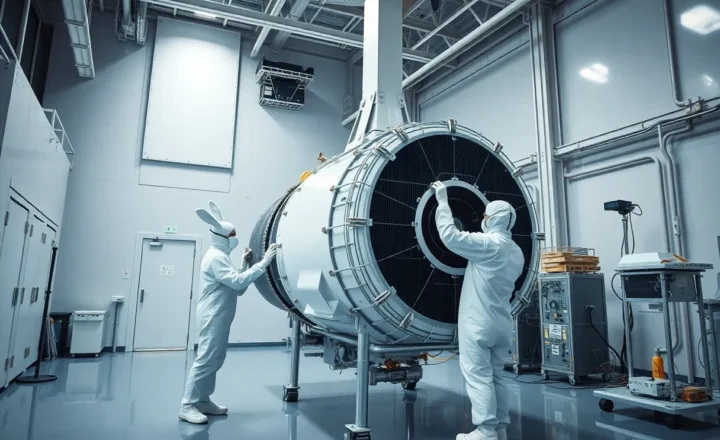
The core technical challenge behind in-orbit satellite servicing is considerably harder than it might initially sound: rendezvousing with and physically docking to another spacecraft in orbit requires extremely precise relative navigation and control, particularly because the vast majority of satellites currently in orbit, including virtually every satellite launched before this capability existed, were never designed with any kind of standardized docking interface or servicing-friendly design feature in mind, since nobody building those satellites originally anticipated that in-orbit servicing would ever become a practical possibility worth designing for.
This meant early satellite servicing technology development had to solve the genuinely difficult problem of safely approaching, characterizing, and mechanically capturing an existing satellite that was never designed to be captured or serviced at all — often using specific existing hardware features like a satellite’s marman ring, the standard mechanical interface used to originally attach a satellite to its launch vehicle, as an improvised docking and capture point, since it represented one of the few standardized mechanical features that different satellites from different manufacturers reliably shared in common, despite never being intended for this specific purpose.

Why Life Extension for Aging Satellites Is the Business Case That Actually Works
The specific satellite servicing application that has demonstrated the clearest commercial success so far is life extension for otherwise healthy geostationary communications satellites that are running low on the propellant needed to maintain their precise orbital position, rather than any other kind of failed component actually breaking down. Geostationary satellites require regular small propulsion adjustments (called station-keeping) to counteract gradual orbital drift, and a satellite that’s otherwise fully functional, with healthy electronics, solar panels, and communications payloads, often reaches genuine end-of-life purely because it has exhausted its onboard propellant supply for these adjustments, at which point an otherwise perfectly good, expensive satellite has to be retired simply because it can no longer maintain its assigned orbital position precisely enough to keep operating there.
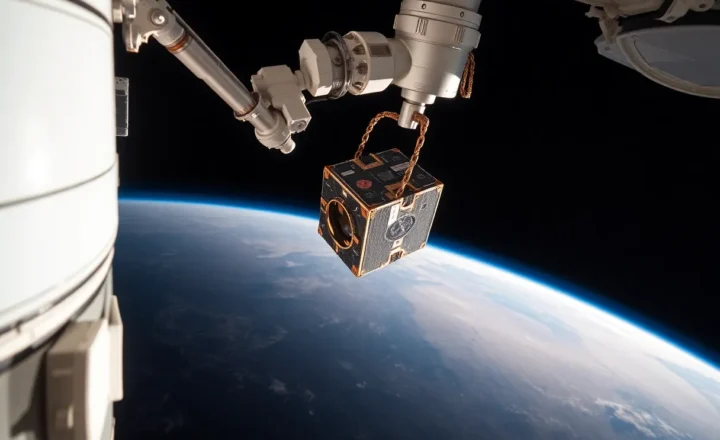
This specific scenario turns out to be a remarkably good match for currently available servicing technology, because it doesn’t require the servicing spacecraft to perform any complex repair of internal satellite components at all — instead, a servicing spacecraft can dock with the client satellite and essentially take over its station-keeping propulsion function directly, using its own propulsion system to keep the combined docked spacecraft pair correctly positioned, extending the client satellite’s operational life by years without needing to actually transfer fuel or repair anything internal to the client satellite itself, a meaningfully simpler and more commercially provable capability than full in-orbit refueling or component repair, which remain considerably harder unsolved technical challenges still mostly confined to earlier-stage demonstration programs.
Who’s Actually Operating This Commercially Today
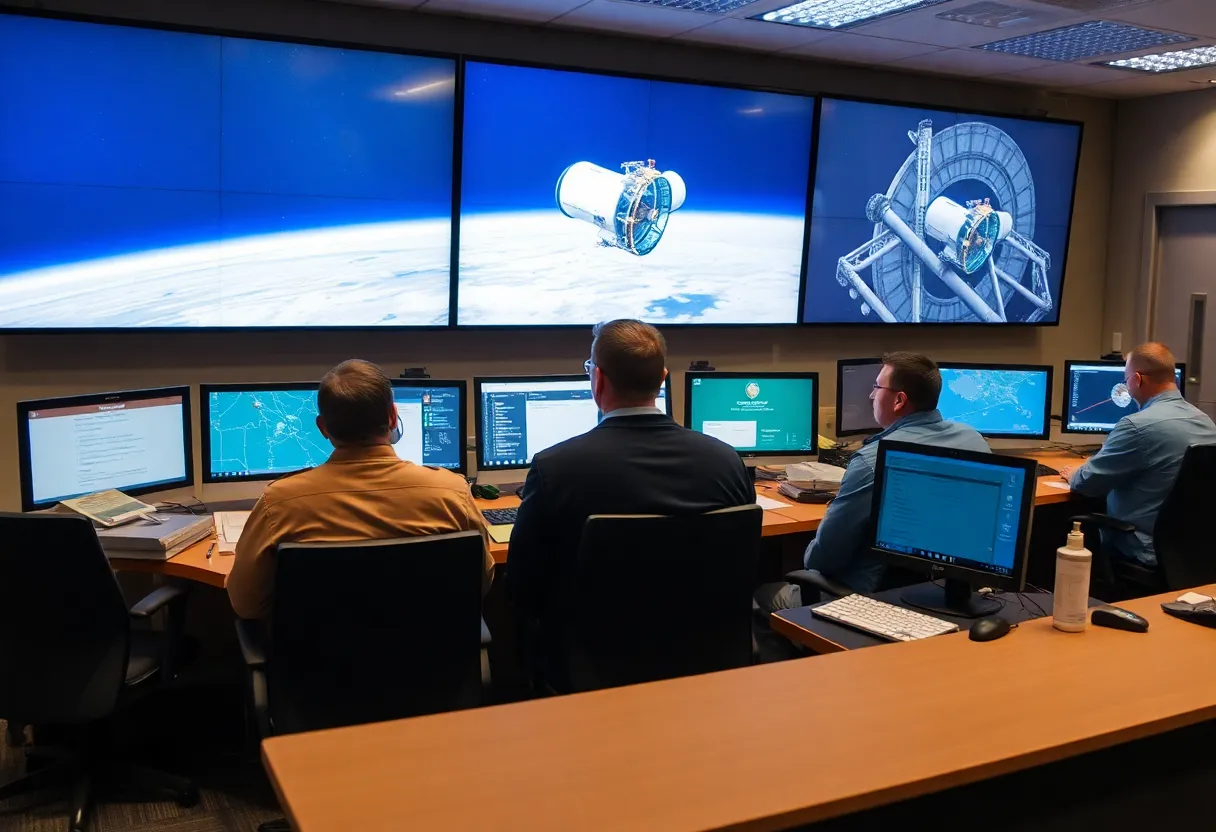
Northrop Grumman’s SpaceLogistics subsidiary, through its Mission Extension Vehicle program, has successfully docked with and extended the operational life of multiple commercial geostationary communications satellites for paying satellite operator customers, representing one of the clearest examples of this specific life-extension servicing model actually generating real, paying commercial revenue rather than remaining a government-funded technology demonstration. These completed missions have provided the industry with genuine operational track record and proof of commercial viability that earlier, purely experimental servicing demonstrations hadn’t yet established.
Beyond life extension specifically, other companies and government-funded programs have continued pushing toward more ambitious servicing capabilities, including actual in-orbit refueling — physically transferring propellant into a client satellite’s own fuel tanks rather than just taking over its station-keeping function externally — and in-orbit robotic repair or component replacement, both of which remain earlier-stage and technically harder problems than the docking-and-station-keeping approach that’s already achieved genuine commercial success, but which represent the next frontier this still-young industry is actively working to prove out and commercialize.
Why the Economics Actually Make Sense for Satellite Operators
From a satellite operator’s financial perspective, the economic case for paying for servicing rather than simply launching a full replacement satellite comes down to a fairly straightforward comparison: building and launching an entirely new geostationary communications satellite represents an enormous capital expenditure, typically spread across many years of design, manufacturing, and launch coordination lead time, whereas paying a servicing provider to extend an existing, otherwise healthy satellite’s operational life by several additional years costs meaningfully less and, critically, can be arranged and executed on a considerably faster timeline than building and launching a full replacement, giving an operator additional years of revenue-generating service life from an asset that’s already fully paid for and already generating revenue, without the multi-year gap and enormous new capital outlay that a full satellite replacement program requires.
Why This Trend Also Connects to the Broader Space Debris and Sustainability Conversation
Beyond the direct commercial life-extension business case, satellite servicing capability has attracted growing interest and government funding support specifically because of its potential relevance to the broader, separately pressing problem of orbital debris and space sustainability, since the same rendezvous, docking, and orbital maneuvering technology developed for satellite servicing is directly applicable to the related but distinct mission of actively deorbiting or relocating defunct satellites and debris that would otherwise remain a persistent collision hazard in already increasingly crowded orbital regions. Several government space agencies have specifically funded satellite servicing technology development partly with this dual-purpose framing in mind, recognizing that a mature, commercially proven in-orbit servicing industry represents infrastructure genuinely useful for both the direct commercial life-extension business already generating real revenue today and the increasingly urgent, separate challenge of actively managing orbital debris that pure regulation and improved satellite design practices alone haven’t yet fully solved.