How Indoor Air Quality Affects Focus and Health More Than People Realize

Maya Chen
July 7, 2026
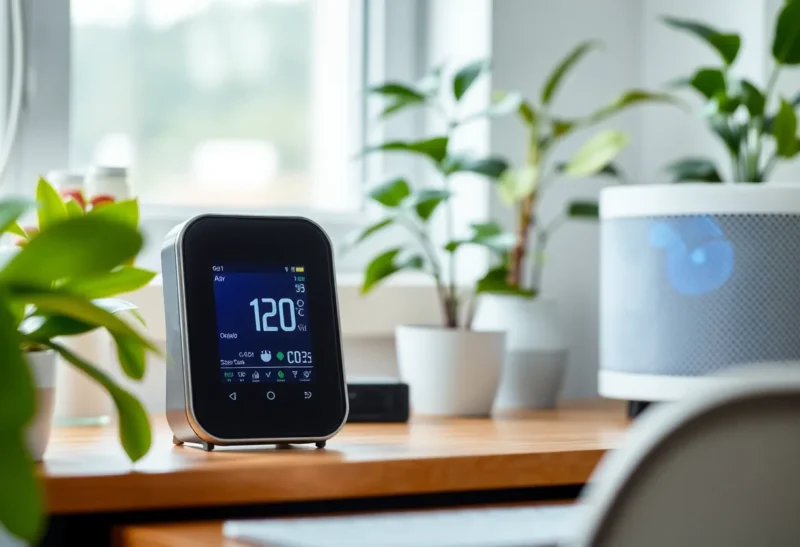
The air inside buildings is frequently more polluted than outdoor air, and the indoor environments where people spend the majority of their time — homes, offices, schools — often have air quality issues that directly affect cognitive function and health in ways that most occupants don’t notice because the effects accumulate gradually and feel like baseline. The research on indoor air quality and human performance has expanded significantly in the last decade, producing well-evidenced findings about what’s in indoor air, what it does, and what actually improves it.
CO2: The Most Consequential Indoor Air Problem for Cognitive Function
Carbon dioxide (CO2) is the most directly relevant indoor air quality factor for cognitive function and the most consistently measured variable in occupant health research. Outdoor CO2 levels are approximately 420 ppm (parts per million). In an occupied, ventilated office or classroom, CO2 can rise to 800–1,200 ppm by midday. In poorly ventilated spaces with multiple occupants — small conference rooms, crowded classrooms, sealed home offices — CO2 can reach 1,500–2,500 ppm or higher.
The research on CO2 and cognitive performance is substantial. A landmark Harvard study by Allen, MacNaughton, and colleagues (2016) placed workers in controlled environments with varying CO2 levels and found statistically significant performance degradation at 1,000 ppm versus 550 ppm, with larger effects at 2,500 ppm, across cognitive domains including decision-making, strategic thinking, and crisis response. Performance at 1,000 ppm — a level easily reached in a normal occupied office — was approximately 15% lower than at 550 ppm on cognitive tasks. Subsequent studies have replicated and refined these findings, consistently showing CO2 effects on cognitive function at levels common in occupied buildings.
The mechanism is not purely oxygen displacement (CO2 elevation doesn’t meaningfully reduce oxygen at these concentrations) but rather direct physiological effects: CO2 is a vasodilator that affects cerebral blood flow, and there may be direct effects of dissolved CO2 on neural function at elevated concentrations. The practical implication is that working in a room where CO2 has risen to 1,200 ppm over several hours of occupancy creates measurable cognitive impairment, but the impairment feels subjectively like normal tiredness or mental fatigue rather than like an external cause.
Particulate Matter: The Health Risk Most People Aren’t Monitoring
Fine particulate matter (PM2.5 — particles smaller than 2.5 micrometers in diameter) is the indoor air quality variable with the strongest evidence for long-term health effects. PM2.5 penetrates deep into the lungs and can enter the bloodstream, where it’s associated with respiratory disease, cardiovascular disease, and in recent research, cognitive decline and dementia. Outdoor PM2.5 is monitored and regulated; indoor PM2.5 is not monitored in most homes despite being a significant exposure source.
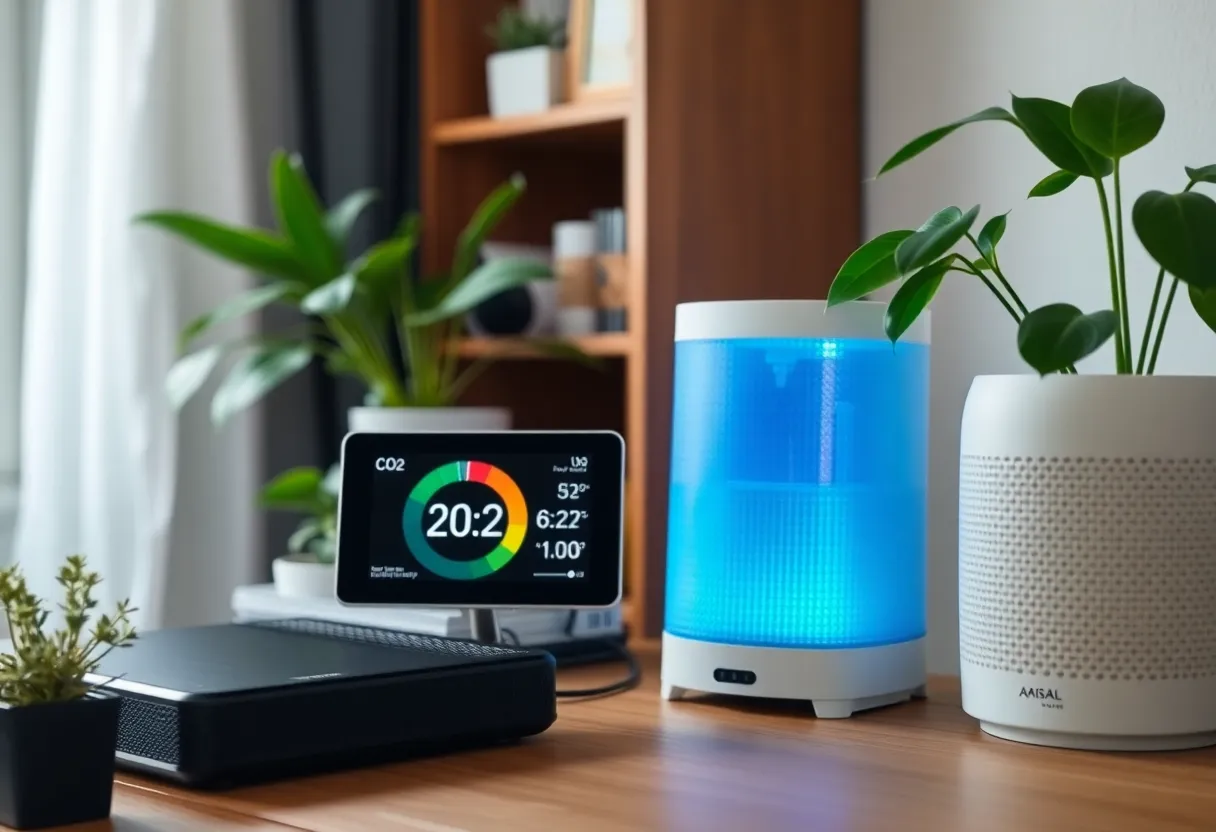
Indoor PM2.5 sources are numerous and often unnoticed: cooking (frying and broiling produce significant PM2.5; gas stoves add combustion particles), candle burning, incense, wood fires, printer and copier emissions, and infiltration of outdoor pollution through leaky building envelopes. A person cooking dinner on a gas stove with poor kitchen ventilation may be exposed to PM2.5 concentrations that would trigger air quality alerts if they occurred outdoors. Consumer air quality monitors (Awair, Aranet, IQAir AirVisual Pro) make indoor PM2.5 monitoring practical and can reveal significant pollution events during cooking or other activities.
The Chinese government’s research during COVID lockdowns showed that indoor PM2.5 in cities during outdoor pollution events — when people closed windows to keep outdoor pollution out — sometimes exceeded outdoor levels due to accumulated indoor sources, a counterintuitive finding that illustrates the importance of distinguishing indoor and outdoor pollution sources.
VOCs, Formaldehyde, and Building Material Off-Gassing
Volatile organic compounds (VOCs) are emitted by a wide range of common indoor materials: new furniture and cabinetry (particularly pressed wood products that use formaldehyde-containing adhesives), paint, flooring adhesives, carpet, cleaning products, and personal care products. Formaldehyde — a specific VOC with well-documented respiratory and carcinogenic effects — off-gasses from engineered wood products (MDF, particleboard, plywood) for months to years after manufacture and installation.
New buildings and recently renovated spaces tend to have the highest VOC concentrations, which is partly responsible for the “new building smell” that people notice. “Sick building syndrome” — the historical term for buildings where occupants experienced symptoms (headaches, respiratory irritation, eye irritation) that resolved when leaving the building — was often related to poor ventilation combined with high VOC loads from building materials. Modern low-VOC and zero-VOC paints, adhesives, and flooring materials have reduced this problem in newer construction, but older buildings and newly installed products with conventional materials remain significant sources.
What Actually Improves Indoor Air Quality
The most effective intervention is ventilation — bringing outdoor air in to dilute indoor pollutants. Opening windows when outdoor air quality is acceptable lowers CO2, dilutes VOCs, and reduces accumulated pollutants more effectively than any air purification technology. The limitation is that outdoor air quality varies, and in urban areas or during outdoor pollution events, opening windows may increase outdoor pollutants while reducing indoor ones.
HEPA air purifiers with activated carbon filters effectively reduce PM2.5 (HEPA captures particles) and VOCs (activated carbon adsorbs gases). The effectiveness is determined by the air changes per hour (ACH) the purifier achieves in the room — a purifier rated for the room’s volume can achieve 4–5 ACH, which is sufficient for meaningful PM2.5 reduction. Ionizers, photocatalytic oxidation systems, and UV-C purifiers have less consistent evidence for indoor air quality improvement and some produce ozone as a byproduct, which is a respiratory irritant. HEPA plus activated carbon is the evidence-supported combination.
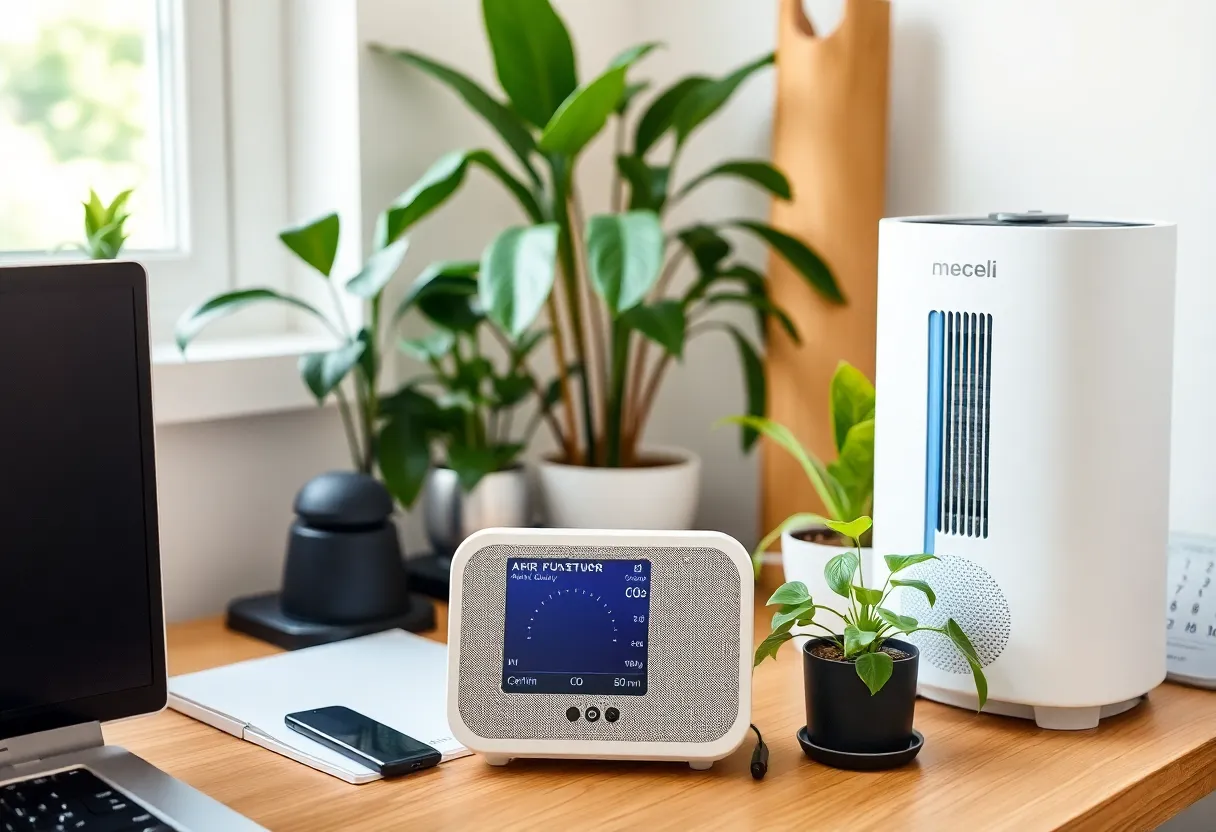
CO2 specifically is only reduced by ventilation — purifiers do not remove CO2. For home offices or rooms where CO2 accumulation is a concern, the practical interventions are: opening a window periodically (even a few inches in a small opening provides meaningful air exchange), increasing mechanical ventilation if the building has it, or monitoring CO2 levels with a device like the Aranet4 to know when ventilation is needed. The Aranet4 specifically has become popular among remote workers and performance-conscious people as a portable, accurate CO2 monitor. Knowing your room’s CO2 level and opening a window when it crosses 800–1,000 ppm is a simple, evidence-based intervention for maintaining cognitive performance through a workday.