What Happens During an Organ Transplant: The Logistics Almost No One Thinks About

Dr. Sarah Okafor
July 7, 2026
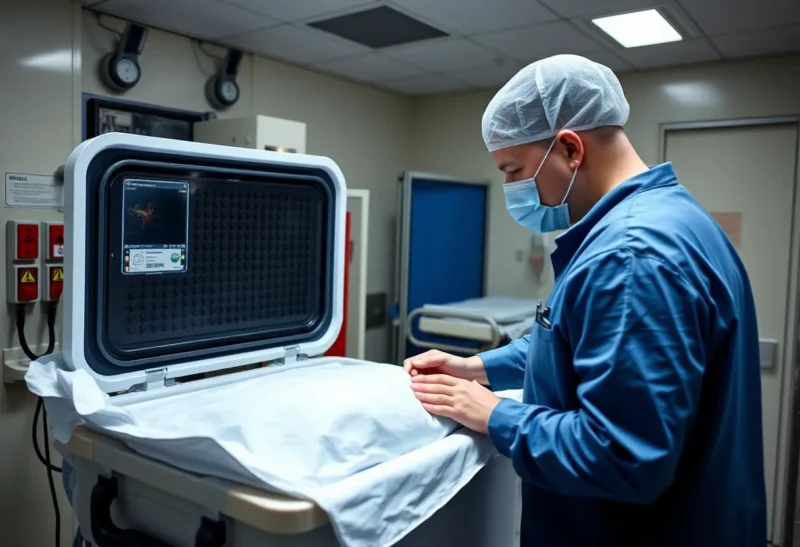
When a transplant surgery is reported in the news, the story focuses on the patient and the surgeon. Rarely mentioned is the coordinator who received a call at 2 a.m. and spent the next six hours managing a supply chain problem of extraordinary complexity—finding compatible recipients, arranging aircraft, tracking road closures, negotiating with two other transplant centres, and watching a biological clock that can’t be paused.
Organ transplantation is one of the most logistically demanding operations in modern medicine, and most of what makes it work happens outside the operating room.
The Moment Everything Starts: Declaring Neurological Death
A deceased donor organ procurement process begins not when the patient dies in the conventional sense, but when a determination of neurological death—brain death—is made by physicians who are entirely separate from the transplant team. This separation is legally and ethically mandatory: the doctors declaring death cannot be involved in organ procurement, eliminating any conflict of interest. In the United States, the Uniform Determination of Death Act governs this standard.
Once neurological death is declared and family consent obtained, a hospital’s transplant coordinator contacts the Organ Procurement Organization (OPO) responsible for that region. The US is divided into 57 OPO service areas; each OPO has around-the-clock staff trained specifically in this coordination work. They deploy a medical team to the donor hospital to manage the donor’s physiological support—maintaining circulation, blood pressure, and organ perfusion—while the matching and logistics process unfolds.
The clock starts here. Different organs have different ischemic tolerance—the window between cessation of blood supply and irreversible damage. Hearts and lungs have the shortest windows: four to six hours from when a heart is cross-clamped (blood supply cut) to when it must be transplanted. Kidneys tolerate cold storage for up to 36 hours; livers for around 12–18. These windows govern every logistical decision that follows.
The Matching System: UNOS and the National List
In the United States, all donated organs are allocated through the United Network for Organ Sharing (UNOS), which operates DonorNet—the national database of recipients waiting for transplants. As of 2024, approximately 100,000 people are on the kidney waiting list alone; the total waitlist across all organ types exceeds 100,000 at any given time.
When a donor is declared, the OPO enters the donor’s medical data into DonorNet: blood type, tissue typing, height, weight, organ function indicators, and medical history. The system generates a prioritised match list for each organ based on a complex algorithm that weighs medical urgency, compatibility factors (blood type, human leukocyte antigen matching for kidneys), waiting time, and geographical proximity. Proximity matters because organ viability time is limited—a heart cannot cross the country without risking damage.
The OPO coordinator contacts transplant centres in priority order for each organ. This is not a simple call—each transplant centre must evaluate the offer against their own candidates, their surgical team’s availability, their recipient’s current medical status, and their assessment of the organ’s quality. An offer can be declined if the organ’s function is marginal and the transplant team judges the risk-benefit calculation unfavourable for their specific patient. Coordinators can spend hours working through an organ offer list before finding acceptance.
Transportation: The Race Against Ischemia
Once an organ is accepted, it must get from the donor hospital to the recipient hospital. This is a transportation problem with an unforgiving deadline and no margin for standard delays.
Organs are perfused with a cold preservation solution that lowers metabolic activity, slowing cellular damage. A heart, packed in cold saline in a specialised cooler, looks remarkably low-tech for the life it represents. The OPO arranges transport: for short distances, ground vehicles. For distances over roughly 200 miles, or when time is critically short, chartered aircraft—sometimes commercial seats when scheduling permits, more often private charter, occasionally military or police aircraft when civilian options fail.
The OPO coordinator tracks every leg of the journey. If a chartered flight is delayed by weather, they immediately start identifying alternatives—different routes, different airports, ground transport options for the last leg. They are in constant contact with the receiving transplant centre, who is preparing both the surgical team and the recipient patient. The recipient must be sedated and prepared for surgery before the organ arrives, because the moment the organ is in the building, the surgical clock is running.
The personnel who physically transport organs—procurement surgeons, perfusionists, or trained couriers—often travel overnight with no guarantee of return transportation until the organ is delivered and they can arrange their own way back. A procurement surgeon who flew out at 11 p.m. to retrieve a liver in another state may be taking a commercial flight home the next morning.
Normothermic Regional Perfusion: Changing the Time Equation
Cold storage has been the dominant organ preservation method for decades, but it’s an imperfect solution: cells continue to deteriorate, just more slowly. Newer machine perfusion technology—particularly normothermic regional perfusion (NRP) and normothermic machine perfusion (NMP)—keeps organs warm and oxygenated rather than cold, maintaining near-physiological conditions and dramatically extending viable transport time for livers and kidneys.
NMP devices connect directly to the organ’s vasculature, pumping warm oxygenated blood and monitoring function continuously. A liver on a normothermic perfusion device can be assessed during transport—actually tested for bile production and metabolic activity—allowing transplant teams to make better-informed decisions about organ quality than they could from donor history and cold appearance alone. This has meaningfully expanded the pool of usable organs by recovering some that would previously have been declined.
The logistical consequence is significant: organs on normothermic perfusion can tolerate longer transport times, opening up matching across greater distances. A liver that previously had to match within roughly 500 miles can potentially match nationally on a perfusion device. This changes the mathematics of UNOS allocation and has been a driver of ongoing debates about how geographic equity in organ access should be structured.

The Recipient Preparation Problem
While the donor organ is in transit, the recipient hospital is running a parallel logistical operation. A patient who may have been living relatively normally must be called in and prepared for major surgery with little notice—sometimes two hours, sometimes six. If they’ve eaten recently, surgery must be delayed or the anaesthesia risk managed. If their medical status has changed since they were last evaluated, the transplant team must make rapid reassessments.
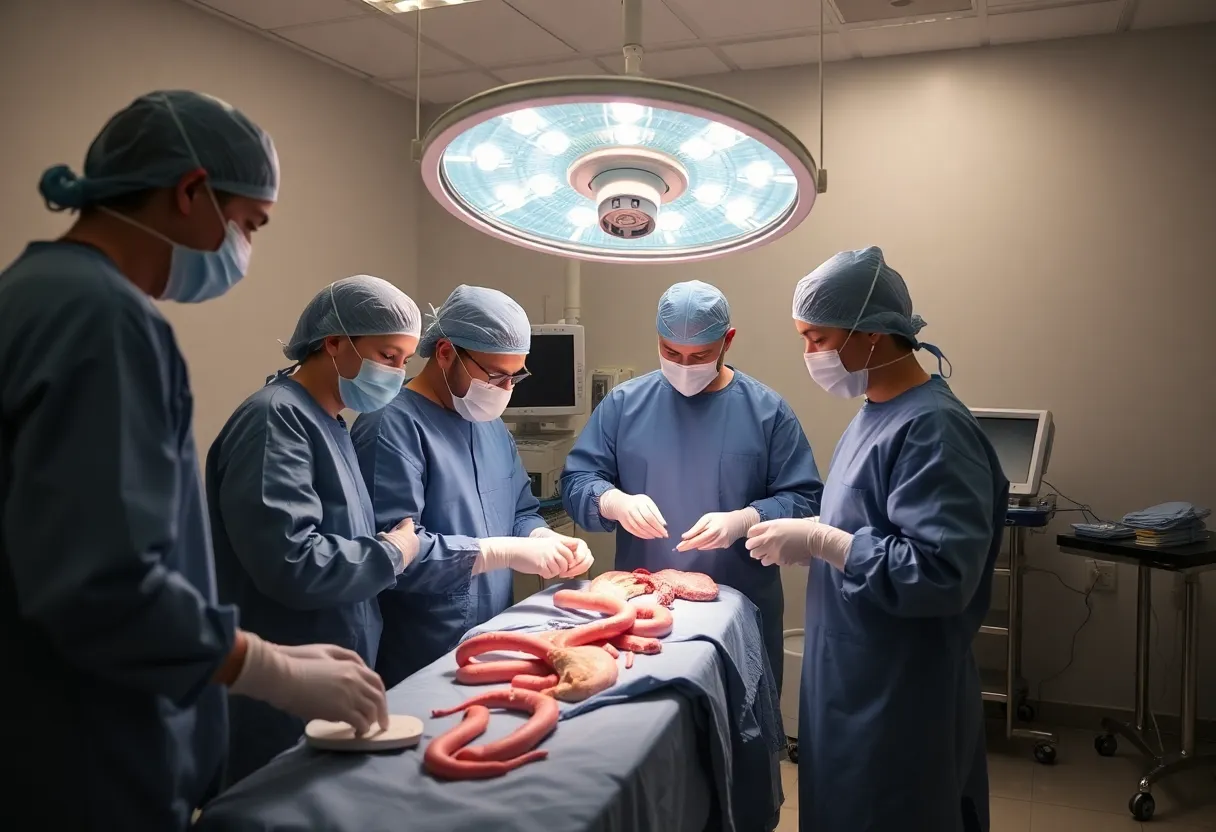
The surgical team itself must be assembled. Transplant surgery is specialised, often requiring the lead transplant surgeon, a second surgeon, anaesthesiologists with transplant experience, perfusionists, scrub nurses, and in some centres, hepatologists or cardiologists on standby. Assembling this team at 3 a.m. on a Tuesday is a staffing coordination problem that transplant centres manage through on-call rotations, but it remains genuinely difficult. Surgical fatigue is a real concern when the team is working at the end of long shifts or has been called in from home.
The recipient is a person with complex feelings about a call that simultaneously means their potential survival and someone else’s death. Transplant social workers and coordinators are trained to navigate this—providing information and reassurance during a preparation period that involves pre-operative tests, IV placement, consent verification, and physical preparation, all while the patient processes the situation emotionally.
Living Donor Logistics: A Different Problem
Living donation—where a living person donates a kidney or a portion of their liver—eliminates the ischemic time pressure almost entirely and allows elective scheduling. The logistics shift from emergency coordination to surgical scheduling coordination, which is substantially more tractable but involves its own complexity: the donor surgery and recipient surgery must happen simultaneously in adjacent operating rooms, often at the same hospital, with two complete surgical teams coordinated to begin at the same time.
A living donor who is not a direct match for their intended recipient can participate in paired kidney exchange programs—chains of coordinated donations where multiple donor-recipient pairs swap donors to achieve compatible matches. These chains can involve two pairs or, in record cases, dozens, with surgeries coordinated across multiple hospitals on the same day. The logistics of a twelve-pair kidney exchange chain—in which a delay or complication at any one hospital can cascade—require the same kind of operational coordination used in complex event management.
What the Numbers Actually Mean
In the United States in 2023, approximately 46,000 transplants were performed—the highest annual total recorded. Despite this, over 100,000 people remain on waiting lists, and roughly 17 people die each day waiting for an organ that didn’t arrive in time. The gap is not primarily a medical problem but a system problem: not enough donors are identified, not all potential donors are approached or consented, and not all available organs are successfully matched and transported before viability lapses.
The logistics improvements of recent years—normothermic perfusion, digital coordination platforms, refined allocation algorithms—have measurably increased the number of successful transplants per donor. Each percentage point improvement in organ utilisation translates to hundreds of additional lives saved annually.
The transplant coordinator who received that 2 a.m. call doesn’t make the news. The surgical team does. But the outcome—whether an available organ reaches a matched recipient in time—depends as much on the logistics as on the surgery. That’s an unusual combination: a supply chain problem where the product is irreplaceable, the deadline is biological, and the cost of failure is someone’s life.