Why Nuclear Fusion Is Closer Than Ever—And Still Harder Than It Sounds

Jordan Lee
July 7, 2026
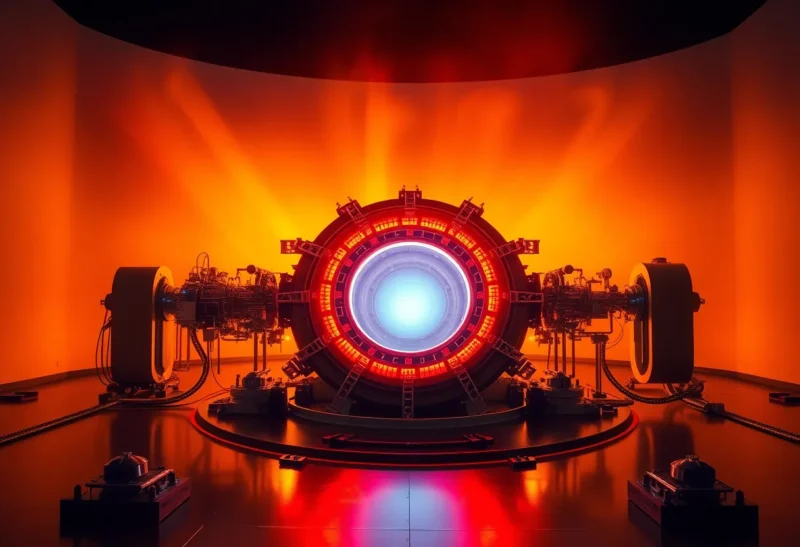
The joke has persisted for seventy years: fusion energy is always 30 years away. The punchline captures a real history of missed timelines and overpromised milestones. But something has changed in the past several years—genuine milestones have been crossed, private investment has poured in at unprecedented rates, and the scientific consensus has shifted from “we understand the physics but the engineering is intractable” to “the engineering challenges are hard but they don’t involve any unknown physics.” Fusion is not solved, and it is not 5 years away. But the grounds for optimism are more concrete than they’ve ever been.
Here’s what fusion actually is, what the current leading approaches involve, and where the realistic obstacles still lie.
The Physics: Why Fusion Releases Energy
Fusion is the process that powers stars, including our sun. When two light atomic nuclei—typically isotopes of hydrogen—come close enough to fuse into a heavier nucleus, the resulting product has slightly less mass than the sum of the inputs. That mass difference is released as energy according to E=mc²—and because c (the speed of light) is a very large number, even tiny mass differences correspond to large energy releases.
The most promising fusion reaction for practical energy generation is deuterium-tritium (D-T) fusion. Deuterium is a naturally abundant hydrogen isotope—one in every 6,400 hydrogen atoms in seawater is deuterium. Tritium is radioactive with a 12-year half-life and doesn’t occur naturally in significant quantities, but can be bred from lithium bombarded with neutrons. The D-T reaction releases 17.6 MeV per reaction—significantly more energy per unit mass than any chemical reaction.
The challenge is that both deuterium and tritium nuclei are positively charged, so they strongly repel each other (electromagnetic repulsion). To overcome this repulsion and allow the strong nuclear force to bind them, they need to collide at extremely high velocities—which requires temperatures of around 100 million degrees Celsius, roughly seven times hotter than the center of the sun. (The sun achieves fusion at lower temperatures because its enormous mass creates gravitational pressure that compensates; a lab reactor doesn’t have that luxury.)
At these temperatures, matter exists as plasma—a state where electrons are stripped from atomic nuclei, creating a soup of free charged particles. The core engineering challenge of fusion is: how do you confine a plasma at 100 million degrees so that fusion reactions happen often enough to produce net energy?
Magnetic Confinement: Tokamaks and Stellarators
The dominant approach to fusion confinement uses strong magnetic fields to contain the plasma. Charged particles in a magnetic field spiral around field lines and can be guided in closed loops, preventing the plasma from touching the reactor walls (which would immediately cool it and end the fusion reaction, as well as potentially damage the walls).
The tokamak—a Russian acronym for “toroidal chamber with magnetic coils”—is the most developed magnetic confinement design. A tokamak is a donut-shaped vessel surrounded by superconducting magnetic coils that create a strong toroidal (around the donut) field. An additional poloidal (through the hole of the donut) field is created by driving a current through the plasma itself using a transformer arrangement. The combination of these two fields creates a helical magnetic field that keeps the plasma stably confined.
The largest tokamak ever built is ITER—International Thermonuclear Experimental Reactor—under construction in Cadarache, France, by a consortium of 35 countries. ITER is designed to produce 500 MW of fusion power from 50 MW of heating power (a Q factor of 10, meaning ten times more energy out than in). It is not a power plant—it will not generate electricity—but it’s designed to demonstrate sustained net energy gain. ITER’s first plasma is currently scheduled for the late 2020s, with full D-T operations in the 2030s. The project has experienced significant delays and cost overruns; its current estimated total cost exceeds €20 billion.
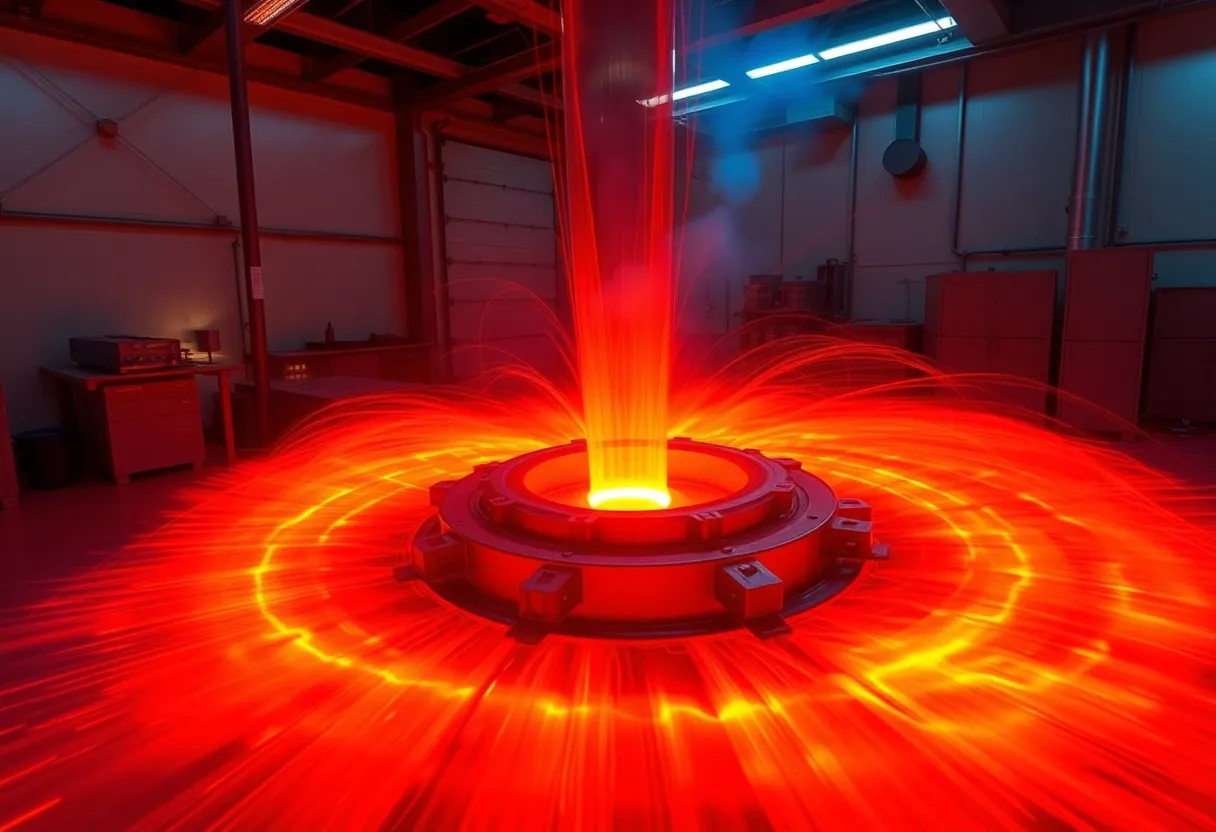
The stellarator is an alternative magnetic confinement design that doesn’t require driving current through the plasma—it achieves confinement through a more complex, precisely calculated magnetic field configuration from external coils alone. Stellarators have the advantage of inherently steady-state operation (tokamaks need pulsed current drive for the plasma current, which complicates sustained operation). The Wendelstein 7-X stellarator in Germany has achieved record plasma temperatures and confinement times for its class. The engineering complexity of stellarator coil design has historically made them harder to build than tokamaks, but improved computational design and manufacturing techniques have made the approach more tractable.
Inertial Confinement: The NIF Breakthrough
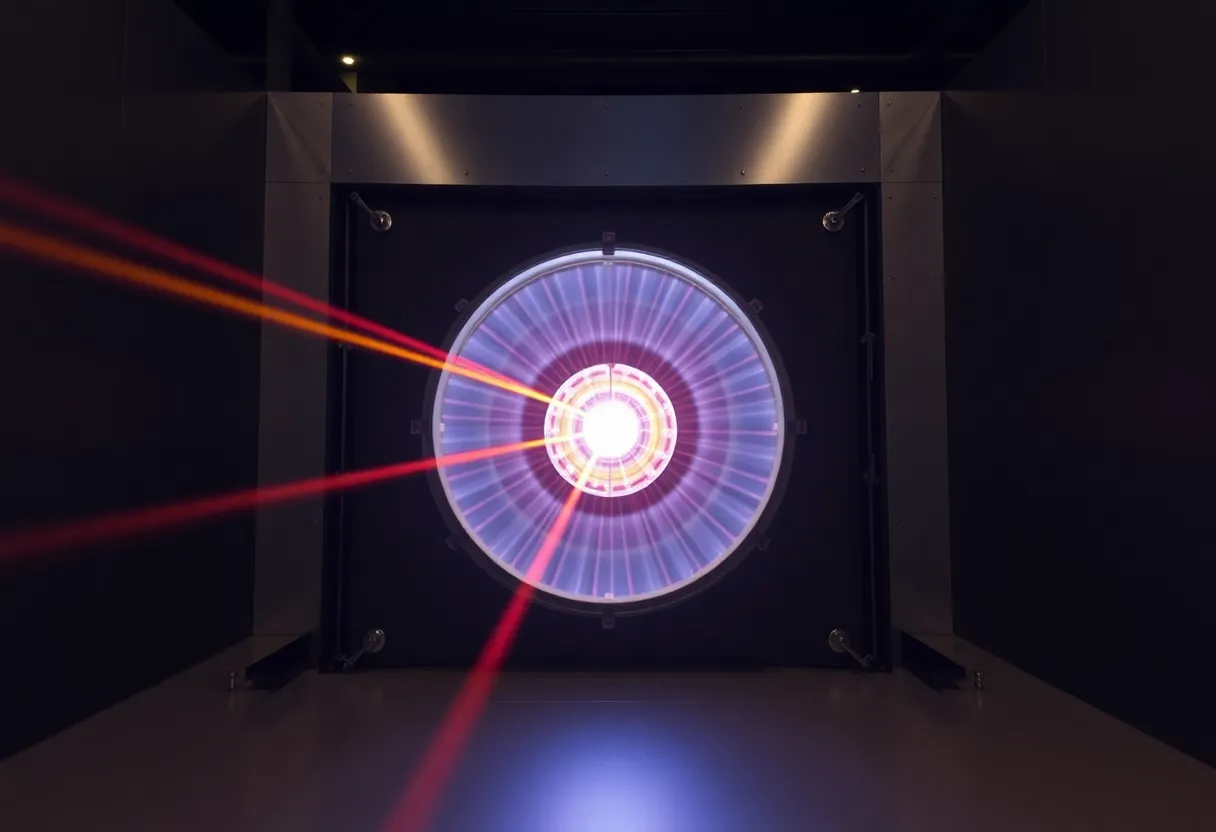
Inertial confinement fusion (ICF) takes a completely different approach. Instead of magnetically confining a large, sustained plasma, ICF rapidly compresses a small pellet of deuterium-tritium fuel using intense beams of laser light or other drivers. The compression is so rapid and violent that fusion reactions begin before the plasma has time to fly apart. The “confinement” is provided by the plasma’s own inertia—hence the name.
The National Ignition Facility (NIF) at Lawrence Livermore National Laboratory in California demonstrated ignition—fusion reactions producing more energy than the energy deposited in the target—for the first time in December 2022. In that experiment, 2.05 megajoules of laser energy produced 3.15 megajoules of fusion energy, a gain of roughly 1.5. Subsequent shots have achieved even higher yields.
This was a genuine scientific milestone—the first demonstration of burning plasma and thermonuclear ignition in a laboratory setting. But the path to a power plant is long. The NIF’s lasers consume about 300 megajoules of electricity to produce those 2 megajoules of laser energy delivered to the target—the overall efficiency is deeply negative. A power plant would need targets costing cents (NIF targets cost tens of thousands of dollars each), repetition rates of perhaps 10 shots per second (NIF can do a few shots per day), and lasers an order of magnitude or more more efficient. None of these are solved problems.
Private Fusion: What the New Companies Are Doing
Something unprecedented has happened in fusion over the past decade: private companies have raised billions of dollars to develop commercial fusion energy, betting that advances in high-temperature superconductors, computing, plasma physics knowledge, and manufacturing can compress the timeline from government-led megaprojects to smaller, faster commercial machines.
Commonwealth Fusion Systems (CFS), spun out of MIT, is building the SPARC tokamak using high-temperature superconducting (HTS) magnets that can achieve field strengths of 20 Tesla—roughly twice what ITER’s conventional superconducting magnets achieve. Stronger magnets allow smaller machines while achieving the same plasma performance (plasma confinement scales strongly with magnetic field strength). SPARC is designed to achieve Q>2 in a machine much smaller than ITER, and CFS plans a commercial pilot plant (ARC) that would feed power to the grid. SPARC construction began in 2021; first plasma is targeted for the late 2020s.
Helion Energy uses a different approach—field-reversed configuration (FRC) plasma, compressed by electromagnets to temperatures where fusion occurs, with energy recovered directly from the decelerating plasma rather than through a steam cycle. Helion secured a power purchase agreement with Microsoft in 2023 contingent on demonstrating fusion power by 2028. Whether Helion will meet that timeline is uncertain, but the commitment reflects genuine private sector confidence in the approach.
TAE Technologies, Tri Alpha Energy (now TAE), and others are pursuing alternative fuel cycles—including proton-boron fusion—that would produce fewer neutrons (making the reactor easier to engineer and shielding less demanding) but require significantly higher temperatures to ignite.
The Remaining Hard Problems
The reasons fusion remains difficult are real and have not been wished away by investment or enthusiasm:
Tritium breeding and supply: D-T fusion requires tritium, which is currently produced mainly as a byproduct of CANDU nuclear reactors. World tritium supply is limited to a few kilograms. A fusion power plant would need to breed its own tritium from lithium in a “breeding blanket” surrounding the reactor. No fusion machine has yet demonstrated tritium breeding at scale, and tritium self-sufficiency is essential for any commercial fusion program.
Material challenges under neutron bombardment: D-T fusion produces energetic 14.1 MeV neutrons—far more energetic than fission neutrons—that damage structural materials by displacing atoms from crystal lattices. The materials science of what happens to reactor-wall materials under decades of high-energy neutron flux is not fully characterized, because no material has ever been exposed to fusion neutron fluences at the relevant scale. Developing materials that can withstand this environment and demonstrating that they perform as expected is a major outstanding challenge.
Plasma stability and control: Fusion plasmas are subject to instabilities—disruptions that can rapidly terminate confinement. Managing disruptions, preventing them, and if they occur, limiting the damage to the reactor wall are active research challenges. Large tokamaks like ITER will need sophisticated real-time control systems to maintain stable plasma operation.
Energy conversion efficiency: Converting fusion energy (mostly carried by neutrons) to electricity adds engineering complexity and efficiency losses. Most D-T fusion concepts use a steam cycle (neutrons heat a blanket, which heats steam, which drives a turbine)—the same basic approach as fossil fuel and fission plants, with similar thermodynamic efficiency limits.
A Realistic Assessment
The most significant change in fusion’s prospects is not a new physics discovery—the physics has been understood for decades. It’s the combination of high-temperature superconducting magnets enabling smaller, more powerful machines, and the influx of private capital that has created multiple simultaneous development paths with shorter design cycles than government megaprojects.
The realistic scenario is that fusion power plants begin to exist in the 2030s–2040s—first as demonstrations, then (if they work as designed) as commercial plants. This is later than some company timelines suggest and earlier than the “always 30 years away” cliché. The path is not clear of obstacles, but it no longer requires unknown physics. What it requires is sustained engineering effort, materials science advances, and operational experience that no fusion experiment has yet accumulated.
Whether fusion arrives in time to contribute significantly to the climate transition—which needs massive decarbonization by 2050—is a separate question from whether fusion will eventually work. The energy transition will be substantially determined by technologies that exist and are scaling now. Fusion, if it works on the optimistic timeline, may arrive just in time to contribute to a second phase of decarbonization in the second half of the century.