What the Analog Synthesizer Revival Says About Digital Fatigue in Music Tech

Jonah Pruitt
July 9, 2026
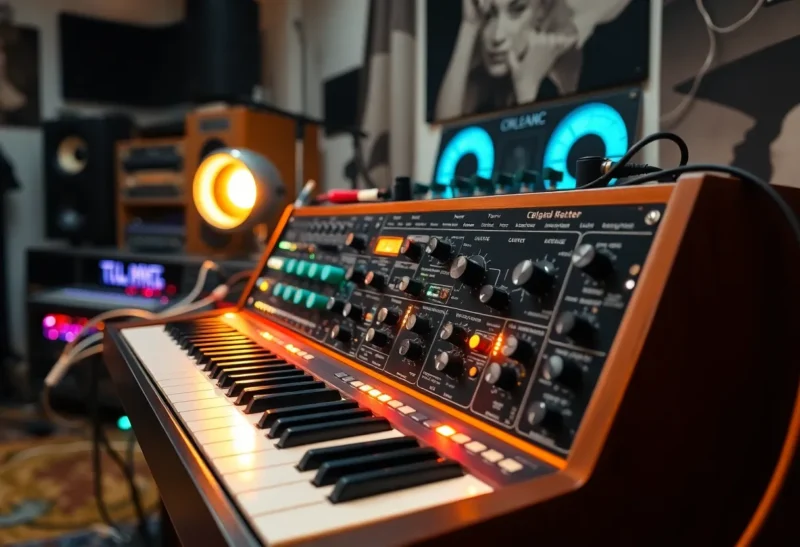
Walk into any modern music gear shop and you’ll find something that shouldn’t, on paper, still exist: brand-new analog synthesizers, built with discrete transistors and op-amps instead of digital signal processors, selling briskly at prices that often exceed what a laptop running a full software studio would cost. Moog, Behringer, Make Noise, and a growing list of boutique modular manufacturers are shipping analog gear at a volume that hasn’t been seen since the technology was actually cutting-edge in the 1970s. I’ve spent twelve years building modular synthesizers and touring with them, and the revival isn’t nostalgia dressed up as a trend — it’s a real response to something specific that happened to musicians during the software era, and it’s worth taking seriously as a signal rather than a fad.
How Complete the Digital Takeover Actually Was
To understand why the pushback happened, it helps to remember how total the digital transition was. By the mid-2000s, software synthesizers and digital audio workstations had made analog hardware functionally optional for almost any kind of music production. A laptop running a DAW like Ableton Live or Logic, paired with plugin synthesizers modeling classic analog circuits, could reproduce an enormous range of sounds at a fraction of the cost, size, and maintenance burden of physical hardware. For most practical purposes — polyphony, preset recall, integration with a broader production workflow, reliability — software won decisively, and an entire generation of producers built their entire practice inside a screen with a mouse and MIDI controller, sometimes never touching a physical synthesizer at all.
That transition delivered real, undeniable benefits: bedroom producers with no capital could access sounds that once required a studio’s worth of expensive equipment, collaboration got easier since project files could be shared instantly, and the barrier to entry for making finished, professional-sounding music collapsed. None of the analog revival that followed is an argument against any of that. It’s a response to something the digital transition didn’t deliver, even as it delivered everything else.
What Actually Went Missing
The complaint that keeps surfacing across interviews with working musicians, gear reviewers, and the modular synth community isn’t really about sound quality in the narrow technical sense — modern digital emulation has gotten remarkably accurate at reproducing the frequency response and harmonic content of classic analog circuits. It’s about something harder to quantify: the physical, tactile relationship between a musician’s hands and the sound-generating process, and the specific kind of unpredictability that comes from real analog circuits.
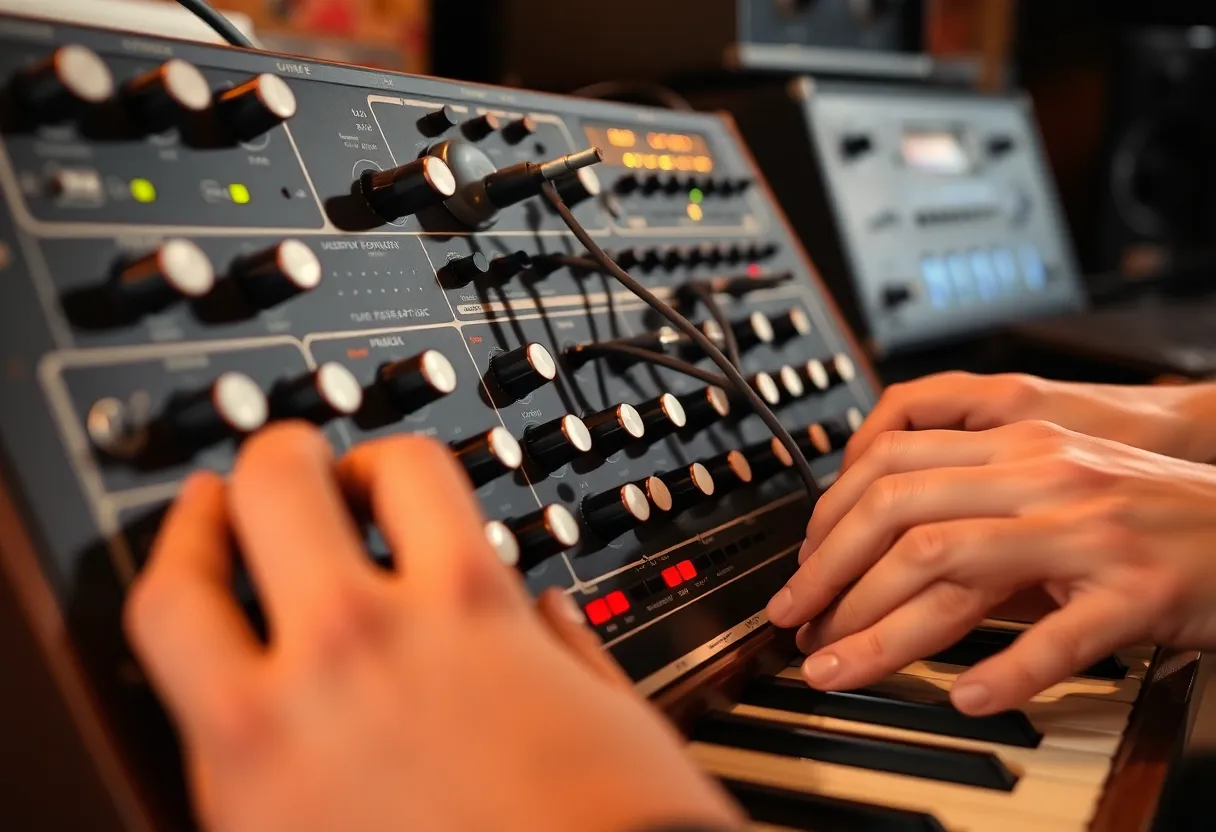
Analog oscillators drift slightly with temperature and component tolerance in ways that are technically “imperfections” but that many musicians describe as feeling alive in a way a perfectly stable digital oscillator doesn’t. Patching a modular system by hand, physically routing signal paths with cables rather than clicking through menus, forces a different, slower, more embodied compositional process — several prominent electronic musicians (Jean-Michel Jarre and members of groups like Autechre have discussed this in interviews) have described discovering sounds they wouldn’t have found by deliberately programming a plugin, precisely because the hands-on process invites experimentation that a mouse-driven interface with infinite undo doesn’t.
There’s also a well-documented psychological dimension that isn’t unique to music: screen-based creative work of all kinds has accumulated a body of complaint, sometimes labeled “digital fatigue,” describing the particular exhaustion of endless menus, infinite parameter automation, and the paralysis of unlimited undo and unlimited plugin choice. A hardware synthesizer with sixteen knobs and no undo button forces decisions in a way that a software instrument with a thousand hidden parameters across nested menus doesn’t, and a lot of musicians report that constraint is what actually helps them finish tracks rather than endlessly tweak them.
The Business Side That Made the Revival Possible
None of this sentiment would have translated into an actual market without a specific manufacturing shift: the cost of producing analog circuitry at scale dropped substantially over the last fifteen years, driven partly by Behringer’s aggressive, controversial strategy of reverse-engineering and reissuing classic synthesizer designs (the Moog Minimoog, the Roland TB-303, and dozens of others) at a fraction of vintage or boutique pricing. Whatever the ethical debate around that strategy — and it’s a real one, given the original designers rarely see royalties from these reissues — it demonstrably expanded the market by putting genuinely capable analog hardware within reach of musicians who couldn’t have justified a $3,000 vintage Minimoog or an equivalent boutique clone.
Eurorack modular synthesis, an open format where modules from dozens of different manufacturers can be mixed and matched in a shared case, has been the other major structural driver. It turned synthesizer building into something closer to a hobbyist ecosystem — smaller manufacturers can enter the market building a single module rather than needing to design and market an entire instrument, which has produced an explosion of niche, specialized analog and hybrid designs that wouldn’t have been commercially viable as standalone products. Industry trade data (from outlets like Sound On Sound and modular-focused retailers) has tracked consistent year-over-year growth in the Eurorack category specifically, even as broader consumer electronics spending has been uneven.
It’s Not Actually a Rejection of Digital Tools
The framing that gets this revival wrong is treating it as a binary rejection of software in favor of hardware. In practice, the musicians driving this trend overwhelmingly use both, and the interesting development isn’t hardware replacing software — it’s hybrid workflows becoming the norm, where analog synthesizers and modular systems are integrated into a production process that still relies heavily on a DAW for recording, editing, and mixing. Companies have responded to this reality directly: Moog, Arturia, and others now build hardware with extensive MIDI and CV integration specifically designed to interface cleanly with software, rather than positioning hardware as a software replacement.
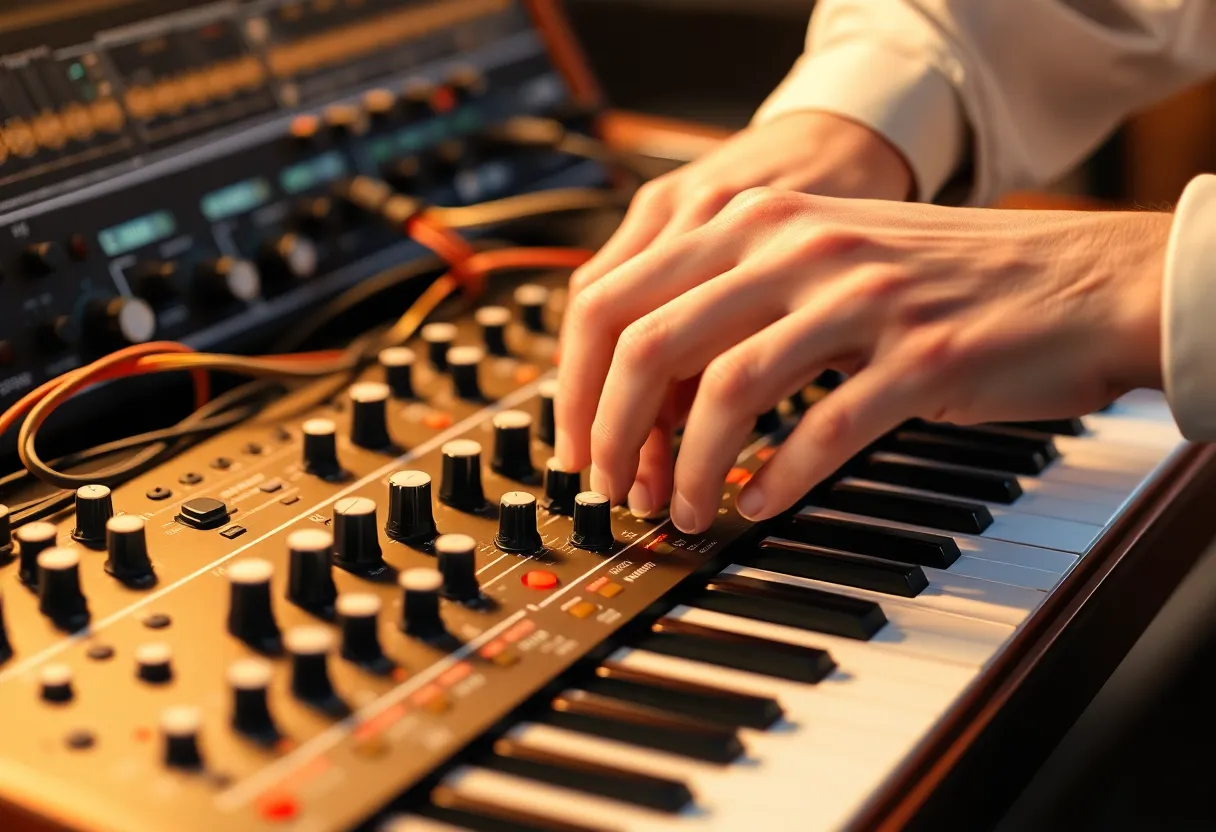
Software companies have responded to the same underlying demand in their own way, building “hardware-feeling” software interfaces — Native Instruments’ Maschine and Ableton’s Push controllers are explicitly designed to give tactile, hands-on control back to a fundamentally digital and software-based workflow, an implicit acknowledgment from the software side that the tactile complaint driving the analog revival was real and addressable without abandoning digital’s actual advantages in recall, editing, and integration.
What This Signals Beyond Music Tech
The pattern here isn’t unique to synthesizers, and it’s worth naming the broader signal it points to: creative and productivity tools that offer unlimited flexibility and infinite undo often produce a specific kind of fatigue that comes precisely from the absence of constraint, and there’s a growing, cross-domain appetite for tools that reintroduce deliberate friction as a feature rather than a limitation. Film photography’s resurgence among people who grew up entirely digital, vinyl records outselling CDs despite streaming’s obvious convenience advantage, and mechanical typewriters finding a niche audience among writers seeking distraction-free composition all share the same underlying logic as the synth revival — the constraint isn’t a bug people are tolerating, it’s the actual feature they’re paying for.
For music technology specifically, the realistic trajectory isn’t analog displacing digital the way digital once displaced analog — the economics and workflow advantages of software are too large and too real for that. It’s a stable, durable niche for physical, tactile, deliberately constrained instruments existing permanently alongside the flexible, unlimited digital tools that will keep dominating most actual production work. That’s a more interesting outcome than either side “winning,” and it’s the one the market has actually settled into over the last several years, evidenced by the fact that even software companies now build hardware controllers to chase the exact feeling that started this whole revival in the first place.