Why Handheld PC Clones Are Racing to the Bottom on Price, Not Quality

Chloe Pemberton
July 9, 2026
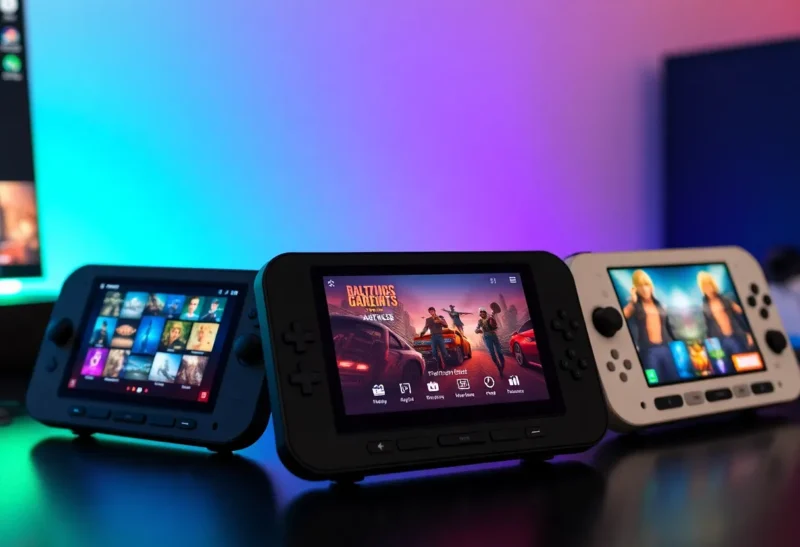
Since Valve’s Steam Deck normalized the idea of a pocketable Windows-or-SteamOS gaming PC, the market that followed hasn’t so much diversified as multiplied. Ayaneo, GPD, OneXPlayer, Ayn, Retroid, and a rotating cast of smaller Shenzhen manufacturers have all released devices that, from six feet away, look like the same handheld with a different logo stamped on the shell. What’s changed in the last two years isn’t the concept — it’s the price war underneath it, and it’s producing a market segment that’s cheaper and more crowded but not obviously better for anyone buying at the bottom of the range.
I’ve reviewed dozens of these devices over the past several years, and the pattern by now is familiar enough that I can predict most new releases from the spec sheet alone. That predictability is itself the story.
Why the Race Started
The handheld PC category exists because a specific supply chain condition made it possible: AMD’s Van Gogh and later Phoenix/Hawk Point APUs (the same family of chips powering the Steam Deck and ROG Ally) became available to third-party manufacturers, giving small companies access to genuinely competent x86 gaming silicon without needing their own chip design capability. Once that door opened, the barrier to entering the handheld market dropped to “source the chip, design a shell, ship a Windows or Linux image” — a much lower bar than building a smartphone or laptop business from scratch.
That low barrier explains why so many manufacturers entered at once, but it doesn’t fully explain the price collapse. That’s driven by something else: nearly every player in this space is using the same handful of AMD or, increasingly, MediaTek and Qualcomm ARM chipsets, sourcing extremely similar OLED and LCD panels from the same handful of Chinese display suppliers, and competing almost entirely on price and marginal feature differentiation because there’s very little room left to differentiate on core performance when everyone’s shopping from the same component catalog.
What “Racing to the Bottom” Actually Looks Like
The clearest evidence is in the sub-$400 segment, where devices using older or lower-tier chips (AMD’s Ryzen 5 7520U rather than the more capable Z1 Extreme, or budget ARM chipsets in Android-based handhelds) have proliferated fastest. These devices hit an attractive price point by cutting corners that don’t show up on a spec sheet comparison: smaller batteries that deliver noticeably shorter real-world runtime than advertised, thermal solutions that throttle hard under sustained load because the cooling budget was cut to hit a price target, lower-quality analog thumbstick potentiometers that develop drift within months rather than years, and support and firmware update commitments that range from minimal to effectively nonexistent once a device stops selling.
None of this is illegal or even necessarily dishonest — the specs quoted are usually technically accurate under ideal conditions. But “technically accurate under ideal conditions” and “what you’ll actually experience playing a demanding game for two hours on a train” are different claims, and the gap between them has widened as more manufacturers compete purely on the headline price and paper spec rather than sustained real-world performance, which is harder to market and much easier to compromise on invisibly.

The Software Fragmentation Problem
Hardware corner-cutting is at least measurable. The bigger, harder-to-quantify problem in this segment is software support, and it’s gotten worse as the manufacturer list has grown. Valve controls SteamOS end to end for the Steam Deck, and while that comes with its own tradeoffs (limited native compatibility outside Steam’s ecosystem), it means updates, driver support, and a consistent user experience are guaranteed for the device’s lifetime by a company with obvious long-term incentive to maintain it.
Most third-party handhelds ship Windows, which theoretically offers broader software compatibility but in practice means Windows’ famously poor touch and controller-first UI experience gets bolted onto a tiny screen with no real optimization layer, and manufacturers rarely invest in the kind of custom shell software (Asus’s Armoury Crate SE being a partial exception) that would make the experience coherent. BIOS and driver updates for smaller manufacturers are frequently irregular, sometimes requiring you to flash firmware from a forum thread rather than an official update channel, and long-term support tends to evaporate within a year or two of a device leaving production, especially for the smaller, more numerous companies at the low end of the price range.
Where the Race Actually Produces Real Value
It would be unfair to frame this purely as a race to the bottom with no upside, because competition has genuinely pushed a few things forward. OLED panels, once an expensive premium feature limited to flagship devices, are now common in the $500-$700 range across multiple brands, largely because panel costs have dropped as more manufacturers order at volume. Battery life and thermal engineering at the upper-middle tier — devices in the $600-$900 range from established players like Ayaneo and GPD — have genuinely improved generation over generation as these companies have gained manufacturing experience and, in some cases, invested in proprietary cooling designs that outperform reference AMD cooling solutions.
Competition has also forced faster iteration cycles than a single-vendor market would produce. New chipsets from AMD and increasingly capable ARM alternatives reach handheld form factors within months of availability, rather than the multi-year cadence a monopoly market might tolerate. If you’re specifically shopping in the upper-middle price tier from an established brand with a track record, the competitive pressure has probably worked in your favor.

How to Actually Shop This Category
A few practical filters separate a good purchase from a regretted one in this crowded field. First, check whether the chipset is a current-generation part or a rebadged older chip being sold at a discount — a Z1 Extreme or newer Ryzen AI part will meaningfully outperform a 7520U-class chip in sustained gaming load, regardless of what the marketing copy emphasizes. Second, look specifically for independent sustained-performance reviews rather than spec-sheet comparisons; outlets that test 30-minute gaming sessions rather than short benchmark runs will expose thermal throttling that a quick review might miss entirely. Third, weigh the manufacturer’s track record on firmware support — companies that have shipped multiple device generations with continued updates to older models (Valve and, to a lesser extent, Asus and Lenovo) carry materially lower long-term risk than newer entrants with a single product cycle behind them.
Finally, be honest about your actual use case. If you mostly play less demanding indie or older titles, the bottom tier’s performance shortfalls matter much less, and the price savings are real and worth taking. If you want to play current AAA titles at reasonable settings for more than 20 minutes without your framerate collapsing, the bottom tier’s corner-cutting will show up exactly where it hurts, and paying up into the middle tier is the more honest bargain even though the sticker price looks worse.
What This Market Looks Like in a Few Years
The most likely outcome isn’t consolidation to one or two winners — the barrier to entry is still low enough that new manufacturers will keep appearing — but a clearer stratification between a small group of brands that have built real engineering differentiation and software support (Valve, and probably Asus and Lenovo given their broader resources) and a large, churning field of budget entrants that compete purely on price with correspondingly higher failure and abandonment rates. That’s not a unique story in consumer electronics — it’s roughly what happened with Android smartphones a decade ago — but it means the burden is increasingly on buyers to know which tier they’re actually shopping in, because the marketing across all of them looks remarkably similar right up until the moment the device is in your hands.