Wearable Devices as AI Endpoints: Why Edge Computing Changes Everything

Dex Hartmann
July 7, 2026
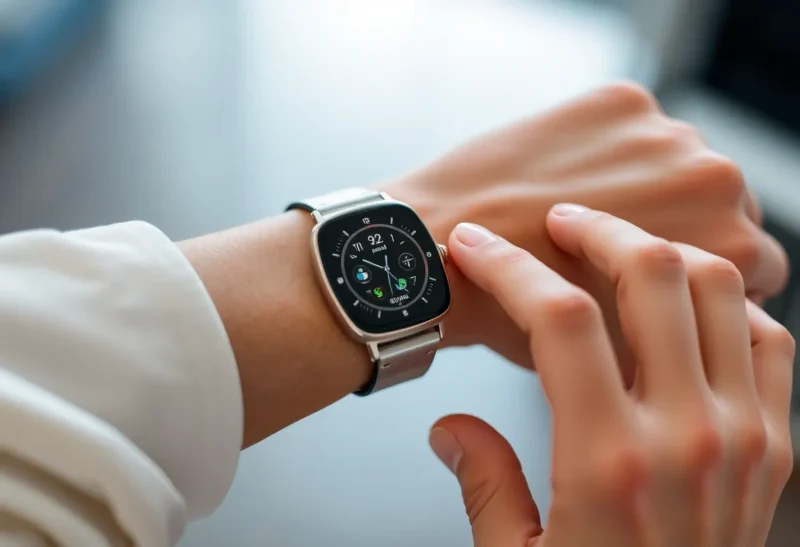
The AI features in today’s smartwatches, wireless earbuds, and smart glasses fall into two distinct categories, and the distinction is more important than it might appear. Some features—voice recognition, health metric analysis, fall detection—rely on sending data to cloud servers, where the AI model processes it and returns a result. Others run inference directly on the device itself: the computation happens in a chip the size of a fingernail, consuming milliwatts of power, without any network request.
This distinction—cloud inference versus on-device (edge) inference—is the architectural axis that will define what wearable AI can actually become. Understanding why edge matters changes how you evaluate wearable devices and what you should expect from the next generation of them.
Why Cloud AI Is Not Enough for Wearables
The cloud approach to AI in wearables works well under specific conditions: when you have a reliable internet connection, when latency tolerance is a few hundred milliseconds or more, when battery life isn’t constrained by continuous radio transmission, and when the data being processed is acceptable to send to a server. These conditions are met often enough that cloud-connected wearable AI is useful—but they’re violated often enough that cloud dependency is a genuine architectural limitation.
Latency is the most fundamental constraint. A smartwatch health feature that requires a round-trip to a cloud server takes hundreds of milliseconds at minimum. For features like real-time noise cancellation in earbuds, real-time translation in smart glasses, or urgent health alerts, that latency is prohibitive. The human auditory system perceives delay above roughly 10–20 ms in real-time audio processing, which makes cloud-based noise cancellation essentially impossible in terms of human perception—and cloud-based translation with sub-100 ms latency impossible given network physics.
Connectivity is intermittent in the real world. A wearable that loses AI capability whenever the phone is out of Bluetooth range, or when in an area with poor cellular signal, degrades in exactly the situations where continuous ambient intelligence would be most useful—exercising in a park, in a building with poor coverage, travelling underground. Edge AI maintains full functionality regardless of network state.
Privacy is increasingly important for continuous health and environmental monitoring. Continuous audio processing, heart rhythm analysis, blood oxygen monitoring, and skin conductance sensing generate a stream of intimate personal data. Processing this data on-device rather than in a cloud eliminates the transmission and storage surface for that data—no server ever receives it. As wearable sensors become more physiologically revealing, this distinction matters more.
The Hardware That Makes Edge AI Possible
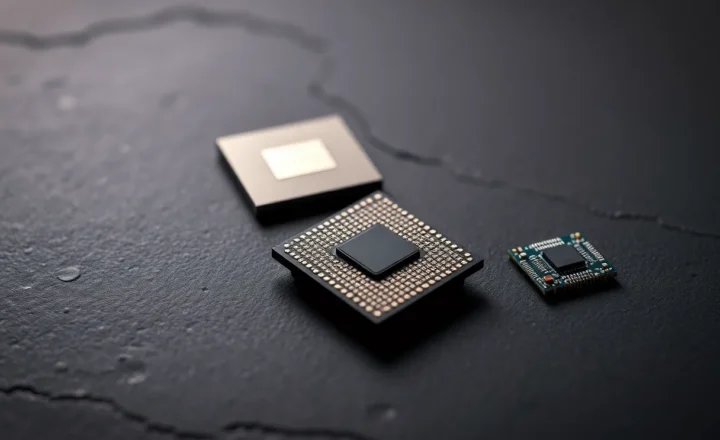
The enabling technology for edge AI in wearables is the Neural Processing Unit (NPU)—a specialised processor core designed specifically to accelerate the matrix multiplication operations that underlie neural network inference, at a fraction of the power cost of a general-purpose CPU performing the same computation.

Apple’s S-series chips (in Apple Watch) and the W-series chips (in AirPods) include dedicated NPUs. Qualcomm’s Snapdragon Wear platform includes an AI accelerator. The latest generation of true wireless earbud chips from Qualcomm, MediaTek, and Apple include dedicated audio processing silicon. These chips can run compressed neural networks—quantised models that trade some accuracy for dramatically reduced model size and computation cost—at power levels that don’t significantly affect battery life.
Model compression techniques—quantisation (reducing numerical precision from 32-bit to 8-bit or lower), pruning (removing low-weight model connections), and knowledge distillation (training a smaller “student” model to replicate a larger “teacher” model)—have made it possible to fit surprisingly capable AI models into extremely constrained hardware. A voice wake-word detector that reliably recognises a single phrase can run continuously on a few microwatts. A heart rhythm anomaly detector capable of identifying atrial fibrillation patterns runs on milliwatts in Apple Watch. A noise-cancelling model that suppresses background audio in real time runs on the chip inside AirPods Pro—all without touching the cloud.
What Edge AI Enables That Cloud AI Cannot
Beyond solving the latency and connectivity problems, edge AI enables qualitatively different capabilities that cloud inference doesn’t.
Persistent ambient awareness: An always-listening earpiece that continuously monitors for sounds requiring attention—a car horn, a baby crying, someone calling your name—can run on-device at extremely low power, continuously, without the battery drain and privacy implications of continuous cloud streaming. This always-on, ambient intelligence model is qualitatively different from “press a button, speak to cloud, get a response.”
Real-time audio processing: Adaptive noise cancellation in AirPods Pro processes audio faster than human perception can detect, applying continuously adjusting filters in real time. This is only possible with on-device processing at sub-millisecond latency. The same applies to hearing enhancement features (transparency mode, conversation boost) and nascent hearing aid features built into premium earbuds.
Continuous health monitoring without network dependency: Continuous ECG monitoring, blood oxygen tracking, and on-device atrial fibrillation detection in Apple Watch all run locally. The alert that tells you something medically significant is happening can fire even in airplane mode, in a rural area, or during a workout where the phone is left behind. Cloud-dependent health alerts can’t make this guarantee.
Personalised models without data leaving the device: On-device learning allows the model to adapt to the specific user without sending personal data to a server. A hearing model that learns a user’s voice patterns over weeks of use can personalise its noise suppression without any of that personalisation data leaving the device.
The Coming Generation: Wearables as Active AI Agents
The next phase of wearable AI, visible in current research and early products, involves devices that don’t just passively process sensor data but actively participate in the user’s information environment as AI agents with local context and persistent memory.

Smart glasses with real-time vision processing—identifying objects, reading text, recognising faces, overlaying contextual information in the user’s field of view—require edge AI for the latency and bandwidth reasons already described. Camera streaming to a cloud for analysis and back would be too slow, too bandwidth-intensive, and too privacy-invasive for continuous use. Meta’s Ray-Ban smart glasses, with their on-device AI assistant features, and the growing market of AI-augmented glasses from various manufacturers, are early demonstrations of this direction.
AI earbuds that provide real-time translation—converting speech in one language to synthesised speech in the wearer’s language, with sub-second latency—are technically feasible with current and near-future chip capabilities. The language models required can be quantised to fit within earbud processing budgets; the limiting factor is chip capability, which is advancing rapidly.
Biometric AI that runs continuously and provides genuine health insight—rather than just raw data—is another frontier. Current devices detect specific patterns (AFib, blood oxygen drop, sleep apnoea indicators) from trained classifiers. Future devices with more capable NPUs and better sensor arrays may be able to run more general health models that detect anomalies across a broader range of physiological signals, alerting users to conditions before they become symptomatic.
The Architectural Divide Ahead
The wearables market is effectively dividing into two tiers based on on-device AI capability. Devices with dedicated AI silicon—high-end smartwatches, premium earbuds, AI-capable smart glasses—will increasingly differentiate on what they can do without cloud connectivity, without battery compromise, and without sending personal data to servers. Devices without AI silicon will remain cloud-dependent for intelligence features, with all the limitations that implies.
For buyers evaluating wearables, the relevant question is increasingly not “what AI features does this device have” but “where does the AI run.” Cloud-connected features work until the server goes down, the subscription lapses, or the company discontinues the service. On-device features work indefinitely, as long as the hardware functions. The architecture of intelligence turns out to matter as much as the intelligence itself.