The Reusable Rocket Revolution: What Changed in the Last Decade

Robin Hayes
February 24, 2026
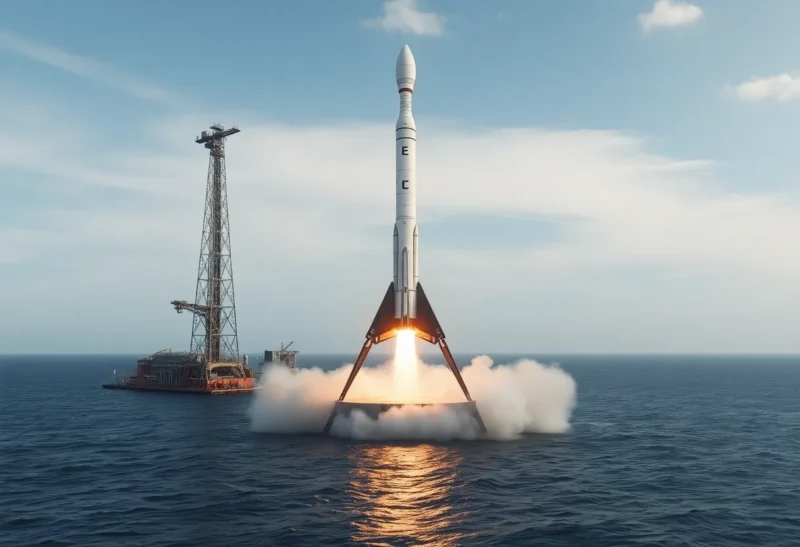
Ten years ago, reusing a rocket booster was still experimental. Today, the same hardware flies dozens of times, and the global launch industry has been reshaped around reuse. What changed wasn’t just one company—it was proof that the economics could work, followed by a wave of imitators, innovators, and skeptics turning into believers. Here’s what the reusable rocket revolution actually did in the last decade.
From Experiment to Norm
SpaceX’s first successful booster landing was in 2015. Before that, every orbital rocket stage was thrown away after one use. The idea of landing a booster on a barge or a pad seemed like science fiction. A decade of iteration—failures, redesigns, and incremental improvements—turned it into routine. Falcon 9 boosters now routinely fly 20 or more missions. That’s not just a technical win; it’s an economic one. The cost per launch drops when the most expensive part of the vehicle comes back.
Other players have followed. Rocket Lab recovered and reflown an Electron stage. Blue Origin’s New Shepard was designed for reuse from the start. China and Europe are developing reusable vehicles. The question is no longer “can we do it?” but “how fast and how often can we do it?”
What Actually Changed
Launch cadence. Reuse lets the same hardware fly again in weeks instead of building a new rocket in months or years. That means more launches per year from fewer boosters. The global launch rate has risen sharply; reuse is a big part of why.
Cost structure. Even with refurbishment, reusing a stage is cheaper than building a new one. That lowers the price of access to space for satellites, science, and eventually crew. It doesn’t make space cheap overnight—but it shifts the curve.
Design philosophy. New vehicles are now designed with reuse in mind from day one. Engines, structures, and recovery systems are part of the baseline. Disposable rockets are still around for some missions and some countries, but the industry default is shifting toward “build once, fly many.”
Competition and copycats. Success forced everyone else to take reuse seriously. Some are building their own reusable systems; others are focusing on niches where expendable still makes sense. The landscape is more varied and more competitive.
What Hasn’t Changed Yet
Reuse is still concentrated in a few vehicles and a few operators. Most launches worldwide still use expendable rockets. Upper stages are almost always thrown away. Deep space and human-rated systems are still catching up. So the revolution is real but incomplete—it’s the direction of travel, not the end state.
What the Next Decade Might Bring
Expect more vehicles designed for full or partial reuse, higher flight rates for individual boosters, and more players (national and commercial) adopting the model. Fully reusable upper stages or spacecraft would be the next leap—harder than booster reuse, but the same logic applies. The last decade proved reuse works. The next one will prove how far it can go.