The Hidden Economics of Airport Design—Why They’re Built the Way They Are

Helena Voss
July 7, 2026
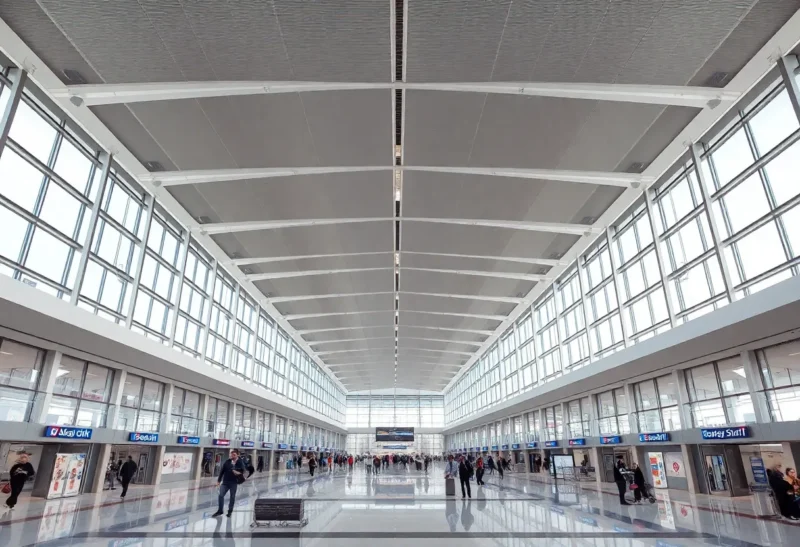
Airports are confusing. The layout of most major airports seems calculated to maximize the distance between where you arrive and where you need to go, the retail is expensive and mediocre, and no one has ever found the right terminal on the first attempt without signage. These frustrations feel like design failures — the result of poor planning or indifference to passenger experience. The reality is more interesting: most of the features that frustrate passengers exist because airports are optimized for goals that often conflict with passenger convenience. Understanding the economic structure of airports explains why they’re built the way they are and why attempts to improve them are more constrained than they appear.
Airports Don’t Make Money on Flights
The most important fact about airport economics is that airlines — the entities most associated with airports — are not the primary revenue source for the airport itself. Aeronautical fees (landing fees, gate fees, passenger head taxes) typically cover only a fraction of an airport’s operating and capital costs. The revenue source that allows airports to cover costs and fund expansion is non-aeronautical revenue: retail, food and beverage, parking, car rental concessions, advertising, and hotel and conference facilities.
At major international airports, non-aeronautical revenue often represents 40–60% of total revenue. This inversion — the terminal is the product, not the planes — explains many design decisions that seem counterintuitive from a passenger experience perspective. Every minute a passenger spends in the terminal rather than in the air or at the gate is a minute available for retail spending. The architecture and wayfinding of terminals are often designed, consciously or unconsciously, to maximize dwell time in retail zones — which is why the path through security consistently deposits you in the middle of duty-free shops rather than directly at your gate.
The Gate Assignment Problem
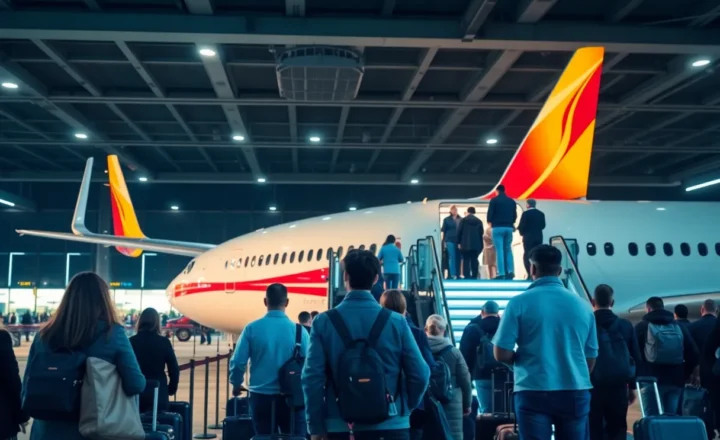
Gate assignment at major airports involves optimizing a multi-variable problem with significant constraints. The optimal assignment minimizes ground taxi time for aircraft (reducing fuel burn and turnaround time), accommodates connection banks (groups of arriving and departing flights that should be close together for transferring passengers), fits the aircraft type to the gate (larger aircraft need specific gate infrastructure), and balances terminal loads. The solution rarely optimizes for the convenience of any individual passenger because individual passenger routing is a lower priority than operational efficiency.
Hub airports with high connection volumes face a specific design challenge: connecting passengers need to reach departure gates from arrival gates within often-tight layover windows, but arrival and departure gates are distributed across large terminal complexes. The design response — long linear concourses, underground people movers, between-terminal trains — is solving the connection problem for the average case, but creates long walks for passengers whose specific connection is at the maximum distance. This is inherent to the hub-and-spoke model, not a solvable layout problem.
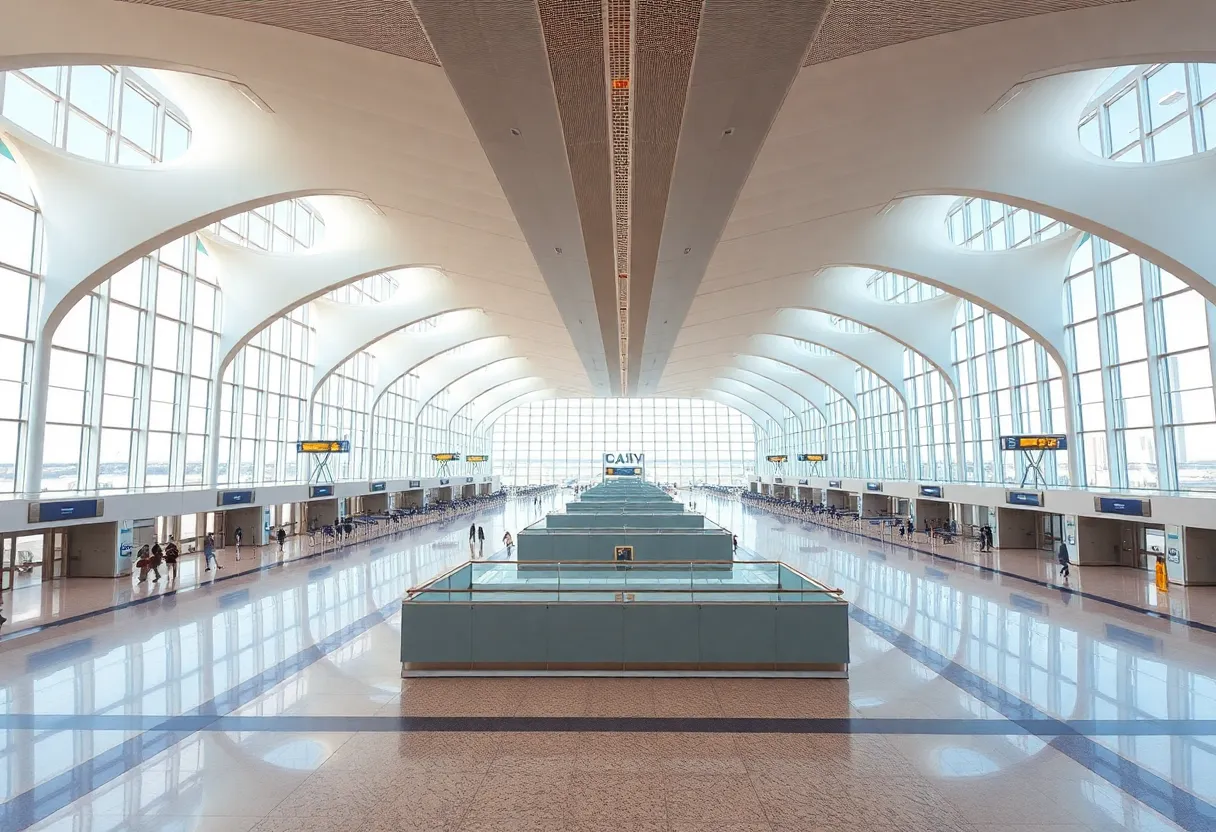
Terminal expansions compound the issue because airports rarely get to start from scratch. New concourses are added to existing infrastructure, creating layouts that reflect the constraints of sequential expansion over decades rather than any single design vision. Heathrow’s complex multi-terminal layout, LAX’s horseshoe shape, and O’Hare’s chaotic multi-concourse structure all reflect airport growth that preceded modern master planning approaches. The airports built relatively recently with unified design — Denver International, Singapore’s Changi, Hong Kong International — show what airports look like when designed as complete systems from the outset.
Security Design and the Post-9/11 Layout
Modern airport layout is significantly shaped by post-2001 security requirements. The distinction between landside (publicly accessible) and airside (post-security) areas creates a physical separation that determines where in the passenger journey commerce can occur. Retail and food in the landside area reaches only meeters and greeters plus non-traveling visitors; retail in the airside area reaches all passengers who have passed through security — a captive audience with time to fill and no ability to leave and return.
This captive audience dynamic is well understood by airport commercial operators and the retailers who lease space in airports. Airports with extensive airside retail achieve higher per-passenger retail spend because passengers have no competitive alternatives. This explains the prevalence of expensive food in airport airside areas: the market is captive, the competition is absent, and the operational costs of airside retail (which must comply with security requirements for delivery) are genuinely higher. The economics support the pricing even if passengers resent it.
Security checkpoint design involves optimization for throughput (passengers processed per hour) and security effectiveness — two goals that sometimes conflict. Increasing throughput requires streamlined procedures, dedicated lanes, and fast-track programs (TSA PreCheck, CLEAR, Global Entry) that allow lower-risk passengers to use expedited screening. The dedicated PreCheck lanes at most major US airports are both a security efficiency measure (lower-risk passengers in faster lanes) and a revenue source (PreCheck enrollment fees go to TSA; CLEAR is a private company). The lane differentiation also serves as visible proof-of-concept for the paid expedited program, encouraging enrollment.
Parking and Ground Transportation Economics
Airport parking is one of the highest-margin revenue sources for airport operators. Parking structures cost significant capital to build but generate consistent, weather-independent revenue at pricing that reflects their captive-market status. The revenue from parking concessions subsidizes other airport operations — some airports use parking revenue to justify keeping aeronautical fees lower for airlines, which helps the airport compete for airline routes.
Ground transportation — taxis, rideshares, rental cars — generates fees through pickup and dropoff permits and dedicated facility charges. The rental car facilities at major airports (often consolidated into Rental Car Centers connected to terminals by dedicated people movers) are significant revenue sources through concession agreements. The rise of Uber and Lyft created initial disruption as rideshares avoided the taxi-equivalent fees; most airports have now established Transportation Network Company (TNC) zones with associated fees, converting rideshare volume into fee revenue.
Why Better Airports Are Harder to Build
Improving airports is constrained by several factors that don’t apply to most commercial real estate projects. Land is the primary constraint: major airports in dense metropolitan areas are built to their physical limits. Runway configuration, which determines capacity ceiling, is difficult and expensive to change — adding a runway at an existing airport requires environmental review, noise impact studies, land acquisition, and neighbor negotiations that often take 10–20 years and cost billions. London’s Heathrow expansion debates have continued for roughly 20 years.
Airline lease agreements lock in gate assignments, terminal assignments, and terminal use agreements for years. When an airline has a long-term gate lease, moving them to optimize layout requires negotiating the lease — which the airline has leverage to resist. The terminal layout of major airports often reflects historical lease arrangements as much as design intent.
Capital investment decisions are made by airport authorities that must balance passenger experience improvements against bondholders, airline cost sensitivity, and regulatory requirements. The economics that make airports profitable (retail capture, parking monopoly, TNC fees) are also the economics that create passenger frustration — and aligning those incentives requires either regulatory pressure (requiring airports to improve passenger experience as a condition of operation) or market competition (which is largely absent given airport monopoly positions). Understanding airports as constrained optimization problems rather than design failures makes their quirks more legible — even if not more comfortable.