Light Pollution and Satellite Streaks: What Astrophotographers Actually Do About It in 2026

Rowan Mercer
May 9, 2026
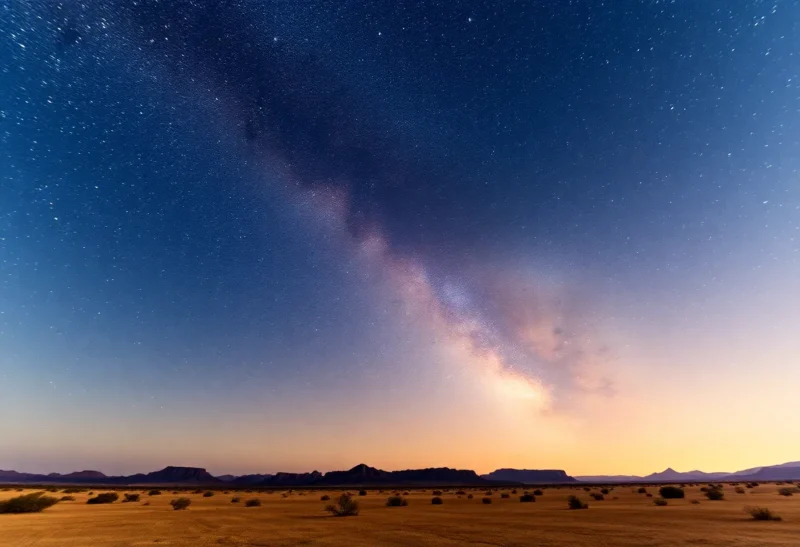
There was a time when “ruined exposure” meant a car’s headlights or a neighbor’s motion-activated flood. In 2026, astrophotographers keep two ledgers: the orange dome of urban skyglow that has crept outward for decades, and the bright, predictable scratches low Earth orbit now paints across long integrations. Neither problem has a consumer-grade off switch. Both reward stubborn technique and honest expectations.
This piece is written from the perspective of people who still drive to dark sites at 2 a.m., not from the policy offices where the real fixes live. You will get hardware choices, shooting tactics, and a clear-eyed view of what advocacy can and cannot change on a weekend timeline.
It also assumes you already know the basics: tracking mounts, calibration frames, and the patience to let a sequence run while you drink bad coffee from a thermos. If you are brand new, start with a static tripod under dark skies; the lessons about sky brightness still apply before you complicate life with autoguiders.
Light pollution: the slow thief you can partly outrun
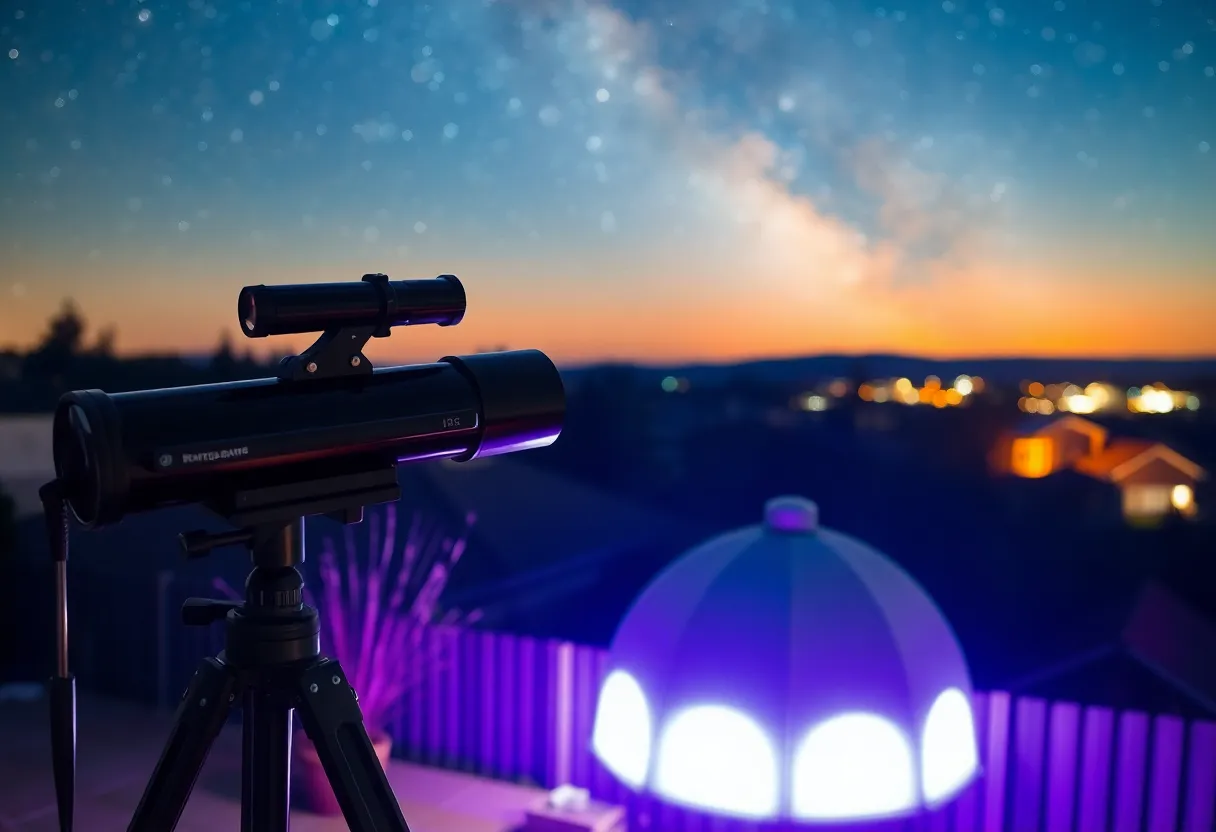
Sky brightness is measured in magnitudes per square arcsecond, but you do not need a photometer to feel it. If your horizon glows sodium-orange or LED-white, faint nebulae disappear first, then spiral arms, then the subtle dust lanes that make wide-field Milky Way images worth printing. The International Dark-Sky Association’s maps are a blunt instrument—resolution is coarse, local lamps matter—but they are still the fastest way to decide whether your backyard is a practice field or a finished canvas.
Practical mitigation starts with distance. A thirty-minute drive often beats a thousand dollars of filters because you are reducing diffuse glow, not trying to subtract it in post. When travel is impossible, narrowband filters (hydrogen-alpha and oxygen-III) can rescue emission nebulae from Bortle 7 skies, at the cost of natural star colors and extra exposure time. Broadband targets—galaxies, reflection nebulae, comets—remain the casualties of bright suburbs; no filter restores photons that never arrived cleanly at the sensor.
Satellite streaks: physics beats outrage
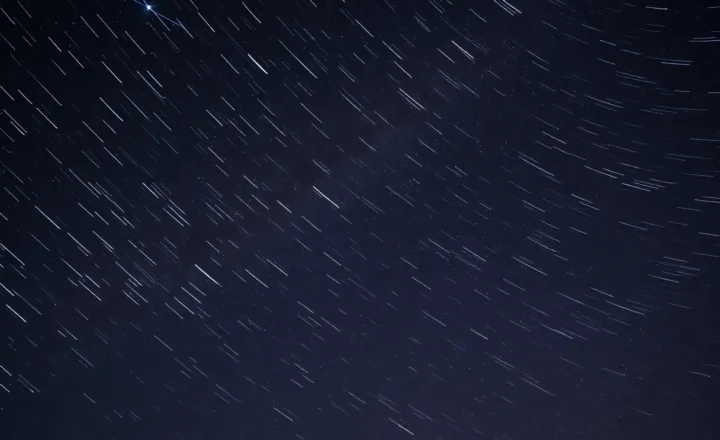
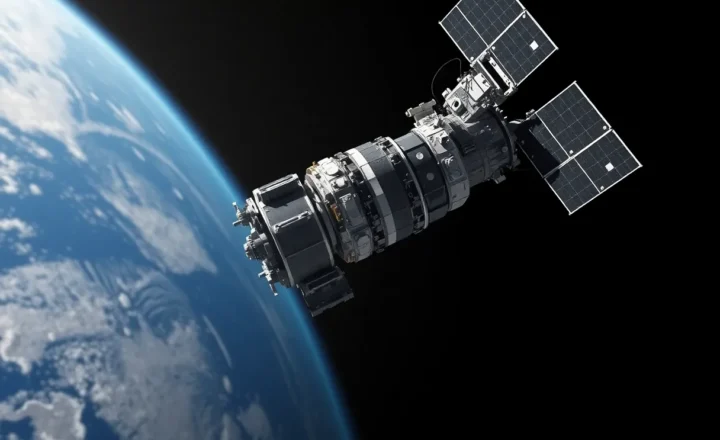
Mega-constellations are not random noise. Many spacecraft reflect sunlight for a while after astronomical twilight and again before dawn, when ground-based observers are most active. Streak brightness depends on geometry, panel orientation, and range. A single frame might catch a silent slash; a deep stack might contain dozens of micro-events that software must reject.
Astrophotographers rarely “solve” satellites in the field the way they dodge clouds. You note transit predictions when you can, you schedule integrations around worst windows when deadlines allow, and you accept that some nights are for calibration frames, not portfolio pieces. The community argument is not about denying connectivity; it is about quantifying impact on science sensors and aesthetic work—and pushing operators toward darker coatings and better ephemerides so mitigation is at least informed.
Capture tactics that still work in 2026
Shorter subs, more of them. Long single exposures maximize read noise on some cameras, but they also maximize the chance a satellite ruins the entire frame. Many imagers run one- to five-minute subexposures and stack hundreds. Outlier rejection algorithms—sigma clip, winsorized means, linear fit clipping—then drop trajectories without nuking nebula signal, provided you have enough frames for statistics to work.
Dithering. Nudging the mount slightly between subs spreads fixed-pattern noise and helps some stacking pipelines separate warm pixels from thin lines. It does not erase a bright streak, but it improves the odds that rejection routines treat it as an anomaly rather than structure.
Timing and latitude. Lower latitudes see more geostationary clutter in certain fields, while mid-latitude observers trade summer humidity for winter transparency. Seasonal planning is old news, but it intersects with satellite illumination in ways almanacs used to ignore. If your planning app now overlays satellite passes, learn which catalogs it uses and how stale they are; ephemeris errors still happen.
When a streak saturates the sensor
Not all satellite signatures are thin lines. Bright passes can bloom on CMOS sensors, especially on fast systems with large pixels. If you see a fat magenta smear instead of a razor scratch, your recovery options shrink: clipping may leave a colored void, and inpainting risks inventing nebula structure. Prevention beats surgery—watch predicted magnitudes, stop the sequence if a train is due through your field, and keep gain settings conservative enough that stars near frame edges are not already riding the top of the histogram.
Lunar phases still matter more than Twitter threads admit. A full Moon does not add streaks, but it raises the sky floor until satellites are harder to distinguish from glare and scattered light. Many imagers treat “bright Moon week” as narrowband-only or as maintenance time—flat frames, focus tests, cable management—so frustration does not accumulate on nights that were never going to yield a wall print anyway.
Software: where the repair budget lives
Modern stacking tools can mask lines, inpaint small gaps, and even attempt generative fills on wide-field mosaics. The ethical line for documentary work is simple: disclose heavy intervention. For art prints, the market rarely cares about algorithmic cosmetic surgery—but your personal bar might. A pragmatic workflow is to keep a “clean enough” master stack for print sales and an archival stack with minimal touch-ups for clubs or citizen-science uploads.
Transient alerts complicate things. If you are hunting fast-moving targets—supernovae, near-Earth asteroids—satellite trails are not only cosmetic; they confuse pipelines that assume streaks are rocks. Professional surveys have moved toward better classifiers; amateurs sharing data with brokers should document preprocessing steps so downstream users know what was clipped.
Advocacy without burning out your hobby
Local lighting wins still exist. Shielded fixtures, warmer color temperatures, and curfews on sports-field floods are fights a city council can understand, especially when you bring before-and-after sky photos from the same tripod location. Satellite mitigation is harder for individuals; commenting on FCC filings, supporting dark-sky chapters, and educating newcomers beats doom-scrolling launch videos.
Remember the social dimension: public star parties are how most people first learn Orion’s belt. If your pitch is only “the sky is ruined,” you lose the room. If your pitch is “here is how we keep both connectivity and stars—with design choices we already know how to make,” you align with parents, teachers, and kids who do not care about your $4,000 mount but do care about wonder.
Remote observatories: renting darkness, importing weather risk
Shared telescopes in Chile, Spain, or the U.S. Southwest sell dark sky by the hour. They can dodge your local Bortle 8 reality, but they introduce scheduling competition, weather roulette, and target window math you do not control. Read the fine print on how they handle unusable subs; some pools credit time, others do not. Satellite traffic is lower at some latitudes and longitudes, not zero—ask whether their stacking pipeline rejects streaks automatically or whether you download raw frames and do it yourself.
Gear honesty: what is worth upgrading
Before you finance another reducer, ask whether your darkest accessible site is the bottleneck. A modest scope under truly dark skies routinely outperforms a flagship rig under a parking-lot dome. Filters and mono cameras help emission targets; fast optics help if you can tame aberrations. None of that stops satellites, but it changes how painful each discarded sub feels.
If you shoot wide-field Milky Way panoramas with a tracker, prioritize a laser-sharp polar alignment routine and a bubble level you trust. Wide lenses exaggerate corner skyglow gradients; fixing tilt saves hours of gradient removal that masquerades as “satellite cleanup” in forum threads. For deep-sky rigs, autoguiders with sane aggressiveness matter more than another 50 millimeters of aperture when seeing is two arcseconds and your subs are short.
Reading the Bortle scale without defeatism
John Bortle’s nine-level scale is a shorthand, not destiny. Bortle 4 on a transparent winter night can beat Bortle 3 with high humidity and smoke. Track your own metrics: average background ADU per minute at a fixed gain, star counts in a test patch of Sagittarius, limiting magnitude of the faintest asterism you can resolve naked eye. When a new strip mall opens three miles away, your personal log will show the step change faster than a global map update.
Looking ahead without magical thinking
Neither light pollution nor low-orbit traffic will revert on a hobbyist’s timetable. The craft in 2026 is the same mix it has always been: scout locations, stack patiently, learn rejection math, and tell truthful stories about what the camera saw. The sky is crowded, but it is not empty—yet. The people who still point glass upward are the ones keeping the evidence vivid enough that the rest of the world remembers to look up.
If you take one habit into the next season, make it logging: exposure length, filter, moon phase, a one-line weather note, and how many subs you threw away to streaks. Data turns anecdotes into improvement. Over a year, those rows show whether you need a darker site, shorter subs, or simply fewer nights spent fighting both glow domes and low-orbit scratches at once. The sky owes you nothing; your notebook earns everything else.