How SpaceX’s Reuse Cadence Is Reshaping What Launch Costs Can Be

Walter Pryce
July 7, 2026
In 2010, the commercial launch industry had a relatively stable cost structure. A dedicated medium-lift rocket launch cost somewhere between $50 million and $200 million depending on the provider and payload. Atlas V, Delta IV, Ariane 5, Proton — these vehicles had different performance envelopes but similar economics: you built the rocket, launched it once, and it was gone. The cost of each launch included amortizing the full cost of building the vehicle.
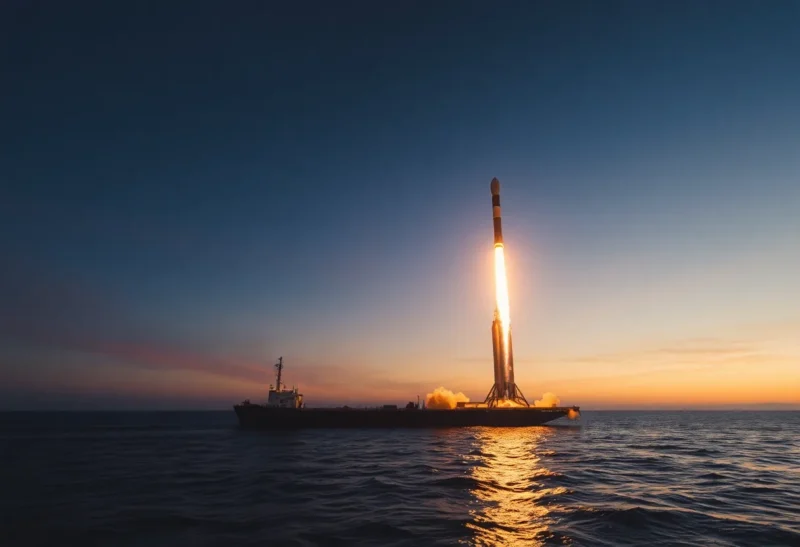
SpaceX started landing Falcon 9 boosters in 2015 and began flying recovered boosters in 2017. By 2026, the economic effects of booster reuse at scale have become concrete enough to analyze seriously — not as projected savings from a program in early development, but as observed behavior from a launch vehicle that has now flown individual boosters more than twenty times. The cost curve for getting mass to orbit has changed in ways that affect every actor in the launch market, from small satellite operators to national security missions.
The Reuse Math That Actually Matters
The Falcon 9 first stage represents roughly 70–75% of the total vehicle cost. SpaceX has never published detailed cost figures, but Elon Musk’s estimates, academic analyses, and comparison to the behavior of SpaceX’s pricing over time suggest the Falcon 9 costs somewhere between $30 million and $50 million to manufacture, with the first stage accounting for roughly $20–35 million of that.
A recovered and refurbished booster doesn’t cost $0 to reuse — there are refurbishment costs, inspection, potentially replacing components with finite lifetimes, and the cost of the propellant for the return burn. SpaceX has stated publicly that refurbishment costs are well under $1 million for routine reflights on well-flown boosters. Even if the actual number is $3–5 million for a full refurbishment cycle, the math is compelling: flying a booster ten times spreads the manufacturing cost over ten flights rather than one, with $3–5 million added per reuse flight versus $20–35 million for a new stage.
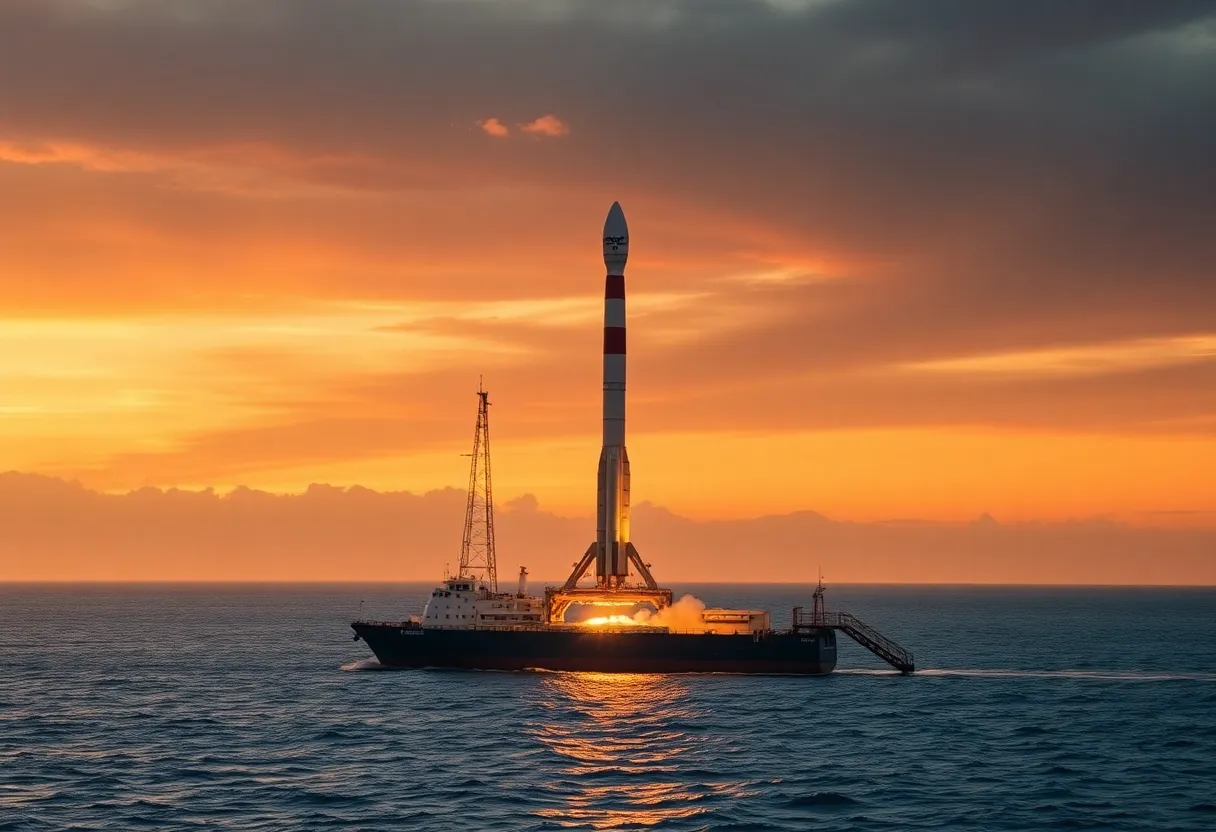
The actual reuse record as of 2026 has individual boosters having flown 20+ times. The most-flown boosters are completing their turnaround inspections and returning to flight faster than the early reuse cadence suggested — some in under a month. This isn’t just impressive from an engineering standpoint; it’s economically significant. Fast turnaround means a single booster can fly more times per year, which means the fixed cost of building and maintaining launch infrastructure is spread over more revenue-generating launches.
What the Pricing Data Shows
Falcon 9’s list price for a commercial launch is approximately $67 million as of 2026, largely unchanged from several years ago. But the satellite industry is not buying launches at list price, and the effective market-clearing price for a Falcon 9 rideshare slot has been significantly lower. SpaceX’s Transporter rideshare missions pack hundreds of small satellites onto a single launch for $5,750 per kilogram to sun-synchronous orbit — a price that was simply not achievable on expendable vehicles before reuse drove the cost basis down.
The comparison to pre-SpaceX pricing is instructive. Ariane 5, which retired in 2023, launched at roughly $150–200 million per mission for commercial geostationary satellites. The replacement Ariane 6 targets around $75–100 million for a comparable mission — a significant reduction, but still well above Falcon 9’s effective pricing for comparable configurations. The European launcher’s cost structure, built on government-funded industrial base commitments across ESA member states, cannot achieve the cost reduction that purely market-oriented reuse enables.
ULA’s Vulcan Centaur, which entered service in 2024, lists at around $110 million per mission with the partial-reuse BE-4 engine recovery mode unavailable in initial configurations. Atlas V retired without a significant reuse component. The US national security launch market, which has supported ULA as a dual-source supplier, has moved its newer contracts toward SpaceX because the price differential is difficult to justify to Congress regardless of procurement preferences.
Starship Changes the Calculation Again
The Falcon 9 reuse numbers are impressive. Starship, if it achieves the reuse model SpaceX is designing toward, makes them look modest.
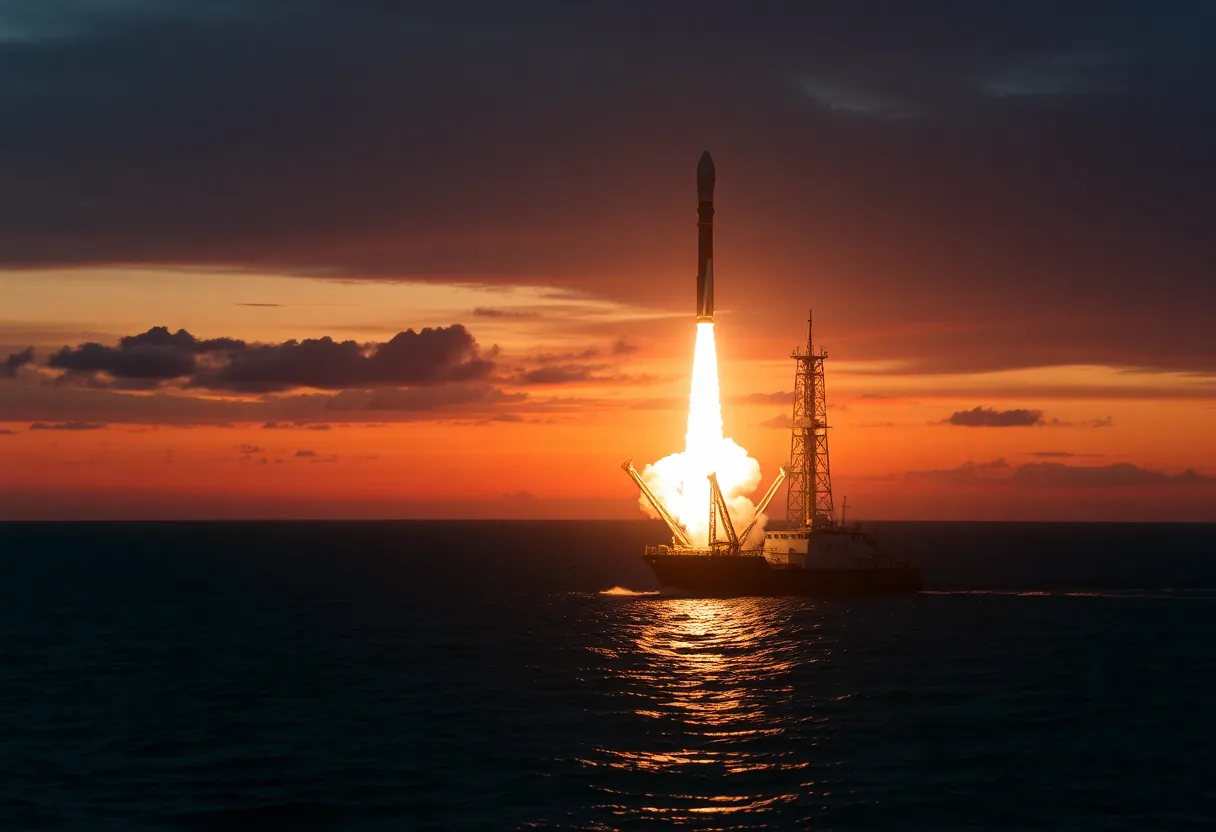
Starship is a fully reusable system — both the Super Heavy booster and the Starship upper stage are designed to be recovered and relaunched. The vehicle’s payload capacity to low Earth orbit is estimated at 100–150 metric tons in fully reusable configuration, compared to Falcon 9’s 22.8 tons (expendable). If SpaceX achieves rapid turnaround on both stages — something they are explicitly targeting and for which the “mechazilla” catch system for the Super Heavy booster is a key enabler — the cost per kilogram to orbit would represent another step-function reduction rather than an incremental improvement.
SpaceX has internally projected launch costs for Starship at $1–10 million per launch in mature operations, compared to $30–50 million for Falcon 9. These projections require significant flight rate to achieve — the fixed cost of operating a launch site and maintaining a large vehicle fleet needs to be spread over many launches to reach those numbers — but the trajectory from Falcon 9’s demonstrated economics to Starship’s projected economics is a logical extension rather than pure speculation.
The implications for launch customers are significant. At $1–10 million per launch for 100+ tons to LEO, the cost per kilogram to orbit approaches and potentially falls below $100, compared to $2,000–3,000 for Falcon 9 rideshare and $10,000+ for pre-SpaceX expendable vehicles. That cost reduction changes the economics of large-scale constellation deployment, lunar and interplanetary missions, and potentially changes what orbital manufacturing and habitation look like when launch cost is not the dominant constraint.
The Market Effects Beyond SpaceX
The launch market’s response to SpaceX’s cost reduction has been a combination of competitive pressure that forced several incumbents to restructure or retire, and a new market of missions that simply wouldn’t have existed at prior cost levels.
Arianespace, ULA, Mitsubishi’s H-IIA/H3, and Russia’s Proton/Soyuz have all faced declining competitiveness for commercial missions in price-sensitive market segments. Some have retreated to niches (national security launches, national pride programs, markets where SpaceX doesn’t compete on geopolitical grounds) while others have attempted reuse-capable next-generation vehicles (Ariane 6’s planned engine-pod recovery, RocketLab’s Neutron with planned reuse).
The new missions are arguably more interesting. Starlink — SpaceX’s own satellite internet constellation — has launched thousands of satellites using Falcon 9 at a volume and frequency that would have been economically impossible at pre-SpaceX launch costs. The entire small satellite and New Space ecosystem grew partly because launch cost dropped enough to make small payloads viable. Planetary science missions that would have required years of budget negotiation to afford a dedicated ride can now rideshare relatively inexpensively.
The question of whether the launch market’s cost reduction translates to a broader democratization of space access — or primarily to reduced costs for large actors like Starlink, national agencies, and defense operators — is genuinely open. The rideshare market has lowered costs for small operators. Whether Starship’s economics translate to genuinely widespread access or primarily further reduce costs for large-scale space infrastructure that only large organizations build remains to be seen as Starship matures. What’s clear is that the cost of reaching orbit has changed fundamentally, and that change is compounding as reuse cadence continues to improve.