How Satellite Internet Works—And What Starlink Changed

Zara Nkosi
July 7, 2026
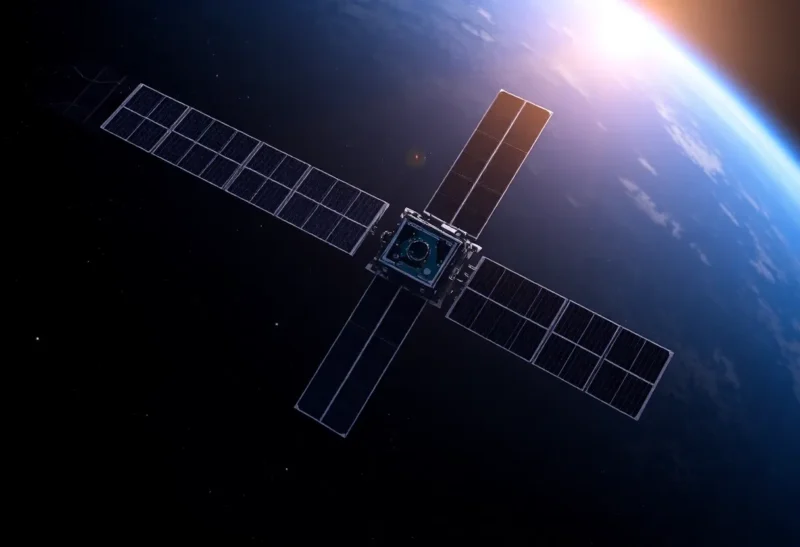
Satellite internet has existed for decades, delivering broadband to rural areas and remote locations where fiber and cable couldn’t reach. For most of that history, it was a last resort—expensive, slow, and saddled with latency that made it essentially unusable for video calls, gaming, or any application that requires fast round-trip communication. Starlink changed that calculus significantly. Not by inventing a new technology, but by deploying a fundamentally different architecture at a scale no one had achieved before.
Understanding what Starlink did differently—and why it matters—requires understanding why traditional satellite internet had the problems it did, and what the physics of orbital altitude actually mean for the user experience.
Traditional Satellite Internet: The GEO Problem
Legacy satellite internet services like HughesNet and Viasat use satellites in geostationary Earth orbit (GEO)—35,786 km above the equator. At this altitude, a satellite’s orbital period exactly matches Earth’s rotation, so it appears stationary relative to the ground. This is enormously convenient for coverage: a single GEO satellite can cover roughly a third of Earth’s surface continuously, so three satellites can provide near-global coverage (except polar regions). Ground dish antennas can point at a fixed point in the sky and don’t need to track moving satellites.
The physics problem is the speed of light. Radio signals travel at approximately 300,000 km/second. The round-trip distance from your dish to a GEO satellite and back to a ground station is roughly 72,000 km minimum—longer when accounting for the satellite’s actual position and the ground station distance. At the speed of light, this produces a minimum one-way latency of about 240 milliseconds, and round-trip latency (the “ping” time) of at least 480–600 milliseconds under ideal conditions.
For context, typical fiber broadband has round-trip latency of 5–20 ms. Cable internet: 15–35 ms. The 600+ ms latency of GEO satellite internet is the reason it’s terrible for anything interactive. Voice over IP becomes unnatural—you finish speaking and wait half a second before the other person hears you. Video calls have similar delays. Gaming on GEO satellite internet is essentially impossible for any game where timing matters. Even web browsing feels slow because each DNS lookup, TCP handshake, and server response involves multiple round trips, each adding 600 ms of latency.
GEO satellites also have limited bandwidth—a single satellite serves an enormous geographic area, and capacity must be shared across all users. During peak hours, speeds on GEO satellite services could drop well below advertised rates. The services also imposed data caps (Fair Access Policies) that throttled speeds after a monthly allotment was consumed.
Low Earth Orbit: The Architecture That Changes Everything
Starlink uses satellites in low Earth orbit (LEO), at altitudes between roughly 340 km and 570 km for its main constellation. At these altitudes, the speed-of-light round trip is dramatically shorter—around 6 ms one-way versus 240 ms for GEO. Round-trip latency on Starlink is typically 20–40 ms in normal operation, occasionally lower, occasionally higher. This is comparable to cable internet and perfectly usable for video calls, VoIP, and most online games.
LEO has a disadvantage that explains why it wasn’t used for commercial broadband until Starlink: satellites at low altitudes move fast—orbital periods around 90–100 minutes—and are visible from any given point on Earth for only a few minutes at a time. Providing continuous coverage requires a large number of satellites, and ground terminals need to continuously track moving satellites, handing off between them as they pass overhead.
Traditional LEO satellite systems (Iridium, Globalstar) existed for mobile voice services, but they used small constellations and provided very low bandwidth—enough for voice calls and basic data, not broadband. The key to Starlink was combining:
- A very large constellation (currently over 6,500 satellites, with planned expansion to tens of thousands)
- Phased-array antenna technology in the user terminal that can electronically steer a beam to track moving satellites without any moving parts
- Low-cost satellite manufacturing at SpaceX’s factory in Redmond, enabling mass production at a cost that makes large constellations economically feasible
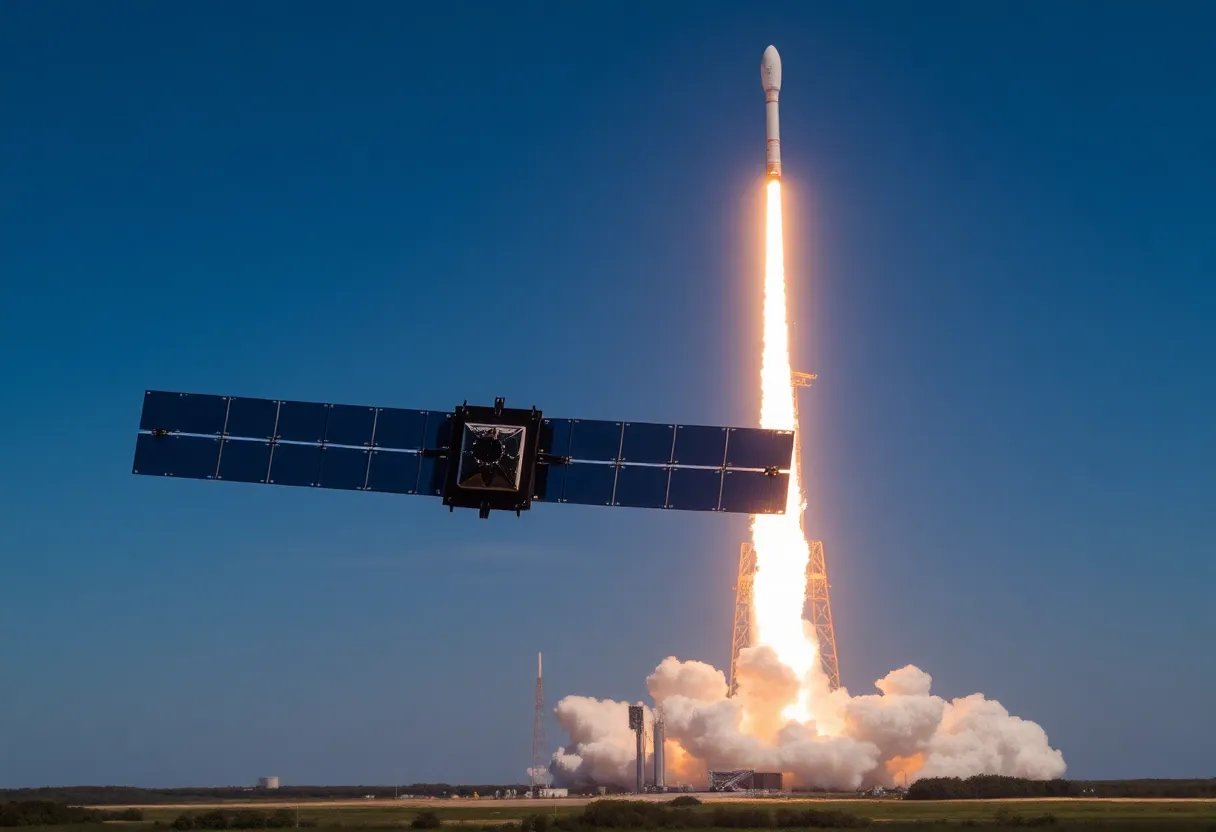
- Cheap launch costs via SpaceX’s reusable Falcon 9 rockets
How the Starlink Terminal Works
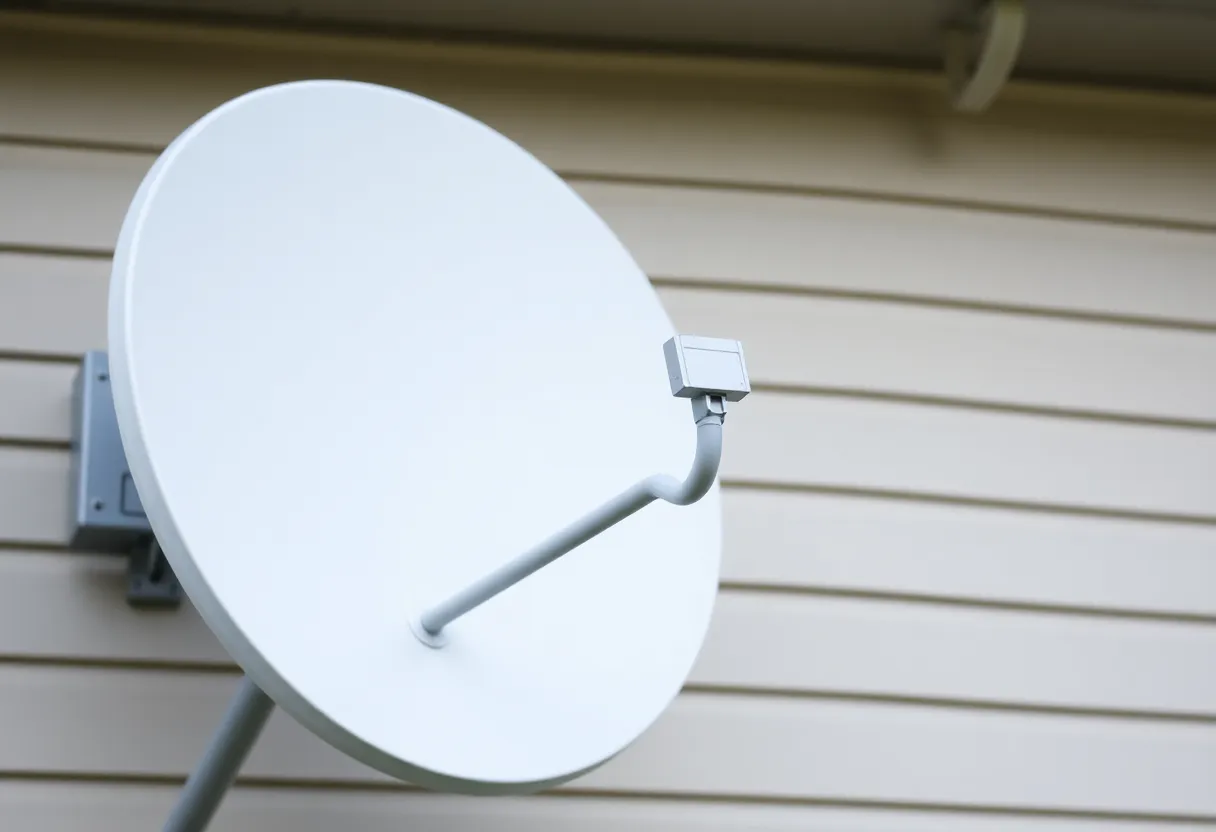
The user-side Starlink “dish” is a flat phased-array antenna—a flat panel containing thousands of small antenna elements whose signals are combined electronically to form a beam. By adjusting the phase relationships between these elements, the beam can be steered electronically to any point in the sky above a certain elevation angle, without any physical movement. The dish continuously tracks whichever Starlink satellite is currently overhead, handing off seamlessly to the next satellite as the previous one moves below the horizon.
This phased-array approach was previously extremely expensive—military phased-array radars cost millions of dollars. SpaceX developed a mass-producible consumer version at a cost of around $600 retail (and reportedly more at the time of development). The electronics density required for a phased array with adequate performance in a pizza-box-sized consumer terminal was a significant engineering achievement.
The dish automatically orients itself using a motor during initial setup—it’s flat but tilts to optimize view of the sky based on your location’s latitude. Once positioned, it’s stationary; the electronic beam steering handles satellite tracking from there.
The Network Architecture
Starlink satellites communicate with ground stations (called “gateways”) in different regions, which then connect to the internet backbone through terrestrial fiber. A user’s data travels from their dish to a satellite, then either directly to a gateway (if one is visible from the satellite’s current position) or via inter-satellite laser links to another satellite that can reach a gateway.
Inter-satellite links (ISLs) are one of Starlink’s more sophisticated features, included in newer satellites but not the earliest generation. Laser links between adjacent satellites allow traffic to be routed through the constellation without touching the ground—potentially reducing latency further for transoceanic routes (where satellites provide a more direct path than undersea cables that route around geography) and improving coverage where gateway ground stations are sparse.
For most residential users, the path is: terminal → satellite → ground gateway → internet. The latency contribution from the satellite hop and back is the 20–40 ms, with additional latency from the terrestrial network path to the destination server.
Starlink’s Real-World Performance
Independent testing and user reports show Starlink typically delivering:
- Download speeds: 50–200+ Mbps (with periodic higher peaks and occasional lower periods)
- Upload speeds: 10–40 Mbps
- Latency: 20–40 ms typically, occasionally higher during congestion or satellite handoffs
Performance varies by location, time of day (network congestion), weather (heavy rain attenuates Ku-band signals), and obstructions (trees or buildings blocking portions of the sky). Dense urban areas can experience more congestion as many users share the same satellite pass. Rural areas with few users per satellite tend to see more consistent performance.
Compared to GEO satellite internet, Starlink is dramatically better for interactive applications. Compared to fiber broadband, it’s similar in download speed but somewhat less consistent in latency and lower in upload speed. For users who have no alternative—rural areas without fiber or cable—Starlink provides something genuinely transformative.
The Competition and Regulatory Landscape
Amazon’s Project Kuiper is the most direct Starlink competitor, planned as a several-thousand-satellite LEO broadband constellation using a similar architecture. First commercial service from Kuiper is targeted for 2025–2026. OneWeb (now Eutelsat OneWeb) operates a LEO constellation targeting enterprise and government customers rather than consumer residential service.
The proliferation of LEO satellite constellations has raised concerns from the astronomy community about light pollution—the reflection of sunlight from the satellites creates streaks in long-exposure astronomical images and can affect radio telescope observations. SpaceX has worked to reduce satellite brightness (with partial success via visors and darkened surfaces) and ITU frequency coordination allocates spectrum between competing satellite operators, but the conflict between LEO constellation expansion and astronomical observation remains an active issue.
Regulatory spectrum coordination is critical—LEO operators need FCC and international spectrum authorizations that specify frequencies, power levels, and orbital parameters. The competition for spectrum and orbital slots between Starlink, Kuiper, and other operators involves ongoing regulatory proceedings at the FCC and ITU.
What Starlink Changed
The most significant shift isn’t the specific technology—phased arrays, LEO, and inter-satellite links were all previously known. It’s the combination of Starlink’s launch cost advantage (from SpaceX’s reusable rockets) and manufacturing scale that made a large LEO broadband constellation economically viable for the first time. The competitive pressure from Starlink has also accelerated similar projects (Kuiper, Telesat Lightspeed) that might not have moved at the same pace otherwise.
For the roughly 3 billion people globally who live in areas without reliable broadband—because the economics of building fiber or cable infrastructure to low-density rural areas don’t work—LEO satellite broadband represents a genuine alternative path to connectivity. Whether the economics of satellite broadband improve enough to reach the most underserved populations (who often can’t afford current Starlink pricing) is the remaining open question. The technical barriers have largely been cleared; the access and affordability challenges remain.