A sit-stand desk you stop moving vs a fixed desk set once: the motor that becomes furniture

Nora Steinberg
September 23, 2026
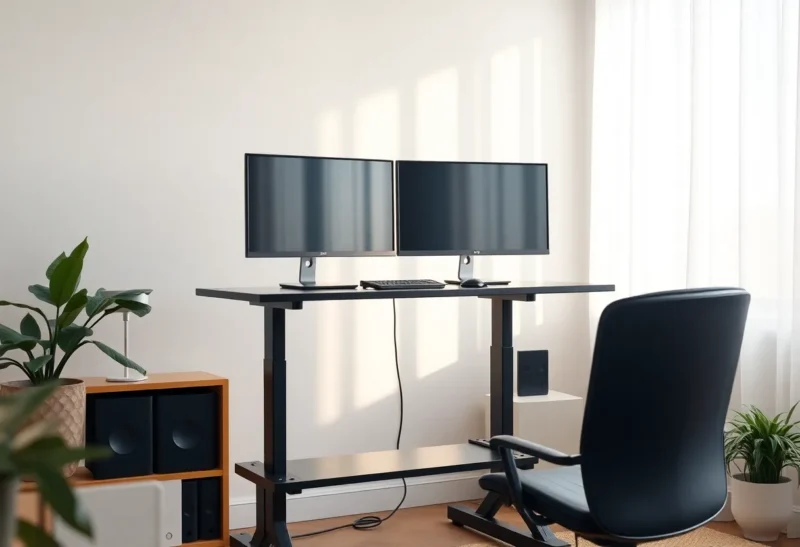
The electric sit-stand desk arrives as a promise: you will change posture on purpose, several times a day, because the motor makes it trivial. Six months later the desk has a favorite height, the memory presets are theater, and the motor has become furniture with a power brick. Meanwhile a friend with a fixed desk set their chair and monitor once, stopped fiddling, and somehow has less neck drama than your “ergonomic upgrade.”
This is not an anti-standing-desk rant. It is a comparison between a adjustable surface you stop adjusting and a fixed surface you set correctly once. The product that wins is the one whose failure mode matches how you actually behave on a Tuesday afternoon—not the one that won a Twitter poll about wellness.
What the motor is supposed to buy
Movement variety. Sitting all day is a load pattern. Standing all day is a different load pattern. Alternating can reduce the sense of being welded to one shape. The motor’s job is to remove friction from that alternation so you do not need to rebuild the desk geometry each time.
Secondary benefits: shared desks in offices, partners of different heights, and the ability to reclaim a standing position for short high-energy tasks. Those are real. They are also optional for many solo home setups where one adult owns the station.
What the motor does not buy: cardio, a personality transplant, or forgiveness for a monitor that still sits too low. If the stack is wrong, raising the desk just raises the wrongness.
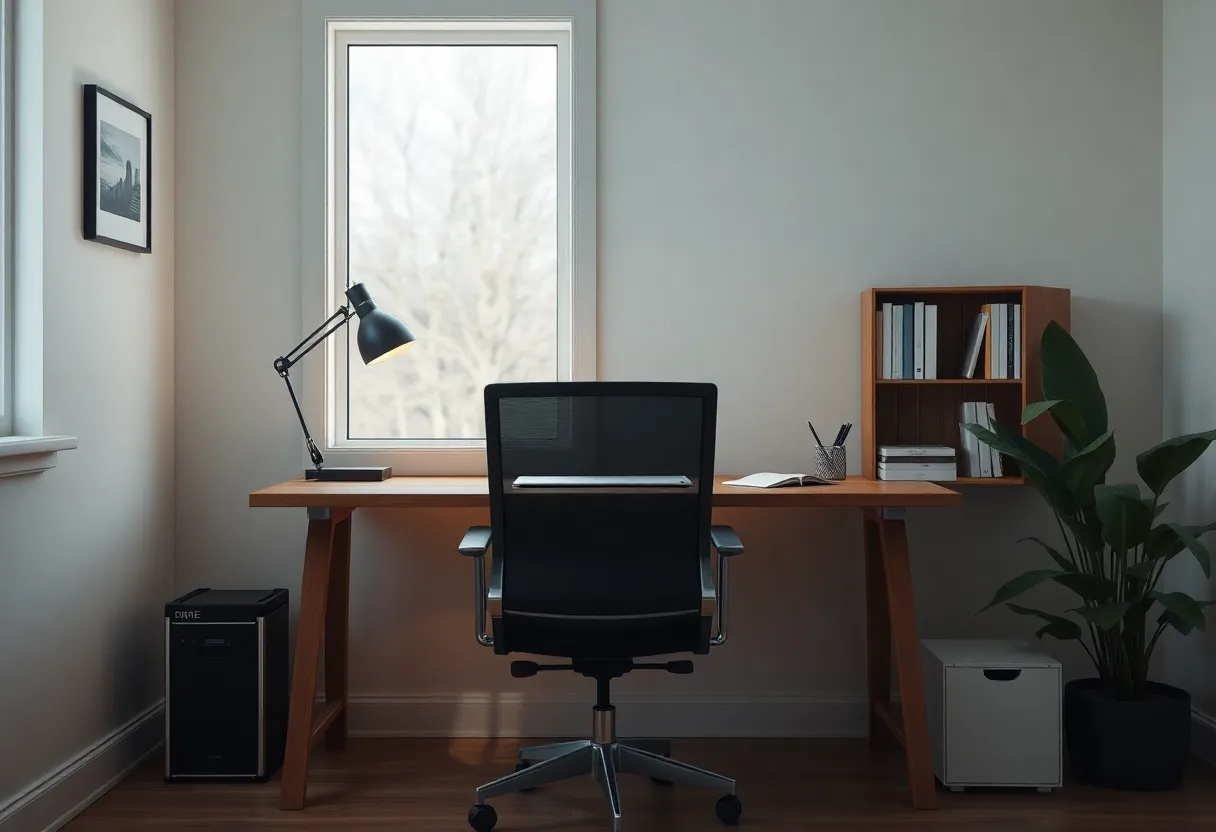
How a sit-stand desk becomes static furniture
Behavior eats hardware. Common paths to a frozen height:
- You pick a sitting height that finally feels fine and fear losing it.
- Cable management was built for one height; standing yanks a USB-C dock.
- The standing position makes you hover-type until your feet hurt, so you abandon it.
- Presets exist, but walking to the keypad feels like interrupting flow.
- The desk is slightly unstable at full rise with ultrawides, so you keep it low.
At that point you own a heavier, pricier fixed desk with a latent motor. The motor is not immoral. It is unused capacity—like a sports car that only sees grocery runs. If you already know you are a grocery-run person, buy the appliance that matches.
What “set once” on a fixed desk actually requires
A fixed desk is only virtuous if the geometry is right: chair height, desk height, monitor height, keyboard distance, foot support. People romanticize fixed desks while keeping a laptop flat on the surface and calling it simplicity. That is not a philosophy. That is a future physio invoice.
Set-once success looks boring: a chair that supports you, a desk at roughly elbow height for typing, a monitor with the top near eye level, and a laptop on a stand if the laptop is the computer. You spend one Saturday. You stop. You revisit when your body or glasses prescription changes—not every hour.
Fixed desks also win on stability and cable honesty. Nothing migrates. Arms and clamps stay put. There is no surprise day when the standing rise discovers your HDMI was 5 cm too short. If you use a heavy clamp arm or a stacked laptop dock, that predictability is worth more than a glossy height readout.
The chair problem people blame on the desk
Many “sit-stand will fix me” stories are chair stories. A moving desk under a collapsed mesh chair still leaves you perched wrong. Invert the budget if you must choose: support the body first, then decide whether the surface needs to travel. Dull advice survives because bodies are dull systems—they want support and change across the day, not a brand of lifting column.
Standing introduces foot and back complaints of its own when people lock their knees, crane toward a laptop, or stand on hard flooring for an hour to prove a point. If standing hurts quickly, you do not need a better motor. You need shorter standing intervals, a mat, or an admission that your useful variety is walking, not static standing.
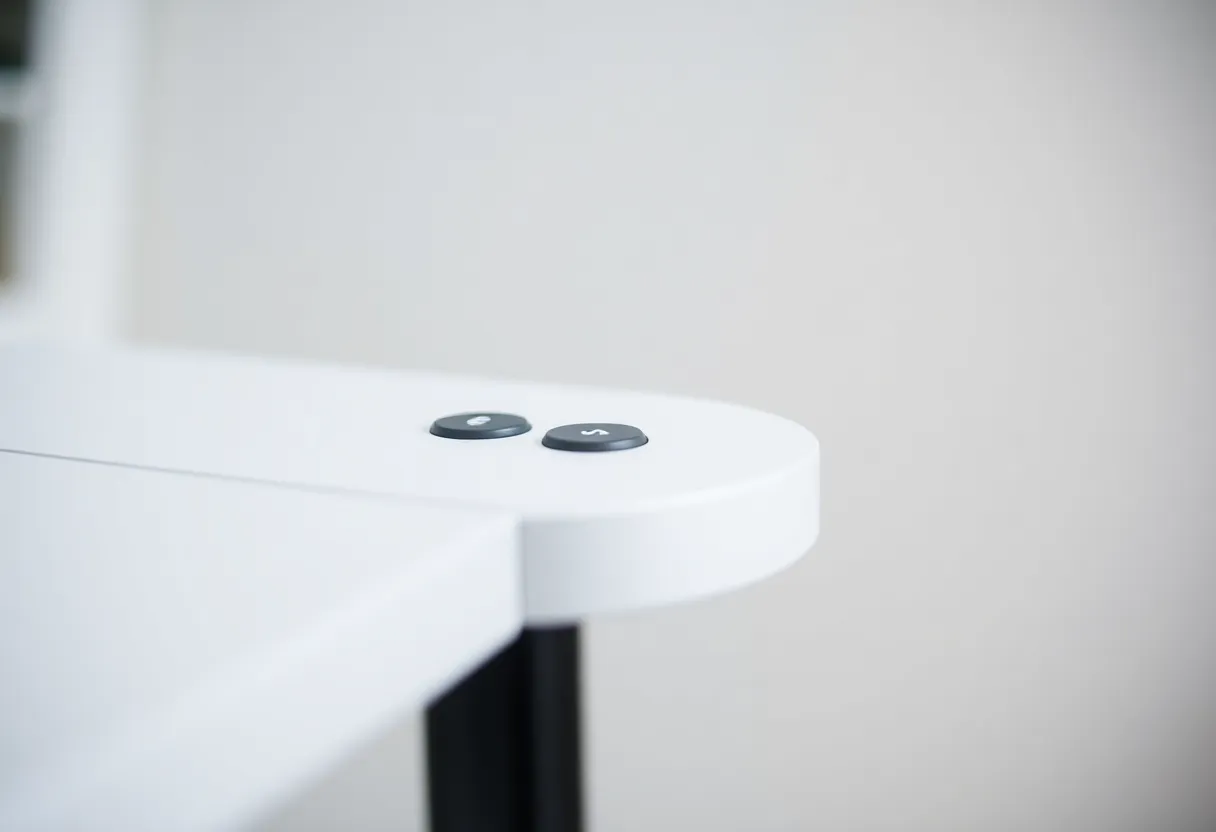
When the motor still earns its keep
Keep (and actually use) sit-stand when:
- You already alternate without gadgets and want less friction—not when you hope the desk will invent the habit.
- Multiple people share the station at meaningfully different heights.
- Your work naturally chunks into modes (standup calls vs deep typing) and you will map heights to modes.
- You have anti-fatigue matting, shoes that are not pretend, and a standing posture that is not locked knees.
- Cables are lengthened and managed for the full travel range before day one.
If those are not true, the motor is a subscription to guilt. Guilt is not ergonomics.
When a fixed desk is the calmer tool
Choose fixed when you want to spend money on the chair and monitor arm instead of the lifting columns; when your room is small and a stable surface matters; when you distrust unused electronics under the desktop; or when you have already proven—via a cheap crank desk or even stacks of books as a trial—that you will not alternate enough to care.
A fixed desk plus a good chair often beats an electric desk plus a mediocre chair. The industry likes to sell the moving surface because it photographs as “tech.” Your tissues care more about support and variety from walking meetings than about millimeters of motorized travel unused.
Habit design if you keep the motor
Do not rely on virtue. Tie height changes to existing events: start of a call, end of a pomodoro, after lunch. Use two presets max. Put a mat down so standing is not a punishment. Fix cables so standing is not a dock-unplugging ritual. If after three weeks the desk has not moved, admit the experiment failed and stop telling yourself a story. Either schedule movement differently (walks, alternate chairs) or sell the desk to someone who will use the travel.
Timers help some people and annoy others. If a timer makes you resent the desk, it will accelerate the freeze. Prefer event-based triggers over nagware.
Cost, repair, and the long tail
Electric desks add failure modes: control boxes, motors, limit sensors. Fixed desks fail more like tables. If you buy sit-stand, prefer vendors with replaceable parts and a weight rating that laughs at your monitors. If you buy fixed, prefer a surface depth that fits keyboard and pointing device without shoulder shrugging.
Resale value exists for both, but a barely used electric desk is a crowded market category. Buy assuming you keep it. Also budget the accessories people forget: longer cables, under-desk cable trays that survive travel, and a mat you will actually leave on the floor. A sit-stand unboxing without cable length checks is how the desk freezes at sitting height on day three.
Apartment and shared-life constraints
Noise matters. Some motors announce every rise to a partner on a call in the next room. Fixed desks are socially quieter. Weight matters in rentals with questionable floors; a heavy dual-motor frame plus filled bookcases is a different conversation than a light fixed table. Wobble at standing height with a pair of tall monitors will push you back to sitting more reliably than any essay about discipline.
If you already own a sit-stand and never move it, you do not need permission to treat it as fixed. Set the best sitting geometry you can, spend the “upgrade energy” on chair and monitor height, and stop performing the unused feature. Selling is optional; honesty is not.
A decision rule without wellness slogans
If you will change height most days, the motor is a tool. If you will not, the motor is a story. A fixed desk set once is not “giving up.” It is refusing to pay for unused degrees of freedom. Alternating posture still matters—you can get it from walking, from a second lounge laptop stance for reading, or from literally standing at a counter for a phone call without motorizing the whole workstation.
Buy the desk that matches your demonstrated behavior, not your aspirational calendar block labeled “stand.” The best ergonomic upgrade is the one that remains correct when you are tired, busy, and done performing wellness for an empty room. Sometimes that is a quiet fixed surface. Sometimes it is a motor you actually press. The tragedy is only the motor that becomes furniture while you keep calling it a lifestyle.
Quick setup checklist (either path)
- Elbows near 90° for typing; shoulders soft.
- Eyes near the top third of the primary display.
- Feet supported—floor or footrest—not dangling.
- Mouse close enough that you are not reaching into next week.
- If sit-stand: test full rise with every cable before you celebrate unboxing.
Do that once with attention. Then stop obsessing. Bodies like variety across the day more than they like a brand of desk. The motor is optional infrastructure for variety. Without the variety habit, it is just a heavier way to hold a keyboard.