How Wildfire Detection Cameras Are Trained to Ignore Cloud Shadows

Futurion Editorial
July 9, 2026
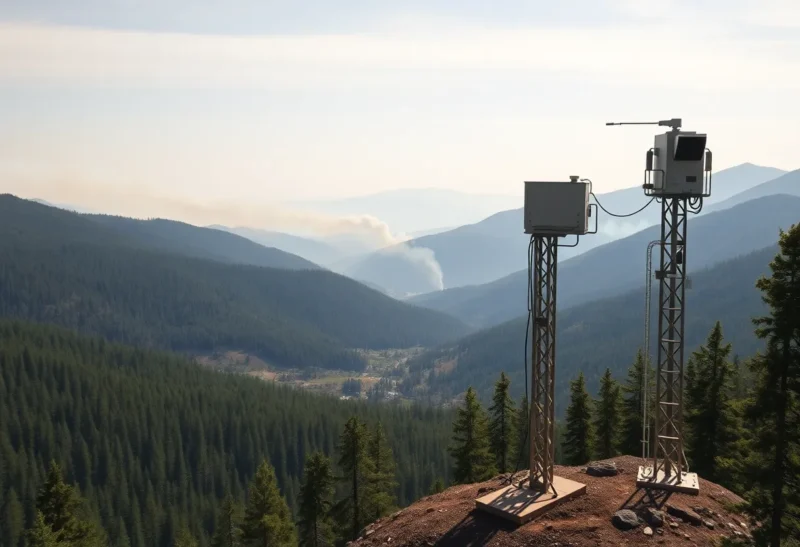
Automated wildfire detection networks have expanded significantly across fire-prone regions in the western United States, Australia, and southern Europe over the past several years, using networks of mountaintop cameras paired with computer vision models trained to spot smoke before it grows into a visible, widely reported fire. The core technical challenge these systems face turns out to be less about detecting obvious, large smoke plumes, which are relatively easy to spot, and much more about the harder problem of avoiding false alarms triggered by things that look deceptively similar to smoke from a distance: cloud shadows, dust, haze, and even steam or fog forming naturally in mountain valleys during specific weather and time-of-day conditions.
Why False Positives Are a Genuinely Costly Problem, Not Just an Annoyance
It’s tempting to think of a false wildfire alert as a minor inconvenience compared to the much more serious cost of a missed real fire, but fire management agencies operating these detection systems have been clear that false positive rates carry real, significant operational costs of their own. Dispatching fire crews and aircraft to investigate a false alert consumes genuinely scarce firefighting resources, particularly during peak fire season when multiple real fire threats may already be competing for the same limited crews and equipment, and a detection system that generates too many false alarms risks a second, more insidious problem: human operators and dispatchers gradually learning to distrust or deprioritize the system’s alerts after repeated false positives, which can dangerously slow response to an eventual real fire precisely because previous false alarms eroded confidence in the system’s reliability.
This combination of costs has made false positive reduction a genuinely central engineering priority for wildfire detection AI systems, arguably just as important as raw detection sensitivity, because a system that catches every real fire but also triggers constant false alarms isn’t actually more useful in practice than a somewhat less sensitive system that maintains operator trust and doesn’t waste scarce firefighting resources chasing phantom fires.

Why Cloud Shadows Specifically Fool Detection Systems So Often
Cloud shadows moving across a forested mountain landscape turn out to be one of the most persistent and specific sources of false detection across multiple deployed wildfire camera AI systems, for reasons that make genuine visual sense once explained. A cloud shadow moving across terrain creates a moving patch of localized darkening that, viewed from a distant camera at certain angles and lighting conditions, can visually resemble the way smoke appears to drift and shift across a landscape, since both phenomena share the basic visual signature of an amorphous, moving, somewhat translucent patch that changes the apparent color and brightness of the terrain beneath or behind it.
The specific difficulty compounds because cloud shadow patterns vary enormously depending on time of day, sun angle, cloud type and altitude, and the specific terrain being observed, meaning a detection model can’t simply learn one fixed visual signature to reliably distinguish “cloud shadow” from “smoke” across all the different conditions a camera network will actually encounter across different seasons, weather patterns, and times of day throughout a full fire season’s operational deployment.
How Detection Systems Have Actually Learned to Tell the Difference
Modern wildfire detection AI systems have converged on a combination of technical approaches specifically to address this and other similar false-positive sources, rather than relying on a single silver-bullet solution. Temporal pattern analysis — examining how a detected feature changes and evolves across a sequence of frames over time, rather than evaluating any single static image in isolation — has proven particularly valuable, because real smoke and cloud shadows tend to move and evolve differently over time in ways that become more distinguishable when a model has access to that temporal movement pattern rather than a single frozen snapshot: smoke typically shows a specific pattern of continuous, billowing growth and rises consistently against gravity regardless of the exact wind conditions, while a cloud shadow’s movement pattern is governed by the cloud’s own movement across the sky and the sun’s position, producing a visually distinct motion signature once a model has been specifically trained to recognize that distinction across enough real-world example footage.
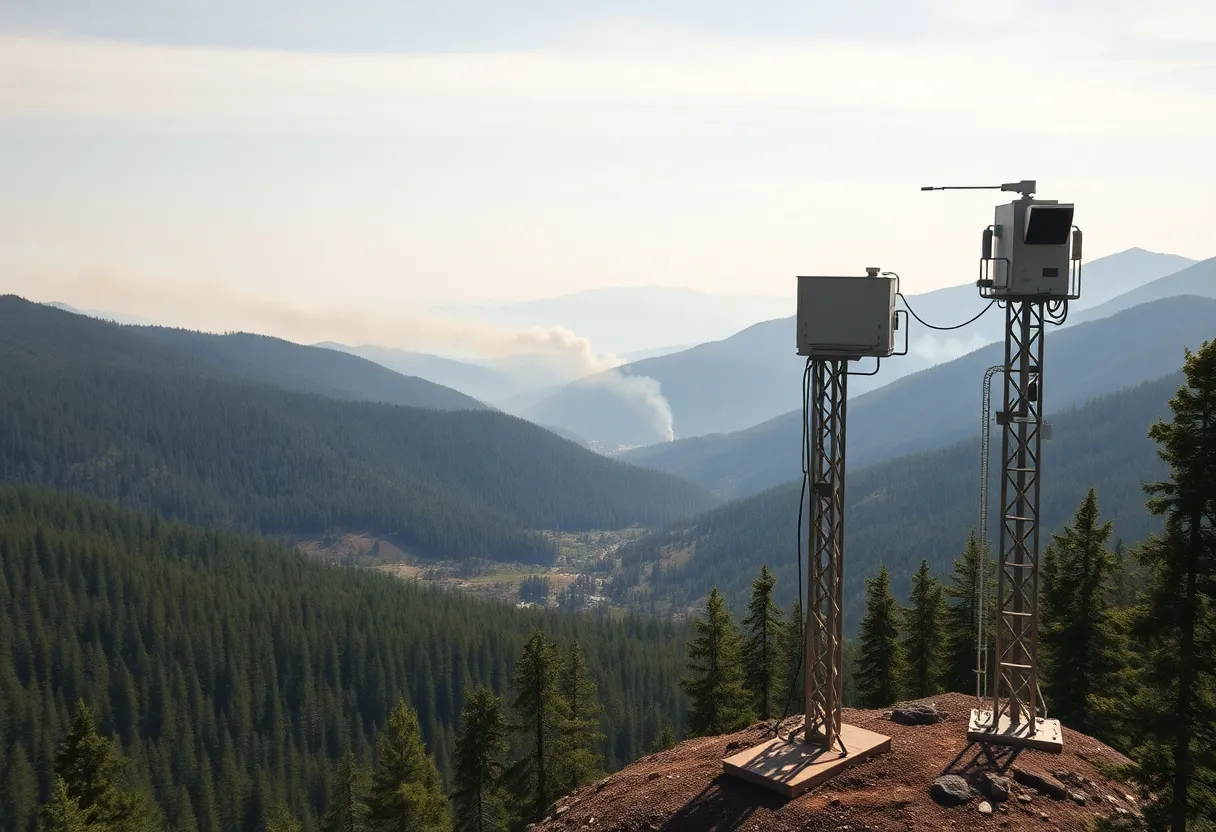
Multi-camera triangulation and cross-referencing represents another meaningful technical layer several deployed systems use: because most wildfire camera networks position multiple cameras with overlapping fields of view specifically covering the same general geographic area from different vantage points, a genuine smoke detection can be cross-checked against what other nearby cameras are observing from a different angle, and a phenomenon like a cloud shadow, which behaves according to predictable atmospheric and lighting physics that a system can model and predict, is often identifiable as inconsistent with an actual localized ground-level fire source when checked against this multi-angle context, in a way that a single camera’s isolated view couldn’t reliably determine on its own.
Why Training Data Quality Has Become the Real Bottleneck
Organizations operating these detection networks, including university-affiliated research programs like the University of California San Diego’s ALERTCalifornia system, which operates one of the largest deployed wildfire camera networks in the western US, have consistently identified training data quality and diversity, more than any single algorithmic technique, as the actual determining factor in how well a detection model performs at distinguishing real smoke from cloud shadows and other lookalike phenomena in real-world deployment. A model trained primarily on daytime, clear-weather smoke examples from one specific region’s characteristic terrain and vegetation may perform considerably worse when deployed against a different region’s different terrain, vegetation, and typical weather patterns, or under lighting and atmospheric conditions underrepresented in its original training data.
This has driven a sustained, ongoing effort across the organizations operating these systems to continuously expand and diversify training datasets with real examples specifically covering the full range of confusing lookalike conditions — cloud shadows across different terrain types and times of day, dust from vehicle traffic or agricultural activity, industrial steam plumes, morning valley fog, and genuine smoke from prescribed burns or agricultural burning that isn’t an emergency wildfire at all but still needs to be correctly classified as smoke while also being distinguished from an actual uncontrolled wildfire requiring emergency response — reflecting a broader pattern common across many real-world deployed computer vision systems, where the hard, ongoing engineering work lies less in any single clever algorithmic breakthrough and more in the patient, continuous process of identifying and correcting for the full range of real-world edge cases a deployed system will actually encounter over years of operation across genuinely varied conditions.
Why Human Verification Remains Part of the System Regardless
Despite these substantial technical improvements, essentially every currently deployed wildfire detection AI system still routes flagged detections through human verification before triggering an actual emergency dispatch, rather than allowing the AI system to trigger fire crew deployment fully autonomously. This human-in-the-loop design reflects both the genuine remaining limitations of current detection accuracy and the appropriately high stakes of the decision involved, where a trained human reviewer looking at the flagged camera imagery, often cross-referencing current weather conditions and other available information, still adds meaningful additional accuracy and judgment to the final call in a way that fully autonomous machine decision-making for this specific, high-consequence application isn’t yet considered mature or reliable enough to fully replace.