Why Esports Broadcast Production Is Harder Than Traditional Sports TV

Reese Dunn
July 9, 2026

Watch a traditional sports broadcast and an esports broadcast side by side and the surface similarities are obvious — casters, analyst desks, instant replays, on-screen graphics tracking the score. Talk to the people who actually produce esports broadcasts for a living, though, and a consistent theme emerges: the production challenge underneath that familiar surface is meaningfully harder than traditional sports broadcasting, for reasons that have nothing to do with budget or experience and everything to do with what’s actually being filmed.
There’s No Physical Camera Angle to Fall Back On
A traditional sports broadcast, at its absolute minimum viable version, can just point cameras at a physical field and follow the ball. Esports has no equivalent baseline, because the “action” doesn’t exist in physical space at all — it exists inside a game engine’s simulated world, and every single camera angle a viewer sees has to be actively generated from that simulation by someone making a real-time editorial decision about what matters most, out of dozens of simultaneous events that might be happening across a virtual map.
In a five-versus-five game like League of Legends or Dota 2, ten players can be doing meaningfully different, tactically important things in different parts of the map simultaneously, and a broadcast has exactly one primary camera feed to show the audience. The person making that choice — often called an observer or spectator operator — is effectively doing live cinematography and editorial judgment simultaneously, deciding in real time which of several concurrent storylines is the one worth showing, with no ability to “catch it on the other camera” the way a traditional broadcast can cut between multiple physical camera operators covering the same visible field.
The Game Itself Is the Broadcast Infrastructure
Traditional sports broadcasting operates on top of infrastructure the broadcaster fully controls: their own cameras, their own graphics overlays, their own replay systems, largely independent of whatever the league itself provides. Esports broadcasting depends on data and camera access piped directly out of the game client itself, through APIs and spectator tools that the game’s developer builds and controls — and that access varies enormously by title, is sometimes changed or restricted by game updates that have nothing to do with broadcasting needs, and occasionally breaks entirely when a patch changes something the broadcast production pipeline depended on.
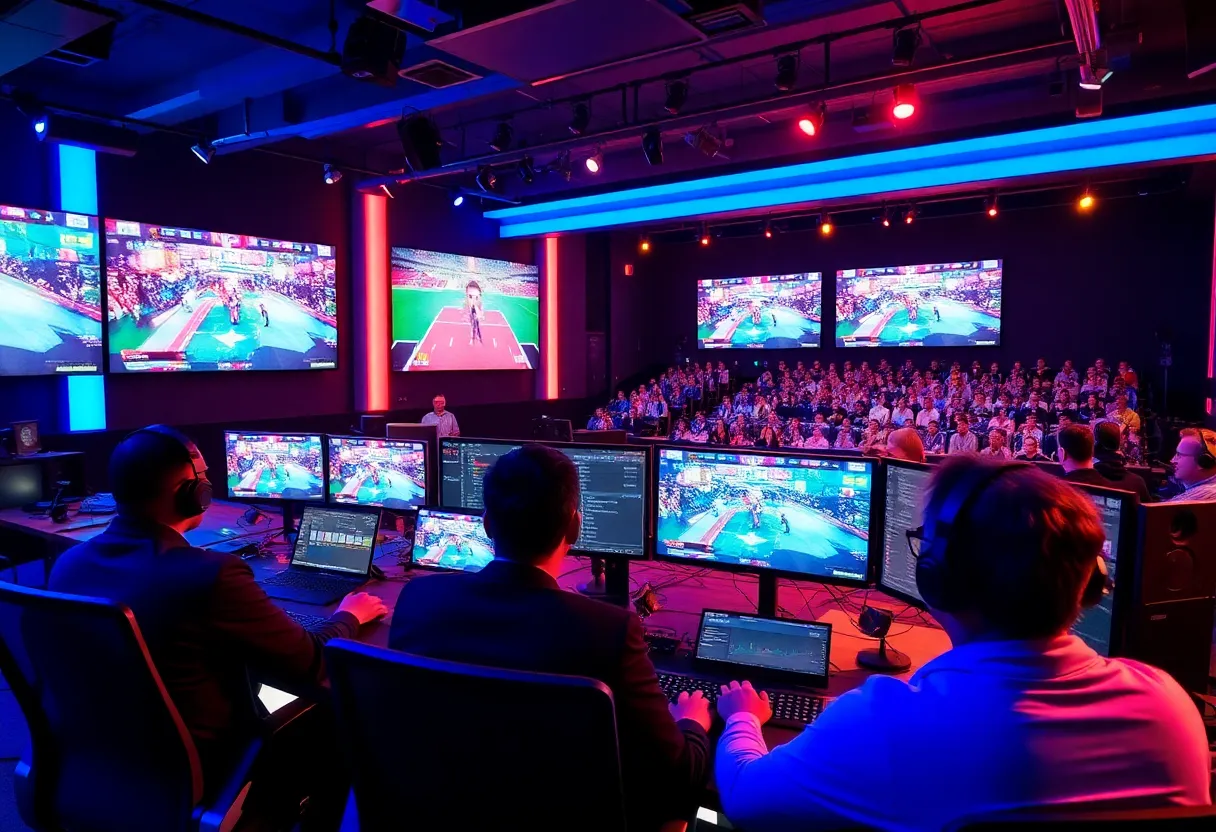
This creates a dependency traditional sports broadcasters never have to think about: an esports broadcast’s entire technical capability — what stats can be overlaid, what camera angles are even possible, how much broadcast delay is required to prevent players from gaining a competitive advantage by watching their own broadcast — is fundamentally constrained by decisions the game developer made, often for gameplay reasons entirely unrelated to broadcast production. A traditional sports broadcaster doesn’t need the NFL to ship a software update enabling a new camera angle; an esports broadcaster frequently does need exactly that from the game’s publisher.
Broadcast Delay Solves a Problem That Doesn’t Exist in Physical Sports
Nearly every competitive esports broadcast runs on a deliberate delay — commonly a couple of minutes — that has no real equivalent in traditional sports beyond routine satellite transmission lag. The reason is specific to the medium: if a live broadcast feed were available to the public in real time, a player or coach could theoretically watch the broadcast’s map-wide observer view — which shows more of the map than any single player can see during actual gameplay — and gain information they wouldn’t otherwise have access to, a problem called “broadcast sniping” that’s been a recognized competitive integrity issue since the earliest professional esports events.
Managing that delay adds real production complexity that traditional sports never has to solve: casters have to talk about events that already happened without revealing information from the live game state they may have separate access to as production staff, in-game chat and voice communications from players have to be handled carefully so nothing leaks through a faster channel than the delayed broadcast, and social media reactions from the live in-venue crowd — who often see events on video screens before the broadcast delay allows home viewers to see them — have to be time-boxed and managed to avoid spoiling outcomes for the delayed broadcast audience.
Multiple Game Titles Means Multiple Broadcast Grammars, From Scratch Each Time
Traditional sports broadcasting has had close to a century to converge on shared visual conventions — score bugs, replay conventions, camera grammar — that mostly transfer between different sports within the same broad category. Esports broadcasting has no equivalent shared grammar across titles, because each game has a fundamentally different structure, pace, and information density that the broadcast has to be built around from first principles.
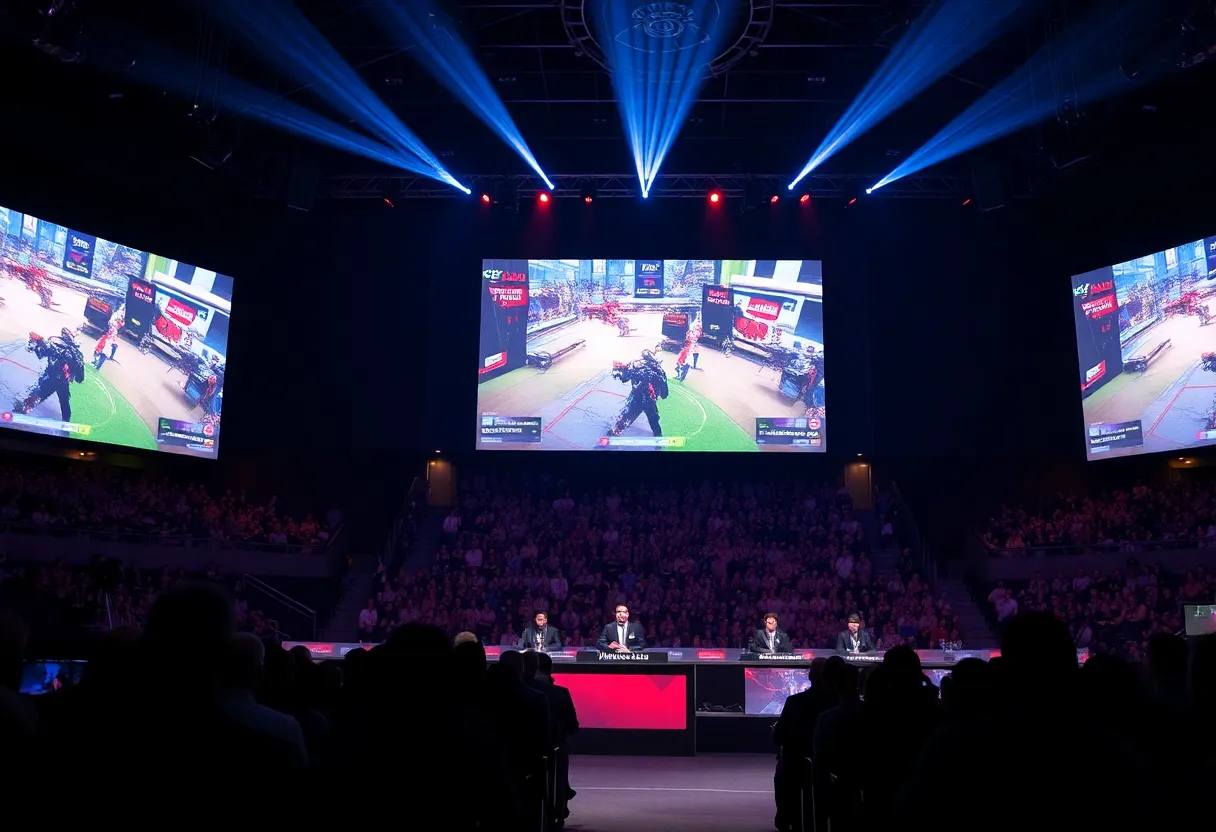
A first-person shooter like Counter-Strike or Valorant needs broadcast conventions built around fast, high-lethality rounds where a single decisive moment can happen in under a second, favoring quick cuts and kill-cam replays. A real-time strategy or MOBA title needs conventions built around slower macro-level strategy unfolding over many minutes across an entire map, favoring wider overview shots and economic/resource tracking overlays that a shooter broadcast would never need. A fighting game needs neither of those — it needs frame-perfect replay capability and split-screen input displays that show exactly what buttons each player pressed, something unique to that genre entirely. Production teams essentially have to reinvent broadcast grammar for every new game genre that becomes competitively significant, rather than adapting an established playbook the way a new traditional sport entering broadcast television might.
What This Actually Means for the People Doing the Work
The practical consequence is that esports broadcast production draws on a genuinely different skill set than traditional sports production, even though the job titles — director, producer, caster, technical director — sound identical on a resume. Observers and spectator operators need deep game-specific knowledge close to a professional player’s level of understanding just to make good real-time editorial decisions about what to show, a requirement that has no clean equivalent in traditional sports camera operation. Broadcast engineers need to understand game client APIs and network architecture as much as traditional video production equipment. And production teams have to rebuild significant parts of their entire toolkit whenever a new game title becomes a broadcast priority, rather than incrementally refining an established, transferable production formula the way traditional sports broadcasting has been able to for decades.
None of this is a knock on esports production quality, which has genuinely matured into something visually sophisticated and technically impressive at the top competitive tier. It’s a reason the category deserves to be evaluated on its own terms rather than measured against traditional sports broadcasting’s much older, much more standardized production playbook — the surface similarities mask a production problem that’s structurally different in ways that matter.