Why At-Home Blood Testing Kits Are Becoming the New Wearable

Mei Lin Chao
July 9, 2026
Wearables spent the last decade convincing people that continuous data about their own body was worth paying for. Heart rate, sleep stages, step counts, and more recently glucose and heart rate variability turned the body into something you could monitor the way you’d monitor a stock portfolio. At-home blood testing is the next logical extension of that same appetite, and it’s arriving faster than most people tracking wearables trends have noticed. I spent eight years running clinical diagnostic assays in a lab setting before moving into writing about this space, and the gap between “lab-grade” and “consumer at-home” has narrowed more than most people — including a lot of the companies selling these kits — like to admit clearly.
What Changed to Make This Possible
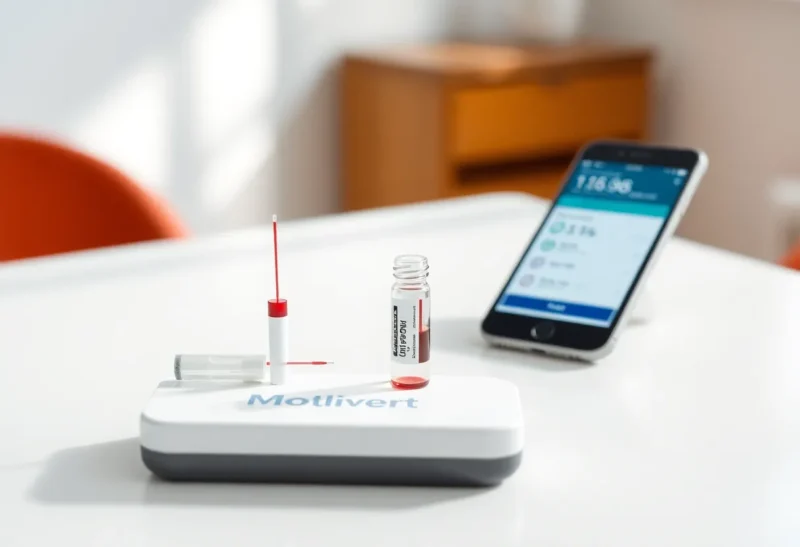
At-home blood testing isn’t new in concept — finger-prick glucose meters have existed for diabetics for decades, and basic cholesterol test kits have been sold in pharmacies for years. What’s new is the breadth of what a small blood sample, collected at home without a phlebotomist, can now be tested for, and how fast the results come back. Companies like Siphox Health, Base, Function Health, and a growing list of competitors now offer panels testing dozens of biomarkers — thyroid function, hormone levels, inflammatory markers, lipid panels, vitamin and mineral levels — from a handful of drops of blood collected via a simple finger-prick lancet and a small collection card or microtainer tube, mailed to a certified lab.
The infrastructure enabling this is largely borrowed from broader advances in clinical lab automation and assay miniaturization — the same technology driving down cost and turnaround time in hospital labs has made it economically viable to run small-volume consumer tests profitably, at price points (often $100-$400 for a comprehensive panel) that would have been implausible a decade ago. Direct-to-consumer lab testing regulations, which vary significantly by U.S. state and have loosened somewhat over the past several years, opened the door for companies to sell tests directly to consumers without requiring a physician order in many cases, which removed a major friction point that previously limited this market to people with a doctor already recommending specific bloodwork.
The Accuracy Question Nobody Markets Clearly
This is the part that matters most and gets glossed over most often in marketing copy. Capillary blood collected via finger-prick — the method almost all at-home kits use — is not identical to venous blood drawn by a phlebotomist, and for certain biomarkers, the difference is clinically meaningful, not just a rounding error. Potassium levels, for instance, are notoriously prone to falsely elevated readings from capillary samples due to hemolysis (red blood cell rupture) during collection, a well-documented issue in clinical laboratory literature that predates the at-home testing boom entirely. Some hormone panels, particularly those sensitive to the time of day and recent activity, are harder to standardize in an at-home context where the company can’t control exactly when or how the sample was collected, compared to a clinical draw done under controlled conditions.
Reputable companies in this space are aware of these limitations and design their panels around biomarkers that hold up reasonably well in capillary samples, and several have published validation studies comparing their at-home results against traditional venous draws for their specific panel — genuinely useful transparency that not every company in the category provides equally. The practical takeaway for a consumer isn’t “at-home testing is unreliable” — for most biomarkers on most reputable platforms, it’s reasonably accurate — but rather that not all biomarkers translate equally well to this collection method, and a company’s willingness to publish its validation data is a legitimate signal of how seriously it takes that distinction.
Why This Is Genuinely Different From a Wearable
The comparison to wearables is useful but has real limits worth naming. A wearable collects continuous, low-friction data passively — you put it on once and it keeps measuring. Blood testing, even at-home, remains an active, somewhat unpleasant, periodic event: you have to prick your finger, collect an adequate sample (a common failure point — under-filling a collection card is one of the most frequent reasons for a rejected or unusable sample), and mail it off, then wait days for lab processing rather than getting instant feedback on a screen. That friction means at-home blood testing will likely settle into a quarterly-or-less testing cadence for most users rather than the continuous, daily engagement wearables have achieved, which meaningfully changes what kind of health insights it can realistically provide.
But the data quality trade-off cuts the other way in blood testing’s favor for certain metrics. Wearables measure proxies — heart rate variability as a stress indicator, skin temperature as an illness signal — that correlate with underlying physiology without directly measuring it. Blood testing measures the actual biomarker, whether that’s your actual thyroid hormone level or your actual LDL cholesterol, which for a meaningful set of health questions is simply information a wearable cannot provide at any price point, no matter how sophisticated its sensors get. The two categories are complementary rather than competing, and the more interesting product trend is companies beginning to combine them — Function Health and a few competitors already push wearable-adjacent messaging around combining continuous data with periodic lab confirmation.
The Business Model Tension Worth Watching
A structural issue in this space that deserves more scrutiny than it usually gets: several companies in the at-home testing category operate on a subscription model that encourages frequent retesting, and the business incentive to sell more tests doesn’t always align cleanly with clinical best practice about how often a given biomarker actually needs re-checking. Testing cortisol or certain hormone levels quarterly, for instance, may capture more noise than signal for a healthy individual without a specific clinical reason to track changes that closely, and a few physicians and clinical chemists interviewed in trade press coverage of this industry have raised concerns about over-testing driving anxiety-inducing false positives or borderline results that don’t actually indicate anything clinically significant, particularly for markers with wide normal ranges or high day-to-day biological variability.
This isn’t unique to at-home testing — it echoes concerns raised for years about wearable-driven health anxiety and over-monitoring — but it’s worth flagging specifically because blood biomarkers carry a kind of clinical authority in people’s minds that a step count doesn’t, making a borderline or slightly abnormal at-home result more likely to trigger real anxiety or unnecessary follow-up care, even when the underlying variance might be entirely normal.
Where the Regulatory Picture Is Headed
The FDA has been paying increasing attention to this category, and 2024’s move to more directly regulate laboratory-developed tests (LDTs) — a category many at-home testing panels have historically operated under with lighter oversight than traditional in-vitro diagnostic devices — signals a regulatory environment that’s likely to tighten rather than loosen over the next several years. Exactly how that plays out for the at-home diagnostics industry specifically is still being worked through in the courts and through ongoing FDA rulemaking, but companies in this space are broadly expecting to face more validation and reporting requirements going forward, not fewer, which will likely raise costs and push some of the least rigorous players out of the market — arguably a healthy correction for a category that grew quickly ahead of settled regulatory clarity.
What This Actually Means for Consumers
The realistic way to think about at-home blood testing right now is as a genuinely useful complement to, not a replacement for, regular care from a physician who has your full clinical context — family history, symptoms, medication interactions — that a mailed-in test panel simply doesn’t have access to. For catching trends over time on well-validated biomarkers, especially for people who don’t have easy or affordable access to regular physician-ordered bloodwork, these kits fill a real gap. For anyone using them as a substitute for actual medical care, or over-interpreting single borderline results without clinical context, the risk of anxiety or misdirected self-treatment is real.
The wearable comparison holds in one more important way: this category, like wearables before it, will get more accurate, cheaper, and more integrated over the next several years as the underlying lab automation and validation science matures. It’s not a fad, and it’s not fully mature yet either — it’s a genuinely new category still working out exactly which biomarkers translate well to a mailed-in finger-prick sample, and consumers are, for now, the ones absorbing that learning curve alongside the industry.