How Vertical Farming Economics Changed After the First Wave of Bankruptcies

Futurion Editorial
July 9, 2026
Between 2022 and 2024, a striking number of the vertical farming industry’s highest-profile companies collapsed. AeroFarms filed for bankruptcy. Fifth Season shut down. Kalera went bankrupt after a SPAC merger that had valued it in the hundreds of millions. AppHarvest, once a Kentucky-based darling of sustainable agriculture investors, filed Chapter 11 in 2024 after burning through hundreds of millions of dollars. For an industry that had spent a decade promising to reinvent food production, the wave of closures looked less like a rough patch and more like a reckoning.
What’s interesting isn’t that vertical farming struggled — plenty of capital-intensive industries have rocky early decades. What’s interesting is exactly which assumptions turned out to be wrong, and how the companies that survived or launched afterward have quietly rebuilt their economics around lessons the first wave learned the hard way.
The Pitch That Attracted the Money
The original vertical farming pitch was seductive for good reason: grow food in climate-controlled indoor stacks near cities, eliminate the need for pesticides, use a fraction of the water of field agriculture, and produce consistent yields regardless of weather, season, or drought. Layer in claims about reduced food miles, and it read like a genuine solution to several problems at once — water scarcity, supply chain fragility, and the carbon cost of shipping produce across continents.
Investors bought the story at scale. Between 2020 and 2022 alone, vertical and indoor farming startups raised billions in venture capital and public listings, with AppHarvest alone raising close to $700 million across its funding history. The pitch decks emphasized yield-per-square-foot numbers that dwarfed traditional field agriculture, and largely glossed over the one number that mattered most: cost per unit of output once you accounted for everything electricity actually touches in an indoor farm.
The Energy Math Nobody Modeled Honestly Enough
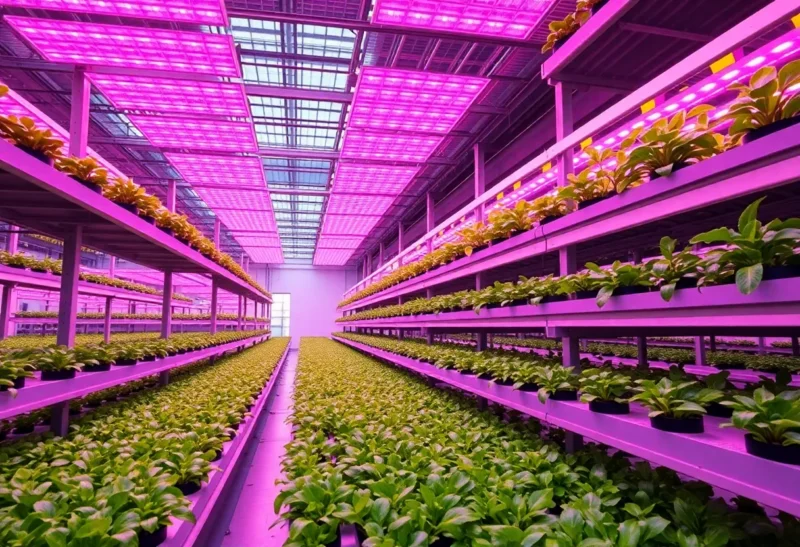
Indoor vertical farms replace the sun with LED grow lights, and that substitution is enormously more expensive than it sounds when you’re growing at commercial scale. Photosynthesis needs a specific quantity and spectrum of light delivered consistently for many hours a day, and LEDs — even highly efficient horticultural LEDs — convert electricity to usable light at efficiencies that are good, not magical. A large-scale leafy greens facility can draw a genuinely enormous continuous electrical load, and that cost doesn’t disappear when energy prices spike; it becomes the largest line item in the entire operating budget, frequently exceeding labor costs.
Climate control compounds this. Grow lights generate heat as a byproduct, and dense indoor growing environments need constant HVAC and dehumidification to keep temperature and humidity in the narrow bands crops need. Several of the companies that later collapsed had built facilities in climates or under utility rate structures where this math was brutal from day one, and had modeled their unit economics on projected efficiency gains — cheaper LEDs, better HVAC recovery systems — that were still years away from commercial deployment when the bills started arriving.
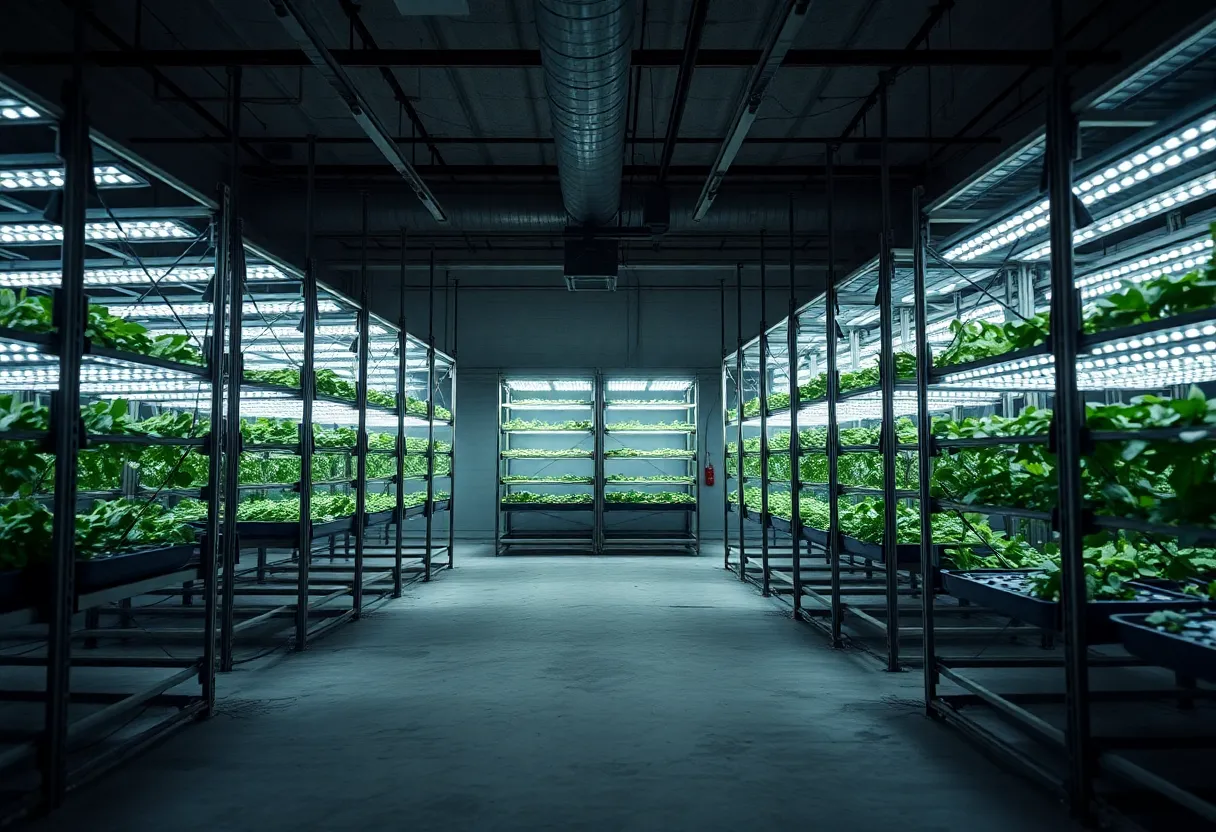
AppHarvest’s specific collapse added a second failure mode on top of the energy problem: its Kentucky greenhouse facilities relied heavily on natural light supplemented by LEDs rather than pure indoor stacks, but the company still struggled with yield shortfalls, high labor turnover in rural facilities, and produce quality inconsistent enough to strain retail contracts. The lesson wasn’t unique to pure indoor vertical farms — it was that indoor and controlled-environment agriculture in general had been sold to investors as more predictable than field agriculture, when in practice it traded weather risk for a different, equally punishing set of operational and energy risks.
The Crop Selection Problem
The other assumption that didn’t survive contact with reality was crop economics. Leafy greens — lettuce, spinach, herbs, microgreens — became the default vertical farming crop almost universally, for a straightforward reason: they’re fast-growing, light in weight relative to their retail price, and don’t need pollination or complex root structures. That made them the easiest crop to prove the concept with. It also meant nearly every vertical farming company was competing in the same narrow, low-margin category, against both each other and against conventional field-grown greens that, despite higher water and pesticide use, remained dramatically cheaper to produce per pound.
Leafy greens also have a ceiling on retail price that consumers won’t cross, no matter how sustainably the product was grown. A vertical farm can charge a modest premium for freshness or pesticide-free marketing, but it can’t charge two or three times the price of conventional lettuce and expect mainstream retail volume. That left very little margin to absorb the energy and labor costs described above, and almost no room for error during periods of high electricity prices, which is exactly the environment several of these companies were operating in as energy markets spiked in 2022.
What Changed After the Shakeout
The companies still operating, and the newer entrants launching since the bankruptcies, have rebuilt their economics around three shifts that the first wave mostly ignored.
First, energy strategy moved from an afterthought to the core design decision. Newer facilities are increasingly sited specifically for access to cheap, stable power — co-located near renewable generation, or in regions with favorable industrial electricity rates — rather than sited primarily for proximity to urban retail markets, which was the original locational logic. Some operators have moved toward hybrid lighting that supplements natural daylight instead of replacing it entirely, directly addressing the single largest cost driver.
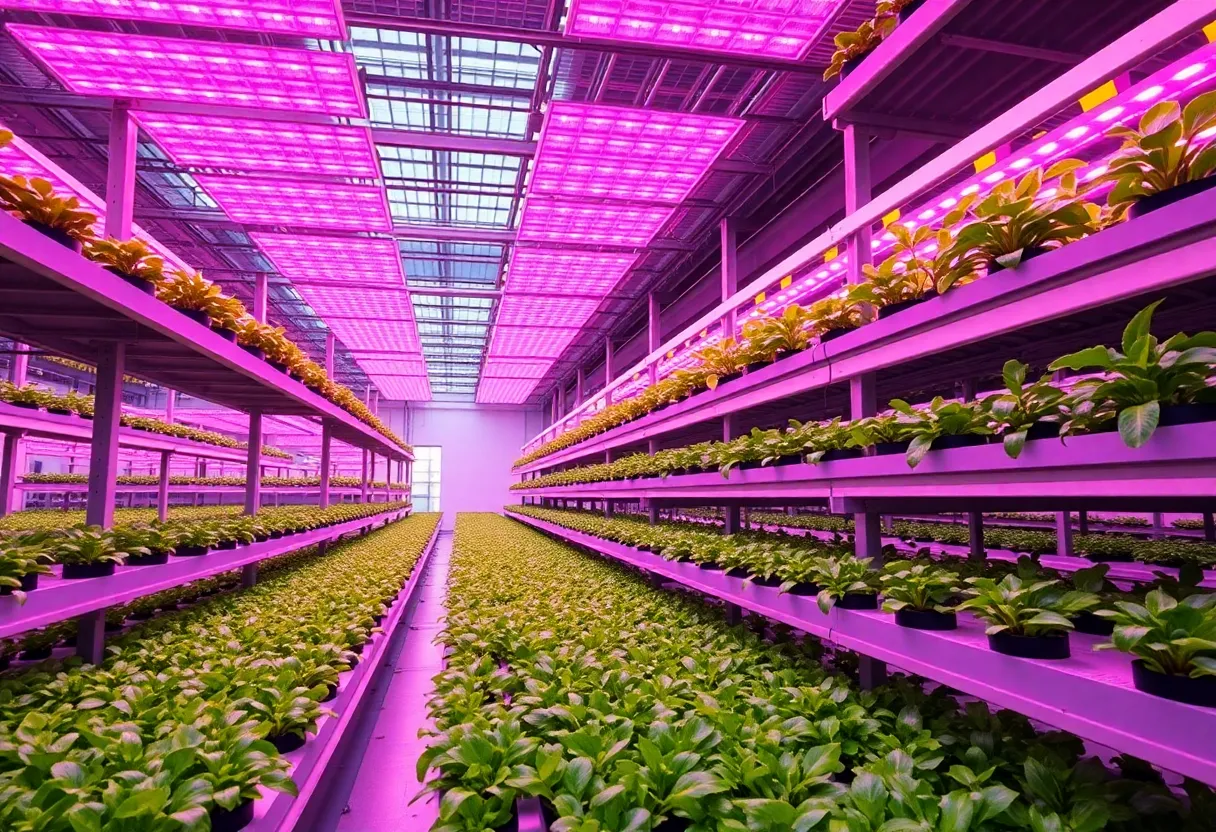
Second, crop diversification away from leafy greens has become a survival strategy rather than an experiment. Berries — particularly strawberries — have emerged as a more promising fit for controlled-environment agriculture, because they command a much higher retail price per pound than greens, tolerate a wider range of growing techniques, and benefit disproportionately from consistent, pest-free growing conditions that field-grown berries can’t match. Companies like Oishii built a business specifically around premium strawberries rather than commodity greens, chasing margin instead of volume.
Third, the survivors have been far more disciplined about capital intensity. The bankrupt first wave largely built enormous flagship facilities before proving unit economics at smaller scale — a sequencing problem common to many capital-intensive tech-adjacent industries during the 2020–2022 funding boom. Newer and surviving operators are more likely to prove profitability at a modest scale first and expand only once the energy, labor, and crop mix numbers actually work, rather than betting the company on economies of scale that were assumed rather than demonstrated.
Whether the Original Promise Still Holds
None of this means vertical farming’s underlying value proposition was a mirage. Water use reductions of 90% or more compared to field agriculture are real and measurable, pesticide-free growing is real, and the ability to site production near dense urban populations genuinely does reduce transportation costs and spoilage for perishable crops. What the bankruptcies proved wasn’t that the technology doesn’t work — it’s that the first generation of companies scaled faster than their actual unit economics justified, chased a crop category with too little margin to absorb energy volatility, and treated electricity costs as a solvable engineering problem rather than the central constraint on the entire business model.
The industry that’s emerging from the wreckage is smaller, less flush with venture capital, and considerably less inclined to promise it will replace conventional agriculture wholesale. It’s also, on the numbers so far, more likely to actually survive.