What Soil Health Actually Means for the Future of Food Production

Lars Bergman
July 7, 2026

Soil health sits at the intersection of agriculture, ecology, and climate — a topic that sounds abstract until you understand what it actually refers to and why it matters. The phrase gets used broadly in discussions about sustainable farming, food security, and carbon sequestration, sometimes in ways that obscure the specific mechanisms at stake. What soil health actually means is the capacity of soil to function as a living ecosystem that supports plant growth, filters water, cycles nutrients, and stores carbon — and the degree to which human agricultural practices have either maintained or degraded that capacity. Understanding what’s in soil, what degrades it, and what regenerates it is essential context for evaluating the future of how the world produces food.
What Healthy Soil Actually Contains
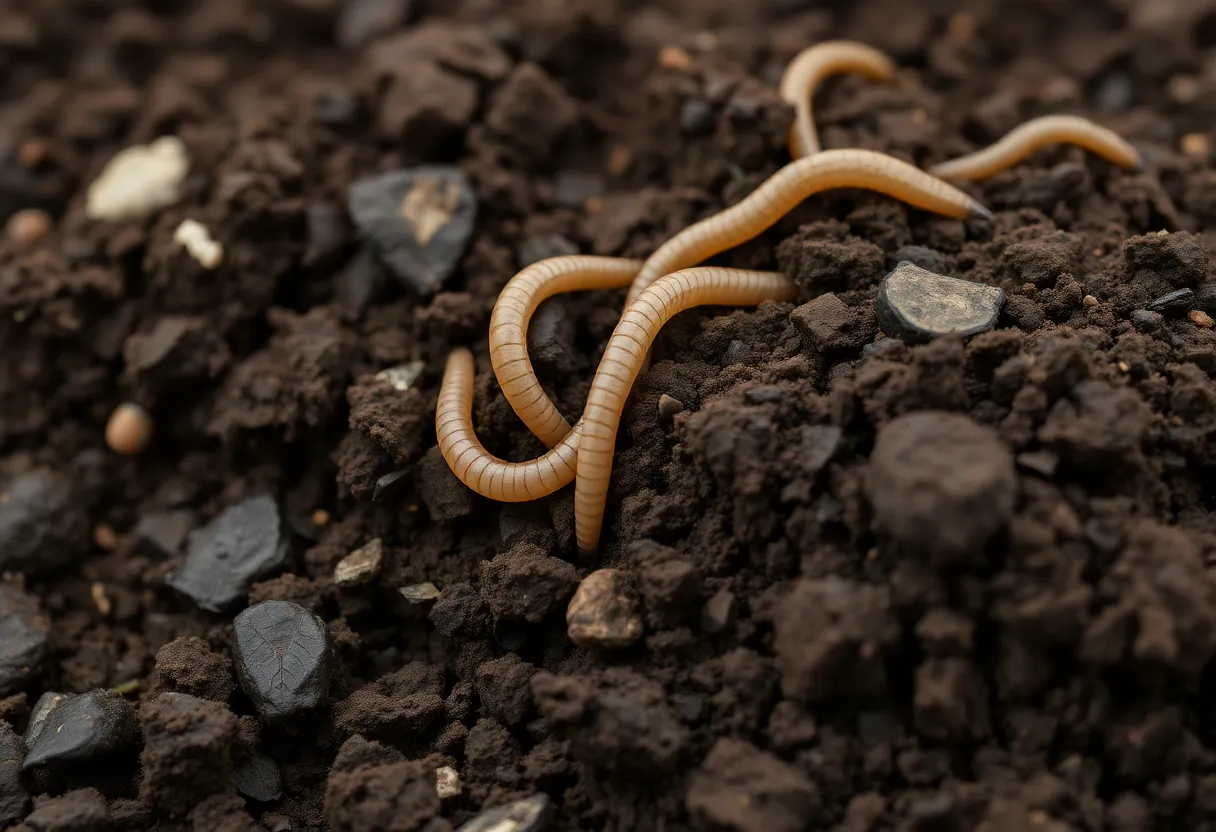
Healthy agricultural soil is not an inert substrate for holding plant roots and delivering water. It is a complex living system. A teaspoon of healthy soil contains billions of bacteria, millions of fungi, thousands of protozoa, and hundreds of nematodes — a microbial ecosystem whose metabolic activity is central to how nutrients move through the soil and become available to plants. Earthworms, beetles, and other macroorganisms contribute by physically turning soil and fragmenting organic matter, creating the loose structure that allows water infiltration and root penetration.
The biological component of soil works in interconnected cycles. Bacteria and fungi decompose organic matter (dead plant material, animal residues) into simpler compounds, releasing nutrients including nitrogen, phosphorus, and potassium back into soil solution where plant roots can absorb them. Mycorrhizal fungi extend plant root systems by forming symbiotic networks — the plant provides the fungi with carbon from photosynthesis; the fungi provide the plant with water and mineral nutrients from soil volumes far beyond the reach of the roots alone. This relationship exists in roughly 80% of land plants and represents a major component of how terrestrial ecosystems function.
The physical structure of soil — its texture (proportion of sand, silt, and clay particles) and its aggregation (how particles clump together) — determines how well soil holds water, resists erosion, and allows air exchange. Organic matter, particularly humus (the stable, decomposed fraction of organic material), is the primary contributor to both water retention and soil structure. Soils high in organic matter hold more water, drain better without waterlogging, resist compaction, and support richer biological communities. This is why organic matter percentage is central to any soil health assessment.
How Industrial Agriculture Degrades Soil
Modern industrial agriculture has increased food production dramatically — the Green Revolution of the mid-20th century is estimated to have saved over a billion people from starvation — but it has done so with a set of practices that have degraded soil health in many agricultural regions. Understanding the mechanisms explains the severity of the problem and why it’s not easily reversed.
Tillage — mechanically turning soil to prepare seedbeds and manage weeds — disrupts soil structure and fungal networks. Each tillage pass destroys mycorrhizal fungal hyphae that took months or years to establish, physically breaks apart soil aggregates, exposes organic matter to oxidation (which releases stored carbon as CO₂), and kills or displaces soil organisms. Annual tillage-based agriculture breaks the conditions that accumulate organic matter and build stable soil structure.
Synthetic fertilizer application, particularly nitrogen fertilizers, can suppress the biological activity that would otherwise cycle nutrients naturally. When plants receive abundant nitrogen directly, their investment in mycorrhizal symbiosis decreases — they have less incentive to support the fungal partners that provide nutrients at metabolic cost. Over time, heavily fertilized soils can develop reduced fungal communities and become more dependent on synthetic inputs for productive yields. This creates an ongoing input dependency rather than a self-sustaining biological system.
Monoculture — growing a single crop species across large areas — reduces the diversity of plant root exudates that feed different soil microbial communities, which reduces overall biological diversity in the soil. Rotational diversity and cover crops provide multiple exudate types that support more diverse microbial communities, while monoculture tends toward microbial communities dominated by species adapted to the one crop’s chemistry.
The cumulative result of these practices in many intensively farmed regions: topsoil depth has decreased, organic matter percentages have fallen, compaction has increased, and erosion rates in some areas dramatically exceed natural soil formation rates (which is roughly 1 inch per 500 years). Global estimates suggest that between 25-40% of productive agricultural land has experienced significant soil degradation over the past century.
What Soil Regeneration Actually Involves
Regenerative agriculture, no-till farming, and soil health-focused practices are gaining significant attention from researchers, farmers, and food companies. The core principle is reversing the degradation mechanisms: reduce physical disturbance, maintain living root contact with soil year-round, maximize biological diversity, and build organic matter. The specific practices include:
No-till and reduced tillage: Eliminating mechanical soil disruption allows fungal networks to persist, aggregate structure to stabilize, and organic matter to accumulate rather than being oxidized. No-till farming requires alternative weed management strategies (cover crops, targeted herbicides, or mechanical cultivation of narrow rows) that are often more complex and context-dependent than conventional tillage. The transition from tilled to no-till systems can temporarily reduce yields as soil biology adjusts — a real economic barrier for farmers.
Cover cropping: Growing plants in fields during off-seasons (when the main crop isn’t present) maintains living root contact with soil, feeds soil biology with root exudates, prevents erosion, and adds organic matter. Different cover crop species (legumes, grasses, brassicas) contribute different characteristics — legumes fix atmospheric nitrogen, grasses build fibrous root biomass, brassicas break compaction with deep taproots. Terminating cover crops at the right time and managing residue for the following main crop requires management skill that varies by region and system.

Compost and organic matter additions: Adding organic matter directly — compost, crop residues, animal manures — increases the substrate available for biological activity and directly builds organic matter percentage. The effect on soil health is real but slower than the marketing around soil amendment products often implies: meaningful changes in organic matter percentage take years to decades at the scale of whole fields, not one season.
Diverse rotations and integrating livestock: Rotating crops across multiple years (corn/soybean/wheat/cover crop rather than corn/soybean) and integrating grazing animals (who deposit manure and physically disturb residues) has historically maintained soil health in mixed-farming systems. The movement toward crop-livestock integration at larger scales is part of the regenerative agriculture conversation.
Soil Health and Carbon Sequestration
Soils contain approximately three times as much carbon as the atmosphere. The potential for building soil organic matter in agricultural soils is therefore significant in climate terms: converting degraded agricultural land to higher organic matter status sequesters carbon that was previously released. The “4 per 1000” initiative (a reference to a French government proposal at COP21) proposed that a 0.4% annual increase in soil organic carbon globally would offset all CO₂ emissions from fossil fuels. The math holds approximately, but the practical achievability at global scale is contested — transitioning major agricultural regions to practices that build organic matter requires significant economic and policy change.
The carbon sequestration potential of soil health practices is real and meaningful at regional scales, though it is not unlimited — soils approach a saturation point where organic matter stabilizes rather than continuing to accumulate. It is best understood as one meaningful component of climate mitigation strategy rather than a silver bullet.
Why This Matters for Food Security
The connection between soil health and future food production is direct: degraded soils produce lower yields without increasing synthetic input applications, are more susceptible to drought and flood damage, are more prone to erosion, and have reduced nutrient density in the crops they grow. If soil degradation continues at current rates in key agricultural regions, maintaining current global food production will require increasingly expensive synthetic inputs to compensate for reduced biological productivity — a situation with implications for food prices, developing country food security, and farm economics.
The encouraging evidence is that soil health can be rebuilt, though slowly. Long-term comparison studies of no-till versus conventional tillage show measurable improvements in organic matter, biological activity, and water retention over 10–20 years. Research programs like those at the Rodale Institute and the Land Institute have demonstrated sustained productivity in lower-external-input systems. The barrier is primarily economic and institutional: transitions require farmers to accept short-term yield risk and learning curves, input industry incentives favor synthetic products, and agricultural subsidy systems in many countries haven’t been designed with soil health as a priority.
Understanding soil health as a biological system rather than a chemical one — and understanding that conventional agriculture’s productivity gains came with real costs to that biological system — is the foundation for evaluating the claims made for regenerative farming, soil carbon credits, and sustainable food systems. The core mechanisms are well understood by soil scientists. The challenge is in implementing what we know at the scale of global food production.