What the History of Timekeeping Reveals About How Humans Measure Progress

Lars Bergman
July 7, 2026
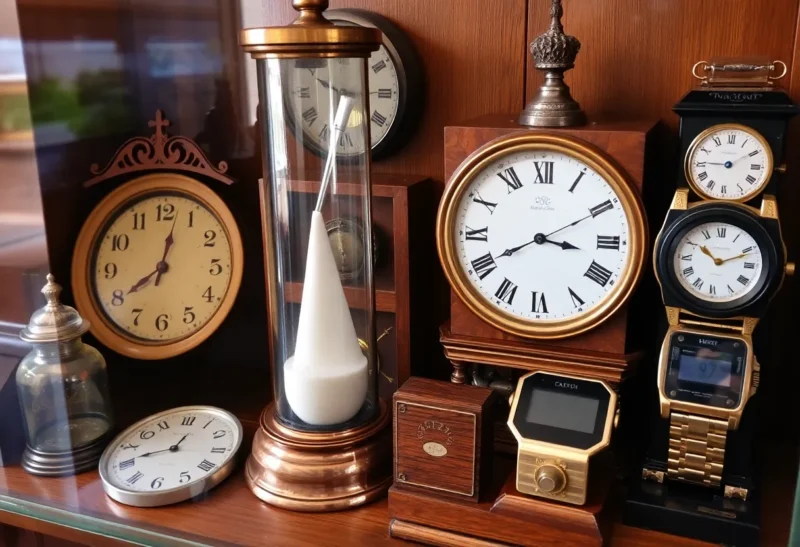
The history of timekeeping is the history of precision — each era demanding measurement finer than the previous one could provide, and each advance in measurement enabling a new level of coordination, commerce, science, and control. The arc from sundials to atomic clocks is not merely a story of technology improving; it’s a story of societies deciding that time needed to be measured more exactly, and then building the institutions and instruments to do so. Understanding what drove each leap in timekeeping precision reveals something about what human activity required at each moment in history — and why the level of accuracy we’ve reached now (atomic clocks accurate to within a second in 300 million years) matters far more than it might seem for everyday modern life.
The First Problem: Dividing the Day
The most fundamental challenge in timekeeping is that the natural cycles available for measurement — day/night cycles, lunar cycles, annual seasons — are unequal in a way that creates measurement problems. The day (one rotation of Earth) is not evenly divisible by the year (one orbit around the sun): the year contains approximately 365.25 days. The lunar cycle (about 29.5 days) doesn’t evenly divide into the year either. Every calendar system in history has had to solve this misalignment problem through intercalation — adding extra days or months to periodically realign the calendar with astronomical reality.
The Babylonians, Egyptians, and Chinese each developed independent solutions thousands of years ago. The Julian calendar (introduced by Julius Caesar in 46 BCE) added a leap year every four years, reducing the accumulated calendar drift significantly. The Gregorian calendar (1582 CE) refined this further by making century years not leap years unless divisible by 400 — an adjustment needed because the Julian calendar was still slightly too long, gaining about 11 minutes per year. By the 16th century, the Julian calendar had drifted 10 days out of alignment with the astronomical equinoxes, which mattered enormously for the Christian calendar and the calculation of Easter. The Gregorian reform dropped 10 days to reset the calendar and implemented the century rule to prevent future drift.
This level of care about calendar accuracy wasn’t mere astronomical pedantry — it was economically and religiously consequential. Agricultural planting decisions, religious holidays, and contract deadlines all referenced calendar dates. Calendar error had real downstream effects on the activities that calendars were meant to coordinate.
From Hours to Minutes: The Mechanical Clock
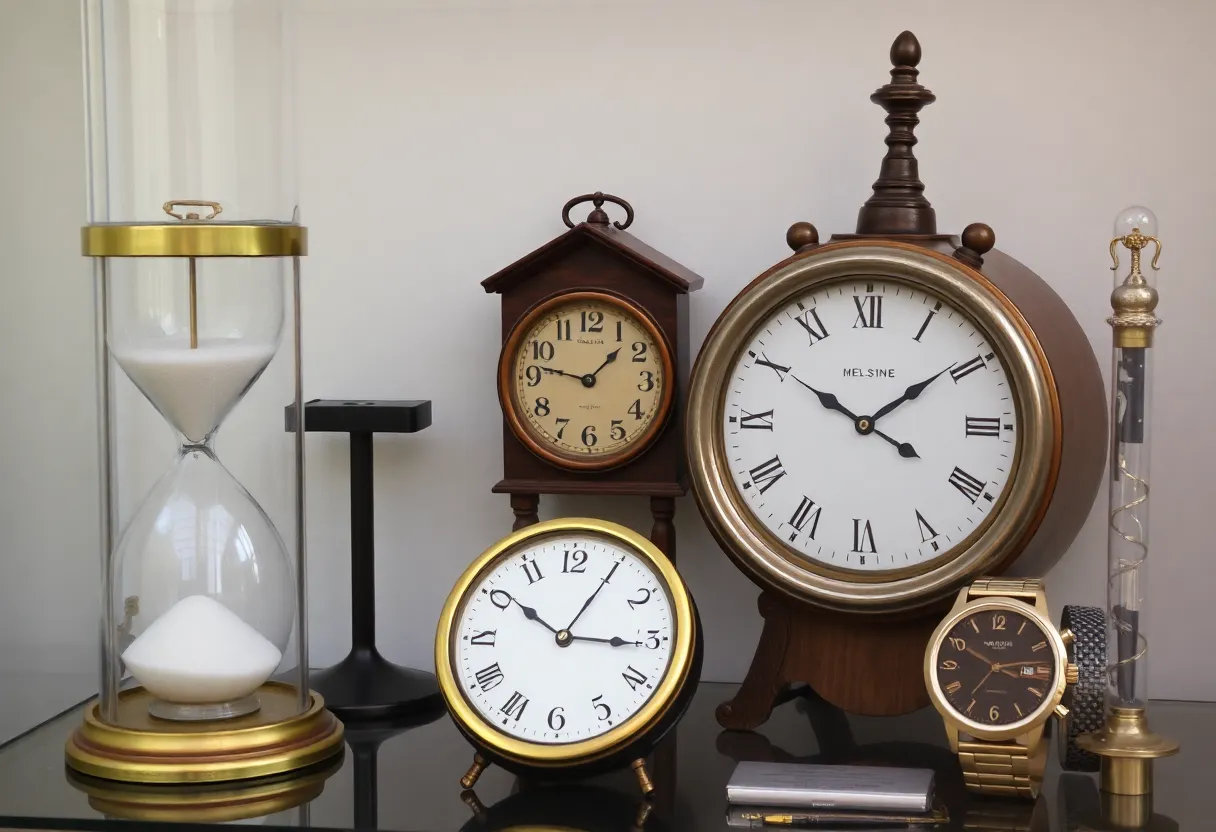
Sundials, water clocks (clepsydrae), and hourglasses all measured time, but imprecisely by modern standards and dependent on conditions (sunlight, temperature, level surfaces). The mechanical clock — using a falling weight to drive a gear train regulated by an escapement mechanism — appeared in medieval Europe in the 13th century. The escapement is the key innovation: a mechanical device that releases the gear train in controlled increments, converting continuous rotational motion into measured intervals. Early mechanical clocks were accurate to within roughly 15 minutes per day — dramatically better than water clocks, but still imprecise by modern standards.
Christiaan Huygens invented the pendulum clock in 1656, reducing daily error to under a minute by exploiting the constant period of pendulum oscillation (which depends on pendulum length, not swing amplitude — a mathematical property Galileo had observed earlier in the century). The pendulum clock was the most accurate portable timekeeping technology for two centuries. By the 18th century, precision clockmakers were achieving accuracy of a few seconds per day — enough to be useful for navigation and scientific observation.
The marine chronometer, developed by John Harrison in the 18th century in response to the British Longitude Prize, solved one of the most practically significant timekeeping problems in history. Determining longitude at sea requires knowing the time at a reference meridian (originally Greenwich) and comparing it to local time (determined by the sun’s position). Clocks of the era lost time at sea due to temperature changes, humidity, and ship motion. Harrison’s H4 chronometer (1759) was accurate enough at sea to determine longitude to within half a degree — transforming naval navigation and making the British prize achievable.
Standardization: When Personal Time Became Shared Time
Before the 19th century, every town kept its own local time based on the position of the sun. This was sensible when travel was slow — the sun’s position shifted by only about 4 minutes per degree of longitude, and covering a degree of longitude on foot or by horse took hours. When the railroad connected cities and allowed rapid travel, the patchwork of local times became operationally problematic: railway schedules required consistent time coordination across hundreds of miles.
Time zones were invented to solve this railroad coordination problem. The United States adopted standard time zones in 1883 (implemented by the railroads, who had more immediate practical need than the government) and most industrialized nations had adopted national or international standard time within a few decades. Greenwich Mean Time became the global reference in 1884. The invention of standard time zones is a clear example of timekeeping precision being driven by economic and logistical necessity — the railroads needed consistent time; individual solar accuracy was insufficient.
The Quartz and Atomic Era
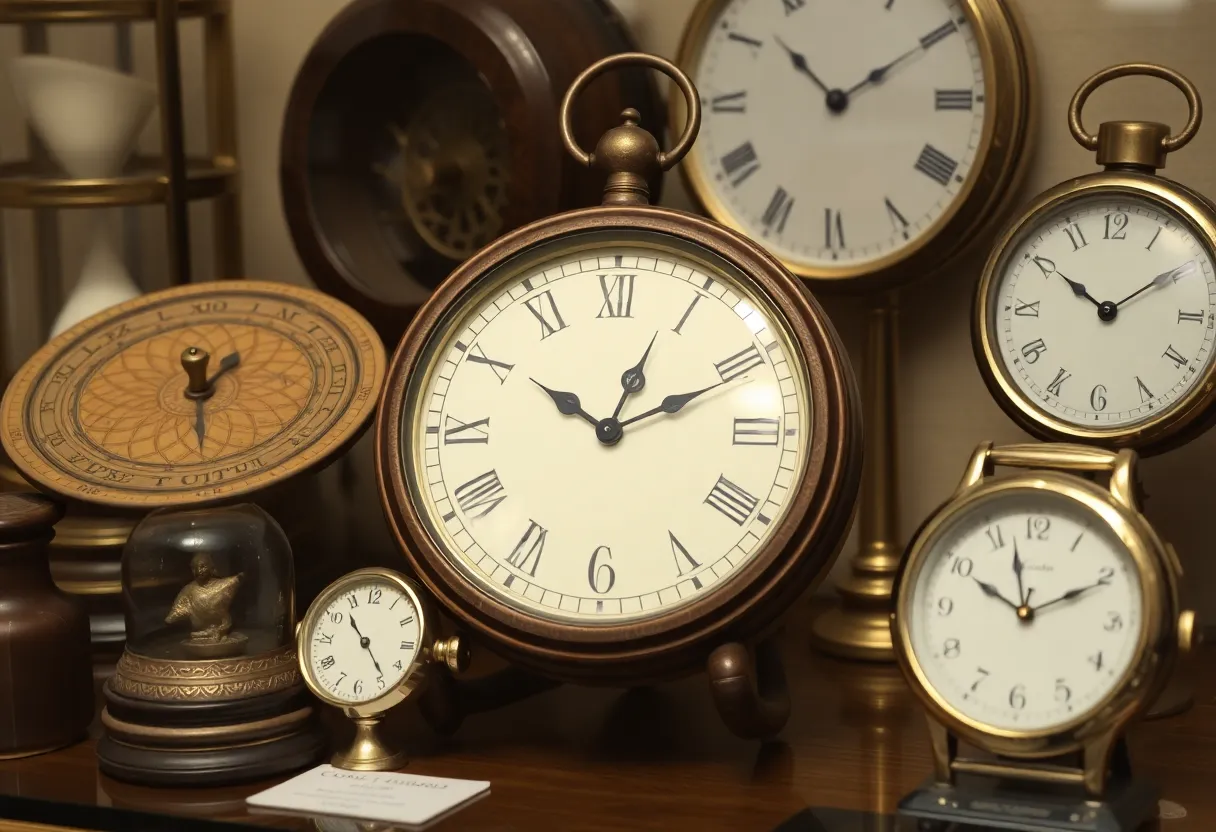
The 20th century brought two major leaps in precision. Quartz crystal oscillators (1927) used the piezoelectric resonance of quartz crystals to regulate time — quartz oscillates at a precise frequency (typically 32,768 Hz for watch crystals) when an electrical current is applied. Quartz clocks reduced daily error to fractions of a second, making them accurate enough for broadcast time standards, financial markets, and scientific instruments. The quartz watch, affordable from the 1970s onward, democratized precision timekeeping — a $10 quartz watch keeps more accurate time than any mechanical watch costing thousands.
Atomic clocks (1955, commercially available from the 1960s) exploit the resonant frequency of atoms (typically cesium-133, which oscillates at 9,192,631,770 Hz) as a timekeeper. The current SI definition of a second is formally defined as exactly 9,192,631,770 periods of the radiation corresponding to the transition between two hyperfine levels of the ground state of the cesium-133 atom. Modern atomic clocks are accurate to within 1 second per 300 million years. The most advanced optical lattice clocks under development are projected to be accurate to 1 second per several billion years — approaching the age of the universe.
Why This Level of Precision Matters Now
Precision at the level of atomic clocks isn’t a hobbyist achievement — it’s embedded infrastructure. GPS satellites use atomic clocks whose timing must be synchronized to within nanoseconds; a microsecond of error in GPS clock synchronization produces roughly 300 meters of position error. Global financial markets synchronize transaction timestamps to microseconds for regulatory compliance and fair access. Telecommunications networks synchronize to prevent data collisions. The internet’s routing infrastructure depends on coordinated timing. Scientific experiments in particle physics and gravitational wave detection require timing precision that only atomic standards provide.
Each era of human economic activity has found that the precision it required just exceeded what previous technology could provide. Agricultural coordination needed seasonal accuracy; naval trade needed longitude-quality accuracy; railroads needed timezone-quality coordination; financial markets need microsecond synchronization; GPS needs nanosecond-quality atomic standards. The history of timekeeping is the history of what precision each era needed — and the technology built in response reveals as much about the activity it served as about the instrument itself.