What Thermal Cameras See That Regular Cameras Don’t—And What They’re Used For

David Shaw
July 7, 2026
Standard digital cameras capture visible light—the same portion of the electromagnetic spectrum that human eyes detect. Thermal cameras capture something invisible to the human eye: infrared radiation emitted by objects based on their temperature. This fundamental difference produces images that reveal information about the physical world that visible-light cameras cannot capture, making thermal imaging genuinely useful for a range of practical applications from building inspection to medical diagnostics.
The Physics: Why Everything Glows
Everything above absolute zero (0 Kelvin, −273°C) emits electromagnetic radiation. The spectrum and intensity of this radiation is determined by the object’s temperature. At room temperature, objects emit primarily in the long-wave infrared (LWIR) range, roughly 8–14 micrometres wavelength—well beyond the near-infrared of standard camera IR filters and invisible to human eyes.
The Stefan-Boltzmann law quantifies this: total radiated power is proportional to temperature to the fourth power (T⁴). This means small temperature differences produce measurable differences in emitted infrared radiation, which thermal cameras can detect and resolve spatially. A thermal camera doesn’t need a light source—it’s imaging the thermal emission of objects themselves, not reflected light.
The false-colour visualisation of thermal images (the familiar blue-cold, red-hot colour palette) is a display choice that makes temperature differences more interpretable. Raw thermal images are grayscale, where brightness corresponds to temperature. The colour mapping makes temperature gradients easier to read quickly.
How Thermal Cameras Work
A thermal camera replaces the visible-light sensor (typically CMOS or CCD silicon) with a sensor sensitive to long-wave infrared radiation. The two main technologies:
Cooled thermal cameras use sensors (typically HgCdTe or InSb photodetectors) that must be operated at cryogenic temperatures (typically 77 Kelvin, −196°C) to achieve the sensitivity needed for high-performance military and scientific imaging. The cooling system—using liquid nitrogen or a Stirling cooler—adds size, cost, and power consumption. Cooled cameras achieve very high sensitivity and are used in applications where detecting tiny temperature differences matters.
Uncooled microbolometer arrays operate at ambient temperature and are the technology behind consumer and commercial thermal cameras (FLIR, Seek Thermal, HIKMICRO). A microbolometer array is a grid of tiny resistors that change resistance with temperature. Incoming infrared radiation heats each element slightly; the resistance change is measured and converted to a temperature map. Uncooled cameras are less sensitive than cooled cameras but are vastly cheaper, smaller, and don’t require cooling infrastructure.
Resolution is a key limitation of consumer thermal cameras: while standard cameras have tens of megapixels, affordable thermal cameras have sensors of 160×120 or 320×240 pixels. The physics and manufacturing cost of large-format uncooled arrays makes high-resolution thermal imaging expensive. Sensor fusion (combining a thermal image with a registered visible-light image at higher resolution) is commonly used to improve interpretability.
Building and Energy Auditing
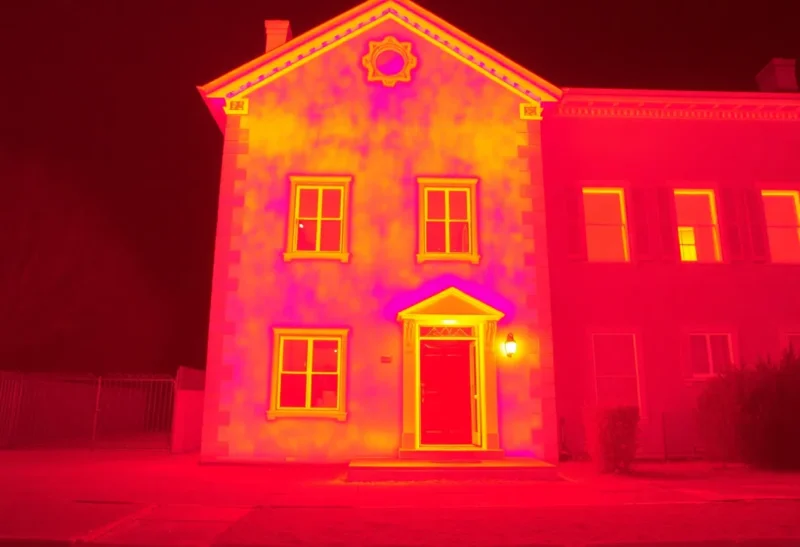
One of the most practical consumer and commercial applications is building thermal inspection—identifying heat loss, insulation failures, air infiltration, and moisture problems in buildings. A thermal camera used on a cold exterior day will show:
Windows and doors as warm areas where conditioned interior air is escaping. Missing or compressed insulation as irregular warm patches on exterior walls. Thermal bridging—structural members (studs, joists) that conduct heat through insulation, appearing as linear patterns of slightly higher temperature. Water infiltration sites (moisture has higher thermal mass than dry materials, appearing as cold spots in certain conditions).
This application has expanded from professional energy auditors to homeowners, aided by affordable smartphone-attachable thermal cameras (FLIR One series, Seek Thermal Compact) that cost $200–500 and produce usable thermal images. The EU’s push to improve building energy performance has increased awareness of thermal imaging as a diagnostic tool for home energy efficiency.
Electrical and Industrial Inspection
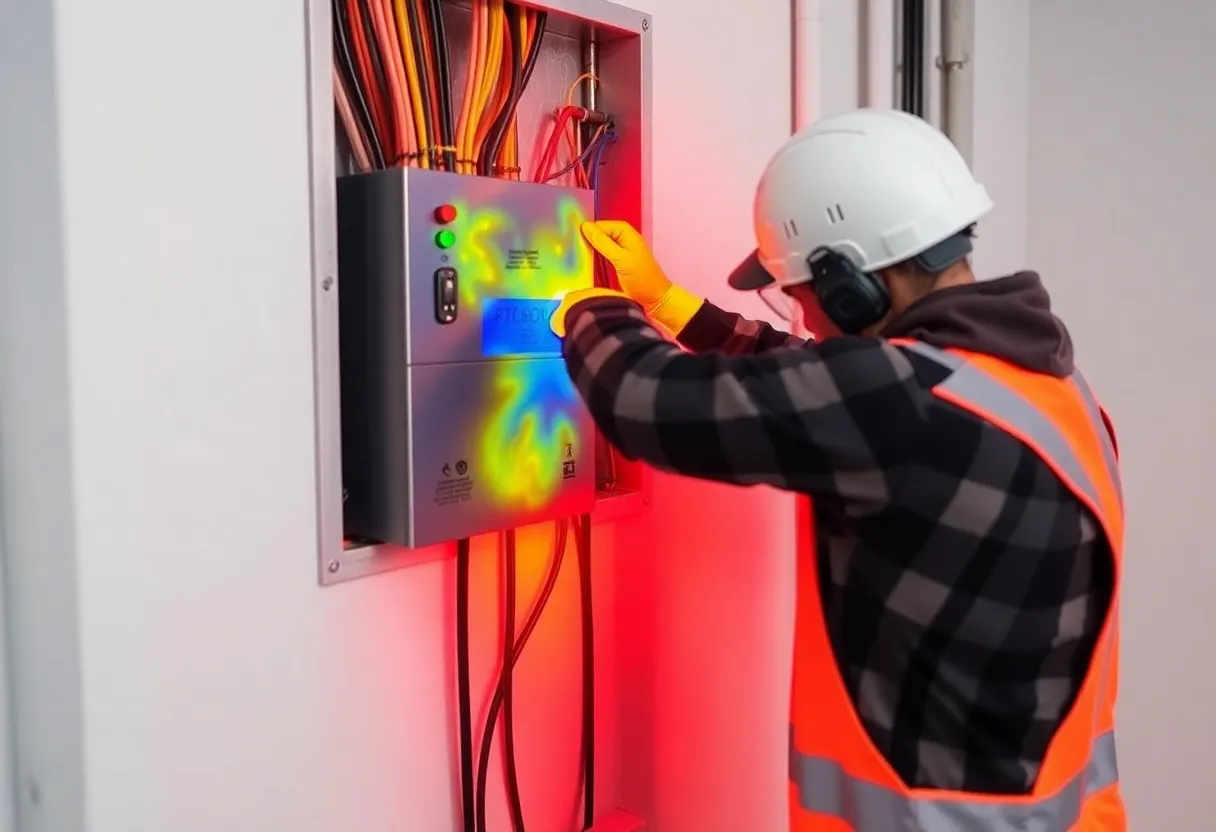
Predictive maintenance using thermal imaging is a well-established industrial practice. Electrical connections, circuit breakers, motors, bearings, and heat exchangers develop thermal anomalies before they fail. A loose or corroded electrical connection has higher resistance, which produces localised heating—visible on a thermal camera before the connection fails. An overloaded circuit breaker operates at higher temperature than one within its rated capacity.
Regular thermal inspections of electrical panels, industrial motors, HVAC systems, and process equipment catch developing faults early—preventing failures and downtime that would cost far more than the inspection. This is why industrial thermal cameras are standard equipment for electrical maintenance and industrial inspection teams. The economics are straightforward: a $2,000 thermal camera can prevent a factory shutdown that costs orders of magnitude more.
Medical and Security Applications
Thermal cameras measure fever non-contactly—airports and public health authorities used them at scale during the COVID-19 pandemic as a triage tool (detecting elevated body temperature as a possible fever indicator). The accuracy and specificity limitations of this application were broadly reported: thermal cameras measure skin surface temperature, which correlates imperfectly with core body temperature, and environmental factors affect the reading. They’re a useful screening tool for directing further assessment, not a diagnostic device.
In security and surveillance, thermal cameras detect people through smoke, fog, and in complete darkness (since they’re imaging thermal emission, not reflected light). This makes them valuable for perimeter security, search and rescue in low-visibility conditions, and firefighting (where thermal cameras reveal hot spots and people through smoke).
Consumer Thermal Cameras in 2026
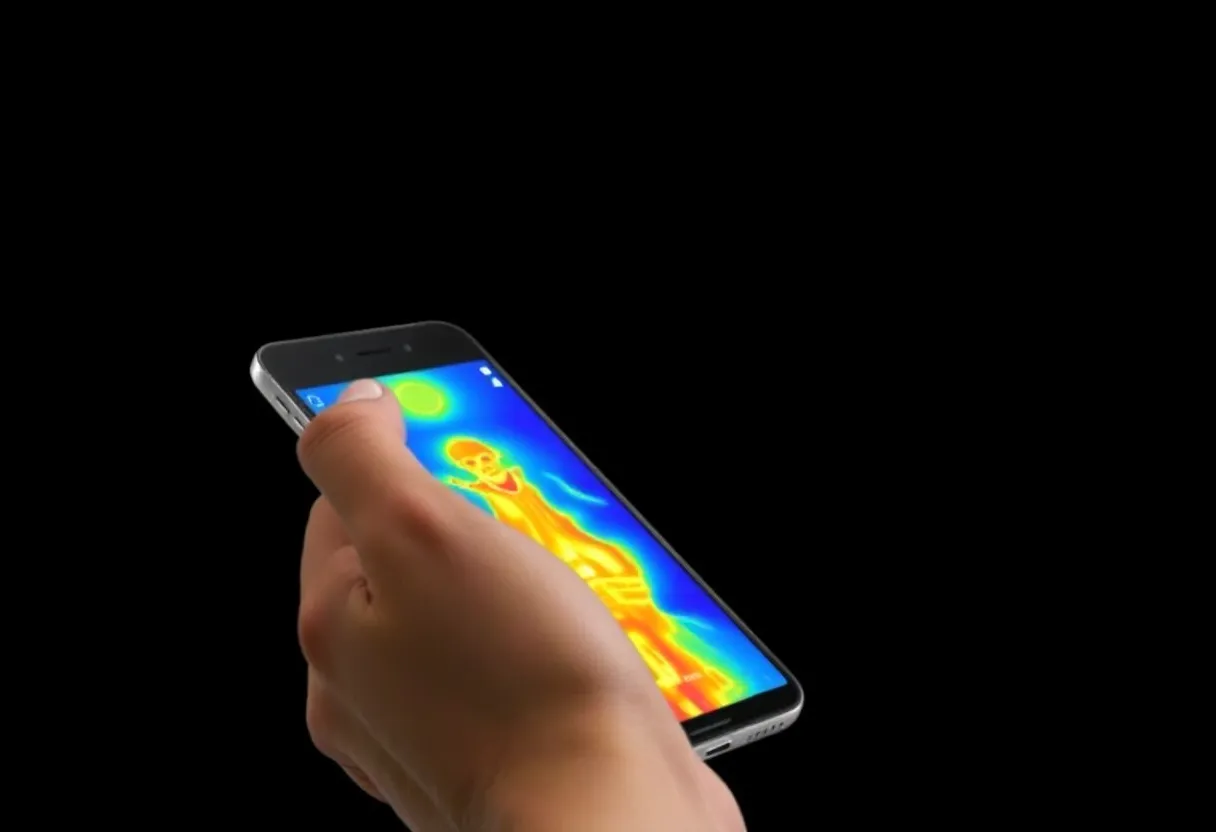
The consumer thermal camera market in 2026 offers several accessible options. Smartphone-attachable cameras (FLIR One Pro, Seek Thermal Compact Pro) attach to the phone’s USB port and use the phone’s screen for display, starting around $400–700. Standalone consumer thermal cameras (Topdon, InfiRay, HIKMICRO) in the $200–500 range have grown the market beyond FLIR’s previous dominance.
The use cases for consumer thermal cameras that justify the cost: home energy auditing (identifying heat loss, draught spots), electrical inspection for DIY homeowners, finding water leaks (moisture shows as cool spots), checking radiant heating floors, and wildlife spotting at night. For these applications, a 256×192 or 320×240 pixel resolution thermal camera at $300–500 provides genuinely useful images that reveal things visible cameras cannot.