Why the Global Rare Earth Supply Chain Is More Fragile Than Commonly Known

Samuel Osei
July 7, 2026
Rare earth elements—the 17 elements comprising the lanthanide series plus scandium and yttrium—have become essential inputs to many of the technologies central to the clean energy transition and modern electronics. Neodymium and praseodymium are critical components of the permanent magnets used in EV motors and wind turbine generators. Dysprosium is added to those magnets to maintain performance at high temperatures. Europium and terbium enable LED phosphors. Lanthanum and cerium go into catalysts and glass polishing compounds. Yttrium is used in lasers and LED lighting.
The “rare” in rare earth is somewhat misleading—these elements are not particularly scarce in the earth’s crust. Cerium is more abundant than copper. The supply chain fragility comes from processing concentration, environmental complexity of extraction, and the specific form of geographic concentration that has developed through decades of investment and underinvestment across different countries.
The Geology Is Not the Problem
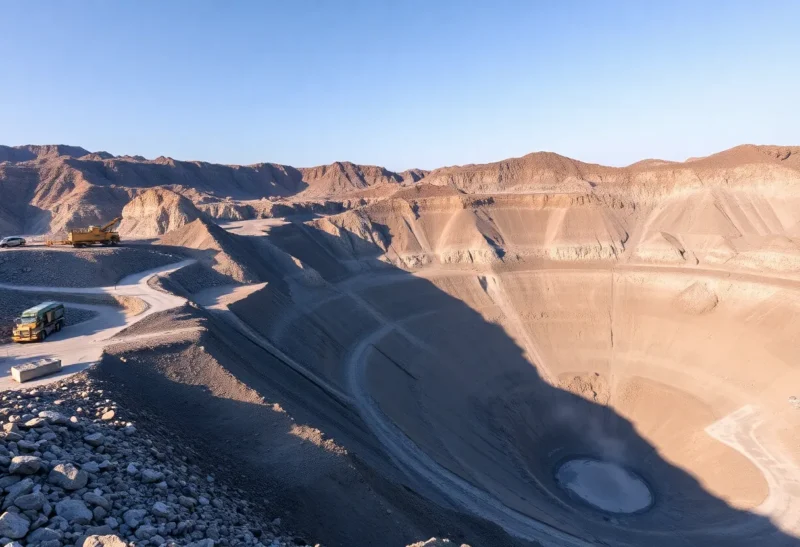
Rare earth elements occur in multiple mineral deposits around the world. Australia, Brazil, Russia, India, Canada, and the United States all have significant rare earth deposits. The Mountain Pass mine in California is one of the richest rare earth deposits in the world. Greenland has substantial deposits. Vietnam has significant reserves. The geological availability of rare earth elements is not, by current assessments, a fundamental constraint.
The supply concentration is in mining and—more significantly—in processing. China accounts for approximately 60% of global rare earth mining and approximately 85–90% of rare earth processing and refining. The separation of mixed rare earth concentrates into individual purified elements requires multiple stages of hydrometallurgical processing—solvent extraction, precipitation, and calcination—using extensive chemical inputs that produce significant waste streams. China’s willingness to accept the environmental costs of this processing during the decades when Western countries were moving away from heavy industrial pollution enabled it to achieve and maintain processing dominance.
The processing concentration is the deeper fragility. A country could mine rare earth ore and still depend entirely on Chinese processing to convert it to usable materials. Mountain Pass, when it operated, shipped mixed rare earth concentrates to China for separation because no US processing capacity existed. Rebuilding processing capacity outside China requires not just capital investment but rebuilding the engineering knowledge, trained workforce, and regulatory frameworks that were abandoned when Western processing operations closed.
The 2010 China-Japan Dispute: A Preview
In September 2010, China imposed an informal embargo on rare earth exports to Japan following a diplomatic dispute over a fishing boat collision near disputed islands in the East China Sea. The embargo lasted approximately two months and exposed how dependent Japanese electronics and automotive manufacturers were on rare earth supply. Japan’s industrial response—diversifying supply sources, reducing rare earth content in products, stockpiling materials, and funding alternative mine development—illustrates both the vulnerability and the range of mitigation strategies available.
China has used rare earth export restrictions as economic leverage in subsequent geopolitical disputes, including restrictions on rare earth exports to the US during the 2019 trade war period. The pattern has made Western governments acutely aware of the supply chain exposure but has not yet produced supply chain diversification at the scale that would substantially reduce China’s leverage.

The Clean Energy Demand Problem
The fragility of the rare earth supply chain is becoming more acute as clean energy deployment accelerates. A typical EV traction motor uses 1–2 kg of rare earth permanent magnets containing neodymium, praseodymium, and dysprosium. A 6 MW offshore wind turbine uses approximately 600 kg of rare earth magnets. As global EV production scales from millions to tens of millions per year, and offshore wind capacity scales from tens to hundreds of gigawatts, the demand for rare earth elements—particularly the heavy rare earths dysprosium and terbium that enable high-temperature magnet performance—is projected to grow substantially.
The supply response to this demand growth requires mine development and processing capacity investment with long lead times. A new rare earth mine typically takes 10–15 years from discovery through permitting, construction, and commissioning to production. Processing capacity expansion requires similar timelines for facility construction and workforce development. The gap between the timeline of clean energy demand growth and the timeline of supply chain diversification is a vulnerability that doesn’t resolve quickly.
The supply challenge is most acute for the heavy rare earths dysprosium and terbium, which are less abundant than the light rare earths (neodymium, praseodymium, lanthanum, cerium) and more concentrated in specific deposit types that are geographically concentrated in southern China. Alternative sources—ion adsorption clay deposits in Myanmar and other Southeast Asian countries, deep sea nodules—are being developed but face their own supply chain and geopolitical risks.
Technology Responses: Reducing, Substituting, Recycling
The vulnerability of rare earth supply chains has motivated significant research investment in three directions:
Reducing content. Motor designs that use less rare earth material per unit of power output have improved substantially—the rare earth content per kilowatt of motor power has decreased through better magnetic circuit design. Further reductions are possible, and the industry trend is toward reduced material intensity even as motor volume increases.
Substituting alternatives. Electric motors can be designed without rare earth permanent magnets, using wound-rotor induction motors or switched reluctance motors. These designs avoid the rare earth supply chain risk but at some cost in efficiency, power density, or complexity. Tesla’s base rear-wheel drive models use induction motors rather than permanent magnet motors for this reason. The tradeoff is real; for high-performance applications where power density matters, permanent magnet motors remain preferable.
Recycling. The rare earth content in end-of-life motors and wind turbines represents a secondary supply stream that will grow substantially as early clean energy installations reach end of life. Rare earth recycling from permanent magnets is technically feasible and is beginning to scale commercially, but the recycling rate for rare earths globally remains low, and the collection and processing infrastructure for end-of-life magnets doesn’t yet exist at scale.
Supply Chain Diversification: Slow Progress
Western governments’ efforts to diversify rare earth supply chains have produced some progress but not yet fundamental change in the supply structure. The MP Materials Mountain Pass mine has resumed production and is developing domestic separation and magnet manufacturing capability with US government support. Australia’s Lynas Rare Earths has built separation capacity in Malaysia and is developing processing capacity in the US. The EU’s Critical Raw Materials Act is directing funding toward rare earth supply chain development within and outside Europe.
These investments represent genuine progress, but rare earth supply chain diversification faces a structural challenge beyond capital: China’s cost advantage in processing, built over decades of environmental and economic investment, is difficult to match without accepting either higher costs or lower environmental standards. Supply chain diversification that relies on Western processing capacity is likely to be more expensive than continuing to depend on Chinese processing—a cost that clean energy manufacturers, governments, and ultimately consumers need to accept as a risk mitigation premium.
The honest assessment is that the rare earth supply chain will remain concentrated and China-dependent for at least another decade, with meaningful diversification achievable in the 15–20 year timeframe if the current investment commitments are sustained. The geopolitical risk that concentration represents is not eliminated by the current wave of diversification investment; it is being gradually reduced, at meaningful cost, over a timeframe that doesn’t match the urgency of clean energy deployment.