Why Cheap Keyboards Are Getting So Much Better and What Changed

Marcus Webb
July 7, 2026
Five years ago, a $50 mechanical keyboard was likely to have rattling stabilizers, scratchy switches, a hollow-sounding case, and a PCB design that amplified every keypress into an unpleasant clack. The mechanical keyboard enthusiast community existed in a separate world of custom builds, group buys, and $200+ boards with premium materials and careful engineering. The gap between affordable and actually good was wide and clearly felt.
That gap has narrowed substantially. A $50–80 mechanical keyboard in 2026 regularly arrives with gasket-mounted cases, factory-lubed switches, pre-dampened stabilizers, and sound profiles that would have required aftermarket modification to achieve in 2020. The question has shifted from “can you get a good budget keyboard?” to “which budget keyboards are genuinely good?” Understanding what drove this change explains both where the improvement came from and what the remaining differences between budget and premium boards are.
The Keyboard Enthusiast Community’s Downstream Effect
The mechanical keyboard hobby community — concentrated on forums like Reddit’s r/MechanicalKeyboards, Geekhack, and YouTube keyboard review channels — developed a sophisticated vocabulary and set of preferences for keyboard sound and feel over the 2015–2022 period. Terms like “thock” (a deep, muted keypress sound associated with gasket mounting and foam dampening), “smooth linear” (a switch that travels without tactile resistance and without the scratchy friction of cheap switch tolerances), and “clack” versus “thud” became common parlance with understood meaning. This community established aesthetic standards that were then pursued by manufacturers targeting enthusiasts.
The commercial insight was that budget keyboard buyers also wanted these qualities, and that manufacturing improvements that achieved them at the component level could be applied at mass-market price points. The enthusiast community’s preferences are not exotic — they’re preferences for a keyboard that sounds pleasant and feels smooth rather than one that sounds hollow and feels scratchy. These improvements translate directly to mainstream appeal.
Gasket Mounting: The Key Design Change
The single most significant construction change in budget keyboards over the past three years has been the adoption of gasket mounting. In traditional tray-mount and top-mount keyboard construction, the PCB and plate assembly is screwed directly to the case, transmitting vibration from keypresses directly through rigid contact points to the case walls. This produces the hollow, reverberant sound that characterizes cheap keyboards and many older enthusiast boards.
Gasket mounting suspends the PCB and plate assembly on silicone or rubber gaskets that absorb vibration rather than transmitting it. The result is a noticeably different typing sound and feel: keypresses feel more cushioned, sound more muted and consistent (“thocky”), and the overall keyboard feels less like tapping a plastic box and more like typing on a premium board. Gasket mounting was originally an expensive construction method associated with custom keyboards costing $150–300; it’s now standard in boards from Keychron, Akko, VGN, and similar brands at the $50–100 price point.
The gasket mount change alone accounts for much of the user-perceptible quality improvement in budget keyboards over the last few years. The same switches that sounded hollow in a tray-mount board sound substantially better in a gasket-mount case because the acoustic properties of the board have changed entirely.
Switch Quality and Factory Lubing
Switch quality has improved at the budget end through both manufacturing tolerance improvements and the adoption of factory lubing. Linear switches in particular benefit dramatically from lubrication — an unlubed linear feels scratchy and inconsistent compared to a well-lubed one that slides smoothly through its travel. Custom keyboard builders have lubed switches by hand (a tedious process requiring lubricating each switch individually) to achieve smooth performance; factory lubing applies lubricant during the manufacturing process.
Factory lube quality varies — it’s typically not as precisely applied as careful hand lubing — but a factory-lubed $0.25 switch is noticeably better than an unlubed $0.25 switch from five years ago. Brands like Gateron, Kailh, and the Chinese switch manufacturers that supply budget boards have improved their manufacturing tolerances, reducing the stem wobble and housing inconsistency that made early budget switches feel cheap. A Gateron G Pro switch from 2024 is meaningfully better than a Gateron switch from 2018, all else equal, because manufacturing precision has improved.
The switch market has also proliferated significantly. Hundreds of switch variants are now available from Chinese manufacturers — different spring weights, different actuation distances, different sound profiles — at prices that have driven down the cost of finding a preferred switch feel. The enthusiast switch market that once required expensive boutique options now has mass-market alternatives covering similar design territory at fraction of the price.
Stabilizer Treatment and PCB Foam
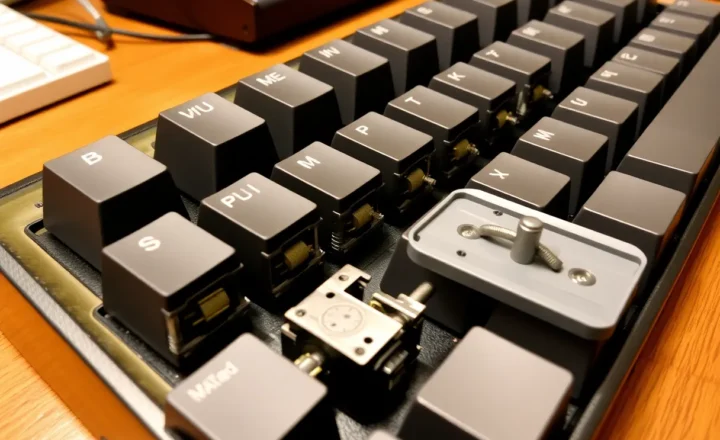
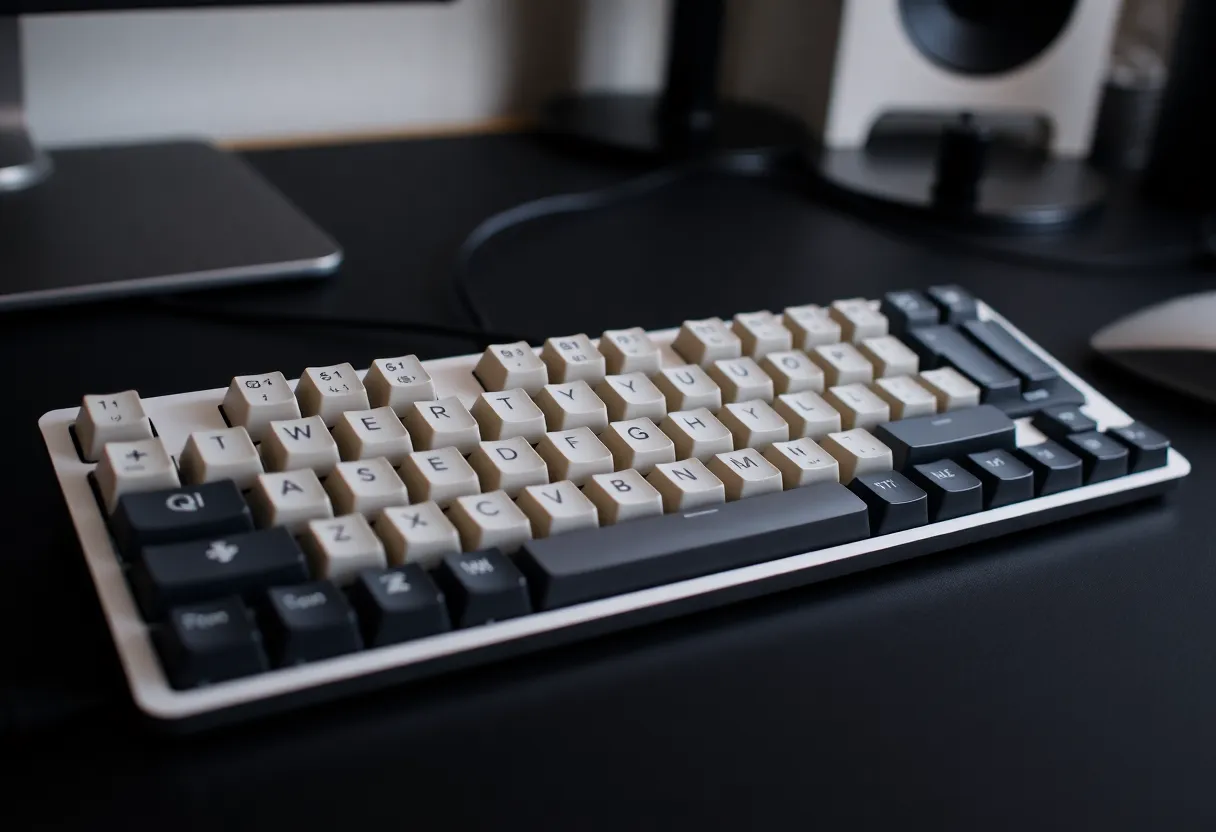
Stabilizers — the mechanisms that stabilize wider keycaps like spacebar, shift, and enter — have historically been the most significant quality differentiator between cheap and premium keyboards. A rattling, scratchy stabilizer makes every spacebar press feel unpleasant and sounds noticeably bad. Improving stabilizers required either replacing them with premium aftermarket versions (Durock, TX) or applying grease and clipping modifications that required time and skill.
Budget boards increasingly ship with stabilizers that are either pre-lubed or pre-modified, and case foam is now commonly included to reduce high-frequency sound transmission. These are small additions at manufacturing cost but produce large user-perceptible quality improvements. The stabilizers on a Keychron Q series or VGN board ship in a condition that would have required modification to achieve on a budget board in 2020.
What Still Separates Budget from Premium
The improvements in budget keyboards have not eliminated the differences between budget and premium boards — they’ve shifted what those differences are. The remaining premium differentiators are: material quality (aluminum cases at $100+ versus polycarbonate or ABS at $50–80, with different acoustic and tactile properties), customization depth (hotswap PCBs, RGB per-key control, programmability beyond basic remapping), build consistency (fewer quality control escapes, more consistent gasket tension, better tolerances), and the specific aesthetics of premium keycap sets that require the production runs and material specifications that group buys and premium retail channel support.
For most people who want a good typing experience, the budget tier now provides it at a price where the value proposition is straightforward. A Keychron K series, Akko 3084B, or VGN board at $50–90 produces a typing experience that would have cost $200 to replicate five years ago. The community-driven standards for what “good” means, the competition among Chinese manufacturers for the budget-conscious enthusiast market, and the manufacturing improvements that have trickled through the supply chain have collectively made the budget keyboard argument much easier than it used to be.