How Electric Aircraft Certification Works and What’s Slowing Commercial Adoption

Stefan Wolff
July 7, 2026
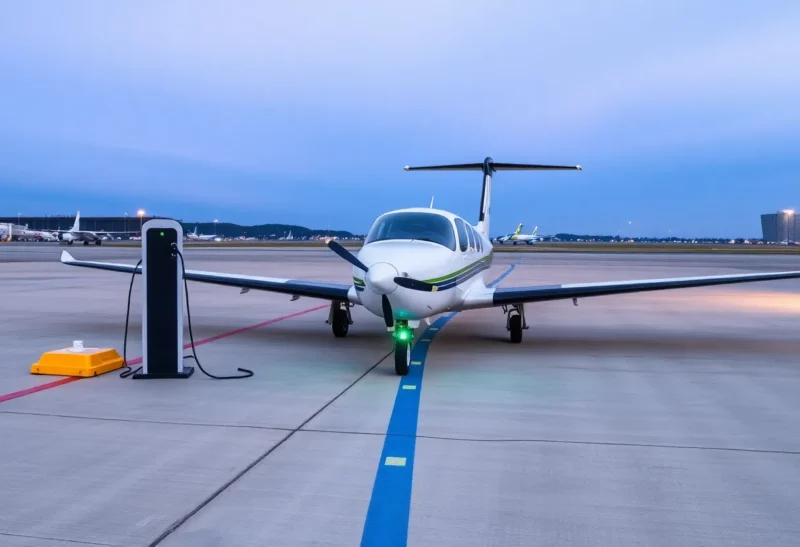
Electric aviation receives substantial press coverage, much of it framed around announcements of prototype aircraft, partnerships, and projected launch dates that recede as the years pass. The gap between the promotional narrative and the operational reality reflects a genuine set of technical and regulatory challenges that are different from those that slowed EV adoption in ground transportation—and in some respects significantly harder.
Understanding what’s actually constraining commercial electric aviation requires looking at the certification process, the specific technical challenges of aviation-grade electrical systems, the energy density problem, and the regulatory gap between what aviation authorities require and what current technology can provide.
Aviation Certification: Why It’s Different
Civil aviation is the most heavily regulated transport sector for good reason: failures are catastrophic and largely non-survivable at altitude. The certification frameworks developed by the FAA (Federal Aviation Administration) in the United States and EASA (European Union Aviation Safety Agency) in Europe were built around conventional propulsion systems—reciprocating engines and turbines that have been understood and tested for decades. Applying these frameworks to novel electric propulsion introduces fundamental ambiguities that the regulators are still working through.
The primary certification pathway for new aircraft types is Part 23 (for aircraft under 19 seats and under 19,000 pounds maximum take-off weight) in the US, updated in 2017 to a performance-based rather than prescriptive standard. This update was intended to enable innovation by defining the safety outcome required rather than the specific means of compliance. For electric aircraft, this means that manufacturers must demonstrate equivalent levels of safety to conventional aircraft, but without an established body of accepted means of compliance for electric propulsion systems.
EASA has developed specific technical specifications for electric propulsion—CS-23 (Certification Specifications for Normal, Utility, Aerobatic, and Commuter Category Aeroplanes) with accompanying acceptable means of compliance for electric aircraft—that represent more developed guidance than was available even five years ago. The regulatory frameworks are improving, but the pace of regulatory development is substantially slower than the pace of prototype development, creating a certification bottleneck for multiple aircraft developers simultaneously.
Battery Energy Density: The Core Constraint
The fundamental physical constraint on electric aviation is the energy density of current battery technology. Jet fuel contains approximately 12,000 Wh/kg of energy. Current lithium-ion batteries deliver approximately 250–300 Wh/kg at the cell level (lower at the pack level after adding structure, cooling, and management systems). The energy density ratio is roughly 40:1 in favour of jet fuel.
For ground transport, this gap is manageable: a car is heavy anyway, weight doesn’t directly affect the energy required for transport (on flat roads), and battery packs can be made large enough to provide adequate range. For aircraft, weight is directly penalised: every kilogram of battery pack requires additional lift, which requires additional power, which requires more battery—a vicious spiral that rapidly erodes usable range as aircraft size increases.
The energy density constraint limits current electric aviation to short-range and small-aircraft applications. Battery-electric aircraft with certificated or near-certification status are largely limited to two-seat training aircraft and small general aviation aircraft with ranges of 50–150 km. The Pipistrel Velis Electro, certified by EASA in 2020, is a two-seat trainer with approximately 50 minutes of endurance plus reserve—practical for flight training but not for point-to-point transport.
Regional transport—15-seat commuter aircraft flying routes of 150–300 km—is the application attracting the most investment and the most headline promises. Companies including Heart Aerospace, Eviation, and Harbour Air have announced electric commuter aircraft targeting this segment. The physics are challenging: a 15-seat aircraft with 300 km range requires substantially more energy per kilogram of aircraft than a 2-seat trainer with 50 km range, and the battery weight fraction needed to achieve the range target approaches the structural limits of what an aircraft can carry while remaining airworthy and profitable.
Battery Safety in Aviation: Stricter Requirements Than Automotive
The thermal runaway risk of lithium-ion batteries—where a cell failure cascades to adjacent cells, releasing heat and potentially fire—is managed differently in aviation than in automotive applications. In a car, a battery fire is serious; the vehicle can be stopped, occupants can exit, and emergency services can respond. In an aircraft at altitude, the same fire is potentially catastrophic: the occupants cannot exit, the aircraft systems may be compromised, and the outcome depends entirely on whether the fire can be contained long enough to land safely.
Aviation certification standards for batteries require demonstrated capability to contain cell-level thermal events without cascading propagation, and without smoke or gases that would incapacitate the crew or interfere with aircraft systems. These requirements are substantially stricter than automotive battery standards and require battery pack designs with more comprehensive thermal management, containment structures, and vent pathways than automotive-grade packs.
The certification testing for aviation battery systems involves intentional thermal runaway of individual cells within the pack to demonstrate containment—a test that requires the pack design to have been specifically engineered around this requirement, not just adapted from an automotive design. This adds development cost and weight relative to automotive battery packs.
Hybrid-Electric: The Bridging Strategy
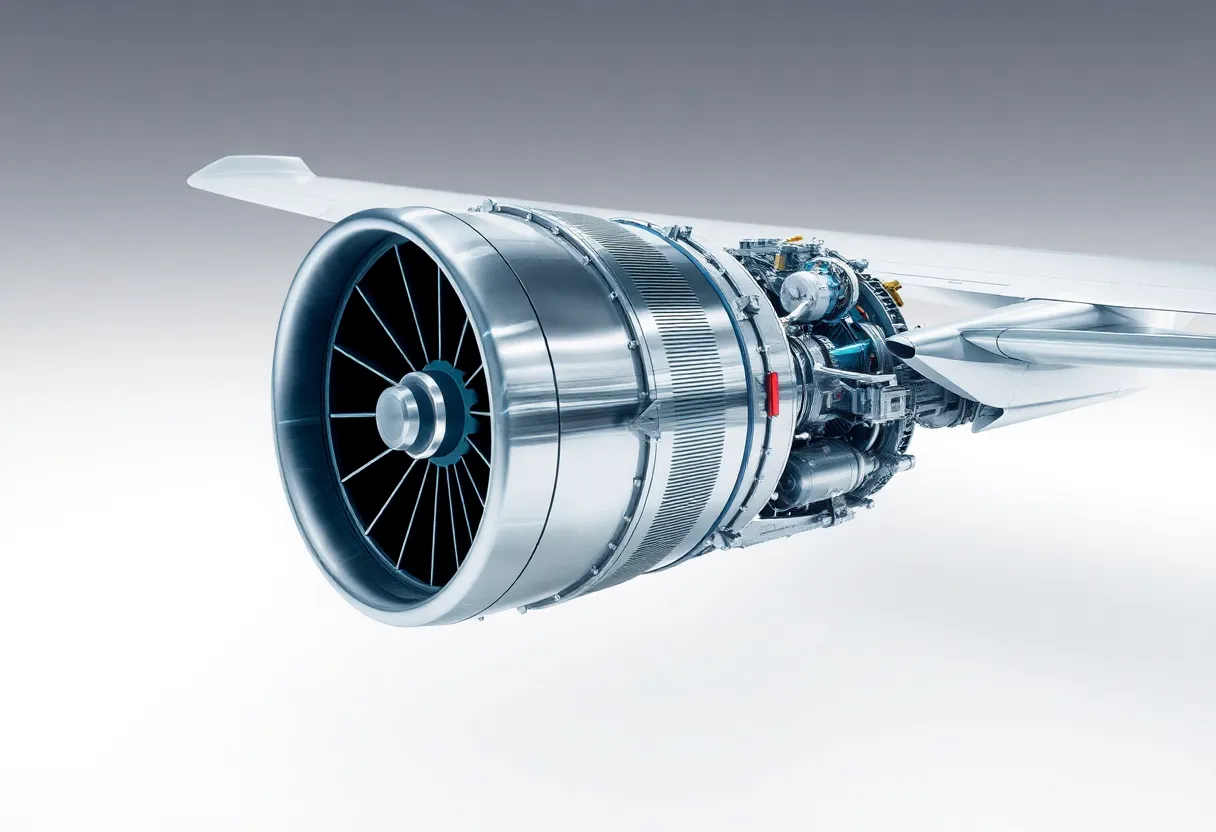
Several aircraft programmes are pursuing hybrid-electric configurations rather than pure battery-electric, recognising that the energy density constraint prevents pure electric from reaching useful range in larger aircraft categories with current battery technology. A hybrid-electric system uses a conventional fuel engine as the primary power source but electrically-driven propulsors and electric power management to improve efficiency and reduce fuel consumption.
The benefits of hybrid-electric in aviation are less dramatic than in ground transport because aviation engines already operate at high thermal efficiency (turboprops and turbofans are highly optimised)—there’s less efficiency gain from capturing regenerative braking energy that doesn’t exist in sustained cruise flight. The primary advantages are system redundancy (the electric and thermal systems can provide backup for each other), noise reduction through lower-RPM propeller operation enabled by electric drive, and the ability to optimise the thermal engine for a narrower power band while using the battery to handle peak demands.
The certification challenge for hybrid-electric is amplified relative to pure electric: the system combines two novel propulsion types, creating compound complexity that the regulatory means of compliance frameworks haven’t fully addressed.
The Infrastructure Gap
Electric aircraft require charging infrastructure at airports. Most airports currently have no electric aircraft charging capability. The infrastructure investment required to equip airports—particularly smaller general aviation airports and regional airports that are the most likely early markets for electric commuter aircraft—is significant and requires coordination between aircraft manufacturers, airport operators, utilities, and regulators.
The charging power requirements for commercial electric aircraft are substantial. Charging a regional electric aircraft in a turnaround time compatible with commercial operations (20–30 minutes) requires power delivery rates of hundreds of kilowatts—infrastructure that many small airports don’t have grid connections capable of supporting without upgrades.
The charging infrastructure problem is solvable and several airports have made investments; the issue is that it requires capital spending before there are aircraft to charge, which makes the business case circular. The chicken-and-egg problem is familiar from EV charging networks and will likely resolve the same way: early adopters and committed routes develop the infrastructure, which enables further adoption.
Realistic Timeline for Meaningful Commercial Adoption
The honest assessment of the timeline for meaningful commercial electric aviation adoption depends heavily on which segment is considered. Two-seat electric training aircraft are here now; the Pipistrel Velis Electro is in commercial service and several other designs are in late certification. Electric flight training is the most immediate large market.
Small commuter electric aircraft (5-9 seats, up to 200 km range) are plausibly 5-8 years from meaningful commercial service, dependent on battery energy density improvements reaching approximately 400 Wh/kg at the pack level and the certification frameworks maturing sufficiently to provide a clear path to approval.
Regional electric aircraft (15-19 seats, 300+ km range) are not achievable with current battery technology at any practical weight budget and are likely 15+ years from commercial viability unless battery energy density improves dramatically beyond current projections.
The aviation industry’s decarbonisation path for the near term runs primarily through sustainable aviation fuel (SAF) and turbofan efficiency improvements rather than electrification—not because electrification isn’t the right long-term direction, but because the physics of energy density mean that conventional aircraft with clean fuels will carry the near-term load while battery technology matures.