How Modern Noise-Canceling Algorithms Work in Active Hearing Protection

Lars Eriksen
July 7, 2026
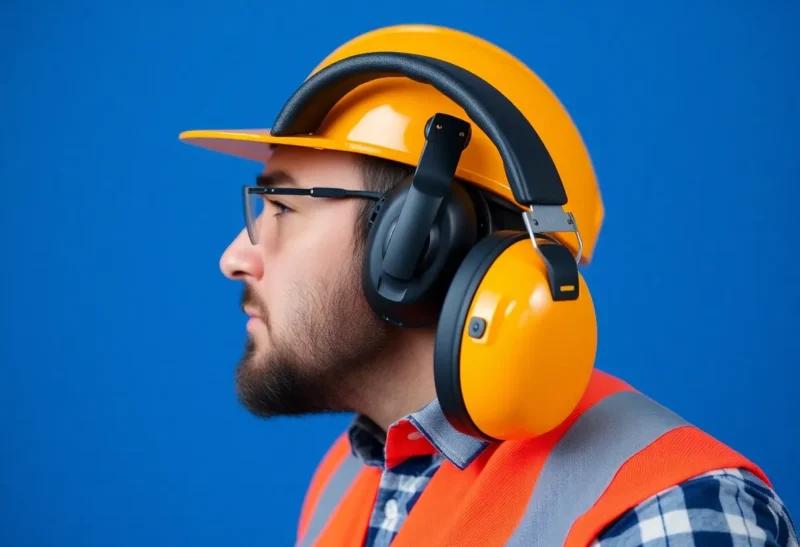
Most people encounter active noise cancellation (ANC) in consumer headphones—the feature that reduces ambient background noise during travel or open-plan office work. The underlying signal processing is also the basis for active hearing protection devices used in industrial, military, and sporting contexts, where the requirements are substantially more demanding: the system must protect against impulse noise events that can damage hearing in milliseconds while still allowing the wearer to hear speech and warning sounds at safe levels.
Understanding how these systems work requires knowing both the signal processing at the core of ANC and the specific engineering challenges that hearing protection applications introduce compared to consumer audio devices.
The Physics of Active Noise Cancellation
Sound is a pressure wave—a pattern of alternating compressions and rarefactions in air. The fundamental principle of ANC is destructive interference: if you generate a sound wave that is the exact inverse (180° out of phase) of an incoming noise wave, the two waves cancel. The result at the listener’s ear is significantly reduced noise—ideally silence, in practice a substantial attenuation of the original sound.
To generate the cancelling wave in real time, the system must:
1. Detect the incoming noise with a microphone
2. Process the captured signal to generate an anti-phase version
3. Play the anti-phase signal through a speaker positioned close to the listener’s ear
4. Do all of this fast enough that the cancellation occurs at the right moment relative to the incoming noise
The timing requirement is demanding. Sound travels at approximately 343 metres per second at room temperature; at the distances involved in a headphone or earmuff, the propagation time from the external microphone to the ear is measured in tenths of milliseconds. The processing chain—analog-to-digital conversion, signal processing, digital-to-analog conversion, speaker driver response—must complete within this window.
Two primary ANC architectures address this timing challenge differently:
Feedforward ANC uses microphones positioned outside the ear cup, facing the noise source. The system captures the noise before it reaches the ear, giving more processing time but requiring accurate prediction of how the noise will reach the ear through the headset structure. Feedforward works well for predictable, broadband noise but can struggle with noise sources that approach from unpredictable angles.
Feedback ANC uses a microphone inside the ear cup, close to the ear. The system compares what the microphone hears against the desired signal (silence or a target level) and continuously adjusts the cancellation signal to minimise the error. Feedback ANC doesn’t require advance knowledge of the noise source but has a narrower bandwidth due to the tighter timing constraints. Most modern implementations use hybrid feedforward-feedback architectures to capture the benefits of both.
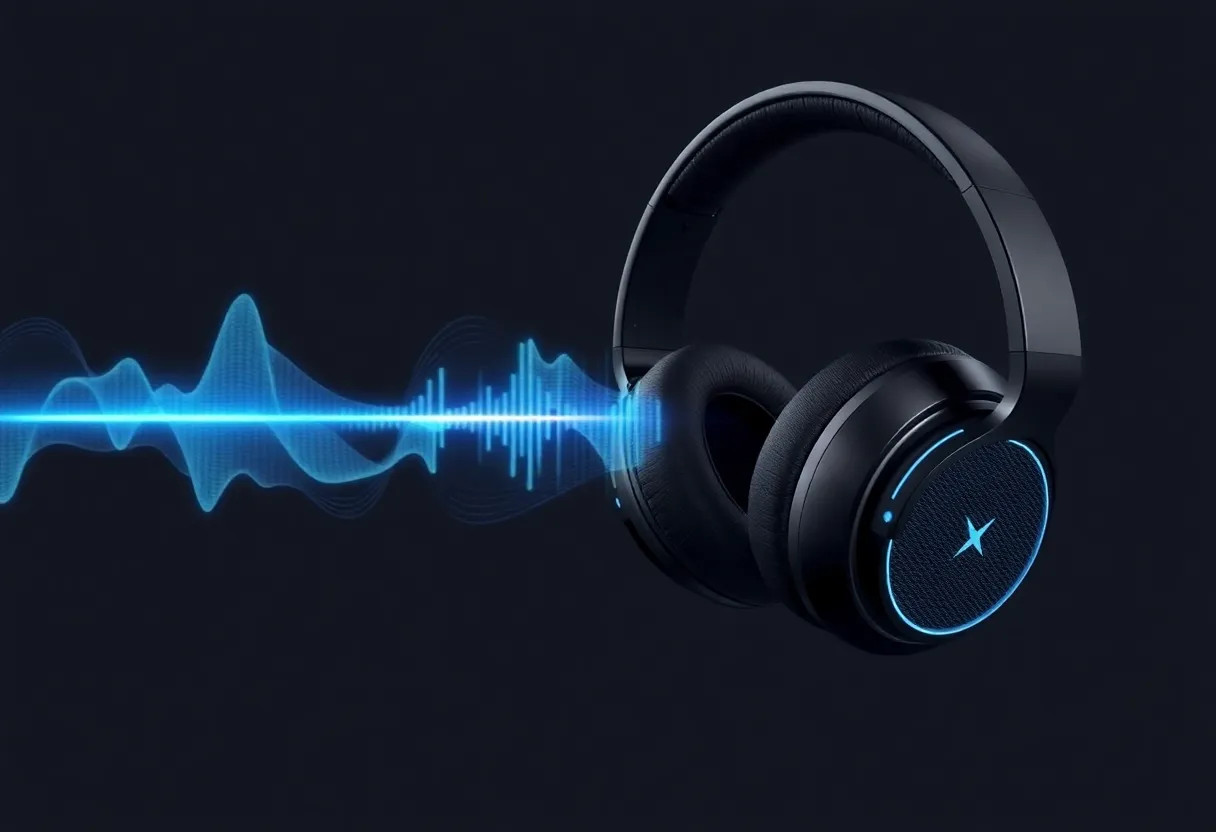
The Hearing Protection Application: Higher Stakes
Consumer ANC headphones are optimised for comfort and audio quality in office and travel environments. The noise levels involved—typically 60–80 dB—are uncomfortable but not immediately damaging. The time constants are lenient enough that a few milliseconds of processing latency is acceptable. The scenarios are relatively predictable.
Active hearing protection for industrial and military use must handle fundamentally different scenarios:
Impulse noise events. A gunshot produces a sound pressure level of 140–170 dB at the shooter’s ear, peaking in less than a millisecond. Industrial machinery can produce impulse noise events from pneumatic tools, presses, and explosions at similar levels. Passive hearing protection (foam earplugs, earmuffs) provides constant attenuation—it reduces all sounds including speech. Active hearing protection must suppress the dangerous impulse while preserving ambient sounds for situational awareness and communication.
The challenge is the impulse duration. A 1-millisecond impulse from a firearm requires the ANC system to detect, process, and generate a cancellation signal within that window—a constraint that is extremely demanding even for modern digital signal processors. Most industrial active hearing protectors use a hybrid approach: passive attenuation provides a baseline of protection for the impulse peak, with ANC contributing to suppression of the tail and reducing the muffled effect on speech that passive-only protection produces.
Level-dependent processing. Many modern hearing protectors implement level-dependent compression: sounds below a certain threshold (typically 82–85 dB) pass through with minimal attenuation or even slight amplification (to improve situational awareness in quiet environments); sounds above the threshold are progressively attenuated. The transition time from the “pass” state to the “attenuate” state is critical—too slow, and the impulse passes before attenuation engages; too fast, and brief loud sounds cause audible pumping artifacts.
Modern implementations achieve switching times of 0.5–2 milliseconds between protection states, with the transition managed by careful gain control algorithms that avoid audible artifacts while responding fast enough to protect against impulsive noise.
Digital Signal Processing Architecture
The DSP (Digital Signal Processor) chips at the core of active hearing protection must execute control algorithms with deterministic timing, low power consumption (battery life is a concern in portable devices), and sufficient computational capacity for the required processing.
The core ANC algorithm is typically a variant of the Filtered-x LMS (Least Mean Squares) algorithm, which continuously updates the cancellation filter coefficients based on the residual error signal from the feedback microphone. This adaptive algorithm allows the system to track slowly changing acoustic environments—different wearers have different ear canal geometries, and the acoustic response of the air column between the speaker and the ear affects performance.
The “secondary path” in the feedback path—the acoustic transfer function from the speaker to the error microphone—must be known for the adaptive algorithm to work correctly. Online system identification methods that estimate this path in real time while the device is operating are used in more sophisticated implementations, allowing the system to adapt as the acoustic conditions change (for example, as the user’s ear warms up and changes the resonances of the ear cup).

Frequency Range and Performance Limits
ANC is most effective at low frequencies—typically below 1–2 kHz. At higher frequencies, the spatial correlation between the external microphone and the ear decreases (the sound waves are short enough that small position differences matter), and the processing latency becomes a larger fraction of the wave period, making accurate cancellation harder to achieve.
This frequency limitation matches well with the noise profile that hearing protection is most important for: low-frequency industrial noise from engines, compressors, and HVAC systems is both difficult to attenuate passively (it requires thick, heavy physical barriers) and highly damaging over extended exposure. ANC can provide 20–30 dB of attenuation below 500 Hz, where passive earmuffs might provide only 5–10 dB. Above 1–2 kHz, passive attenuation from the physical structure of the earcup takes over.
The combination of passive high-frequency attenuation and active low-frequency attenuation in a well-designed hybrid device can achieve flat, broadband attenuation across the full audio spectrum—which is the ideal for comfortable, effective hearing protection that doesn’t distort the perceived sound environment of the wearer.
Speech and Communication Integration
Active hearing protection in military and industrial applications increasingly integrates two-way communication—the device both protects the wearer from external noise and enables radio communication and team communication in noisy environments where shouting or unprotected ears would be the only alternatives.
Integrating communication introduces additional signal processing challenges: the communication audio must be mixed with the ambient audio being passed through the protection system at appropriate levels, the microphone for outgoing communication must be placed to capture the wearer’s voice while rejecting ambient noise (typically a boom microphone positioned close to the mouth, often with directional processing), and the combination of communication and ANC processing must be managed to avoid feedback instability between the communication speaker and the ANC microphones.
The more recent generation of active hearing protection increasingly processes all these signal paths in software running on capable DSP platforms, allowing firmware updates to improve algorithms after deployment and enabling new features like situational awareness enhancement (selectively amplifying speech-frequency content) and integration with digital radio systems. The devices have moved from analog electronics with fixed processing characteristics to programmable signal processing systems that can be updated and customised—a transition with significant implications for performance over device lifetimes.