SpaceX Starship and the Lunar Return: What’s Actually Realistic by 2030

Robin Hayes
July 7, 2026
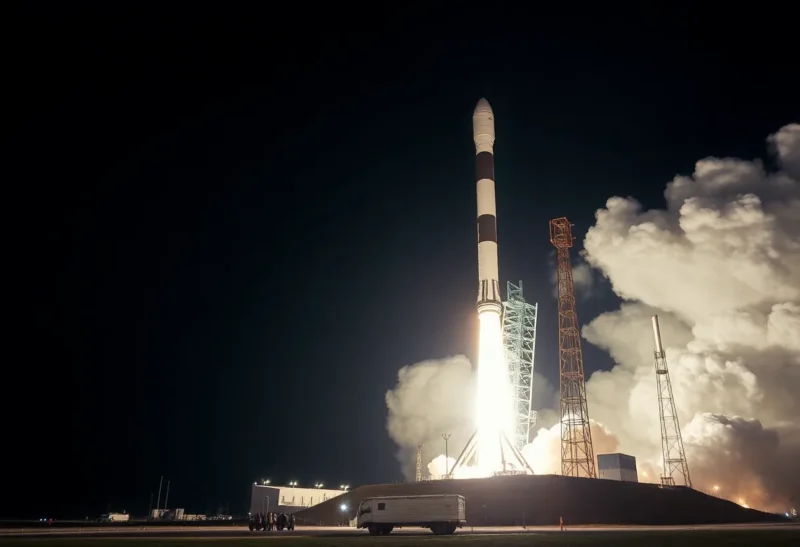
The plan for returning humans to the Moon under NASA’s Artemis programme was optimistic from the start and has been revised multiple times. Artemis III—the mission intended to land astronauts on the lunar surface for the first time since Apollo 17 in 1972—has had its target date pushed from 2024 to 2026, then to 2027, and as of mid-2026 the realistic window looks more like late 2027 to 2028 at best. The central vehicle in that plan is SpaceX’s Starship Human Landing System (HLS), and understanding what Starship has accomplished, what it still needs to demonstrate, and what the realistic timeline looks like requires separating the genuine engineering progress from the ongoing schedule slippage.
What Starship Actually Is
Starship is a fully reusable two-stage rocket system consisting of the Super Heavy booster (first stage, 33 Raptor engines in the Block 2 configuration) and the Starship upper stage (six Raptor engines). The complete stack stands approximately 121 metres tall and is designed to be the most capable launch vehicle ever built, with a payload capacity to low Earth orbit (LEO) exceeding 100 tonnes in fully expendable configuration and potentially 150+ tonnes with reusability.
The vehicle is designed around full and rapid reusability—both stages returning to the launch site and being caught by the “Mechazilla” mechanical arms on the launch tower rather than landing on legs, dramatically reducing turnaround time between flights compared to any previous rocket design. SpaceX demonstrated booster catch in October 2024 and has since refined the system through multiple integrated flight tests.
By mid-2026, Starship has completed eleven integrated flight tests with steadily improving outcomes. The earlier test flights achieved successful stage separation and demonstrated upper stage re-entry, with later flights achieving controlled water landings of the upper stage and booster catch operations. The vehicle is not yet operational in the sense of regularly flying payloads, but the flight testing cadence has validated key elements of the design.
The Lunar HLS Architecture: Why It’s More Complex Than It Looks
NASA selected Starship as the Human Landing System for Artemis in 2021—a contract award that surprised the industry because it was a single-vendor selection rather than the dual-award approach used in previous competitive phases. The Artemis HLS Starship is a modified variant of the upper stage, adapted for operations in lunar orbit and on the lunar surface rather than atmospheric re-entry.
The fundamental complexity in the HLS architecture is propellant transfer. Starship burns liquid methane and liquid oxygen (LOX). To reach the Moon with a useful payload, the HLS vehicle needs to be refuelled in LEO after launch—SpaceX’s plan involves multiple tanker Starship flights to transfer propellant to a depot, then to the HLS. This in-space propellant transfer at scale has never been demonstrated. SpaceX has conducted small-scale propellant transfer tests, but demonstrating the full depot and transfer system required for lunar missions is a significant remaining milestone.

The Artemis architecture also requires integration with the SLS (Space Launch System) and Orion capsule, which carry the astronauts from Earth to lunar orbit. The crew transfers from Orion to the HLS in lunar orbit, descends to the surface, ascends back to lunar orbit, and transfers back to Orion for Earth return. This necessitates rendezvous and docking in lunar orbit—a well-understood capability in LEO but less frequently practised in the lunar environment.
The Remaining Technical Milestones
For Artemis III to proceed, several major technical demonstrations are required:
Propellant transfer demonstration in orbit: SpaceX needs to demonstrate cryogenic propellant transfer between two Starships in orbit at the scale required for lunar missions. This is the most critical outstanding demonstration item and the one with the most engineering risk—handling cryogenic fluids in microgravity at the required flow rates and pressures has not been done before.
HLS variant qualification: The lunar HLS is a different vehicle from the Earth-return Starship being tested in flight tests. Its systems for lunar surface operations, propellant management in the lunar thermal environment, crew ingress/egress systems, and surface interfaces need to be qualified.
Extended Starship flight test success: Continued demonstration of reliable Starship upper stage performance and the booster catch system at sufficient reliability to proceed to crewed flight.
Suit and surface system integration: The Axiom Space lunar spacesuit (developed under a separate NASA contract) needs to be integrated with HLS and tested. Surface operations planning—including landing site selection, mobility on the lunar south pole terrain, and science operations—needs to be validated through simulations and precursor missions.
The Artemis Programme’s Non-Starship Challenges
Starship development is the most prominent schedule risk in Artemis, but not the only one. The SLS and Orion systems are built and flight-demonstrated (Artemis I in 2022 was an uncrewed lunar orbit test; Artemis II, a crewed lunar flyby without landing, is currently scheduled for late 2026). But SLS has a very high per-flight cost (estimates range from $2 billion to $4 billion per launch) and a slow production rate—a significant constraint on mission frequency.
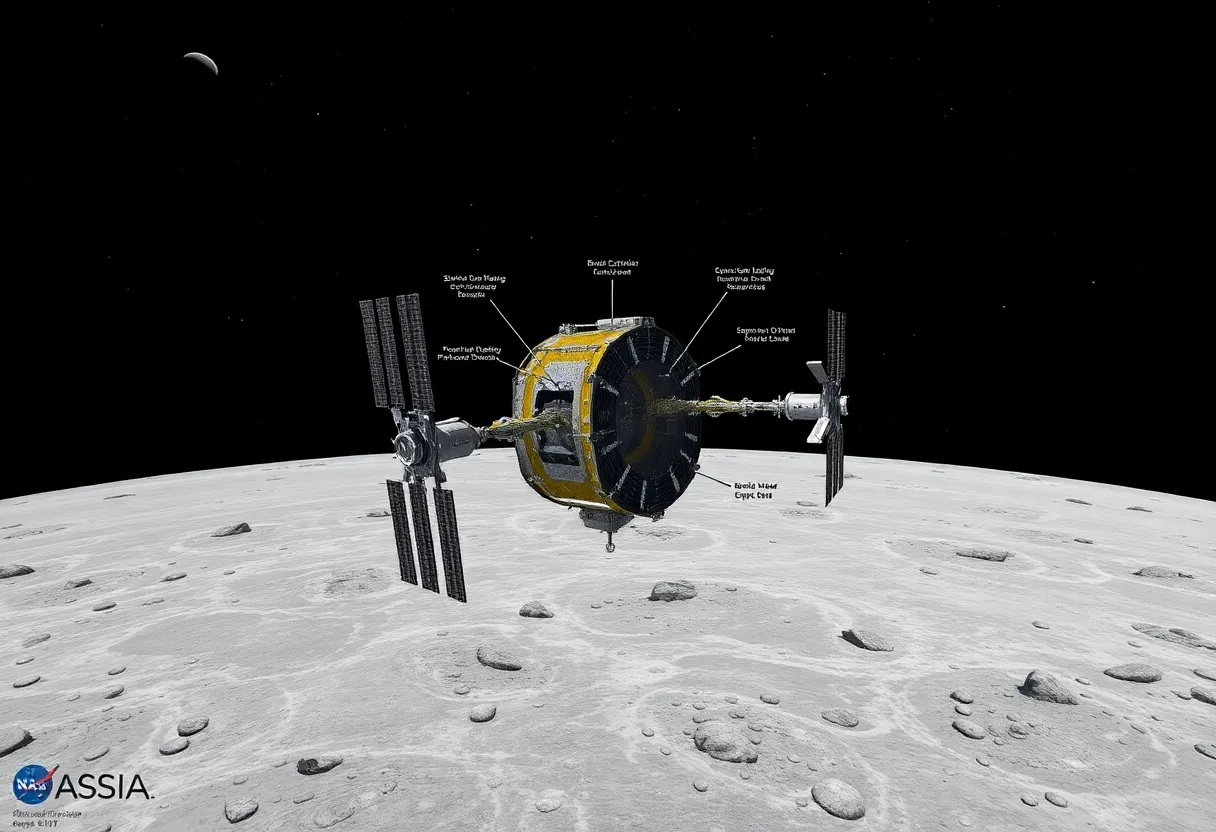
The Lunar Gateway—a small space station planned for lunar orbit that would serve as a staging point for surface missions—has been deprioritised from the critical path for early Artemis landings but remains part of the longer-term architecture. International partnerships with ESA, JAXA, and CSA contribute modules and systems to Gateway, adding coordination complexity to an already complex programme.
Funding is a perennial constraint. NASA’s Artemis programme has been adequately funded at roughly $4–5 billion annually across its components, but political support has varied with administration priorities. Sustained multiyear commitment at the required funding levels through multiple administrations is not guaranteed.
What’s Realistic by 2030
The most defensible assessment of what the Artemis programme will achieve by 2030 involves some version of the following scenario:
Artemis II (crewed lunar flyby) completes in 2026 or 2027, validating the crew-rated Orion and SLS for human deep space flight. SpaceX completes propellant transfer demonstration and HLS qualification work through 2026–2027. Artemis III—the actual lunar surface landing—is most likely in 2028, with 2027 being optimistic and 2029 being a reasonable backup assumption.
If Artemis III succeeds, Artemis IV and V (targeting 2029–2031) would use an upgraded Block 1B SLS with greater payload capacity and would begin testing Gateway elements. The programme’s longer-term aspiration—sustainable lunar surface presence, eventually leading to a permanent outpost—is a 2030s and 2040s objective rather than a 2020s one.
What is not realistic by 2030 is anything resembling a permanent lunar base or commercial lunar tourism at scale. The engineering and operational infrastructure for sustained human lunar presence requires far more flight experience, surface asset deployment, and in-situ resource utilisation (extracting water ice from the lunar south pole for propellant) than can plausibly be accomplished in four years. The 2030 horizon is the beginning of routine crewed lunar access—if the programme stays on schedule—not its culmination.
Starship’s role in all of this is critical in an unusual way: it’s both the vehicle most capable of enabling the programme’s ambitions and the source of the highest remaining technical risk. The propellant transfer challenge is real. The timeline pressure is real. And the programme’s success depends on SpaceX continuing to develop and qualify a vehicle at the pace required—which has historically been faster than NASA’s schedule expectations and slower than SpaceX’s own public projections.