The Real Difference Between 4K and 8K for Everyday Viewing

Ian Cross
July 7, 2026
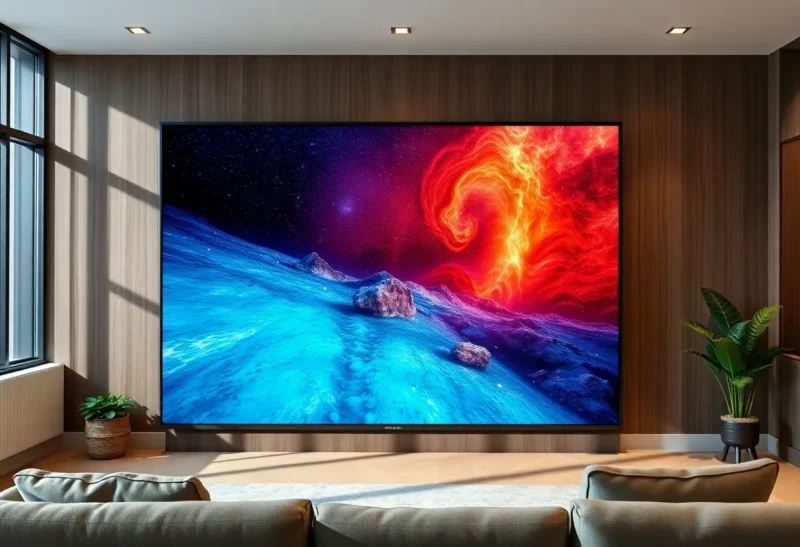
8K televisions exist. Samsung, LG, and Sony sell them. The resolution—7,680 × 4,320 pixels, or 33 million pixels total—is four times that of 4K and sixteen times that of 1080p. The marketing around 8K is enthusiastic about these numbers. What the marketing is considerably less clear about is why they don’t translate to a visible improvement for most people watching television in most homes, or what the actual meaningful differences between 4K and 8K are for real-world use.
Understanding this requires engaging with some visual science that display manufacturers would prefer to keep abstract.
Visual Acuity and the Limits of Human Perception
The human eye’s ability to resolve fine detail is measured as visual acuity—commonly expressed as the minimum angle of resolution, or the smallest angular separation at which two points can be distinguished as separate. Standard (20/20) vision resolves approximately 1 arc minute—about 0.017 degrees—meaning two points must subtend at least that angle at the eye to be seen as distinct rather than merged.
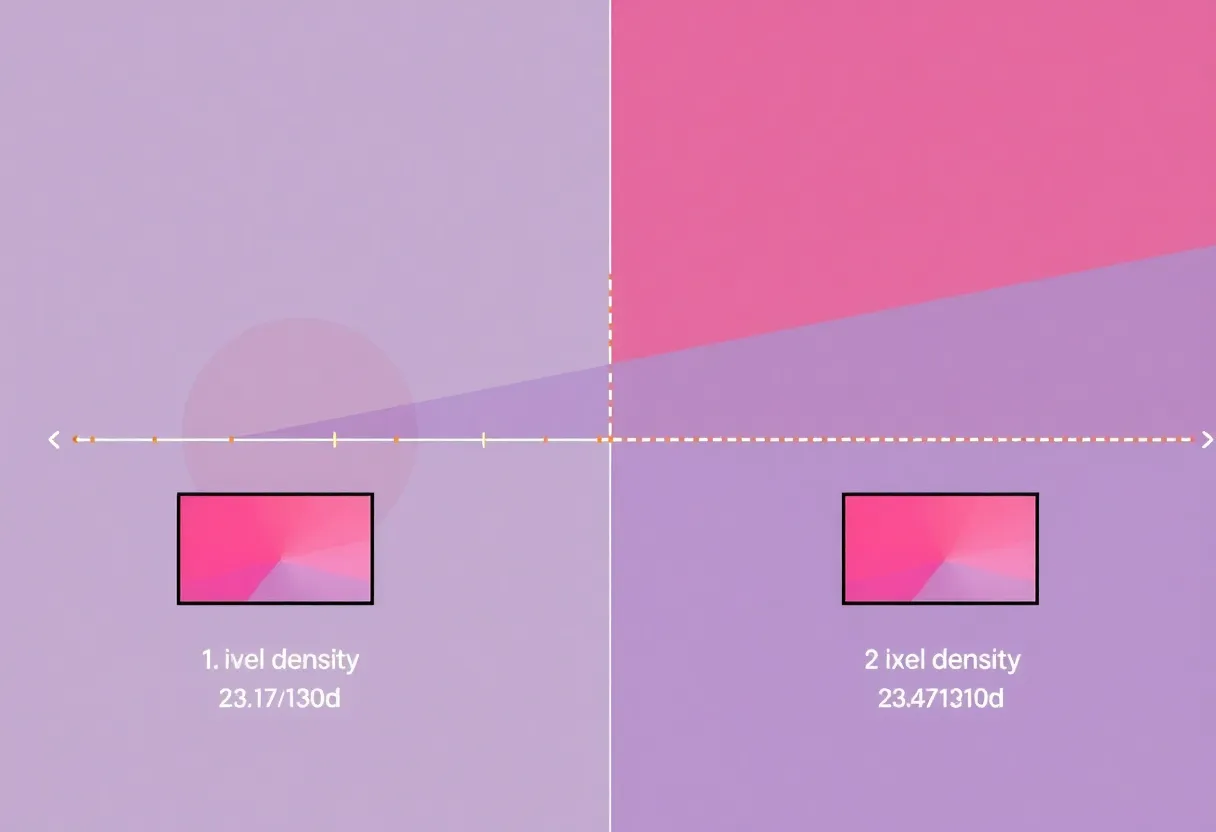
This has a direct consequence for display resolution: the benefit of higher pixel density depends on whether the pixels are small enough to be individually visible at your viewing distance. If your eyes can’t resolve individual pixels at a given distance, adding more smaller pixels produces no perceptual improvement—the detail is below the threshold of human visual resolution.
A 55-inch 4K television has a pixel density of approximately 80 pixels per inch. At the typical living room viewing distance of 7–10 feet, the 4K pixels are already below the angular resolution threshold for most people—meaning you cannot see individual pixels, and the image appears sharp and continuous. To benefit perceptually from 8K resolution on a 55-inch screen, you would need to sit approximately 3–4 feet from the screen, close enough that the additional resolution falls within your visual acuity limit.
On a larger screen, the relationship changes. An 85-inch 8K television at 7 feet of viewing distance begins to put 8K resolution within the range where the additional pixels could theoretically be resolved by someone with excellent visual acuity. The key word is theoretically—and the practical reality involves additional factors that complicate the calculation.
The Content Problem
Resolution improvement is only visible if the source content has enough detail to fill those pixels. A 4K television displaying 1080p content upscales it—the TV’s processor generates additional pixels based on the surrounding pixel data—but the result is limited by the resolution of the original. An 8K television displaying 4K content does the same: it has 33 million pixels, but 8.3 million of them contain real information and the rest are upscaled estimates.
As of 2026, native 8K content is effectively nonexistent for mainstream consumers. There is no 8K streaming service. Physical 8K media doesn’t exist for consumers. The BBC experimented with 8K production for specific events; some Japanese broadcasters have 8K channels; professional cinema production uses 8K sensors. For the overwhelming majority of content that people watch—streaming services, cable, Blu-ray—the source resolution is 4K at best, often 1080p, and sometimes lower.
This is a structurally different situation from the 1080p-to-4K transition. When 4K televisions became mainstream in the early-to-mid 2010s, 4K content was initially scarce, but it arrived within a few years: Netflix launched 4K streaming, Amazon followed, 4K Blu-ray launched in 2016, and most major streaming services now default to 4K for subscribers with appropriate plans and connections. 8K has no comparable content ecosystem developing at pace with hardware sales—and it’s not clear that it will, because the production, storage, and delivery infrastructure requirements for 8K are enormous relative to the perceptual benefit.
Where 8K Adds Real Value: The Upscaling Case
The strongest genuine argument for 8K isn’t native 8K content—it’s upscaling quality. An 8K television’s image processor has four times as many pixels to work with when upscaling 4K content, which can produce smoother edge rendering, cleaner fine detail, and less visible artefacting than 4K upscaling of 1080p content. This benefit is real, though its visibility depends on content type, processor quality, and viewing conditions.
Samsung and Sony have both invested significantly in AI-based upscaling algorithms for their 8K sets—neural network-based processing that has been trained on vast quantities of image data to make more accurate detail predictions than classical upscaling algorithms. The results in controlled demo conditions are sometimes genuinely impressive: upscaled 4K footage on an 8K display, particularly for content with fine textures (grass, fabric, facial skin), can look distinctly cleaner than the same content on a 4K display.
Whether this upscaling improvement is worth a substantial price premium over the best 4K televisions—which also have capable upscaling processors—is a matter of viewing conditions, screen size, and individual visual sensitivity. On large screens (75 inches and above) at close viewing distances, the upscaling improvement can be perceptible. On screens below 65 inches at normal living room viewing distances, the difference is difficult to demonstrate convincingly even in controlled conditions.
What Actually Matters More Than Resolution
The honest assessment of display quality in 2026 is that resolution is the least important specification differentiating premium televisions, and has been for several years. The perceptual improvements that matter most are in different areas.
HDR (High Dynamic Range) — The ability to display a wider range of brightness levels, from deep blacks to very bright highlights, produces the most consistently visible improvement over SDR (Standard Dynamic Range) content. A 4K HDR image looks dramatically better than 4K SDR, particularly for content produced with HDR in mind. OLED panels (which produce true black by turning off individual pixels) and the best mini-LED LCD panels (which use hundreds of small dimming zones for local contrast control) produce HDR performance that is genuinely dramatic. The HDR spec formats—HDR10, Dolby Vision, HDR10+—determine how well the display uses its hardware capabilities, and Dolby Vision’s dynamic metadata approach tends to produce the most consistently optimised results.
Panel technology — The difference between a mid-range LCD and a premium OLED is more perceptually significant than the difference between 4K and 8K at normal viewing distances. OLED’s pixel-level control of light emission produces infinite contrast ratios, no halo artefacts, and superb off-angle viewing. Samsung’s QD-OLED combines OLED’s individual pixel control with quantum dot colour enhancement for displays that are both very bright and have excellent colour saturation.
Refresh rate and motion handling — 120Hz panels (double the traditional 60Hz refresh rate) produce noticeably smoother motion for sports, gaming, and action sequences. Gaming applications can exploit variable refresh rate (VRR) technology—NVIDIA G-Sync, AMD FreeSync, or the HDMI 2.1 standard VRR—to eliminate screen tearing and reduce input lag. These improvements are visible in daily use in ways that the difference between 4K and 8K at typical viewing distances is not.
The Honest Buying Advice
For most buyers deciding between 4K and 8K televisions today, the decision should be 4K. The price premium for 8K—typically $2,000–$5,000+ above comparable 4K sets—buys improvements that are difficult or impossible to perceive with the content available and at the screen sizes and viewing distances typical of residential use. The money spent on 8K would produce more visible improvement if applied toward a larger screen size or a higher-quality 4K OLED panel instead.
The case for 8K becomes marginally more reasonable for very large screens (85 inches and above) in dedicated home theater setups where viewing distance can be controlled, for buyers who watch a high proportion of content that benefits visibly from the upscaling improvements, and for buyers who plan to own the television for a decade and expect 8K content delivery infrastructure to arrive eventually.
For everyone else, 4K with excellent HDR, panel quality, and image processing—available at prices that have become genuinely accessible across a wide range of brands and sizes—remains the answer. Resolution is not the constraint on television image quality in 2026. It hasn’t been for years.