Why Formula 1 Cars Are the World’s Most Advanced Driver Feedback Systems

Alex Vance
July 7, 2026
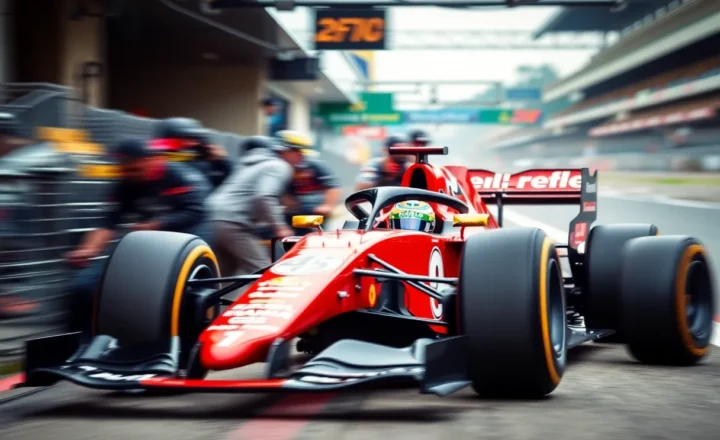
A Formula 1 driver at 300 km/h has roughly 50 milliseconds to react to what’s happening at the front of the car. They’re making control inputs—brake pressure, steering angle, throttle application—before the conscious mind has fully processed the sensory input that triggered them. In this environment, the engineering challenge isn’t just building a fast car. It’s building a system that gives a human being accurate, high-bandwidth information about a machine operating far beyond normal human perceptual limits—and allows them to act on it.
Formula 1 cars are, among everything else they are, the world’s most sophisticated closed-loop feedback systems for a human operator. Understanding how that feedback works reveals something interesting about the intersection of human physiology and extreme mechanical engineering.
Sensory Channels: What the Driver Feels
The primary feedback channels for an F1 driver are not visual but proprioceptive and haptic—felt through the body rather than seen through the eyes. This matters because visual processing takes significantly longer than tactile or vestibular processing; by the time you’ve seen that the rear of the car is stepping out, you’re already behind the information.
Steering feel is the most critical haptic channel. In road cars, power steering systems filter most mechanical feedback; F1 cars use hydraulically assisted steering specifically calibrated to transmit meaningful information about front tyre behaviour. A driver distinguishes between understeer (the front tyres losing grip, felt as the steering becoming light—reduced resistance), oversteer (the rear stepping out, felt as the steering sharpening and requiring correction), and the fine texture of grip at the tyre contact patch, which they learn to read like a language. Teams calibrate steering column stiffness, assist levels, and geometry to maximise the information content of what the driver’s hands feel.
Brake pedal feel tells the driver about braking force distribution and tyre behaviour under hard braking. F1 brake pedals are extremely stiff—drivers apply forces upward of 150 kg peak braking pressure with one foot, at deceleration rates of 5–6g. The pedal feel at the edge of lockup—a specific onset texture before a wheel locks—allows elite drivers to brake at precisely the friction limit without locking, something that’s difficult to convey in any description and must be learned through thousands of hours of physical repetition.
Vestibular feedback—the driver’s own body sensing acceleration through the inner ear and the loads on their body from the harness—is a significant information channel. Under 5g lateral loads in a high-speed corner, the driver’s body is pressed against the side of the cockpit with a force that tells them, physically, how much lateral grip the car is generating. In heavy braking, the 5–6g longitudinal deceleration compresses the driver into the harness in a way that’s directly proportional to braking force—giving the driver kinesthetic confirmation of what they’re doing.
The Steering Wheel: A Control Panel Designed for Peripheral Vision
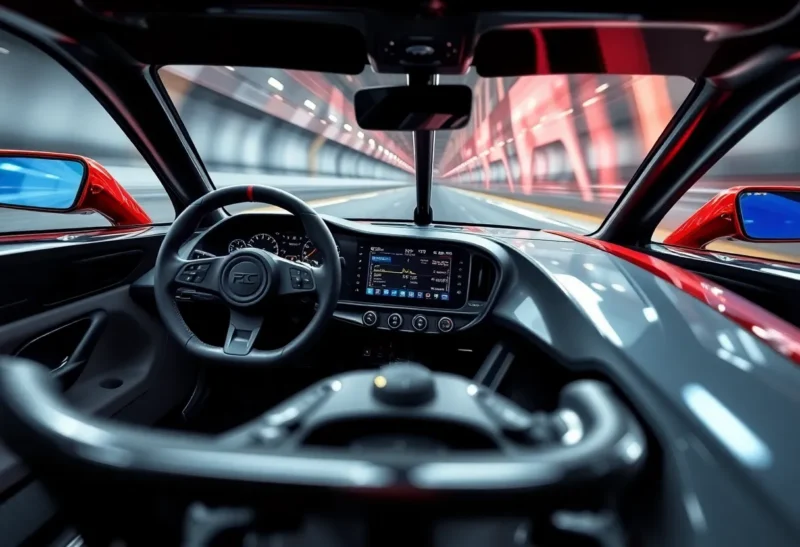
The modern F1 steering wheel is one of the most complex handheld interfaces ever designed for human use. A 2024-specification wheel typically includes 20+ buttons, 6–8 rotary switches, multiple paddles on the front and back, and a full-colour LCD display in the centre—all accessible without removing hands from the wheel, all operable while the driver’s visual attention is focused on the track 100–300 metres ahead.
The control layout reflects decades of ergonomic iteration. Functions accessed frequently during a racing lap—engine mode, differential settings, battery deployment on the hybrid power unit—are on the thumb-accessible rotary switches. Functions used less often—pit limiter, radio activation, driver number confirmation—are on buttons that require slightly more deliberate reach. The physical feel of each control (the click of a button, the detent positions of a rotary) allows operation by touch without visual confirmation.
The LCD display is primarily for safety information and critical strategic data: tyre compound currently fitted, fuel load delta, time gaps to competitors, DRS availability zone status, and engine warning lights. During a normal lap, the driver rarely reads it; their eyes are on track. The display is most consulted during the relative calm of long straights or during formation and safety car laps when the car is not at the limit.
Teams program the steering wheel’s display and controls to each driver’s preference. Over a driver’s career at a team, the layout stabilises into a personal configuration—a physical grammar of buttons and rotaries that becomes procedurally automatic, executable without thinking, the way an experienced musician operates their instrument.
The Radio Loop: Human and Machine Intelligence in Real Time
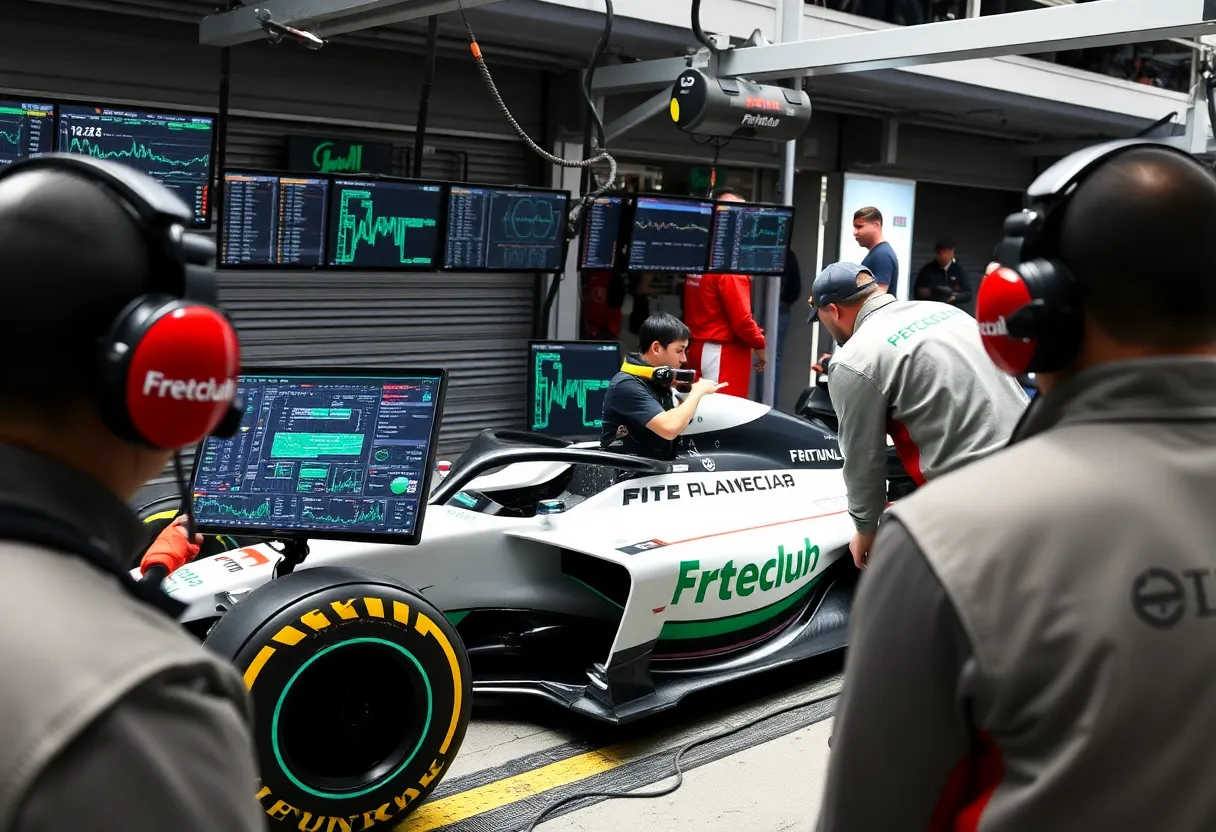
Formula 1 cars generate roughly 1,500 data channels of telemetry—sensors measuring tyre temperatures, brake temperatures, suspension loads, fuel flow, oil pressure, tyre pressures, accelerometer data from multiple axes, and hundreds of engine parameters—transmitted in real time to the team’s engineering wall in the pit lane. The engineering team monitoring this data sees a picture of the car’s status that is in many ways more detailed than what the driver can feel.
The radio communication between race engineer and driver is a continuous human-to-human data link supplementing the driver’s direct sensory experience. A typical race engineer call might be: “Brake balance two clicks forward, Martin thinks you’re overheating the fronts.” The driver incorporates this instruction, adjusts the brake balance, and monitors whether the feel changes as predicted. The loop closes when the telemetry confirms—or doesn’t—that the car’s behaviour changed in the expected direction.
This division of labour is distinctive: the driver has unique access to proprioceptive information that doesn’t show up clearly in telemetry (the subtle onset of tyre degradation felt through the steering, changes in car behaviour that precede sensor-measurable changes), while the engineering wall has access to data the driver cannot process in real time at racing speed. Elite driver-engineer pairs develop a high-bandwidth shorthand—compressed communication that conveys complex technical information in seconds between corners.
Aerodynamic Feedback: Feeling the Air
F1 cars generate most of their cornering ability through aerodynamic downforce—negative lift that presses the car onto the track, allowing cornering speeds that would be physically impossible on mechanical grip alone. Modern F1 cars can generate in excess of 1,000 kg of downforce at high speed, exceeding the car’s own weight.
The driver experiences this as a phenomenon that is almost impossible to explain to someone who hasn’t driven at these speeds: at 250+ km/h, the car feels planted, stable, capable of enormous cornering forces, because the air is effectively pressing it into the track. As speed decreases, the downforce reduces approximately with the square of velocity—meaning a car that feels supremely stable at 300 km/h feels unsettled and skittish at 80 km/h, in the pit lane, where a road car driver would feel comfortable.
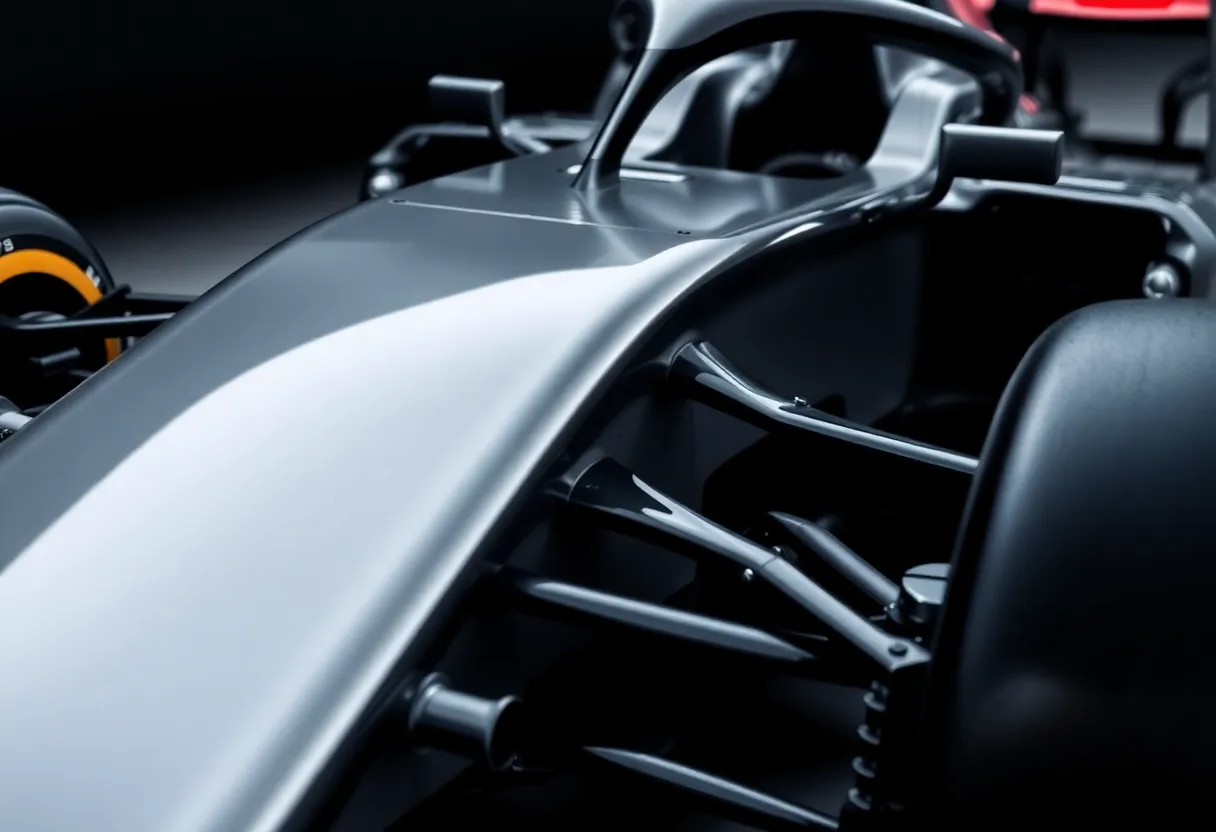
Drivers also feel aerodynamic balance—the distribution of downforce between front and rear axles—as a handling characteristic. Too much rear downforce relative to front produces understeer; too much front relative to rear produces oversteer. Teams adjust aerodynamic balance through setup changes (front wing angle, beam wing settings, diffuser geometry) and, during a race, through driver-adjustable DRS and limited front wing changes at pit stops. The driver’s feedback on aerodynamic balance is an essential input to setup decisions; teams that build a car that a driver can accurately read and communicate are at a structural advantage over those that don’t.
Tyre Information: Reading Degradation in Real Time
Tyre management is one of the most cognitively demanding aspects of modern F1 racing—and one of the most information-dense feedback challenges. The tyre changes character as it heats, wears, and degrades, and the optimal driving style changes with it. A driver who can’t read tyre state accurately will either push too hard (causing early degradation) or drive too conservatively (leaving lap time on the table).
Temperature is the primary variable. F1 tyres have a relatively narrow operating window—roughly 80–110°C depending on compound—where they produce maximum grip. Below temperature, they’re slow and unpredictable; above temperature, the rubber grain structure breaks down, degradation accelerates, and grip drops sharply. The driver’s feedback channel for tyre temperature is predominantly steering feel: a cold front tyre feels slippery, reluctant, and tends to understeer; an overheating tyre feels initially grippy and then suddenly unstable as the surface begins to grain or blister.
Experienced drivers develop a sense for the tyre’s trajectory—not just where it is now but where it’s going. Recognising the early signs of degradation onset allows them to adjust their driving style—reducing cornering loads, modifying turn-in technique, adjusting brake bias—to extend tyre life before it becomes critical. This is a skill that’s learned over thousands of kilometres and is one of the clear differentiators between elite and midfield-level F1 drivers.
The Human Performance Layer
The car produces feedback through these channels; what the driver does with it is a function of physical conditioning, perceptual training, and cognitive load management. F1 drivers undergo specific training for neck strength (to manage g-loads), cardiovascular fitness (to maintain cognitive performance at high heart rates and temperatures in the cockpit), and hand-eye coordination at high speeds. The physical conditioning is preparation for the sensory environment, not decoration.
The cognitive challenge at racing speed is the management of attention across multiple information streams simultaneously: track position and racing line, competitor positions, strategy information from the radio, machine condition via feedback channels, and the real-time control inputs required to keep the car at the friction limit. Managing this without cognitive overload—remaining calm, responsive, and analytically useful to the team—is what elite F1 driving looks like from the inside. The car is the most sophisticated feedback instrument ever designed for human use at the edge of physical possibility. What the driver does with that feedback is the sport.