What Space Debris Removal Missions Have Actually Launched in 2026

Theo Nakamura
July 7, 2026
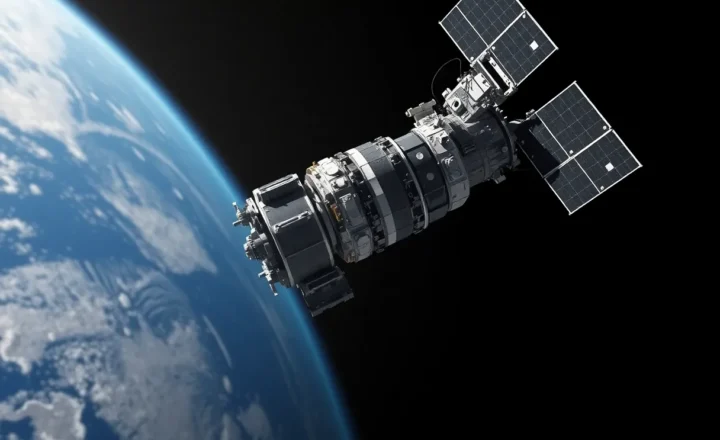
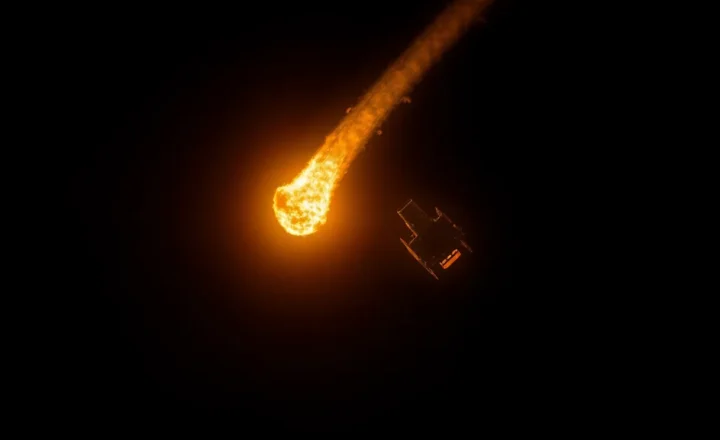
Low Earth orbit has a debris problem that has been described in increasingly urgent terms since the 1970s. The Kessler syndrome—the theoretical cascade where debris collisions generate more debris, which causes more collisions, until orbital shells become unusable—has moved from theoretical concern to active modelling by space agencies. The number of tracked objects in orbit exceeds 27,000; the number of untracked objects larger than 1 cm is estimated in the millions.
For years, active debris removal was a problem with no serious missions attached to it. Conferences, white papers, and funding announcements circulated while the debris accumulated. In 2026, that’s starting to change—but the change is slower and more constrained than the headlines suggest. Here’s what has actually launched, what’s in development, and what the realistic timeline looks like for making a dent in the orbital debris population.
ClearSpace-1: The ESA Mission That Redefined the Timeline
The most concrete active debris removal mission in development is ClearSpace-1, a collaboration between the European Space Agency and the Swiss startup ClearSpace SA. The mission targets a Vespa (Vega Secondary Payload Adapter) upper stage left in a roughly 800 km orbit after a 2013 Vega launch—a 112 kg piece of hardware in a relatively accessible orbit.
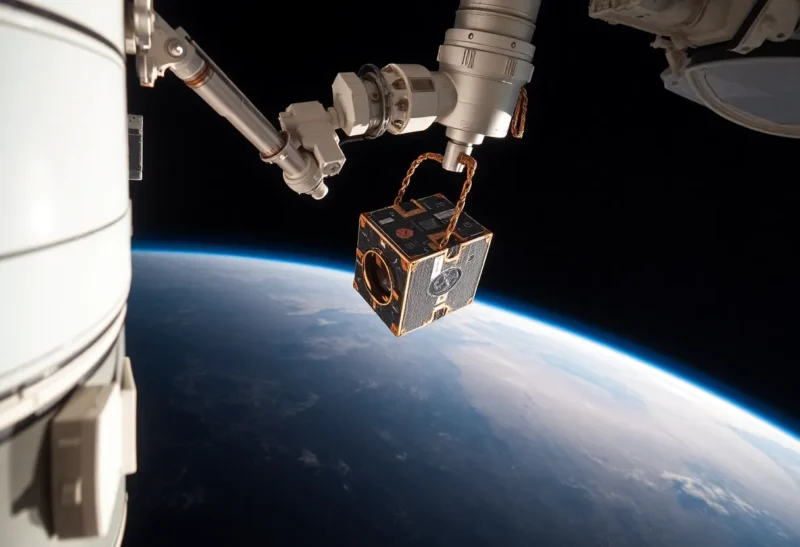
ClearSpace-1 will use a four-arm grapple system to capture the Vespa, then deorbit both the chaser spacecraft and the captured debris together. The approach is deliberately conservative—targeting a known, relatively cooperative piece of debris with a well-understood shape—to validate the fundamental capture and deorbit mechanics before attempting anything more complex.
The mission was contracted in 2020 with an original target launch date of 2025. It has slipped to 2026-2027, partly due to the technical complexity of building a spacecraft designed to physically grab another object in orbit, and partly due to the collision damage ClearSpace’s primary spacecraft sustained from a small debris piece during ground testing in 2023—a detail that carries its own irony. As of mid-2026, the mission is in final assembly with a launch window targeting late 2026 or early 2027 on a Vega-C or Ariane 6 rocket.
ClearSpace-1 is significant not because it will remove a single dangerous piece of debris—Vespa, while real, is not among the highest-priority debris objects—but because it’s the first contracted, funded mission to attempt physical removal of a non-cooperative object in LEO. If it succeeds, the technical validation enables more ambitious follow-on missions.
Astroscale: The Commercial Debris Removal Leader
Astroscale, a Japanese company founded in 2013, is the most active commercial player in the active debris removal space and has the most missions actually in orbit.
ELSA-d (End-of-Life Services by Astroscale-demonstration) launched in March 2021 and demonstrated magnetic docking between a chaser spacecraft and a client satellite equipped with a docking plate. The mission conducted multiple separation and re-docking tests before ending operations. It proved that proximity operations, rendezvous, and magnetic capture could work in orbit—fundamental steps toward commercial debris removal services.
ELSA-M (multi-client) is Astroscale’s next step—a spacecraft designed to service OneWeb satellites, with the goal of deorbiting multiple satellites in a single mission. OneWeb, now Eutelsat OneWeb, operates a low Earth orbit broadband constellation and contracted Astroscale as part of its end-of-life responsibility obligations. ELSA-M’s development has proceeded with UK Space Agency funding and a target launch in 2025-2026.
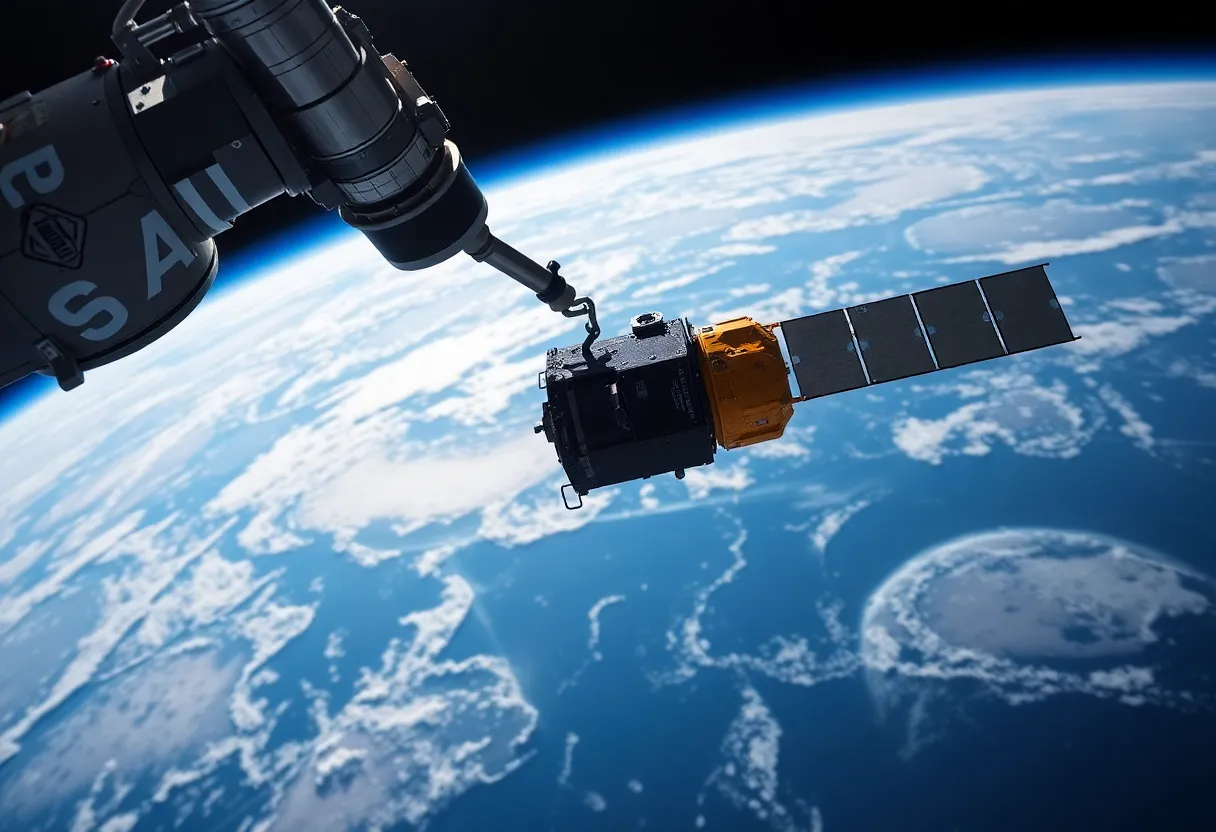
ADRAS-J (Active Debris Removal by Astroscale-Japan) launched in February 2024 and is the most advanced debris removal demonstration mission currently operating. ADRAS-J’s mission is specifically to rendezvous with and inspect Japan’s H-IIA rocket upper stage (Object 2009-066B)—a 3-tonne piece of debris tumbling in orbit since 2009. ADRAS-J completed the approach phase and has conducted close-proximity inspection of the tumbling object, returning detailed imagery of its condition, its tumble rate, and its surface features. This inspection data is critical for designing a future capture mission, as the tumble rate and axis of rotation determine what capture mechanism is feasible.
ADRAS-J is not a capture mission—it’s an inspection and characterisation mission. But it’s the closest approach to an actual large debris object that any spacecraft has achieved, and the data it’s generating is directly informing follow-on ADRAS-J2, which is designed to actually capture and deorbit the H-IIA upper stage.
What’s in Development at Other Organisations
Beyond ClearSpace and Astroscale, several other organisations have active debris removal programmes at various stages:
D-Orbit (Italy) focuses on deorbit services for satellite operators at end-of-life, essentially offering “drive you down” services for satellites that can still manoeuvre but whose operators want a controlled deorbit. This isn’t active debris removal in the sense of capturing non-cooperative objects, but it prevents new debris creation, which is arguably more important in the near term.
Exolaunch and similar small satellite integrators have begun requiring deorbit devices (passive drag augmentation sails or propulsive modules) on small satellites they launch, ensuring they comply with the 5-year rule for deorbit below 600 km. This prevention-focused approach is where most current space sustainability investment actually goes—stopping new debris from being created is cheaper and more tractable than removing existing objects.
NASA’s OSAM-1 (On-orbit Servicing, Assembly, and Manufacturing 1) has had a troubled development. Originally designed to refuel a retired Landsat satellite as a technology demonstration, OSAM-1 has experienced significant cost overruns (from an initial $1.8 billion estimate to over $3 billion before NASA cancelled it in February 2024). The cancellation removed one of the larger agency-funded demonstrations of spacecraft servicing technology from the near-term pipeline.
China has conducted proximity operations experiments with its Shijian satellites that have demonstrated rendezvous and capture capabilities, ostensibly for debris removal purposes. The dual-use nature of these capabilities—proximity operations that work for debris capture also work for disabling adversary satellites—has created geopolitical tension and reduced international cooperation on debris removal, which is significant because the largest debris objects include many from Chinese and Russian launches.
The Hard Problems That Haven’t Been Solved
The engineering demonstrations are meaningful, but several fundamental problems remain unsolved and limit the scalability of active debris removal even as the technology matures.
The tumbling problem. Most large debris objects are tumbling—rotating on one or more axes at rates that can range from a slow roll to multiple revolutions per minute. Capturing a tumbling object is significantly harder than capturing a stable one, because the capture mechanism has to time its engagement to the rotation cycle, and if the debris is rotating fast, the timing window is very narrow. ADRAS-J’s inspection of the H-IIA upper stage has revealed the actual tumble characteristics, which is why that data matters—it tells engineers what kind of capture system is feasible.
The non-cooperative design problem. Debris objects were not designed to be captured. They have no docking ports, no standardised grapple fixtures, no magnetic docking plates. Capturing them requires either grappling something on their surface (launch vehicle brackets, antenna mounts, nozzle bells) that may or may not be strong enough to sustain capture forces, or deploying a net or harpoon that can deal with the resulting attitude disturbance. Each debris object is effectively a unique engineering problem.
Liability and ownership. Under the Outer Space Treaty, the launching state retains jurisdiction and control over its space objects permanently. Russia technically still owns every defunct Soviet satellite. The US owns every retired NASA spacecraft. To legally remove another country’s debris object, you need that country’s permission—which may not be forthcoming for political reasons, legal reasons, or simply because they don’t have an active space agency willing to engage in the paperwork. This limits international cooperation on removing some of the highest-priority debris objects.
Economics. Active debris removal is expensive and there’s no direct revenue model. ClearSpace-1’s contract with ESA is government-funded. Astroscale’s missions are subsidised by government space agencies. Commercial satellite operators have some incentive to use deorbit services at end-of-life (regulatory compliance increasingly requires it), but someone capturing and deorbiting abandoned debris from 20 years ago captures zero value from the process—they’re paying for a service that benefits all other orbital users. The public goods problem is stark.
What Actually Makes a Difference in the Near Term
The debris experts who aren’t selling debris removal services tend to be clear about what matters most: preventing new debris creation, not removing existing debris.
The 25-year rule (now tightened to 5 years in some jurisdictions) for deorbiting satellites below 600 km after end-of-life is the regulatory framework that matters most for LEO sustainability. SpaceX’s Starlink constellation—the largest in orbit—has committed to deorbiting satellites within approximately 5 years of end-of-life and has demonstrated reasonably effective compliance. The concern is that as the constellation grows to tens of thousands of satellites, even a small failure rate at end-of-life compounds over time.
The truly high-risk debris objects are the 50-100 largest pieces of mass in LEO—dead rocket bodies and large defunct satellites that could generate thousands of new trackable debris pieces in a single collision. Removing these 50-100 objects would do more for long-term orbital sustainability than removing thousands of smaller pieces. ClearSpace-1 and ADRAS-J2 are aimed at exactly this priority, which is why they matter more than their small scale implies.
What to Watch in the Next 18 Months
The milestone that will most clearly define whether active debris removal is moving from demonstration to operational is ClearSpace-1’s capture attempt. If the Vespa capture succeeds, it proves the fundamental approach works and creates a validated technical baseline for follow-on commercial missions. If it fails—particularly if the capture attempt itself generates additional debris—it sets back the field significantly and reinforces the argument that debris prevention is more tractable than removal.
ADRAS-J2’s development timeline is worth tracking. Japan’s JAXA has committed to the follow-on capture mission and the inspection data from ADRAS-J makes the capture design more tractable. A successful H-IIA upper stage deorbit would be the highest-mass active debris removal in history and would validate the approach for the large-mass targets that pose the greatest Kessler risk.
Regulatory developments are also significant. FCC and ITU rulemaking on satellite deorbit timelines, the development of international norms around debris removal liability, and potential funding mechanisms (debris removal as a public goods service funded by orbital users proportional to their debris contribution) are the policy levers that will determine whether the emerging technical capability can scale.
The technology exists, mostly. The economics and governance haven’t been solved. That’s the actual state of active debris removal in 2026—and it’s both more advanced and more constrained than the headline announcements suggest.