Why Voice Cloning Scams Are Outrunning Bank Fraud Defenses

Dana Kelley
July 9, 2026
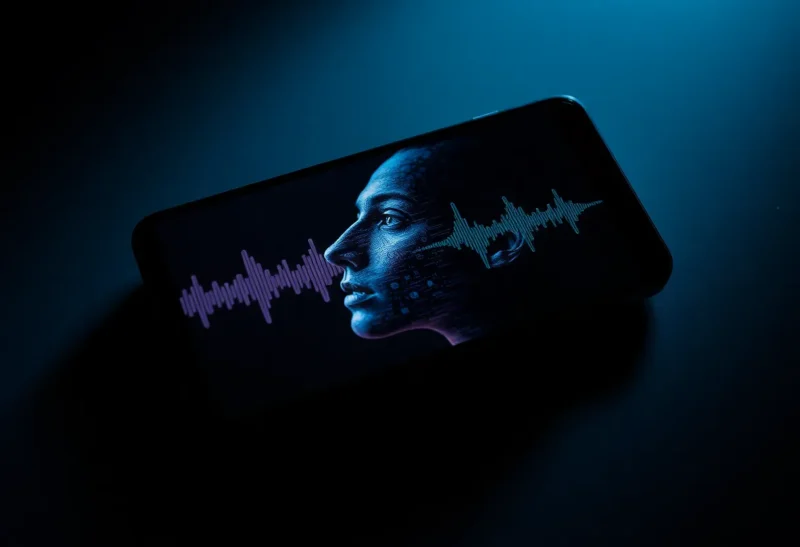
A few years ago, “voice cloning” was a novelty demo — feed a few minutes of audio into a model, get a passable impression of someone’s voice back, good enough to fool a casual listener for a sentence or two. That novelty is gone. Today, three seconds of audio pulled from a voicemail greeting, a podcast appearance, or a video someone posted at their kid’s birthday party is enough to produce a synthetic voice that can pass a human ear test, and increasingly, pass the voice-verification systems banks built specifically to stop this kind of fraud.
I’ve spent a decade in incident response and penetration testing, and the shift I’ve watched over the last two years isn’t subtle. Voice cloning went from a research curiosity to a commodity fraud tool faster than almost any other AI capability, and the institutions meant to defend against it are still largely fighting the last war.
How Fast the Technology Actually Moved
The turning point wasn’t one breakthrough — it was several arriving close together. Text-to-speech models moved from needing hours of clean training audio to needing seconds, thanks to few-shot voice cloning architectures that learn a speaker’s vocal characteristics from a short reference clip and apply them to arbitrary new text. Commercial tools built on this research — some marketed for legitimate uses like dubbing and accessibility — made the underlying capability available to anyone with a credit card and no verification of intent. Open-source models closed most of the remaining gap within months of each commercial release, meaning the capability didn’t stay gated for long even when companies tried.
The fraud economics followed immediately. Where a scammer once needed to actually impersonate someone convincingly on a live call — a skill, honestly — they now need a short audio sample, a script, and a few dollars of compute. Real-time voice conversion, where a scammer’s own live speech is converted into a target’s cloned voice with under a second of latency, is now good enough that it’s been used in live phone calls, not just pre-recorded messages. That distinction matters because it means voice cloning fraud isn’t limited to leaving a fake voicemail — it can carry an entire interactive conversation, adapting to what the victim says in real time.
Why Banks Built Voice Verification in the First Place
To understand why this is such a specific problem for banks, you need to understand what voice biometrics were solving. Call centers have always been a weak point in identity verification — knowledge-based questions (mother’s maiden name, last four of your SSN) are trivially defeated by data breaches, and human agents get socially engineered constantly. Voice biometrics were sold as a way to authenticate a caller passively, by analyzing the physical characteristics of how their vocal tract produces sound, without needing a PIN or a security question a fraudster might already have.
Major banks and financial institutions spent the 2010s rolling this out widely — it genuinely reduced call center fraud and cut average call handling time, which made it a rare security control that both improved defense and reduced operating cost. That dual benefit is exactly why so many institutions leaned on it heavily, sometimes as close to a sole factor for high-risk actions like large transfers or card reissuance over the phone.

Where the Verification Systems Actually Fail
Voice biometric systems were designed and tested against a threat model of casual impersonation — a person trying to imitate someone’s voice through effort and mimicry. They were not designed against a threat model where an attacker can generate synthetic speech that matches statistical properties of the target’s actual vocal tract, derived from real recorded samples of that person’s voice. That’s a fundamentally different and much harder problem, and several independent research groups and red teams (including studies published by groups like the security firm McAfee and various university labs) have demonstrated bypass rates against commercial voice authentication systems that would be unacceptable for almost any other security control — in some published tests, above 80% success on certain systems using cloned samples generated from minutes of public audio.
Liveness detection — checks meant to distinguish a live human speaker from a recording or synthetic playback — has become the main line of defense, but it’s an arms race with an uncomfortable asymmetry. Detection models are trained against known generation techniques; new generation techniques are released constantly, and there’s an inherent lag between a new cloning method appearing and a detection system being updated to catch its artifacts. Some banks have quietly begun de-emphasizing voice-only authentication for high-risk transactions specifically because of this gap, adding compulsory secondary factors even when the voice check passes — a tacit admission that the control no longer stands alone.
The Attacks Aren’t Just Hitting Banks Directly
The more damaging pattern isn’t fraudsters calling banks pretending to be customers — it’s fraudsters calling customers pretending to be someone the customer trusts, then directing the actual account holder to move money themselves. The “grandparent scam,” where a cloned voice of a grandchild claims to be in trouble and needs money urgently, has been documented at scale by the FTC and consumer protection agencies, with victims reporting the voice was “unmistakably” their family member’s. Corporate variants are worse financially: a 2024 case widely reported in the security press involved a finance employee at a multinational firm transferring over $25 million after a video call with what appeared to be the company’s CFO and colleagues — all synthetic. Business email compromise groups have added voice cloning as a verification step specifically to defeat the “call to confirm” advice that security teams spent years training employees to follow.
This is the part that’s hardest to defend against with technology alone, because the vulnerable system isn’t a bank’s authentication stack — it’s a person’s trust in a familiar voice, deployed against a decision made under manufactured urgency. No amount of bank-side liveness detection helps when the fraud never touches the bank’s phone system at all.
What Actually Works Right Now
The institutions handling this best have converged on a few unglamorous practices rather than a single silver-bullet technology:
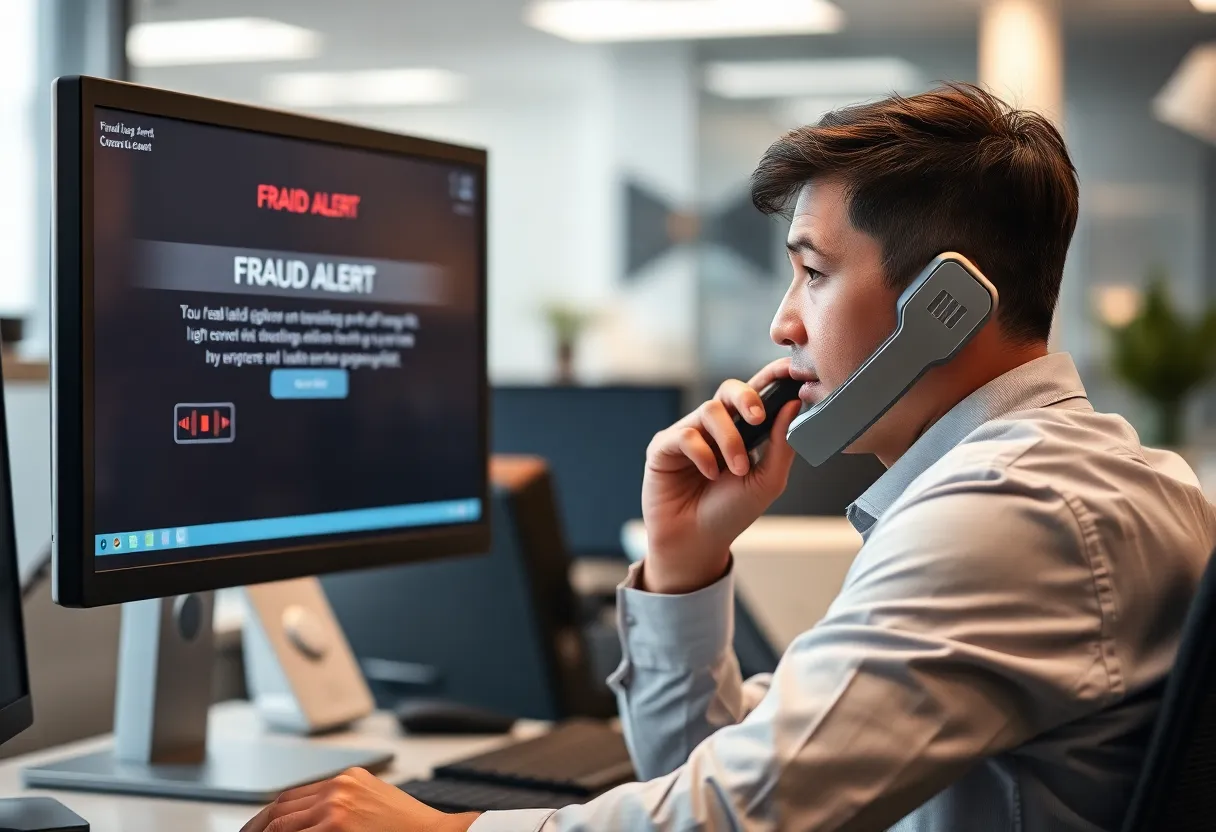
Out-of-band verification for anything high-risk — a callback to a number on file, not one provided during the suspicious call, remains the single most effective control, precisely because it breaks the attacker’s control of the channel. Mandatory step-up authentication for large transfers or account changes, regardless of whether voice biometrics passed, treats voice as one signal among several rather than a standalone gate. Some banks have started using challenge phrases agreed upon in advance through a verified channel, functioning like a shared secret that a cloned voice alone can’t produce, since it depends on knowledge, not just vocal characteristics.
On the consumer and corporate side, the advice sounds almost too simple to be a real defense, but it works: establish a verbal “safe word” with family members for financial emergencies, treat any urgent request for money or credentials over the phone as suspect by default regardless of how convincing the voice sounds, and for businesses, require financial transfer approvals to go through a documented process that a phone call — however convincing — cannot shortcut. None of this requires new technology. It requires treating voice as what it now is: no longer reliable proof of identity on its own.
Where This Goes From Here
Detection technology will keep improving — watermarking proposals for AI-generated audio, cryptographic provenance standards like C2PA extending into audio, and better real-time liveness models are all active areas of work, and some will meaningfully raise the bar. But the honest read is that voice authentication is now in a similar position to where SMS-based two-factor authentication ended up a decade ago: still useful as one layer, dangerously insufficient as the only layer, and unlikely to fully recover the trust it once had as a standalone control.
The institutions that adapt fastest are the ones that stopped treating this as a technology problem to be patched and started treating it as an assumption to retire. Voice used to be a decent proxy for identity because faking it convincingly took real skill. That’s no longer true, and the fraud numbers are moving exactly as fast as you’d expect once that assumption quietly stopped holding.