Why Vertical Farming Startups Keep Running Out of Money

Isabel Morgan
July 7, 2026
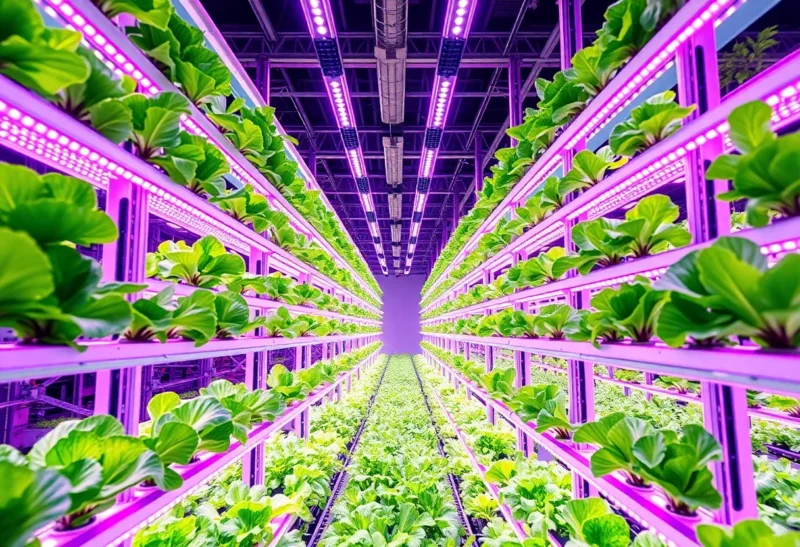
The pitch for vertical farming is genuinely compelling. Stack crops in climate-controlled warehouses under LED lights, grow year-round without weather risk, use 95% less water than field agriculture, locate facilities near cities to cut transport emissions and days-to-shelf time. In a world where food security, water scarcity, and supply chain fragility are real concerns, it sounds like an obvious win.
And then the companies keep going bankrupt. AeroFarms filed for bankruptcy in 2023 after raising over $200 million. AppHarvest collapsed in 2023 after a high-profile SPAC listing. Bowery Farming shut down in 2023 after raising $647 million over its lifetime. Fifth Season closed its Pittsburgh facility in 2022. Infarm, once Europe’s largest vertical farming company, laid off most of its workforce and collapsed its US operations in 2023. The graveyard of funded, ambitious vertical farming companies is now large enough to be a meaningful dataset.
The technology mostly works. The business model mostly doesn’t. Understanding why requires looking at the actual unit economics—and at some structural features of food production that don’t bend easily to venture capital timelines.
Electricity Is Not a Rounding Error
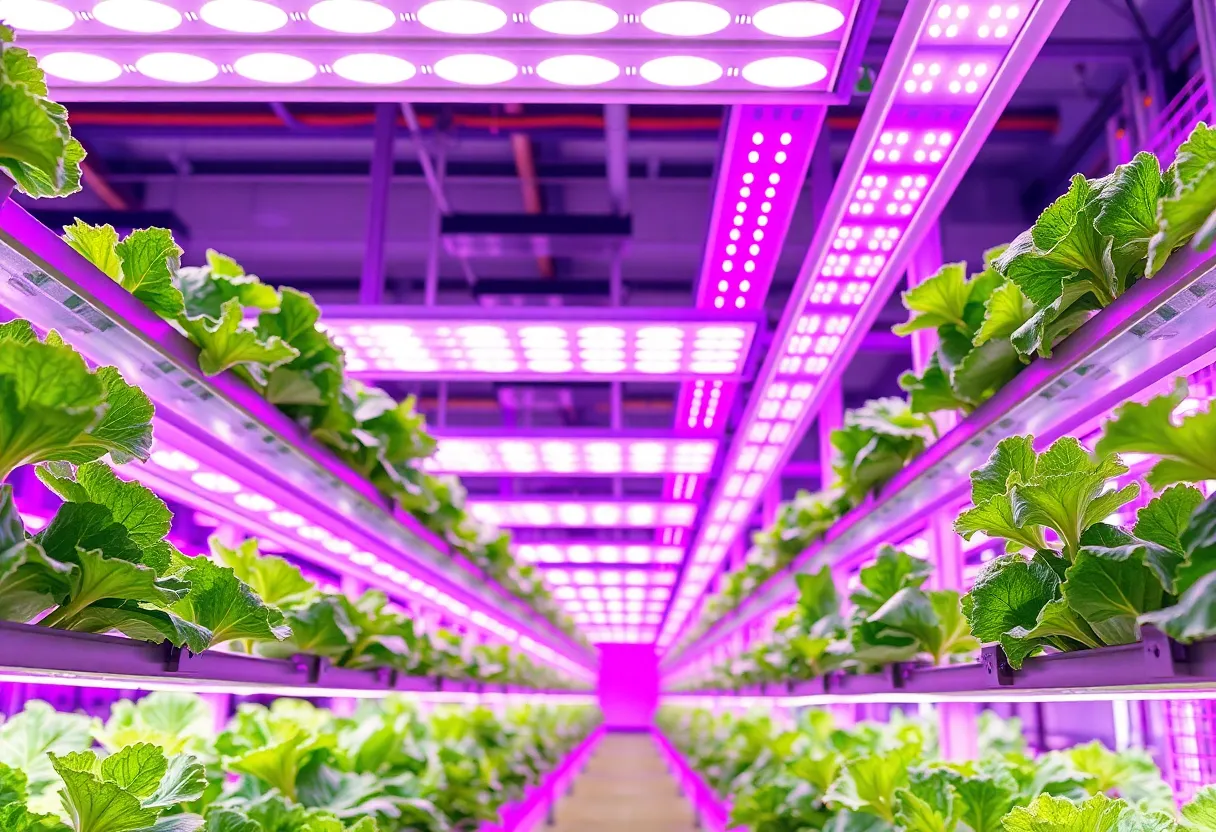
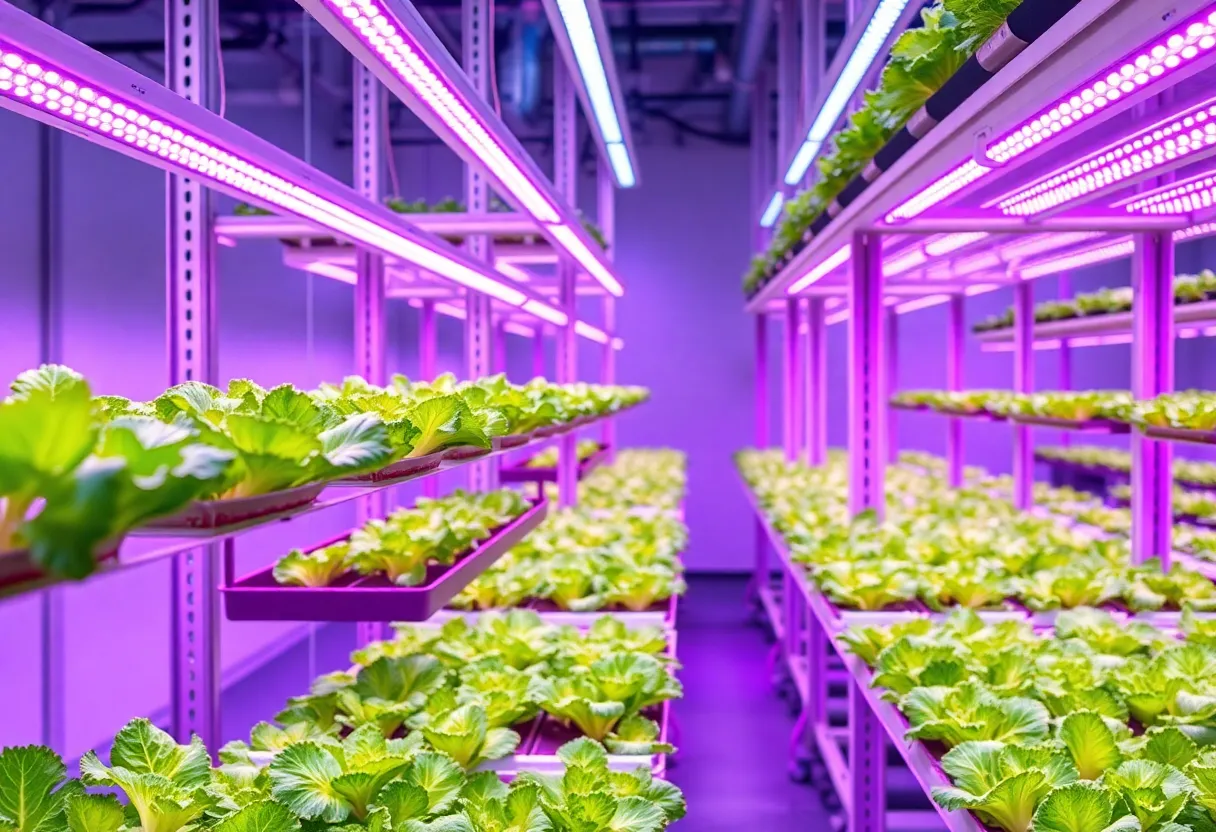
The fundamental cost driver in a vertical farm is electricity. Crops grown in windowless warehouses need artificial lighting for the entire photoperiod—typically 16 to 18 hours per day. LED grow lights have improved dramatically in efficiency since the early days of vertical farming, but even best-in-class fixtures consume significant power when running across thousands of square feet of growing trays.
A representative large-scale vertical farm might consume 20–40 megawatt-hours of electricity per day. At average US commercial electricity rates of $0.10–$0.14 per kWh, that’s $2,000–$5,600 per day in electricity alone, or $730,000–$2,000,000 per year. For a facility producing leafy greens—the vertical farming industry’s primary product—this electricity cost can represent 25–40% of the total cost of production.
Field agriculture doesn’t have this cost at all. The sun is free. A California field lettuce grower’s primary costs are land, water, labour, and logistics—none of which involves paying for photons. When energy prices spiked in 2021 and 2022, vertical farms that had modelled their economics on pre-spike electricity rates found their margins, already thin, turning negative. Several companies that might have survived normalised energy costs couldn’t survive the spike.
The Crop Problem: You Can Only Charge a Premium for So Much Lettuce
Vertical farms currently grow a narrow range of crops: leafy greens (lettuce, spinach, arugula, kale, herbs), microgreens, and some strawberries. The reason for this limitation is straightforward—high-value, fast-growing crops with short vertical footprints can produce enough revenue per square foot per year to potentially justify the electricity cost. A head of butter lettuce that cycles in 30–45 days and sells for $3–$5 can, in theory, produce sufficient revenue density.
The problem is market saturation. The premium grocery channel—Whole Foods, specialty stores, high-end retailers—that’s willing to pay $4 for locally grown hydroponic lettuce is not an infinitely expandable market. As more vertical farming companies entered the premium lettuce market, they competed for the same shelf space and the same customer base. Retail partners eventually had more vertical farming suppliers than they needed, which reduced pricing power for producers.
Scaling to commodity pricing—the price at which conventional agriculture sells lettuce—is mathematically impossible at current vertical farming economics. Conventional California field lettuce sells to retailers for $0.80–$1.20 per head. Vertical farms need $2.50–$4.00 to break even at current electricity and labour costs. There’s no plausible path to cost reduction that closes a gap that large on the primary product.
The crops that would generate compelling economics—wheat, corn, soybeans, rice—require enormous vertical space, long growth cycles, and produce low value per pound. Running a vertical corn operation under LEDs would produce a product that costs 15–20 times what field corn costs to grow. The business case simply doesn’t exist for commodity crops.
Capital Intensity and the Depreciation Problem
A large vertical farming facility is extraordinarily capital intensive. AeroFarms’ facility in Newark cost around $30 million to build and outfit. The custom growing systems, HVAC infrastructure, LED fixtures, nutrient delivery systems, climate control, and automation equipment all require large upfront investments. These assets depreciate over 10–20 years and must be paid for out of product margin while the facility is producing.
When a vertical farm raises $100 million in venture capital to build facilities, that capital comes with expectations of returns that food margins—historically among the thinnest in any industry—struggle to deliver. The venture capital model is designed for software businesses where marginal cost approaches zero as you scale. Agriculture doesn’t have that property. Growing twice as much lettuce requires roughly twice as much electricity, twice as many seeds, twice as much water, and twice as many workers.
The SPAC listings of 2021—AppHarvest, Local Bounti, and others—were particularly poorly matched to the businesses they funded. SPACs brought in retail investors expecting technology company growth trajectories from what were fundamentally infrastructure-heavy agricultural businesses with thin margins and long payback periods. The gap between the pitch deck projections and actual operating results was in some cases staggering.
Labour Automation Is Harder Than the Demos Suggest
Most vertical farming companies have presented automation as the path to profitability. If robots can seed, transplant, harvest, and pack leafy greens without human labour, the per-unit labour cost drops enough to make economics work.
The reality of agricultural automation is that the demos are easier than the production deployment. Harvesting a single lettuce head cleanly in a controlled demo environment is a solved problem. Harvesting ten thousand heads per hour with 99.5% success rate, managing the inevitable variability in plant size and orientation, dealing with mechanical failures at 3 a.m., and training staff to maintain the robots—this is considerably harder. Companies that promised automated operations in their fundraising materials were often operating with significant manual labour when actual facilities were running.
The labour required in a vertical farm is also different from field agriculture—it’s skilled indoor work that commands higher wages than migrant field labour. Quality control technicians, crop scientists, HVAC and systems technicians, and data analysts don’t come cheap, and the indoor controlled environment creates specific occupational requirements around humidity, temperature, and chemical exposure that field operations don’t have.
What Actually Works in Indoor Agriculture
Not everything in indoor food production is failing. The companies that are surviving and in some cases thriving have made specific strategic choices that distinguish them from the companies that collapsed:
Greenhouse rather than fully enclosed vertical. Greenhouse growers like AppHarvest (before its bankruptcy, which was partly about operational execution rather than the model itself) and more successfully Village Farms International use sunlight as the primary light source, supplemented by LED grow lights during low-light periods. This dramatically reduces electricity consumption while still providing climate control and year-round production. Greenhouse tomatoes, peppers, and cucumbers have viable economics that fully enclosed vertical farms have struggled to match.
High-value specialty crops. Cannabis was the crop that proved indoor controlled-environment agriculture could be profitable at scale—because the regulated retail price supported the cost structure. Some vertical farming companies are pivoting to high-value specialty herbs, pharmaceutical plants, and rare variety produce that commands prices field agriculture can’t match for quality reasons.
Contract manufacturing for food companies. Rather than competing directly on fresh produce pricing, some operators are positioning facilities as contract production of specific variety crops for food processors who need consistent supply year-round. This changes the revenue model from commodity competition to B2B contract manufacturing.
Geographic premium positioning. Vertical farms in markets where field produce genuinely struggles—Alaska, northern Canada, regions of Norway and Iceland, Middle Eastern countries dependent on food imports—have better economics because the alternative is expensive imported produce. The “grown locally” premium is most valuable where “locally” would otherwise mean a 5,000-mile supply chain.
The Investor Reckoning
Venture capital investment in vertical farming peaked in 2021 at around $1.8 billion globally and has declined sharply since. The collapse of multiple high-profile companies reduced appetite significantly. The remaining investors are more focused on profitability paths and technology licensing than on facilities buildout.
The technology that vertical farming companies developed—seed-to-sale tracking, plant phenotyping AI, nutrient delivery optimisation, climate control systems—has genuine value outside fully enclosed vertical operations. Some of the IP and expertise from failed companies has been acquired and applied in greenhouse operations, controlled environment research, and plant biology applications that don’t require the full vertical farm cost structure.
The story of vertical farming is not that the technology is wrong—it’s that the market and the business model were ahead of where the economics could support. The timeline for LED efficiency improvement, electricity cost reduction (as renewables become cheaper), and automation maturity may eventually make the full vertical farm model viable for a wider range of crops. But that timeline is likely measured in decades, not years, and it requires structural changes in energy markets that no startup can control.
What This Means for Food Systems
The honest answer to “will vertical farming feed cities?” is: partially, for specific crops, in specific markets, probably not at the scale that the 2020–2023 venture boom implied.
Leafy greens grown indoors near population centres will continue to exist as a premium product. The companies that survive will be those with realistic economics—sustainable energy costs (ideally on-site renewables or locked-in low-cost power contracts), automated operations that have been proven at scale rather than promised, and product strategies that don’t require competing on commodity pricing.
The broader lesson for climate tech and food tech investing is a familiar one: physical infrastructure businesses have unit economics that don’t respond to venture scaling timelines. Software margins don’t apply to kilowatt-hours and seed trays. The companies that succeeded in raising large capital rounds based on projected economics that assumed dramatic cost improvements that didn’t materialise in time are a cautionary tale about what happens when compelling macro narratives outrun business fundamentals. The world needs better food systems. That need doesn’t guarantee that any specific approach to building them will produce investable returns on a venture timescale.