Why Grid-Scale Battery Storage Is the Bottleneck Nobody Wants to Admit

Jordan Lee
March 7, 2026
Solar panels and wind turbines get the headlines. Politicians pose in front of them. Startup pitch decks lead with sleek renderings of them. But if you want to understand why the clean energy transition keeps hitting speed bumps, look elsewhere: at the quiet, unglamorous world of grid-scale battery storage.
Every kilowatt-hour of renewable energy that flows when the sun is shining or the wind is blowing has to go somewhere. When it exceeds demand, it either gets curtailed—wasted—or stored. Right now, we simply don’t have enough storage. And nobody really wants to talk about it.
The math that nobody likes
Renewables are intermittent. Solar output peaks around midday and drops to zero at night. Wind is fickle. To run a grid reliably on mostly clean energy, you need enough batteries (or other storage) to shift supply across hours and days. The International Energy Agency and countless grid operators have run the numbers: achieving deep decarbonisation means multiplying grid-scale storage capacity many times over.
Consider California. On a typical sunny afternoon, solar can supply more than half the state’s electricity. The state has installed record amounts of solar. On bright spring afternoons, supply exceeds demand. Grid operators often have to pay other states to take the surplus—or curtail it entirely. When the sun sets, demand remains high. Without sufficient storage, gas peaker plants fire up. The same pattern repeats in Texas, Australia, and across Europe. Solar and wind can supply a large share of energy over a year, but the grid operates in real time. Matching supply and demand hour by hour requires storage or flexible gas. Storage, for obvious reasons, is the preferred long-term path.
Yet deployment lags far behind what models suggest we need. Lithium-ion batteries, which dominate the market, are expensive at grid scale. Raw material costs, manufacturing capacity, and logistics all constrain how fast we can build. Meanwhile, permitting and grid interconnection can add years of delay. The result: a bottleneck that politicians and industry alike prefer to downplay, because admitting it would mean acknowledging how hard the transition will actually be.
Every megawatt of solar without matching storage is a megawatt that might be thrown away when the sun is brightest.
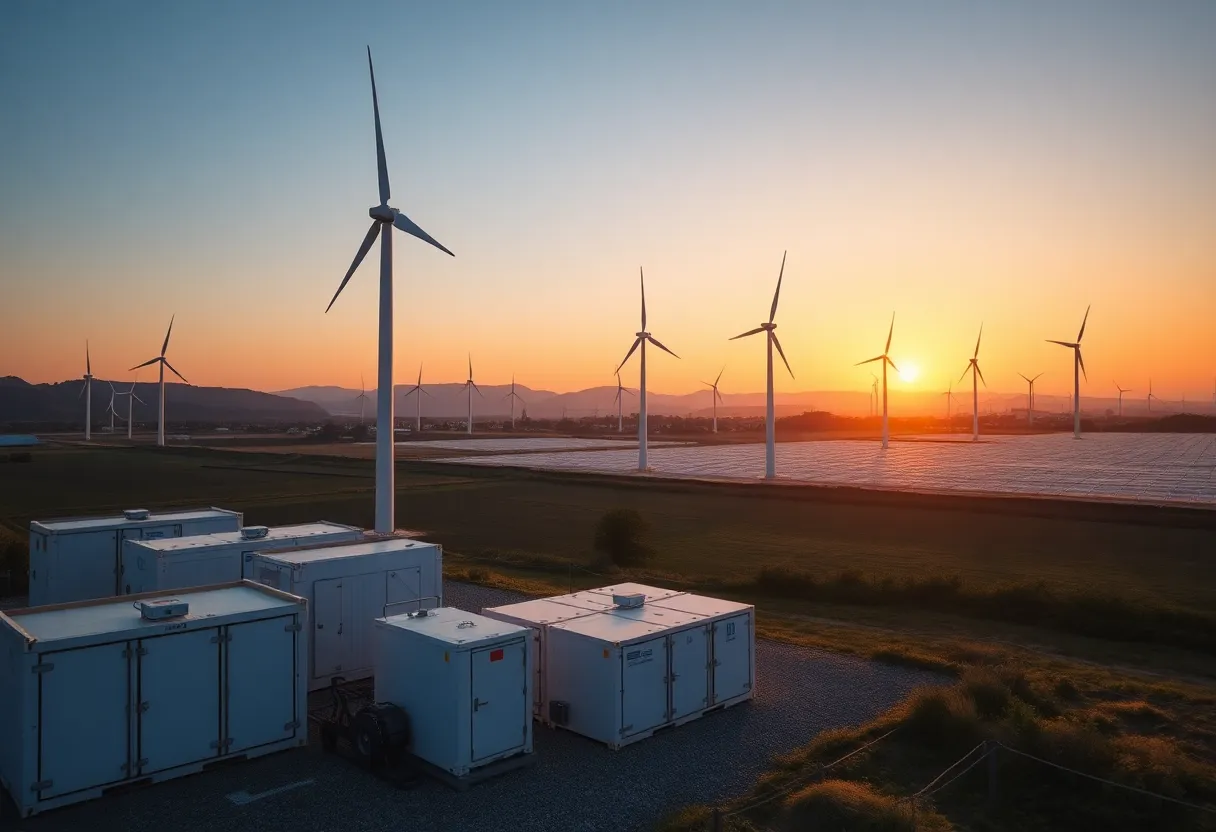
Why batteries, and why now
Until recently, the grid relied on gas peaker plants to balance supply and demand. They spin up when demand spikes or when renewables dip. They’re reliable, dispatchable, and fast. But burning gas for a few hours a day is increasingly hard to justify—economically and politically. Carbon pricing, corporate sustainability targets, and regulatory pressure are pushing utilities to reduce emissions. Batteries are stepping in.
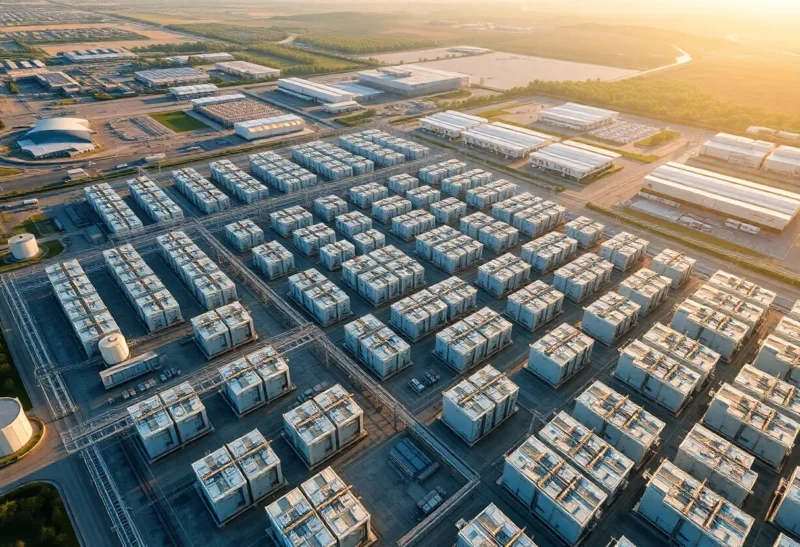
Lithium-ion costs have fallen sharply over the past decade. What cost hundreds of dollars per kilowatt-hour now costs a fraction of that. Grid-scale projects that once seemed impossible are now pencilling out. Utilities and developers are building massive installations: hundred-megawatt-hour systems that can power tens of thousands of homes for a few hours. Companies like Tesla, Fluence, and a host of regional players have proven the technology works at scale. The Moss Landing project in California, the Hornsdale plant in Australia, and countless others demonstrate that grid batteries are no longer experimental.
What’s lacking is scale and speed. We need far more of them, and we need them connected to the grid faster. The good news is that the learning curve continues. Each new project refines the engineering, the software, and the business models.
The bottleneck nobody wants to name
Why don’t we hear more about this? Partly because storage is less photogenic than a field of solar panels or a line of wind turbines. Partly because admitting the bottleneck means admitting that the transition is harder than campaign rhetoric suggests. And partly because the storage industry itself is fragmented—there’s no single lobbying voice that matches the solar and wind trade associations.
Three things are holding grid storage back.
First: cost and supply. Lithium, cobalt, and nickel are finite. Recycling is ramping up but isn’t yet sufficient to close the loop. Geopolitical tensions and trade policy add uncertainty. While sodium-ion and other chemistries promise to reduce reliance on scarce materials, they’re not yet dominant at grid scale. For now, lithium-ion rules—and its supply chain is stretched.
Second: grid integration. Connecting a big battery to the grid isn’t like plugging in a lamp. It requires studies, upgrades to substations and transmission, and approval from multiple agencies. In many regions, the interconnection queue is years long. A developer might secure a site, sign a power-purchase agreement, and then wait three or four years for permission to connect. Delays compound. Projects get cancelled. Capital sits idle.
Third: economics. Batteries make money from arbitrage (buying power when it’s cheap and selling when it’s dear) and from ancillary services like frequency regulation. In some markets, revenue streams are clear and attractive. In others, they’re uncertain. Regulatory frameworks vary wildly by jurisdiction. Investors hesitate when the payoff is murky.
Policymakers often treat storage as an afterthought. They mandate renewables, subsidise solar and wind, and assume the grid will sort itself out. It won’t. Without a deliberate push for storage—permitting reform, grid upgrades, clear revenue streams—we’ll keep adding renewables that can’t be fully utilised. We’ll curtail more. We’ll burn more gas when the sun sets.
What’s actually changing
Awareness is growing. More utilities are procuring storage alongside renewables in a single package. Regulators in several US states and European countries have begun to prioritise interconnection for storage projects. The Inflation Reduction Act in the US includes incentives for standalone storage, not just storage paired with solar. That matters: batteries often make more sense at substations or near demand centres than colocated with a specific solar farm.
New chemistries are emerging. Flow batteries offer long duration and less degradation. Sodium-ion could cut costs and ease supply constraints. Solid-state and other next-generation technologies are in development. None of these will replace lithium-ion overnight, but they could diversify the market and reduce pressure on a single supply chain.
Individual projects are also getting smarter. Software that predicts wholesale prices and optimises charge-discharge cycles is improving. Batteries are increasingly being used for multiple value streams: arbitrage, frequency regulation, capacity reserves. That improves economics and makes projects more attractive to financiers.
The bottleneck is real, but it isn’t permanent. With the right policy, investment, and urgency, grid-scale storage can scale. The question is whether we’ll treat it as the critical infrastructure it is—or keep pretending the transition will take care of itself.
What comes next
The uncomfortable truth is that the energy transition was never going to be a straight line. It will be messy, expensive, and slower than optimists hoped. Admitting that grid-scale storage is a bottleneck is the first step to fixing it. Solar and wind can power the future—but only if we build the batteries to hold it.