Why Lithium Iron Phosphate Batteries Are Gaining Ground Over NMC Chemistry

James Okafor
July 7, 2026
For most of the past decade, the dominant narrative in EV battery technology framed the competition as a race to higher energy density—packing more kilowatt-hours into less weight and volume to extend range and reduce costs. Lithium nickel manganese cobalt oxide (NMC) chemistry, with its higher energy density, was the leading choice for most long-range EV applications, while lithium iron phosphate (LFP) was considered a lower-cost alternative suitable for entry-level vehicles and stationary storage where weight was less critical.
That framing has shifted. LFP adoption has accelerated substantially among major EV manufacturers, including Tesla (which shifted its standard range vehicles to LFP in most markets), BYD (whose Blade Battery is an LFP design), and a growing number of Chinese manufacturers who account for an increasing share of global EV production. Understanding why requires looking at the trade-offs between these chemistries more carefully than the energy-density-first narrative typically does.
The Basics of Each Chemistry
Both NMC and LFP are lithium-ion battery chemistries that use lithium as the charge carrier. The difference is in the cathode material.
NMC (Lithium Nickel Manganese Cobalt Oxide) cathodes contain nickel, manganese, and cobalt in various ratios (NMC 811 is 80% nickel, 10% manganese, 10% cobalt; NMC 622 is 60-20-20; etc.). Higher nickel content increases energy density at the cost of thermal stability. NMC chemistry provides energy densities of approximately 150–220 Wh/kg at the cell level in current commercial cells.
LFP (Lithium Iron Phosphate) cathodes use iron and phosphate—abundant, cheap, and thermally stable elements. LFP cells have lower energy density, typically 90–160 Wh/kg at the cell level, but substantially different performance characteristics in other dimensions.
The Safety Advantage: Thermal Stability
The most significant structural advantage of LFP over NMC is thermal stability. NMC cathodes can undergo exothermic decomposition if the cell reaches sufficiently high temperatures—a process that can cascade into thermal runaway, the battery fire mode that has been responsible for notable EV fires and battery incidents. The onset temperature for NMC thermal runaway is approximately 150–200°C depending on the specific NMC formulation.
LFP cathodes are intrinsically more thermally stable due to the strong covalent bonding of the phosphate structure, which doesn’t release oxygen upon decomposition. LFP cells are significantly harder to drive into thermal runaway—the onset temperature is approximately 270°C, and the heat released when runaway does occur is substantially lower than in NMC. This makes LFP packs easier to design with adequate thermal management, more tolerant of charging errors and high-current demands, and less dangerous in automotive crash scenarios.
The safety advantage translates into reduced battery management system (BMS) complexity and cost: LFP packs require less aggressive thermal management infrastructure than NMC packs. It also reduces insurance and liability risk, which is increasingly factored into total cost of ownership calculations for commercial fleet operators.
Cycle Life: Where LFP Has a Major Advantage
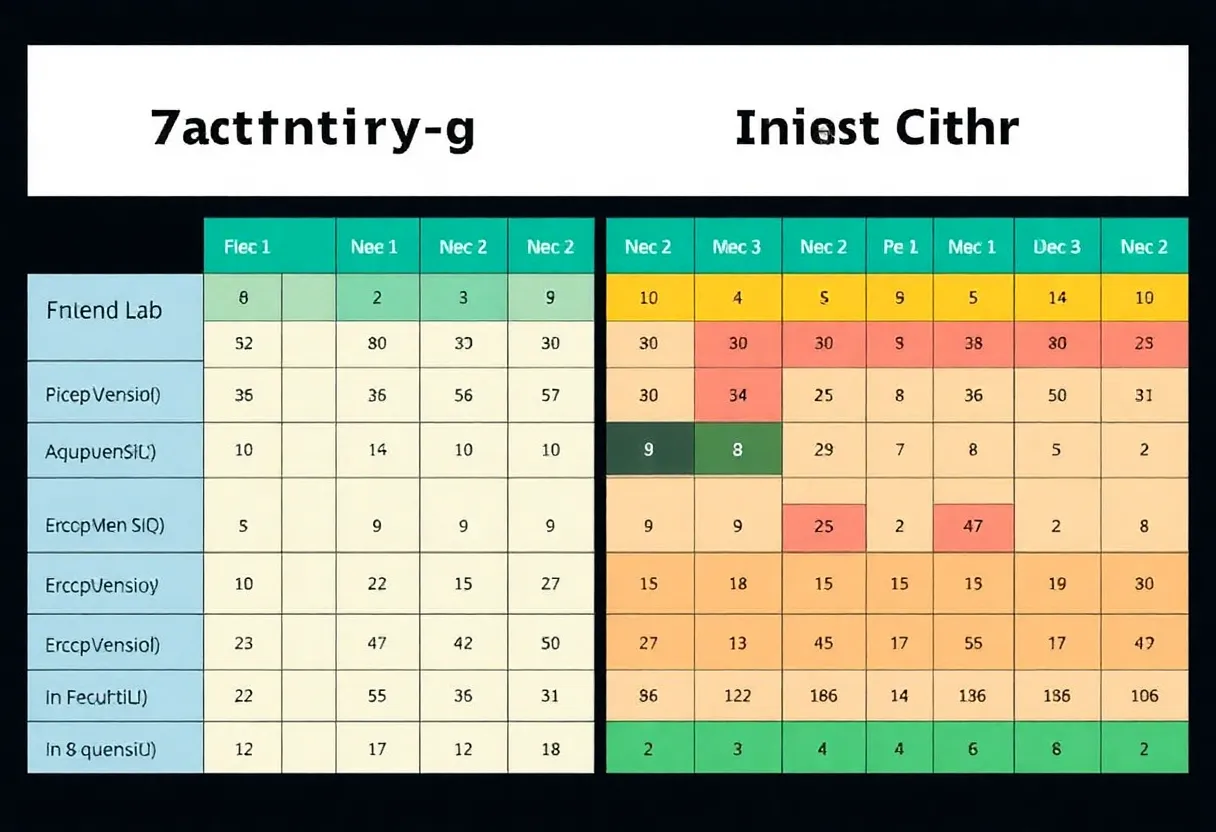
Battery cycle life—the number of charge-discharge cycles before capacity degrades to 80% of original—is substantially better for LFP than NMC. LFP cells in automotive applications typically achieve 2,000–4,000 cycles at 80% depth of discharge. NMC cells in similar conditions typically achieve 1,000–2,000 cycles.
For a vehicle driven 15,000 km per year and charged once per day, 2,000 cycles represents approximately 5.5 years; 4,000 cycles represents 11 years. The difference is significant for total ownership cost and for battery second-life and recycling economics.
The cycle life advantage is even more pronounced in stationary energy storage applications—grid-scale batteries, home energy storage systems—where the pack may cycle multiple times per day and where longevity is the primary cost driver. LFP has become the dominant chemistry for stationary storage largely on the basis of its superior cycle life and lower cost.
Cobalt Independence: Geopolitical and Supply Chain Implications
Cobalt is one of the most geopolitically and ethically problematic materials in the battery supply chain. Approximately 70% of global cobalt production comes from the Democratic Republic of Congo, where mining has been associated with serious human rights concerns including child labour in artisanal mining operations. Cobalt is also a relatively scarce element with no straightforward substitutes in NMC chemistry.
LFP contains no cobalt. This makes LFP supply chains substantially more resilient to cobalt price spikes, geopolitical disruptions, and the ESG (Environmental, Social, Governance) concerns that are increasingly material to EV manufacturers’ supply chain decisions. High-nickel NMC formulations (NMC 811) were developed partly to reduce cobalt content, but even these retain cobalt in the cathode.
The iron and phosphate materials in LFP are abundant, widely distributed geographically, and cheap—which is a primary reason that LFP cells can be produced at lower cost than equivalent-capacity NMC cells, and why that cost advantage is likely to be durable rather than narrowing as the market scales.
The Energy Density Gap: Closing But Still Real
The energy density disadvantage of LFP relative to NMC remains real, though it’s been reduced by improvements in LFP cell design and pack-level engineering. BYD’s Blade Battery design, which stacks LFP cells directly into the pack structure without conventional module packaging, achieves pack-level energy density approaching that of conventional NMC packs by eliminating the space and weight of the module housing.
For vehicles where range is the primary competitive dimension—long-range premium EVs targeting 500+ km range—NMC remains advantageous because the energy density advantage translates directly into range at given vehicle weight. For vehicles where 300–400 km of real-world range is adequate for the target market, LFP’s cost, safety, and longevity advantages outweigh its energy density deficit.
The market segmentation that’s emerged reflects these trade-offs: LFP dominates in standard-range vehicles, urban EVs, commercial vehicles with daily charging, and stationary storage. NMC or high-nickel variants continue to be used in long-range premium vehicles and applications where energy density is a hard constraint.
Manufacturing and Recycling
LFP manufacturing is simpler and cheaper than NMC manufacturing at the cell level. The lower temperature sensitivity of LFP materials reduces the precision requirements for electrode fabrication and reduces the risk of manufacturing defects that could compromise cell safety. Chinese manufacturers, who have produced LFP at scale for longer than Western manufacturers, have driven LFP cell costs to approximately $50–70/kWh—substantially below the $100–130/kWh range for comparable NMC cells.
Battery recycling economics favour NMC to some degree: the valuable metals recovered from NMC (cobalt, nickel) have higher market prices than iron, so NMC recycling has a better revenue offset against recycling costs. LFP recycling is less economically attractive but environmentally simpler—the materials are less toxic and the supply chain for recycled iron and phosphate is less specialised.
The trajectory of cost reduction in EV batteries strongly favours LFP: falling cell costs, improving energy density through pack-level engineering, and the cobalt independence advantage are all vectors that improve LFP’s competitive position relative to NMC over time. The question for the next five years is not whether LFP will take share from NMC—it already has—but whether high-nickel NMC and next-generation chemistries (NMC with silicon anodes, lithium-sulphur, solid-state) can maintain a sufficient energy density premium to justify their cost in the market segments where range still matters most.