Why Handheld Spectrometers Are Becoming the Maker Community’s New Multitool

Futurion Editorial
July 9, 2026
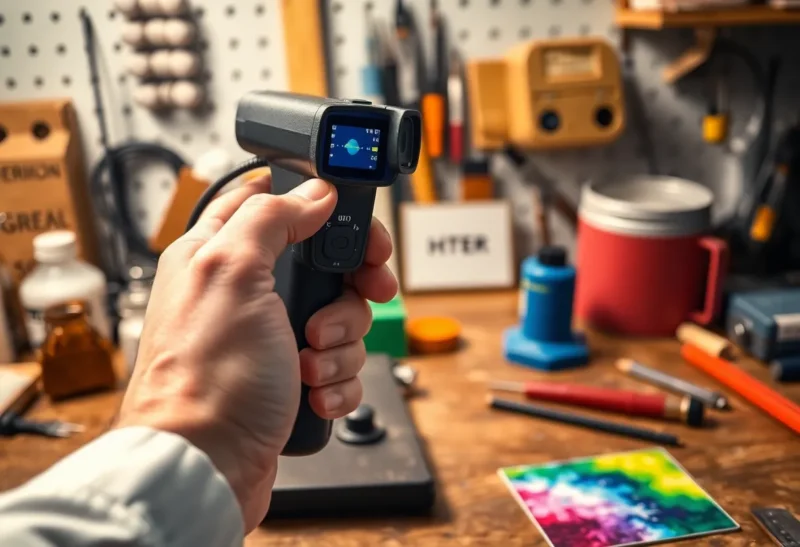
Ten years ago, if you wanted to know the precise wavelength composition of a light source, or verify that a filament you bought online was actually the polymer it claimed to be, you needed access to a university lab or an industrial quality-control department. Today you can buy a spectrometer that fits in your palm for less than a decent multimeter, and a growing number of makers are finding reasons to keep one on the bench next to their calipers and soldering iron.
A spectrometer, in the simplest terms, splits light into its component wavelengths and measures the intensity at each one — essentially a much more precise, quantitative version of what a prism does to sunlight. That measurement turns out to be useful for a surprising range of hobbyist and small-business problems that have nothing to do with formal chemistry, which is exactly why the tool has jumped from lab-only status to garage-workshop staple over the last several years.
What Changed to Make This Affordable
Spectrometry has always worked the same way in principle: light passes through a diffraction grating or prism, spreads into its spectrum, and a detector array measures intensity at each wavelength band. What used to cost thousands of dollars was mostly paying for optical precision, calibration, and a detector sensitive and linear enough for scientific-grade measurement.
Three things converged to bring the price down. First, CMOS linear image sensors — originally developed for entirely different consumer applications like barcode scanners and document scanners — became cheap and good enough to serve as passable spectrometer detectors once fabrication tolerances improved. Second, diffraction gratings that once required precision glass manufacturing can now be produced accurately enough as injection-molded plastic or even holographically printed film for consumer-grade instruments, at a tiny fraction of the historical cost. Third, and maybe most importantly, open-source hardware projects — most notably variations on the Public Lab spectrometer design, which started as a citizen-science oil-spill-monitoring tool around 2011 — proved that a genuinely useful spectrometer could be built from a webcam, a piece of a broken DVD (which works surprisingly well as an improvised diffraction grating), and a cardboard tube. That open design lineage directly shaped the current generation of commercial handheld units, which are essentially a refined, professionally manufactured descendant of the cardboard-and-DVD original.
What Makers Are Actually Using Them For
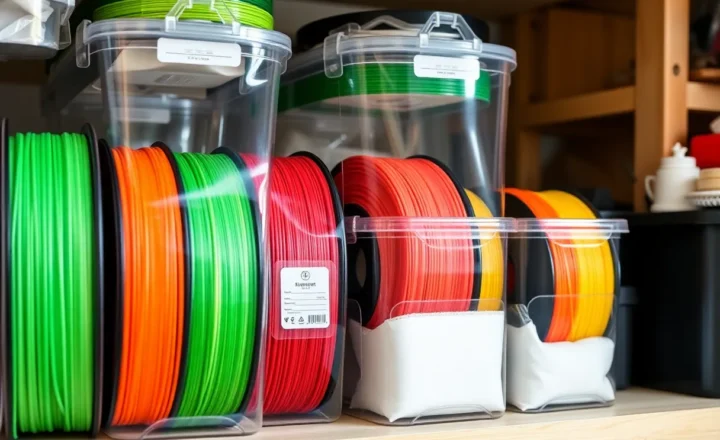
The single most common use case reported across maker forums and hobbyist communities is plastic and filament verification. 3D printing enthusiasts who buy filament from secondary marketplaces, where mislabeling is a real and recurring problem, use spectrometers to get a rough compositional check — not a certified material analysis, but enough of a signature to catch a spool mislabeled as PETG that is actually a cheaper, more brittle blend, or to flag filament contaminated with recycled content that will behave unpredictably under heat.
LED and lighting hobbyists represent the second major community. Anyone who has tried to match color temperature across LED strips from different manufacturers, or verify that a “full spectrum” grow light actually delivers the photosynthetically active wavelengths it claims, knows that manufacturer specifications on lighting products are notoriously unreliable. A basic spectrometer reading takes the guesswork out of that comparison, letting a hobbyist actually see the measured spectral output rather than trusting a marketing claim on packaging.
Home aquarium and reef-keeping communities — a surprisingly technical hobbyist niche — have adopted handheld spectrometers to verify that aquarium lighting is delivering the specific blue and violet wavelengths that coral and certain photosynthetic organisms actually need, since human color perception is a poor proxy for what matters biologically to the tank’s inhabitants.
There is also a smaller but growing community using spectrometers for gemstone and mineral identification, food and beverage hobbyists checking the approximate composition of homemade extracts and infusions, and audio-visual enthusiasts calibrating projector and monitor color output more precisely than a phone camera app can manage. None of these use cases require laboratory-grade accuracy — they require a repeatable, quantitative signal that is dramatically better than eyeballing a color under uncontrolled ambient light, which is what nearly everyone was doing before these devices became affordable.
Where the Limits Actually Are
It is worth being honest about what a $50-to-$300 handheld spectrometer cannot do, because the marketing around some of these products oversells their capability. Consumer-grade units typically cover the visible spectrum, roughly 380 to 750 nanometers, with resolution that is useful for comparative measurements but not fine enough for the kind of precise chemical identification that laboratory-grade Raman or FTIR spectrometers — instruments that still cost tens of thousands of dollars — can perform. A hobbyist spectrometer can tell you that two light sources have meaningfully different spectral signatures, or that a plastic sample’s reflectance profile looks more like PLA than PETG. It generally cannot give you a certified compositional breakdown or detect a specific trace contaminant the way a purpose-built lab instrument would.
Calibration drift is another real limitation. Cheaper units rely on the user periodically recalibrating against a known reference light source, and skipping that step — which is easy to forget, since the device still produces a plausible-looking reading either way — introduces systematic error that compounds over weeks of use. Reviewers and long-term users in maker communities consistently flag this as the difference between a spectrometer that is a genuinely useful diagnostic tool and one that is a fun toy producing numbers of dubious accuracy.
The Open-Source Ecosystem Still Driving Innovation
Even with commercial units now widely available, the DIY and open-source spectrometer scene has not disappeared — if anything, it has professionalized. Projects distributing open hardware designs and companion analysis software let makers build a spectrometer for a fraction of the cost of a commercial unit, and more importantly, let them see and modify every part of the calibration and analysis pipeline, which matters a lot to hobbyists who want to actually understand what the device is measuring rather than trust a closed black box. Community-maintained spectral reference libraries, where users upload calibrated readings of known materials, are quietly becoming a useful crowdsourced resource, letting someone check an unknown filament sample’s spectrum against a library entry from another user who tested a confirmed-genuine spool of the same material.
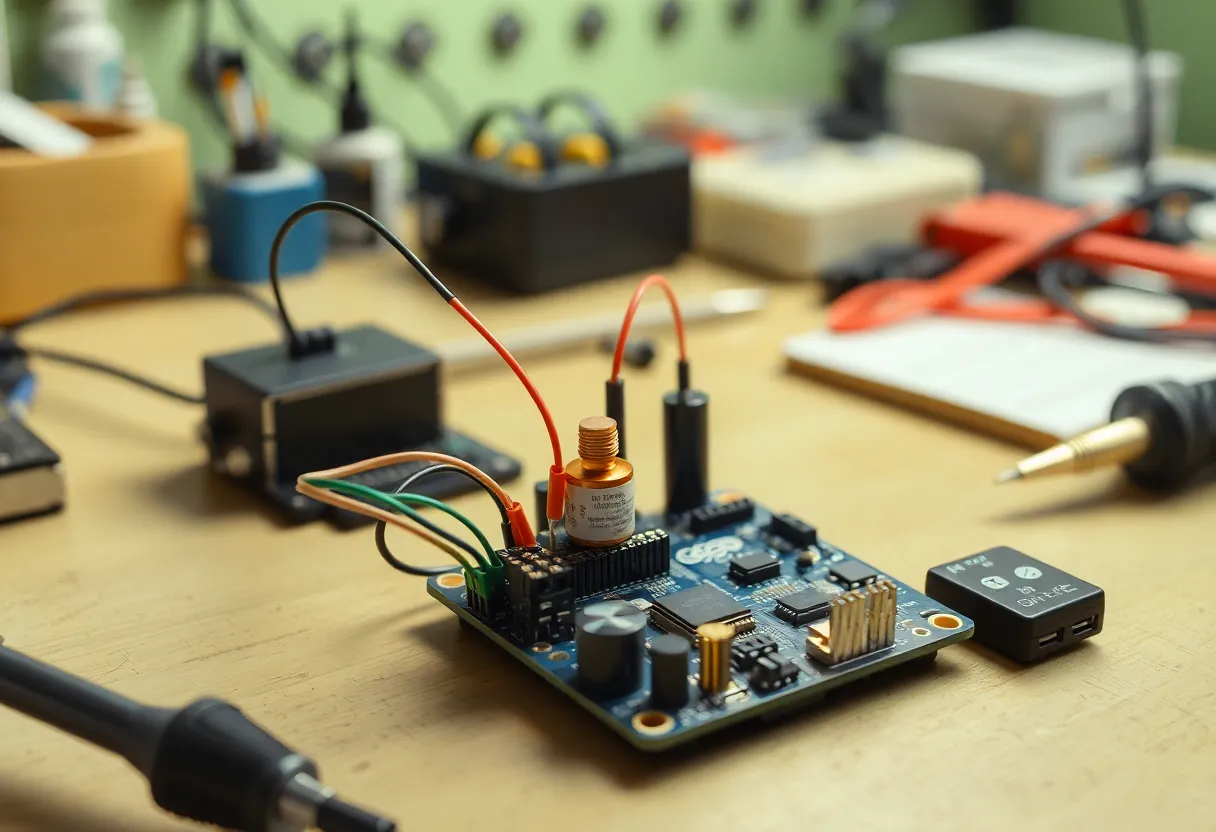
Microcontroller integration has also matured considerably. Small spectral sensor breakout boards, designed to be wired directly to an Arduino or similar board, let makers build spectrometry into automated projects — continuous monitoring of a grow light’s output over a plant’s life cycle, for instance, or an automated sorting rig that flags plastic type by spectral signature on a small recycling or filament-reclaiming setup. This kind of embedded, always-on measurement is something a handheld consumer unit cannot easily replicate, and it represents where a meaningful chunk of the more technically ambitious maker projects are heading.
Is It Worth Adding to Your Bench
For makers whose projects intersect with color, light, or material verification in any serious way — 3D printing with sourced-from-anywhere filament, LED and lighting projects, reef tanks, or hobbyist chemistry — a basic handheld spectrometer has become genuinely affordable enough to be a reasonable addition to the toolkit, in the same category as a decent multimeter or a cheap oscilloscope: not something every hobbyist needs, but something that pays for itself quickly for the specific subset of projects where “what wavelength is this actually emitting” or “is this actually the material it claims to be” is a question worth answering precisely rather than guessing at.
For everyone else, it remains a genuinely interesting but non-essential tool — one more example of a measurement instrument that used to be gatekept behind institutional lab access quietly becoming a garage-workshop commodity, following the same cost curve that put oscilloscopes, 3D printers, and CNC mills within reach of hobbyists a decade or two earlier.