Why Cheap 3D Printers Produce Results Close to Expensive Ones Now

Anya Petrov
July 7, 2026
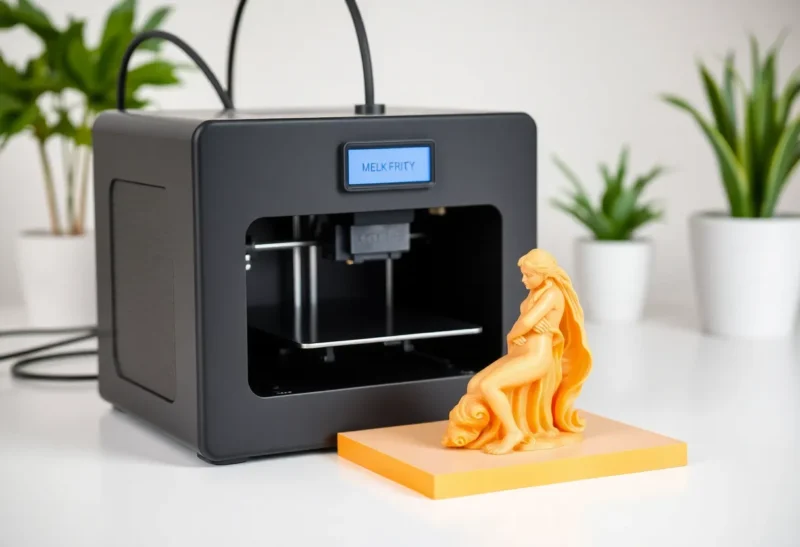
The Bambu Lab X1 Carbon is an $1,100 FDM 3D printer. The Bambu Lab A1 Mini is $300. The Elegoo Neptune 4 is $150. The Creality Ender 3 V3 SE is under $170. Five years ago, the print quality difference between these price points would have been obvious and substantial. Today, someone who picks up a $170 printer and follows basic setup procedures can produce prints that would have required a $700–800 machine in 2020. Understanding what drove this improvement explains both the current state of the market and where the remaining differences between price tiers actually are.
What Changed: Input Shaping and Resonance Compensation
The most significant technical advancement that has trickled down to budget FDM printers in the last two to three years is input shaping — also called resonance compensation or vibration compensation. When a 3D printer’s print head moves, the mechanical system vibrates slightly in response to direction changes. At higher print speeds, these vibrations introduce ringing artifacts in the printed output — wavy patterns visible on flat vertical surfaces near sharp corners, commonly called “ghosting” or “ringing.” The practical consequence was that faster printing produced worse-looking prints, creating a forced tradeoff between print speed and quality.
Input shaping uses accelerometers to measure the printer’s resonance frequencies and then shapes the motion profile of the print head to counteract those vibrations — deliberately introducing compensating movements that cancel the ringing. The result is dramatically cleaner prints at higher speeds. A printer with properly calibrated input shaping can produce prints at 200+ mm/s with quality that was previously only achievable at 40–60 mm/s. Bambu Lab’s printers popularized input shaping in the consumer space, and within two years, the feature appeared in Creality, Elegoo, Anycubic, and Bambu’s lower-priced models — driving it into the $150–200 price tier.
Automatic bed leveling has similarly become standard at all price points. Manual bed leveling — the tedious process of adjusting the build plate to be perfectly parallel to the print head’s travel plane — was one of the most significant sources of first-layer failure for beginners and a maintenance requirement that deterred many potential users. Inductive probes and strain gauge-based leveling systems that automatically measure and compensate for bed inconsistency are now standard at budget price points, removing a major source of failure and maintenance overhead that distinguished good setups from frustrating ones.
The Slicer Software Improvement
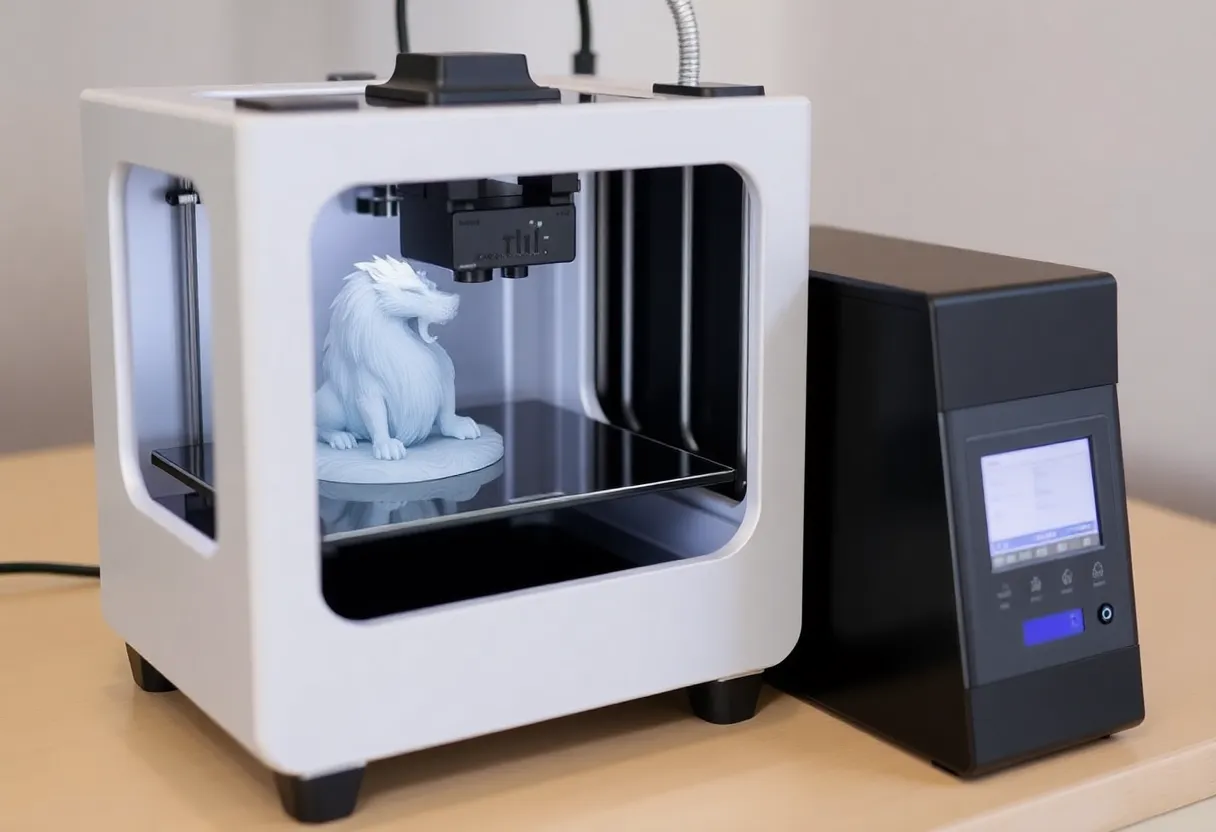
Slicer software — the application that converts a 3D model into the motion instructions the printer executes — has improved substantially and largely for free. OrcaSlicer, Bambu Studio (based on PrusaSlicer), and Cura are free applications whose print profiles for specific printers have been extensively tuned by community members. The default print profile for a $150 Elegoo printer in 2026 contains calibration knowledge that a $500 printer owner in 2020 would have spent weeks developing through trial and error.
The community calibration infrastructure around budget printers has become one of the most significant equalizing factors. Reddit communities, YouTube channels, and slicer profile repositories share printer-specific tuning that benefits everyone. A first-time buyer of a budget printer who follows a current community guide and applies a calibrated print profile will produce good prints from their first attempts; the same printer four years ago required significantly more user expertise to produce similar results.
The Remaining Differences: Where Price Still Buys Something
The improvements in budget printers don’t eliminate the differences between price tiers — they shift what those differences are. The $1,000+ tier still offers meaningful advantages for specific use cases.
Speed remains the clearest premium differentiator. Bambu Lab’s X1 Carbon and P1S use CoreXY kinematics (a different motion system architecture from the bed-slinger design common in budget printers) that achieves 500+ mm/s print speeds while maintaining print quality through input shaping. Budget printers with input shaping achieve 200–250 mm/s. For high-volume printing where throughput matters — production of many parts — the higher-speed premium printers produce meaningfully more output per hour.
Multi-material printing is another premium differentiator. Bambu’s AMS (Automatic Material System) and Prusa’s MMU enable printing in multiple colors or materials in a single job. Budget printers are generally single-filament. For functional multi-color prints or prints combining flexible and rigid materials, the multi-material ecosystem remains premium.
Enclosed build chambers — standard on higher-tier printers and now available as a premium option on some mid-range models — are required for printing engineering-grade materials (ASA, ABS, polycarbonate, nylon) that warp severely in open-air environments. Budget printers print PLA and PETG well; they struggle with engineering filaments that require temperature-stable printing environments. For prototyping with functional materials rather than display prints, this matters.
The Practical Buying Landscape
For a new user who wants to print PLA and PETG models — the overwhelming majority of hobbyist 3D printing — a $150–200 budget printer in 2026 produces excellent results with reasonable reliability. The Creality Ender 3 V3 SE, Elegoo Neptune 4, and Bambu Lab A1 Mini (which pushes closer to $300 but offers multi-color and higher speed) are all competitive starting points that don’t require the expertise budget printers demanded two to three years ago.
The case for spending more is real for high-volume printing (speed matters), multi-material work (AMS requires the Bambu ecosystem), engineering filaments (enclosed chambers required), or the preference for a more hands-off experience (Bambu’s ecosystem is genuinely more automated and user-friendly than other brands at any price). For the mainstream use case — making things, prototyping, hobby projects with standard filament — the gap between cheap and expensive has compressed to the point where a $150 printer makes sense for a first purchase and the upgrade can come later if the use case demands it.