What Bidirectional Charging Actually Needs Before It’s Practical for Homeowners

Evan Pierce
July 7, 2026
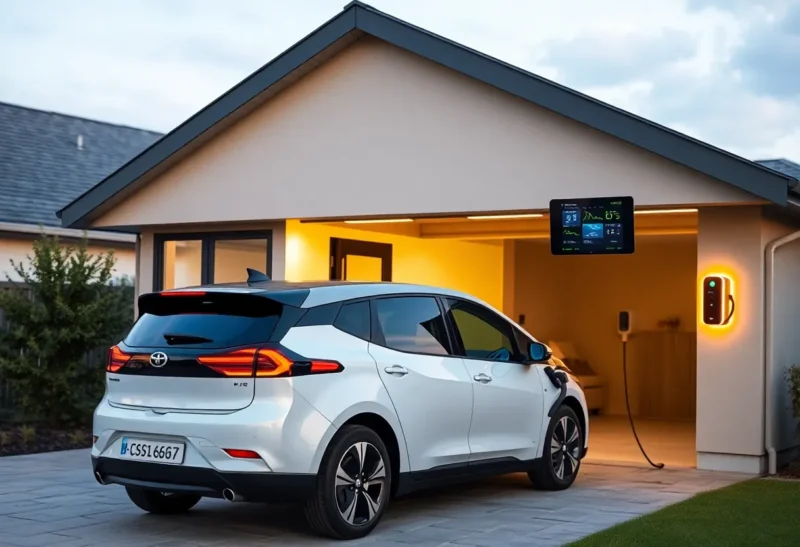
An electric vehicle with a 75–100 kWh battery pack contains roughly four to seven days of average home energy consumption sitting in your garage. The idea that this battery could serve as a home backup power source, export excess solar energy back to the grid, or enable you to charge during cheap overnight rates and run your home from the car during peak pricing hours is straightforwardly compelling. The technology to do this exists. The implementation at scale is harder than the concept suggests, and most homeowners asking about bidirectional charging in 2026 are surprised by how many pieces have to be in place simultaneously for it to actually work.
The Three Flavors of Bidirectional Charging
Bidirectional charging is not one thing. The three main variants have different infrastructure requirements, different utility relationships, and different value propositions for homeowners.
Vehicle-to-Home (V2H) uses the car as a backup power source for your home in the event of a grid outage. The car’s battery provides AC power through a dedicated gateway and transfer switch, essentially functioning as a very large uninterruptible power supply. This doesn’t require any relationship with your utility — it’s a self-contained system — but it requires dedicated hardware (the bidirectional EVSE/gateway, the transfer switch, potentially an upgraded service panel), and only works when the car is home and plugged in.
Vehicle-to-Grid (V2G) connects your car to the utility grid and allows your utility to draw power from the car’s battery during peak demand periods, paying you for the exported energy. This requires both a compatible bidirectional charger and an active agreement with your utility to participate in a demand response or V2G program. Utilities get peak demand reduction; you get compensation. The relationship with the utility and the rate structures are more complex than V2H, and V2G programs are still in limited commercial deployment in most US markets.
Vehicle-to-Load (V2L) is the simplest implementation and is already available on several current EVs (Hyundai Ioniq 5/6, Kia EV6, Ford F-150 Lightning, Rivian R1T) as a standard feature. V2L provides AC power from outlets in the vehicle or from an adapter at the charge port, allowing you to run appliances, tools, or devices directly from the car’s battery. This is useful for camping, job sites, and emergency power for specific devices, but it’s not integrated with your home electrical system — it’s essentially a very large portable generator.
The Hardware Gap
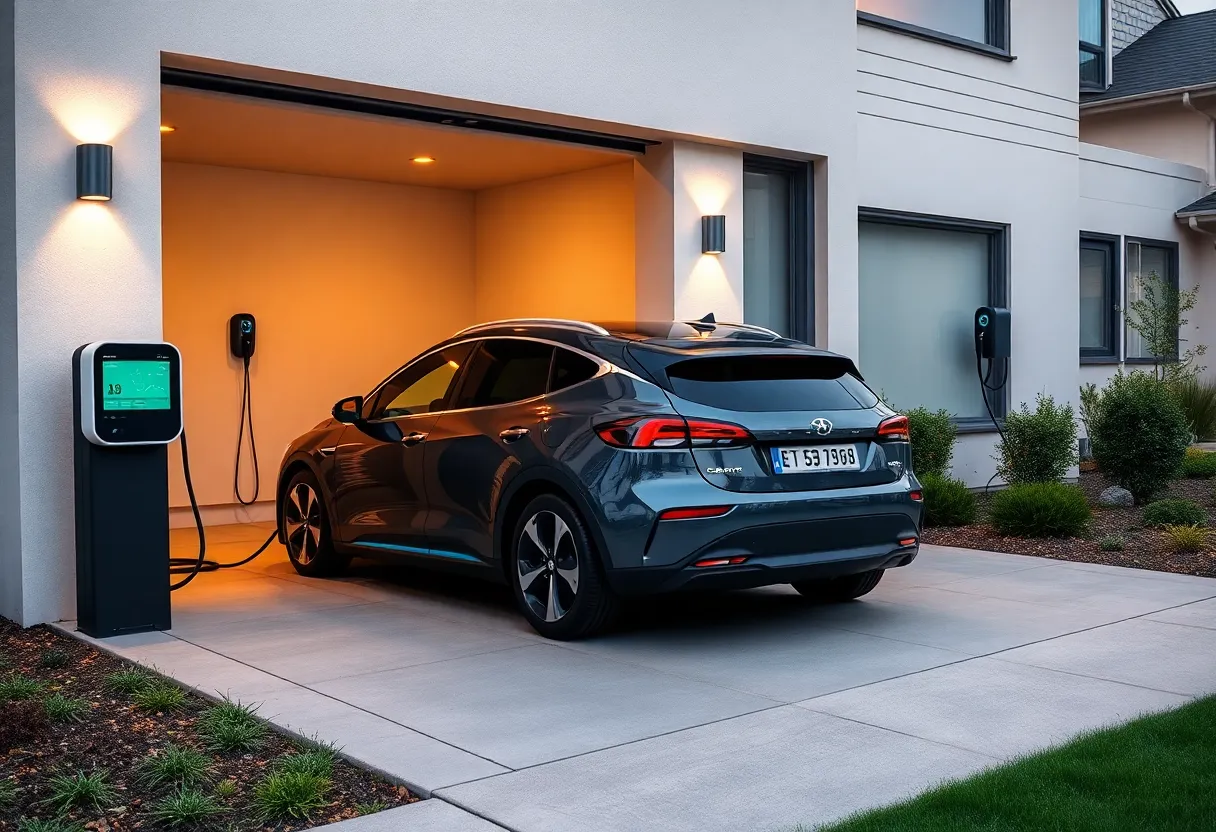
For V2H — the most broadly useful bidirectional capability for homeowners — you need a vehicle that supports bidirectional charging on its onboard charger, a compatible bidirectional EVSE, and the appropriate electrical infrastructure at home.
Vehicle support is the first constraint. As of 2026, the vehicles with robust, deployed V2H capability in the US market are relatively limited: Ford F-150 Lightning and E-Transit, certain Hyundai and Kia models (Ioniq 6, EV6 with the right configuration), and Nissan’s LEAF with CHAdeMO bidirectional support (CHAdeMO is declining in North America). Tesla vehicles, despite their large market share, do not natively support V2H through their charge port — Tesla’s proprietary Powerwall and Powerwall 3 systems handle home backup but via stationary battery rather than the vehicle. The Cybertruck does support bidirectional power, but with limitations.
Compatible bidirectional EVSEs are still a developing market. Ford’s Charge Station Pro (required for the F-150 Lightning’s Intelligent Backup Power system) is the most retail-deployed example. Wallbox’s Quasar 2 supports CHAdeMO-based bidirectional charging. DC-coupled bidirectional chargers for CCS (the dominant North American standard) are in development and commercial deployment is limited. The NACS transition that most major automakers have committed to means another hardware generation cycle as the standard shifts.
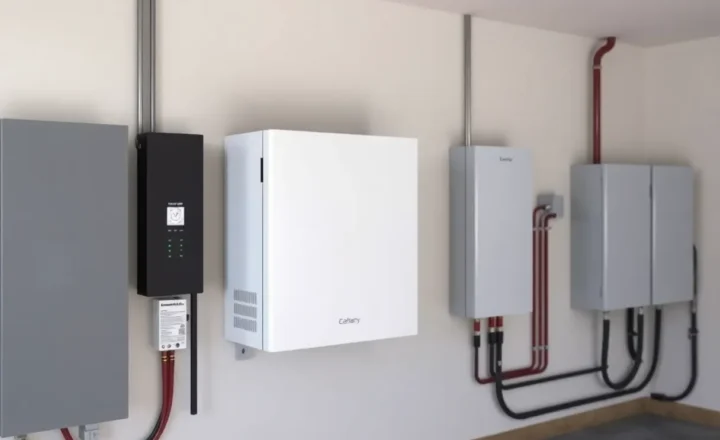
The electrical installation is non-trivial. A proper V2H installation requires a transfer switch to isolate your home from the grid during backup operation (required for safety — you can’t export power onto a grid line being worked on by utility crews), an upgraded home panel in many cases, and electrical work to route the backup power to your home’s critical loads or whole house. Depending on your current panel capacity and home configuration, this can range from $2,000 to $8,000 in electrical work beyond the cost of the EVSE itself.
The Battery Degradation Question
Using your EV battery as a home power source means more charge and discharge cycles than the vehicle’s battery accumulates through driving alone. Battery capacity degradation over time is a function of total energy throughput (total kilowatt-hours charged and discharged) as well as the specific chemistry, temperature management, and state-of-charge ranges used.
EV manufacturers have taken different approaches to this concern. Ford limits the F-150 Lightning’s Intelligent Backup Power to charge/discharge cycles that keep the battery in a protective state-of-charge window and uses a less degradation-intensive charging profile than fast charging. Nissan’s earlier guidance on LEAF CHAdeMO bidirectional use was cautious about daily V2G use contributing to battery degradation. The general consensus from battery researchers is that limited V2H use (occasional backup during outages, daily arbitrage within moderate state-of-charge ranges) causes meaningful but not dramatic additional degradation over the vehicle’s lifetime. Aggressive daily V2G cycling — the utility using your car heavily for grid services — causes more degradation, which is why V2G compensation programs need to justify that trade-off financially.
The battery warranty question is related but separate. Some manufacturers explicitly warranty the battery against premature capacity loss including when used for bidirectional purposes; others exclude bidirectional use from warranty coverage or haven’t addressed it clearly. This is a specific thing to verify before buying a vehicle for V2H/V2G use rather than assuming it’s covered.
The Utility Relationship
V2H doesn’t require utility cooperation beyond having a properly installed transfer switch (which protects utility workers). V2G absolutely does require it, and this is where most homeowners in most US markets hit a wall.
V2G programs require the utility to have compatible smart meters, rate structures that compensate for exported energy, and grid management systems that can communicate with home bidirectional chargers. Most US utilities don’t have all of these in place, and those that are piloting V2G programs are doing so in limited geographic areas or with specific fleet partnerships rather than general homeowner enrollment. California, Hawaii, and a handful of northeast states with aggressive grid modernization programs are further along. Most of the country has limited to no utility V2G programs available.
Net metering — which covers solar export to the grid — is more widely available but is a separate policy from V2G and doesn’t automatically apply to vehicle battery exports in many states. The regulatory framework for bidirectional vehicle energy is still being developed by state utility regulators, and the timeline for widespread V2G availability in the US is measured in years, not months.
What Makes Sense Today
For homeowners in 2026, the most practical bidirectional charging value proposition is V2L for occasional use (camping, power outages, job sites) combined with V2H backup power if you buy a compatible vehicle and live in an area with significant grid outage risk. The F-150 Lightning’s Intelligent Backup Power is the most deployable full V2H system currently available to retail buyers and has documented real-world use in outage situations. The total system cost is high ($1,000+ for the charge station, $2,000–5,000 for electrical installation) but it’s a functional product that works today.
V2G as a meaningful homeowner revenue opportunity is a 2028–2030 story in most US markets, contingent on utility infrastructure development and regulatory frameworks that are progressing but not yet broadly available. Buying a vehicle for V2G revenue today means banking on infrastructure that doesn’t yet serve your area in most cases. The vehicles being sold now with V2G-capable hardware are correctly positioned as forward-compatible rather than immediately deployable for V2G in most markets.
The technology works. The ecosystem around it is catching up. Buying an EV with bidirectional capability is a reasonable future-oriented choice; expecting to use V2G for grid arbitrage income this year requires both the right vehicle and the right utility market, which substantially limits who can actually realize that value today.