What Actually Slows Down Municipal Water Main Replacement Projects

Futurion Editorial
July 9, 2026
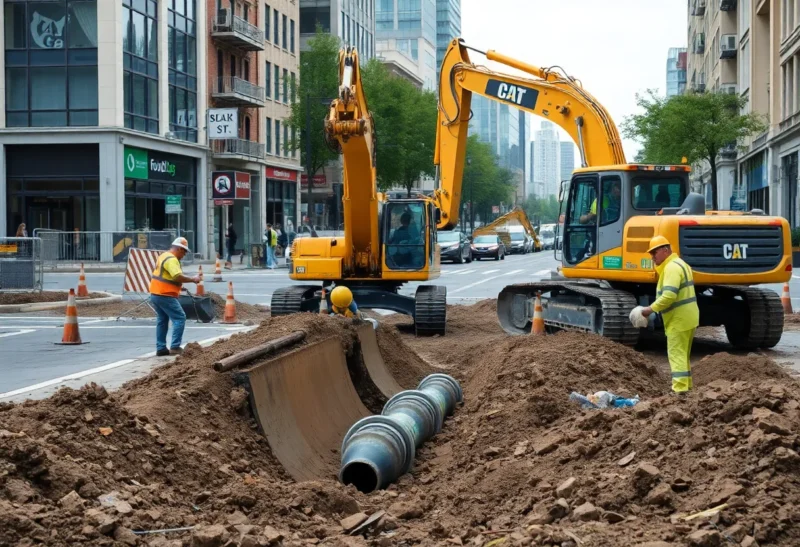
Most US cities carry water main infrastructure that’s decades, and in some older cities, well over a century old, and water utility industry assessments consistently describe the pace of actual replacement as too slow relative to how quickly aging infrastructure is deteriorating and failing. That gap between recognized need and actual replacement pace isn’t primarily a matter of engineering difficulty — replacing a water main is well-understood, mature construction work. It’s a matter of several compounding practical constraints around funding, underground congestion, and project sequencing that together make water main replacement a much slower and more expensive undertaking per mile than the underlying pipe-laying work alone would suggest.
Why Underground Congestion Is a Bigger Constraint Than Most People Realize
Modern city streets typically have dense underground utility corridors packed with water mains, sewer lines, gas lines, electrical conduits, telecommunications cabling, and increasingly fiber optic infrastructure, often installed at different times by different agencies and private utilities with limited coordinated planning for how all these systems would eventually need to coexist and be independently maintained or replaced over their respective lifespans.
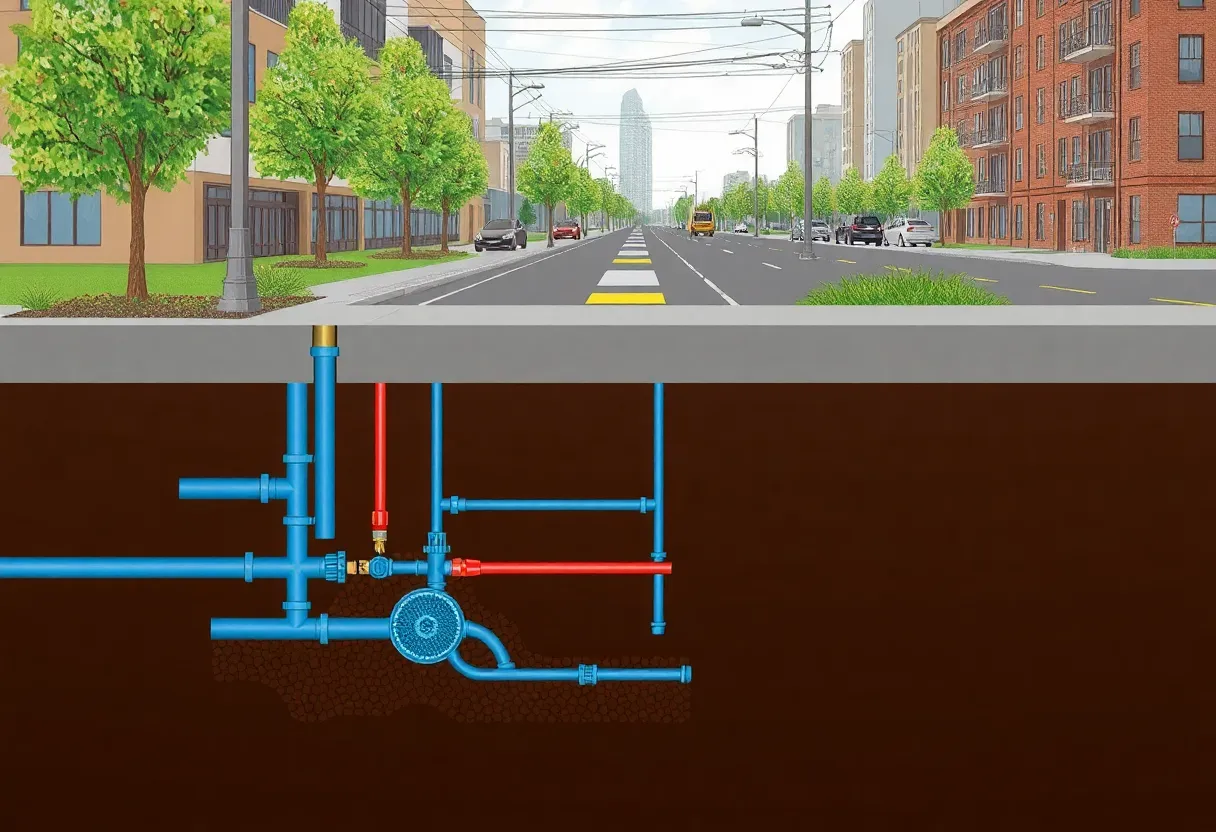
Replacing a water main running through this congested underground corridor requires careful excavation planning and coordination to avoid damaging adjacent utility infrastructure, often requiring utility locating surveys, coordination meetings with every other utility owner whose infrastructure runs through the same corridor, and sometimes temporary support or relocation of adjacent utility lines during construction — coordination overhead that scales with how many separate utility owners have infrastructure in a given street, and that simply didn’t exist as a constraint when the original water main was installed in an era with less densely packed underground utility competition for the same limited underground space.
Funding Structure Creates a Different Kind of Bottleneck
Water utilities are generally funded primarily through customer rate revenue, and water rates in most US jurisdictions have historically been set at levels that prioritized affordability over generating the substantial capital reserves that proactive, accelerated infrastructure replacement at scale would actually require. This creates a structural funding gap: the American Water Works Association and similar industry assessments have repeatedly estimated that needed water infrastructure investment substantially exceeds what current rate-funded capital budgets across most utilities can actually support, forcing many utilities into a reactive replacement posture — replacing mains after failure or clear imminent failure risk, rather than proactively replacing aging infrastructure on a schedule based on projected remaining service life.
Federal infrastructure funding programs, including recent significant allocations through infrastructure legislation, have provided meaningful additional capital for some utilities, but these funding sources are generally allocated through competitive grant processes or formula-based distributions that don’t come close to closing the full estimated funding gap across the entire aging water infrastructure base nationally, meaning the underlying capital constraint remains a persistent, structural limit on replacement pace for most utilities regardless of individual grant successes.
Why the “Replace Reactively” Pattern Is Genuinely Hard to Break
The combination of underground congestion complexity and funding constraints pushes many utilities toward a replacement strategy that industry engineers generally acknowledge isn’t ideal from a pure asset management perspective — replacing mains after they fail or show clear imminent failure signs, rather than proactively replacing aging infrastructure based on statistical failure risk modeling before failures actually occur.
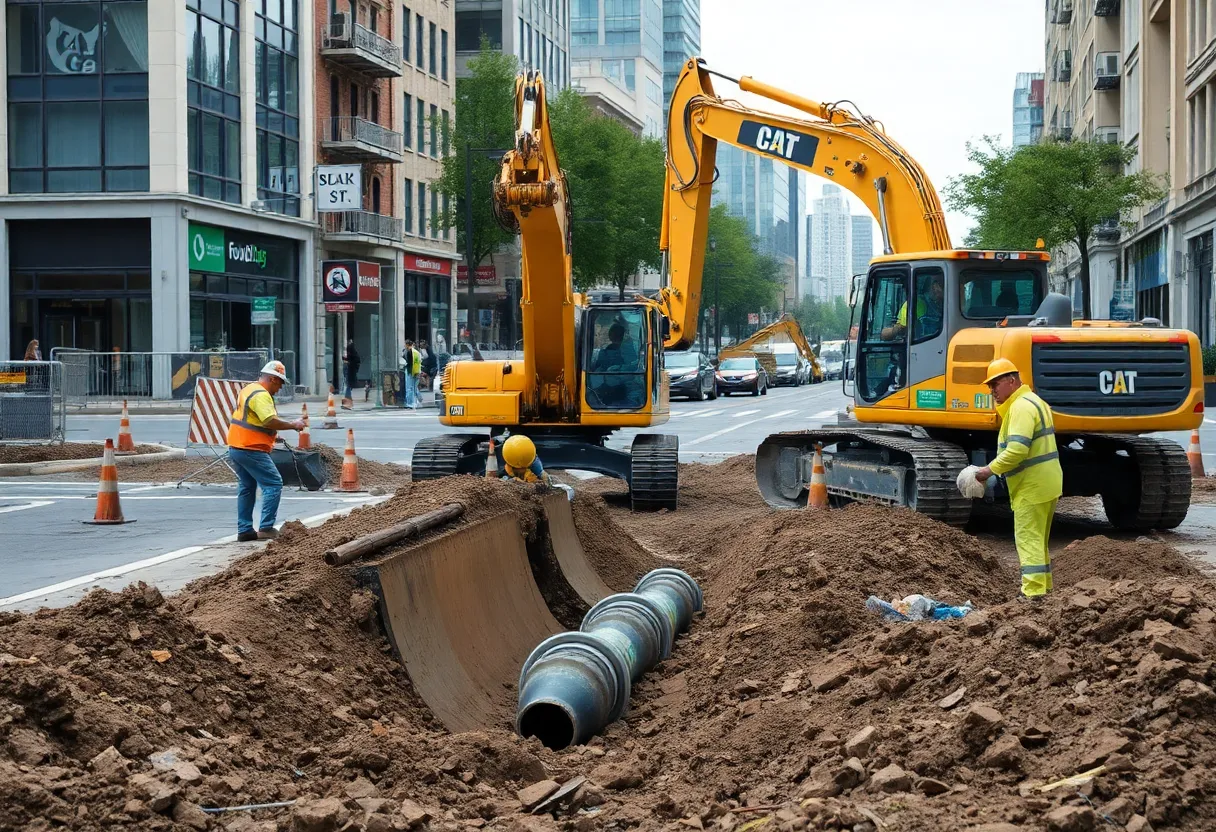
This reactive pattern is genuinely more expensive over the long run than proactive replacement, both because emergency repair work costs more per foot than planned replacement work (emergency crews and equipment mobilization, expedited but less efficiently sequenced excavation, and the water loss and property damage costs main breaks cause before repair) and because a reactive strategy means utilities are constantly responding to whichever pipes happen to fail rather than being able to sequence replacement work efficiently by geographic area or coordinate timing with other planned street work. But shifting to a genuinely proactive replacement schedule requires upfront capital investment that many utilities’ current rate-funded budgets simply don’t support, creating a difficult chicken-and-egg dynamic where the more cost-effective long-term strategy requires exactly the kind of upfront capital commitment that chronically underfunded utilities struggle to make.
Permitting and Traffic Management Add Further Time, Even With Funding Secured
Even when funding and underground coordination are resolved for a specific project, municipal permitting processes, required public notification periods, and traffic management planning for construction that inevitably disrupts street access add further time to project timelines, particularly in denser urban areas where a single street closure for water main work can significantly affect traffic patterns across a broader area and requires correspondingly more careful advance planning and public communication than the same work might require in a lower-density area with more available alternate routes.
Utilities and municipal public works departments have made some progress reducing this specific friction through better inter-agency project coordination — deliberately timing water main replacement to coincide with other planned street reconstruction or other utility work in the same corridor, reducing the number of separate times a given street needs to be excavated and disrupted — but this kind of coordinated multi-project sequencing itself requires additional upfront planning coordination that adds its own scheduling complexity, even though it ultimately reduces total disruption and cost compared to each utility replacing its own infrastructure on a fully independent timeline.
Why This Combination of Constraints Persists as a Structural Problem
None of the individual constraints slowing water main replacement — underground congestion, funding limitations, reactive replacement patterns, and permitting overhead — are new or poorly understood problems within the water utility industry; they’re persistent structural features of how US water infrastructure financing and urban underground utility management have historically been organized, and addressing them meaningfully generally requires either substantially increased capital investment (through rate increases, expanded federal funding, or both) or fundamentally different regulatory and planning coordination models than most utilities currently operate under. Until one or both of those structural changes happens at meaningful scale, the pace of water main replacement across most US cities is likely to remain constrained well below what most infrastructure engineers consider the actual replacement need, continuing the reactive, failure-driven replacement pattern that industry assessments have been flagging as a genuine long-term infrastructure risk for years.