What Happens Mechanically When a Suspension Bridge Handles Wind Load

Dr. Kenji Watanabe
July 9, 2026
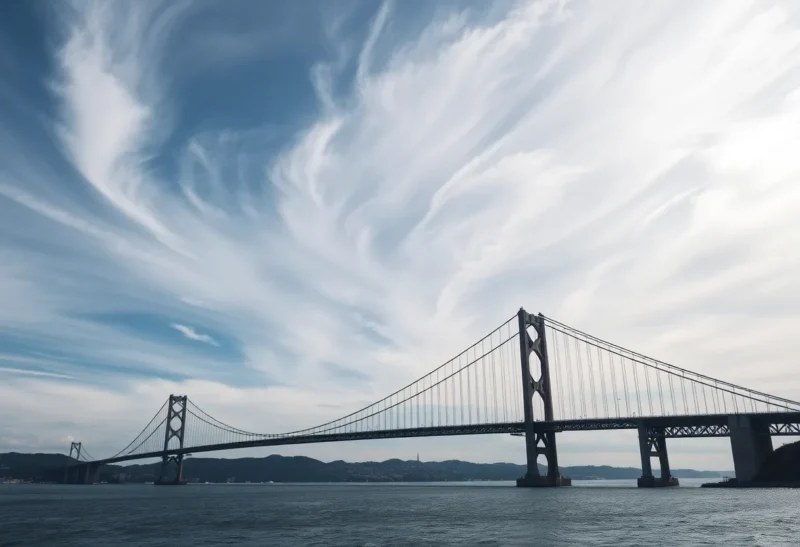
The 1940 collapse of the Tacoma Narrows Bridge, filmed dramatically as the deck twisted and undulated violently before finally tearing apart in wind that wasn’t even close to hurricane force, remains the single most-cited case study in bridge engineering education for a reason: it demonstrated, in unmistakable footage, that a bridge can fail from wind loading through mechanisms entirely different from simply being blown over or overloaded by brute static force. Understanding what actually happens mechanically when a modern suspension bridge deck encounters wind requires separating several distinct physical phenomena that engineers now design around explicitly, largely because of exactly what that failure revealed.
Static Wind Load Is the Simple Part
The most intuitive wind effect on a suspension bridge is static load — the direct, steady pressure wind exerts on the bridge deck, cables, and towers simply by pushing against their surface area, the same basic physics as wind pushing against a building or a sail. Engineers calculate this using established wind pressure formulas based on wind speed, the bridge’s exposed surface area and shape, and regional wind climate data specific to the bridge’s location, and design the structure’s strength and stiffness with a substantial safety margin above the maximum static load the site’s worst-case wind conditions are expected to produce.
This part of wind engineering was reasonably well understood even before Tacoma Narrows, and it’s not actually what caused that bridge’s failure — the wind speed involved (around 40 mph) was well within the static load the bridge was designed to withstand. The real story is a much more subtle and, at the time, poorly understood dynamic phenomenon.
Aeroelastic Flutter: The Mechanism That Actually Brought Down Tacoma Narrows
Aeroelastic flutter is a self-reinforcing feedback loop between a structure’s motion and the aerodynamic forces that motion itself generates — and it’s fundamentally different from static wind pushing on a stationary object, because it involves the structure’s own movement actively amplifying the aerodynamic forces acting on it, rather than just passively resisting a fixed external force. As wind flows over and around a bridge deck, it creates vortices (rotating pockets of air) that shed off the deck’s edges in a pattern influenced by the deck’s specific shape and its motion at that instant.
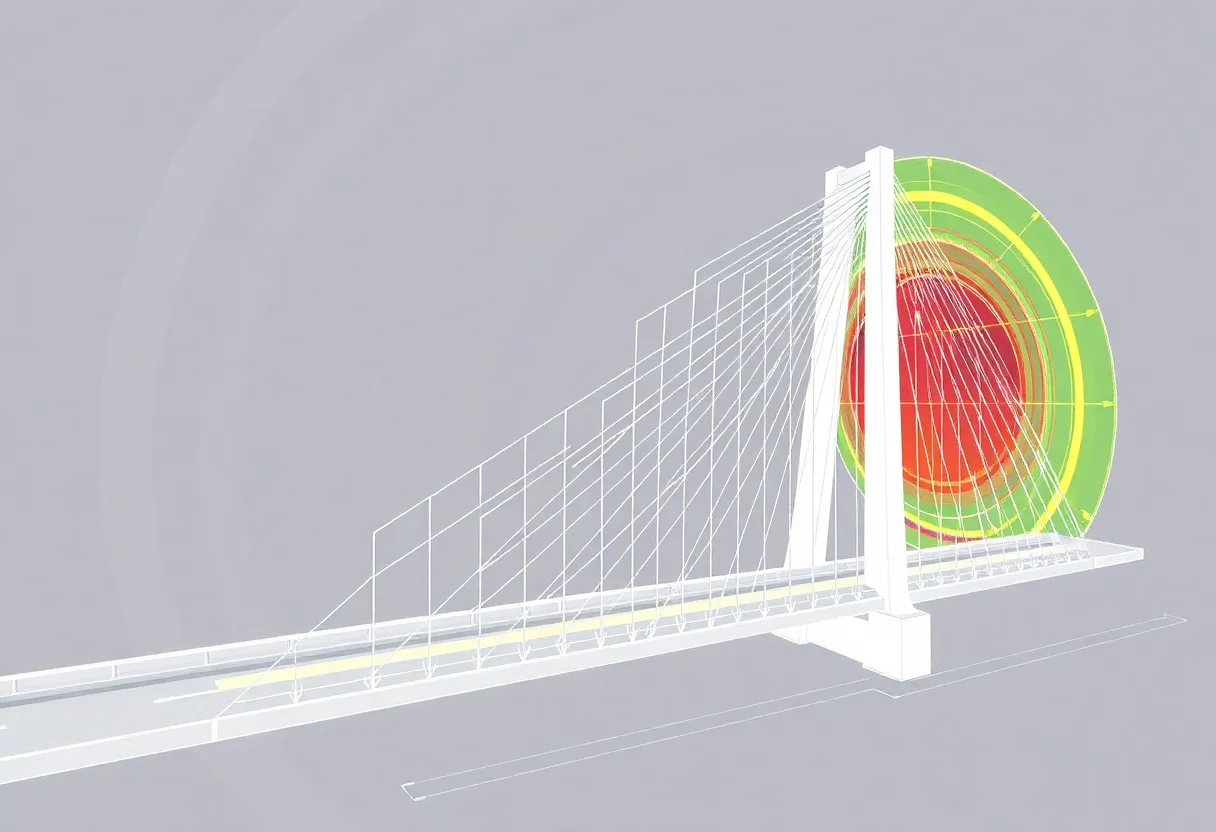
If a deck’s shape and stiffness characteristics happen to align in a way where the timing of that vortex shedding synchronizes with the deck’s natural tendency to twist and oscillate, the aerodynamic forces generated by the deck’s own motion begin reinforcing that same motion rather than damping it out — each oscillation cycle feeds slightly more energy into the next one instead of the energy dissipating, and the oscillation amplitude grows progressively larger rather than settling down, exactly as captured in the Tacoma Narrows footage where the deck’s twisting motion visibly grew more violent over time until the structure exceeded its material limits and failed. Tacoma Narrows’ original deck design used a solid, shallow, plate-girder design that was particularly susceptible to this vortex-shedding feedback loop — a design choice that made sense based on the aerodynamic engineering knowledge available at the time, but that we now understand was almost uniquely prone to flutter given its specific cross-sectional shape and stiffness properties.
How Modern Bridge Design Engineers Around Flutter
The direct legacy of Tacoma Narrows in bridge engineering practice is that flutter analysis is now a mandatory, rigorous part of designing any long-span suspension or cable-stayed bridge, using a combination of wind tunnel testing on scale models and increasingly sophisticated computational fluid dynamics simulation to identify a proposed deck design’s “critical flutter speed” — the wind speed at which the self-reinforcing oscillation feedback loop would begin, which engineers then design to occur at a wind speed comfortably above anything the bridge’s actual site conditions would ever realistically produce.
Several specific design changes have proven effective at raising this critical flutter speed to safe margins: open-truss deck designs (rather than Tacoma Narrows’ solid plate-girder design) that allow wind to pass through the structure rather than being forced to flow entirely around a solid surface, which reduces the vortex-shedding intensity that drives flutter; increased deck torsional stiffness (resistance to twisting specifically, as distinct from resistance to simple bending) since flutter fundamentally depends on a twisting oscillation mode; and aerodynamic fairings and deck edge shaping specifically designed to disrupt the clean vortex shedding pattern that drives the feedback loop in the first place. The Tacoma Narrows Bridge itself was rebuilt in 1950 using an open-truss deck design specifically informed by these lessons, and it has operated without any flutter-related incident since.
Vortex-Induced Vibration Is a Related but Distinct, Milder Phenomenon
Separate from full aeroelastic flutter, bridges can also experience vortex-induced vibration (VIV) — a related but generally much milder oscillation caused by the same basic vortex-shedding process, but without crossing into the self-reinforcing runaway feedback loop that defines true flutter.
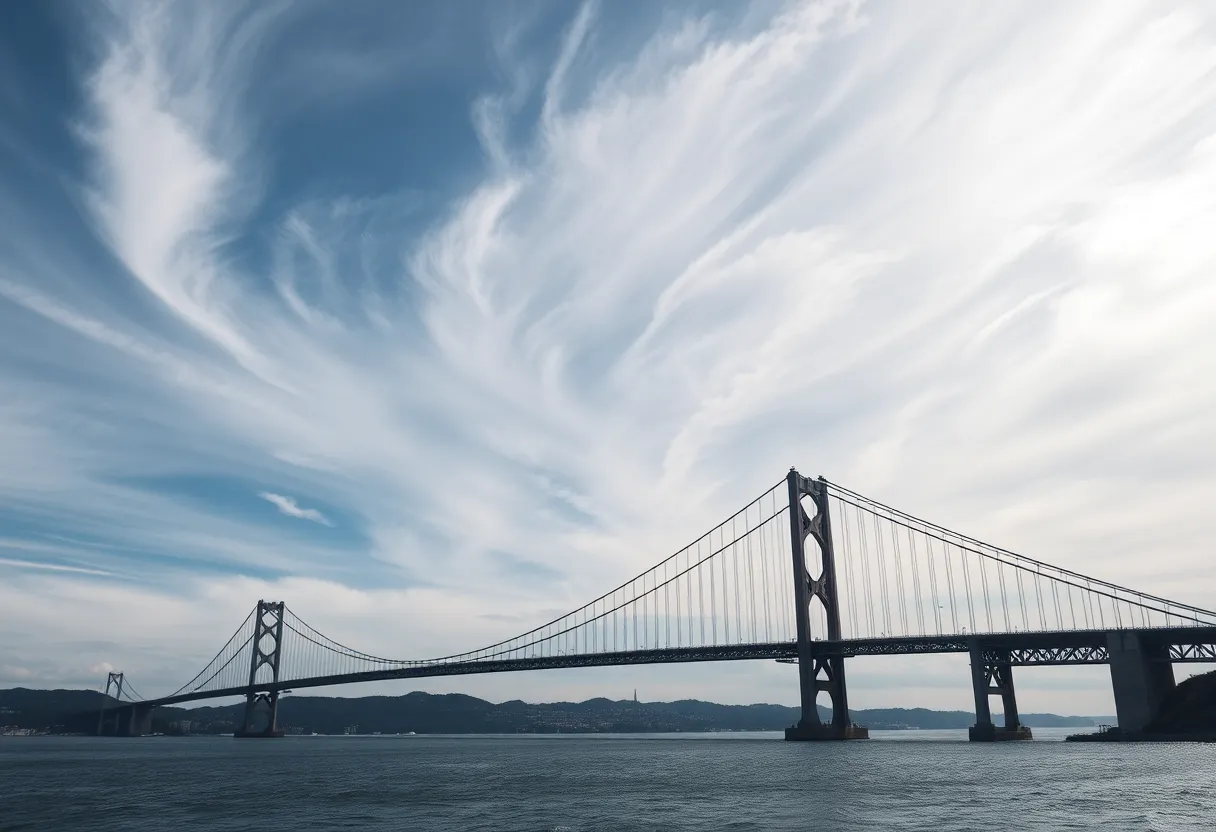
VIV can still cause a bridge to visibly oscillate under specific wind speed and direction conditions — the Millennium Bridge in London and several other modern structures have experienced noticeable, if non-catastrophic, VIV-related motion that required retrofit damping solutions after opening — but it generally doesn’t grow into a runaway, structure-threatening oscillation the way true flutter does, and it’s typically addressed through tuned mass dampers (weighted devices that absorb and dissipate specific oscillation frequencies) rather than the more fundamental deck redesign that flutter risk requires.
Why This History Still Shapes Every New Long-Span Bridge Design
Every major suspension and cable-stayed bridge built since Tacoma Narrows has undergone wind tunnel testing specifically because of the lessons that failure taught the engineering profession, and the specific combination of open deck structures, torsional stiffness targets, and aerodynamic shaping used on modern long-span bridges like the Akashi Kaikyō Bridge in Japan or the Golden Gate Bridge’s various retrofits traces directly back to understanding flutter as a distinct, self-reinforcing dynamic phenomenon rather than treating wind loading as simply a bigger version of a static push. It’s one of the clearer examples in structural engineering history of a single dramatic failure directly reshaping an entire discipline’s standard design practice, rather than being a one-off anomaly that got patched over without changing the underlying engineering approach.